Luxor’s Monthly Lookback Series for September 2026 provides a comprehensive deep dive into the dynamics of the Bitcoin hashrate market, capturing a month defined by opposing macroeconomic pressures, shifting network metrics, and evolving forward market trends. Following a robust August rally that injected significant momentum into hashprice, September delivered a balancing act where Bitcoin’s spot price gains were nearly neutralized by concurrent increases in network difficulty.

September 2026 Spot Hashprice and Its Constituents
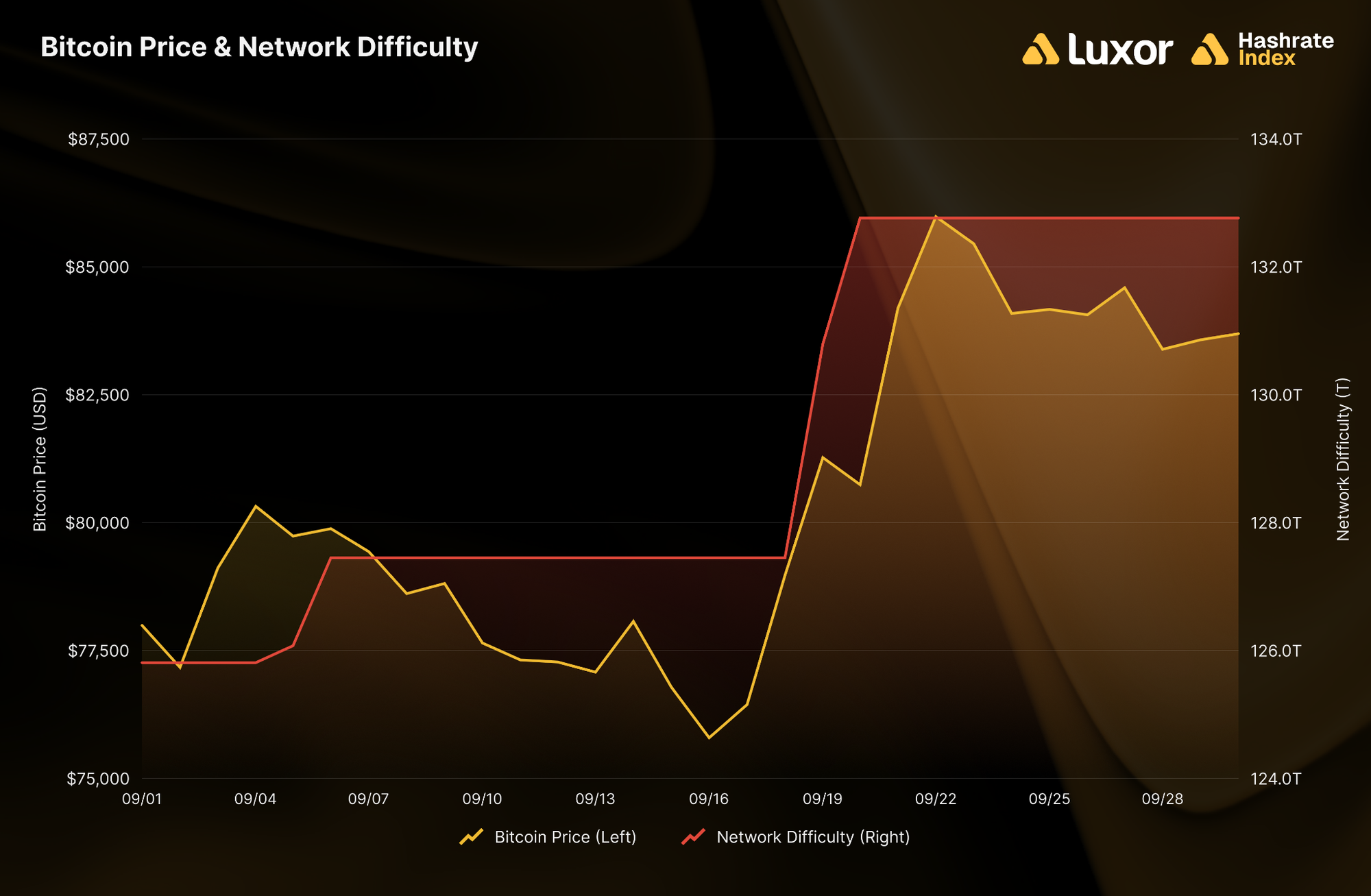
August’s strong performance had left the market wondering whether Bitcoin would maintain its upward trajectory or if network difficulty adjustments would erode the recent hashprice gains. September ultimately delivered a mixture of both forces. Bitcoin climbed roughly 7.3% from its monthly open to its close, while network difficulty rose 5.5% across two upward retargets. Consequently, spot hashprice finished the month within $0.71 of where it started, reflecting a period of macro-level equilibrium for mining revenues.
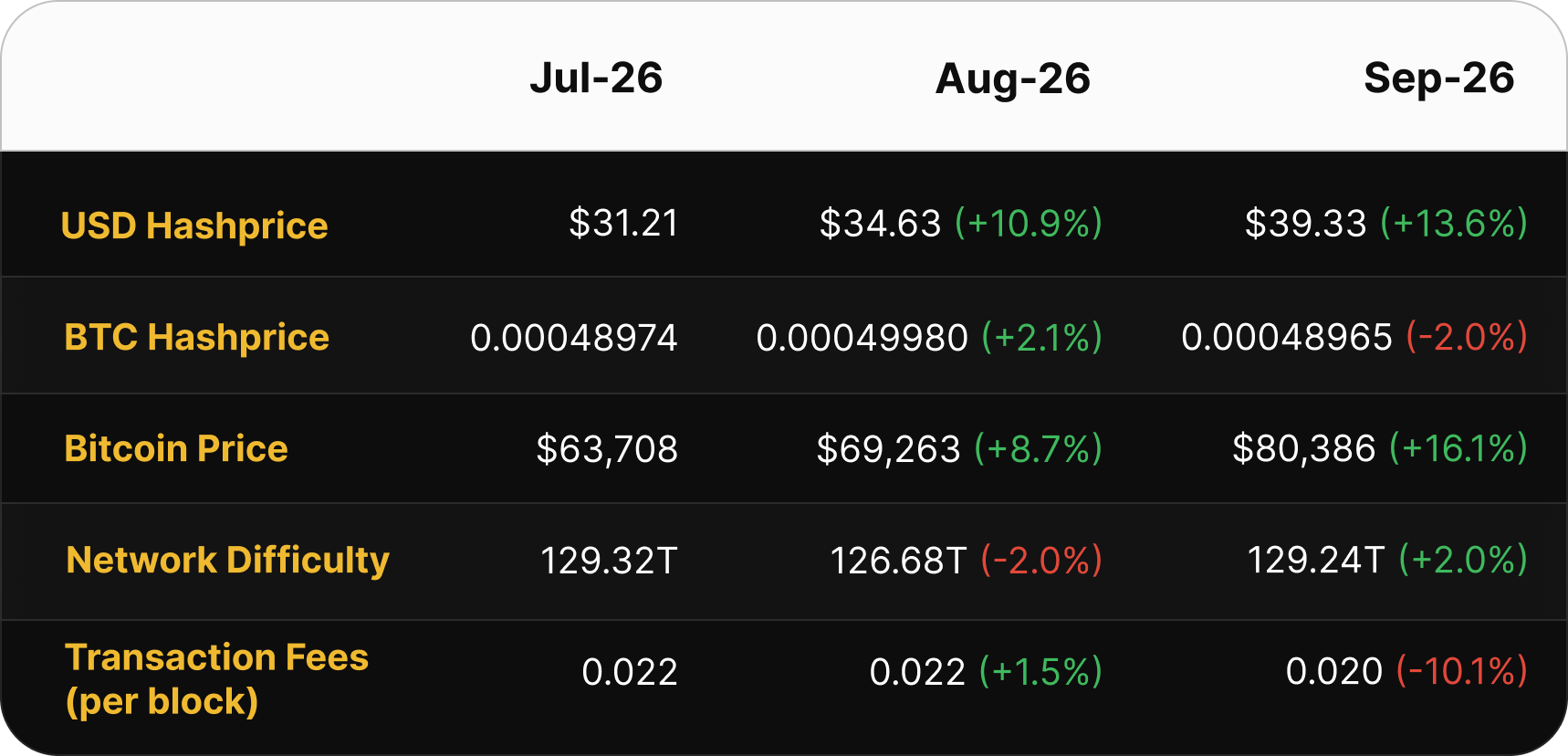
USD hashprice managed to preserve the ground won during August while recording modest incremental gains. The month opened at $39.21 per PH/s/day, closed at $39.92 representing a 1.8% increase, and averaged $39.33—marking the highest monthly average since January. Miners experienced nine days where settlement settled above $40, representing the most days above that threshold in any single month since November 2025, contrasting sharply with just one such day in August.
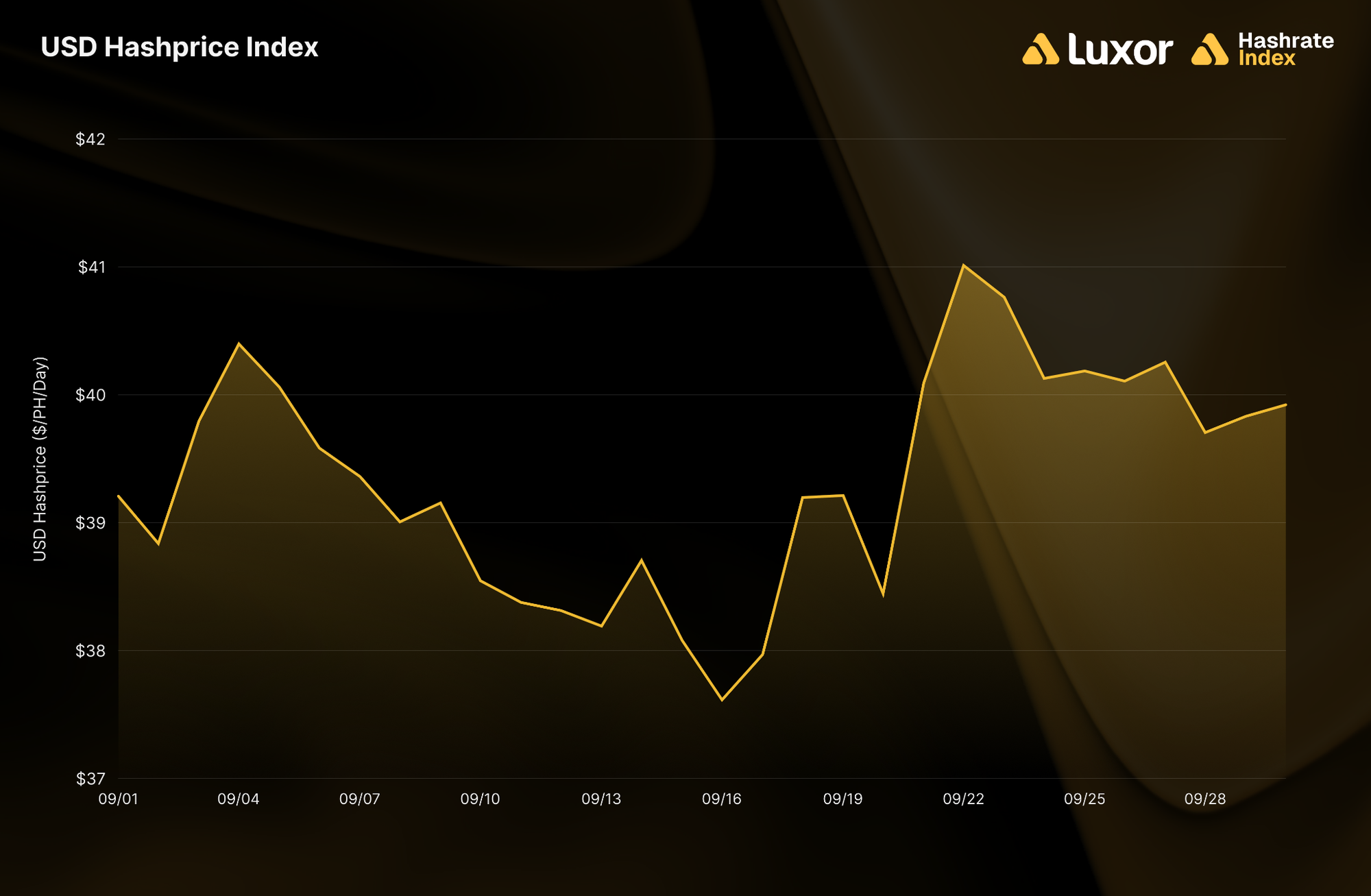
The trading range remained relatively narrow by the standards of 2026, touching a monthly low of $37.61 on September 16 before peaking at $41.01 six days later. Beneath these surface figures, Bitcoin’s appreciation pushed hashprices upward, while climbing difficulty acted as a persistent counterweight.
Bitcoin Price Volatility: Macro Pressures Followed by ETF-Driven Rallies
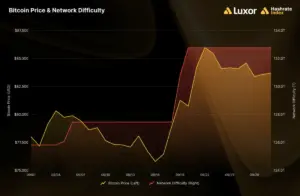
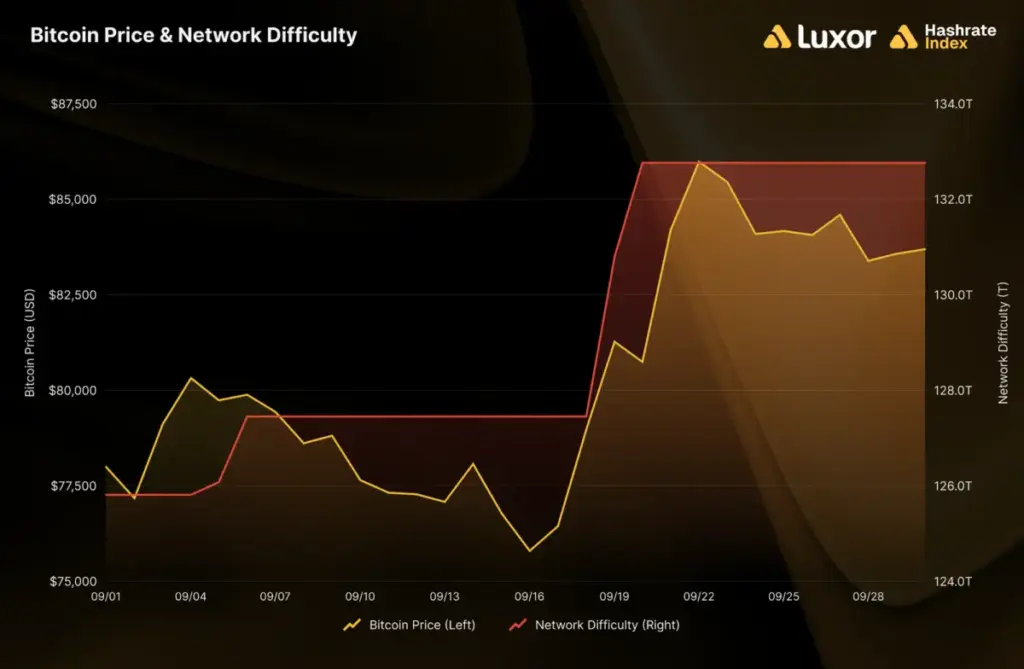
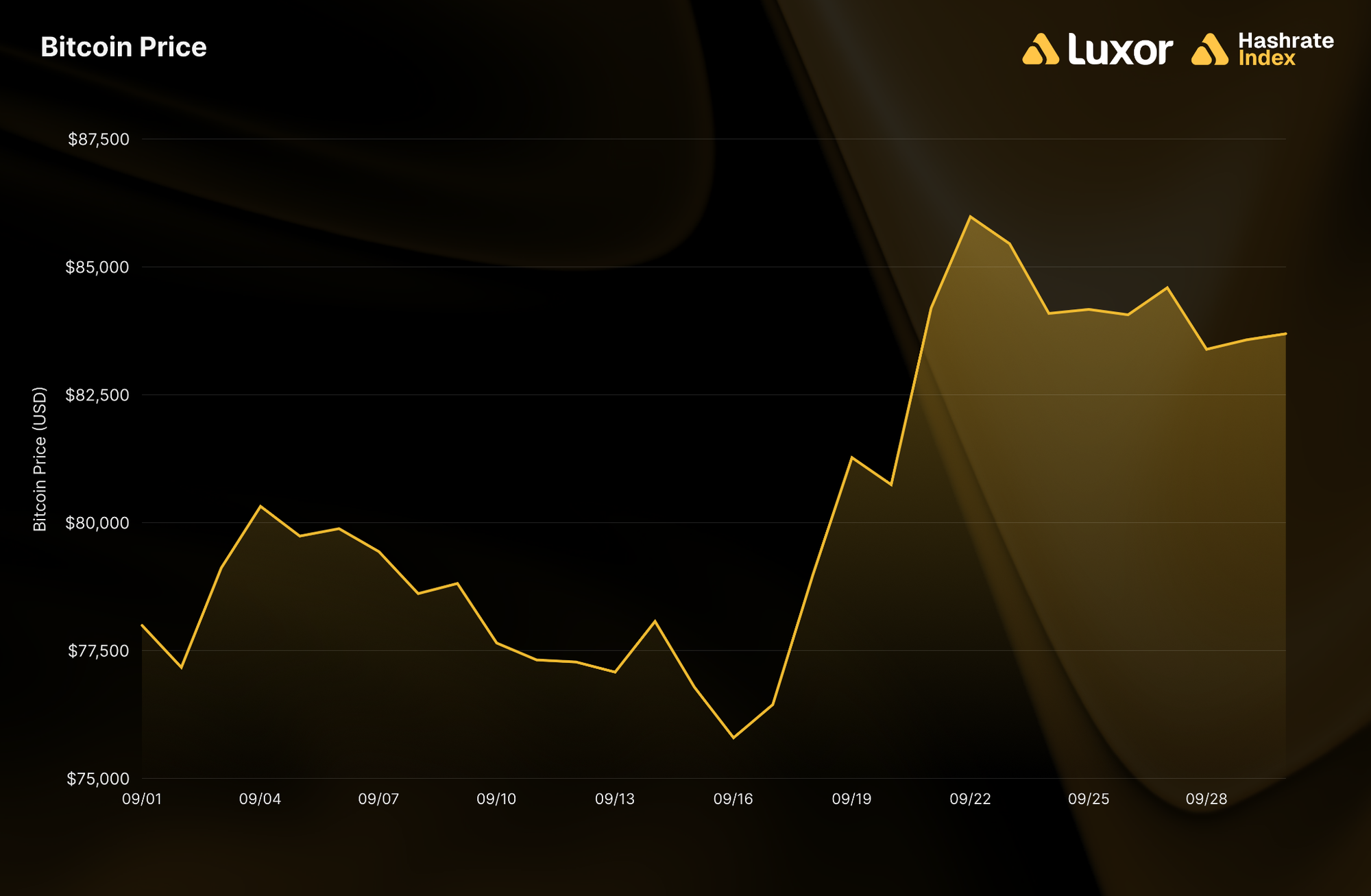
Bitcoin opened September trading at $77,984 and concluded the month at $83,687, representing a 7.3% gain. Its monthly average reached $80,386, up 16.1% compared to the previous month, with a monthly peak of $85,973 recorded on September 22.
The month was marked by intense macroeconomic volatility, particularly mid-month when two significant regulatory and monetary events occurred within a 24-hour window. On September 15, the United States Senate failed to invoke cloture on the Clarity Act with 41 opposing votes, effectively stalling the legislative initiative for the remainder of 2026. The following day, the Federal Open Market Committee (FOMC) unanimously raised interest rates by 25 basis points to a target range of 3.75% to 4.00%, marking the central bank’s first rate hike since July 2023. Bitcoin experienced its monthly low of $75,791 during the immediate fallout on September 16.
Despite these headwinds, the market mounted a swift recovery. Between September 16 and September 22, Bitcoin surged 13.4% to reach $85,973, marking its largest six-day gain since the August market breakout. This recovery was catalyzed by substantial institutional inflows into spot Bitcoin exchange-traded funds, which absorbed $999 million on September 21—the largest single-day inflow of the year and the highest since October 2025. Total monthly ETF inflows reached $2.65 billion, pushing net flows for 2026 back into positive territory. According to estimates from Bloomberg Intelligence, the average U.S. spot ETF holder returned to profitability for the first time since January.
Even with these gains, Bitcoin finished September down 32.8% from its October 6, 2025 all-time high of $124,485, an improvement from the 37.1% deficit recorded at the end of August. The asset remained 13.1% below its 2026 high of $96,278 set on January 15. On a quarterly basis, Bitcoin gained 41.8%, marking its strongest quarter since the final three months of 2024.
Network Difficulty and Hashrate Growth
Network difficulty averaged 129.24T, representing a 2.0% increase, and closed the month at 132.76T. Two upward adjustments took place during the month: a 1.31% increase on September 5 followed by a 4.16% increase on September 19, which marked the largest single retarget since late June. With a cumulative net gain of 5.52% across the two adjustments, September experienced the most significant monthly difficulty growth since October 2025.
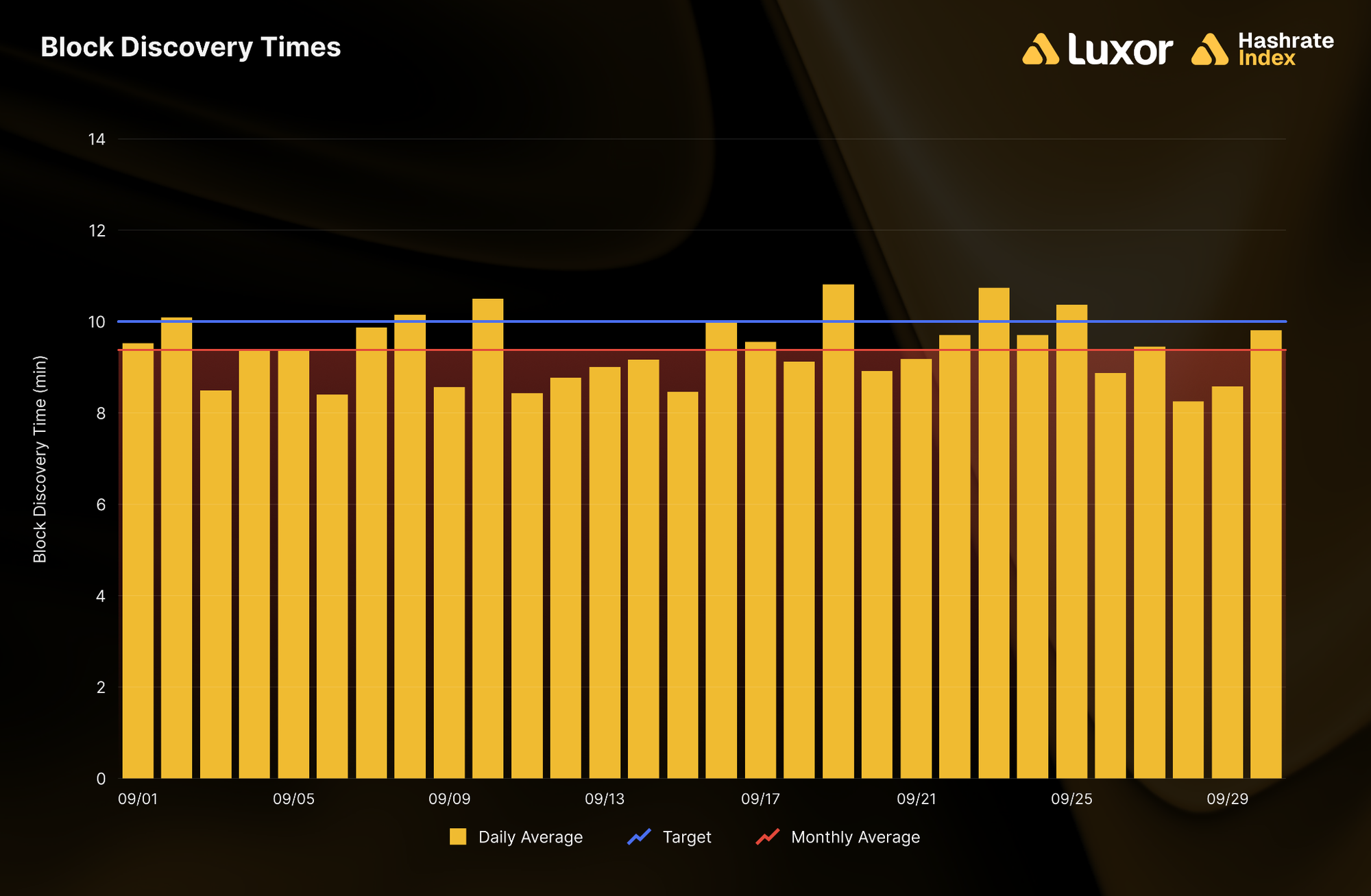
Block times averaged 9 minutes and 23 seconds, making it the fastest month for block generation since February, with 23 out of 30 days coming in below the target 10-minute interval. As the Texas summer came to a close and the 4CP (Four Coincident Peak) transmission season concluded, hashrate that had previously curtailed returned to the network. The 7-day network hashrate average rose steadily from 926 EH/s to 975 EH/s over the course of the month.
Looking back at the seasonal power dynamics in ERCOT, the four coincident peaks occurred on June 18, July 22, August 24, and September 12. July’s peak of 90.96 GW set the seasonal high, while September’s peak of 86.49 GW, recorded at 4:30 PM Central Time, served as the final critical interval. Flexible-load clients utilizing Luxor Energy successfully dispatched curtailment across all four intervals, logging 120 hours of downtime over 47 dispatch days. At prevailing transmission rates, the avoided charges outweighed the foregone mining margins by an estimated factor of 14 to 1. The 4.16% difficulty retarget followed exactly one week after the final peak.
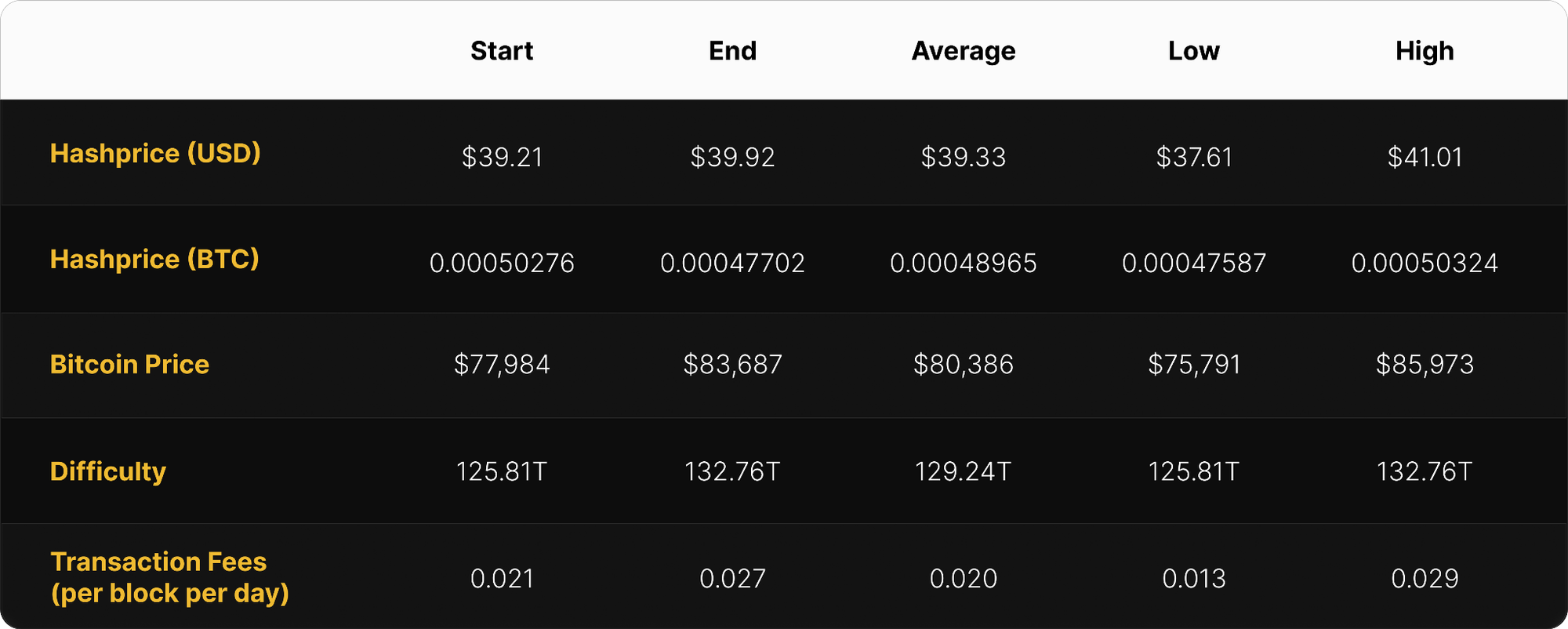
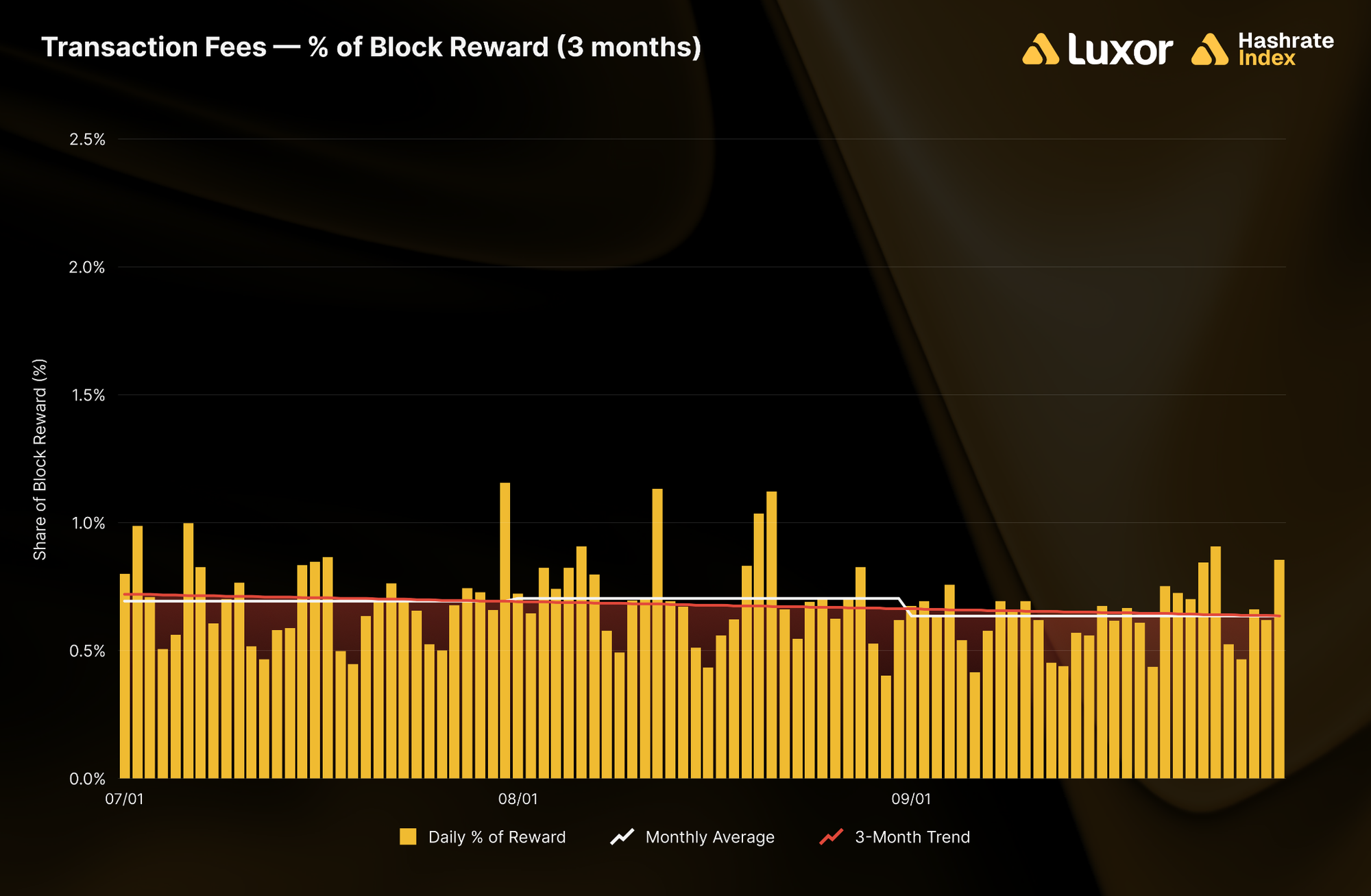
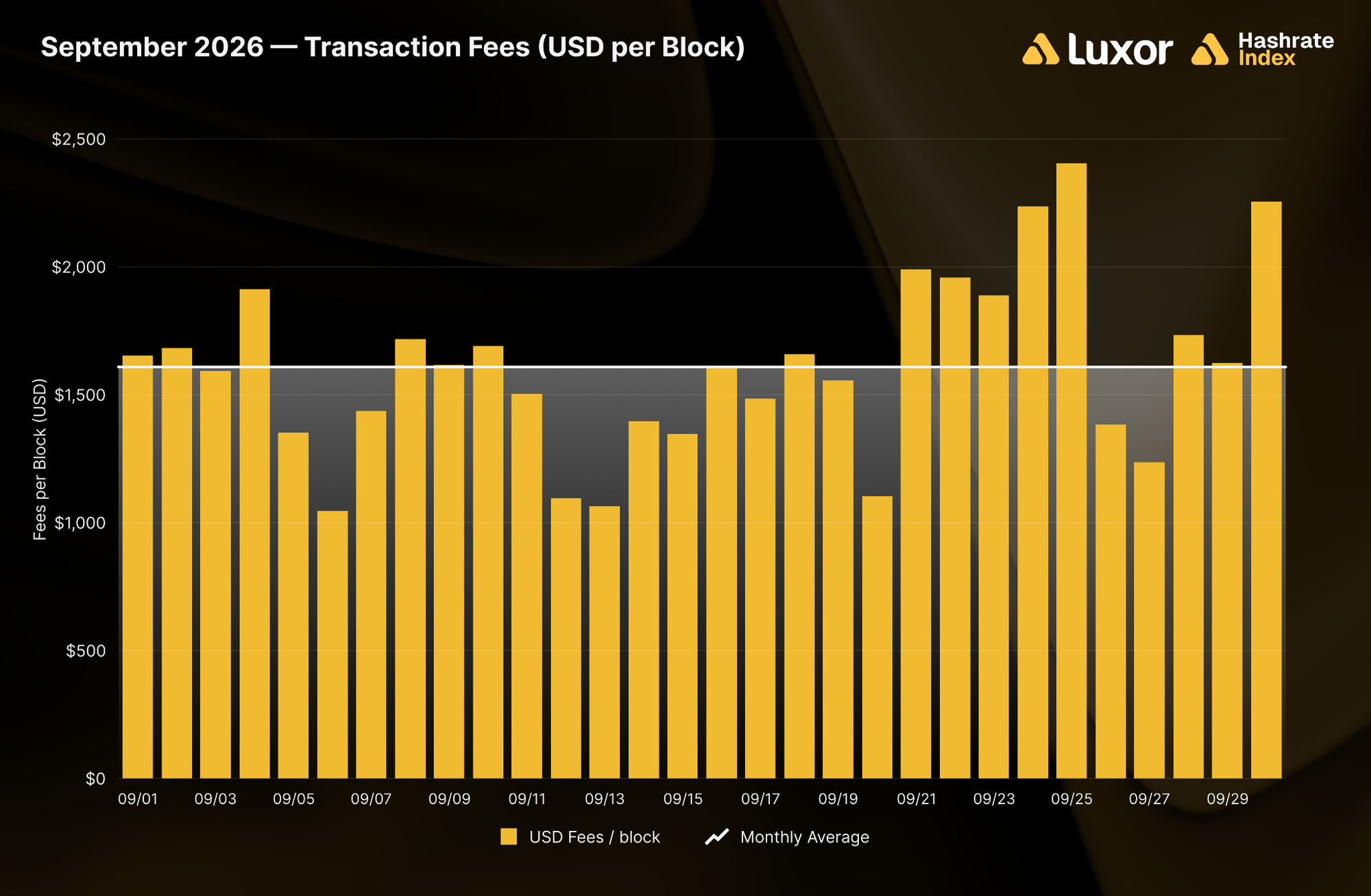
Transaction fee collection fell 10.1% to average 0.0199 BTC per block, representing the lowest level since May. Fees accounted for just 0.63% of total block rewards, marking the fifteenth consecutive month that fee revenue remained below 1%. Daily fee collections ranged between 0.013 and 0.029 BTC per block without any notable outlier blocks. In U.S. dollar terms, the average block earned approximately $1,607 in fees, a 4.8% increase driven entirely by Bitcoin’s price appreciation.
Energy Hashprice and Fleet Efficiency Tiers
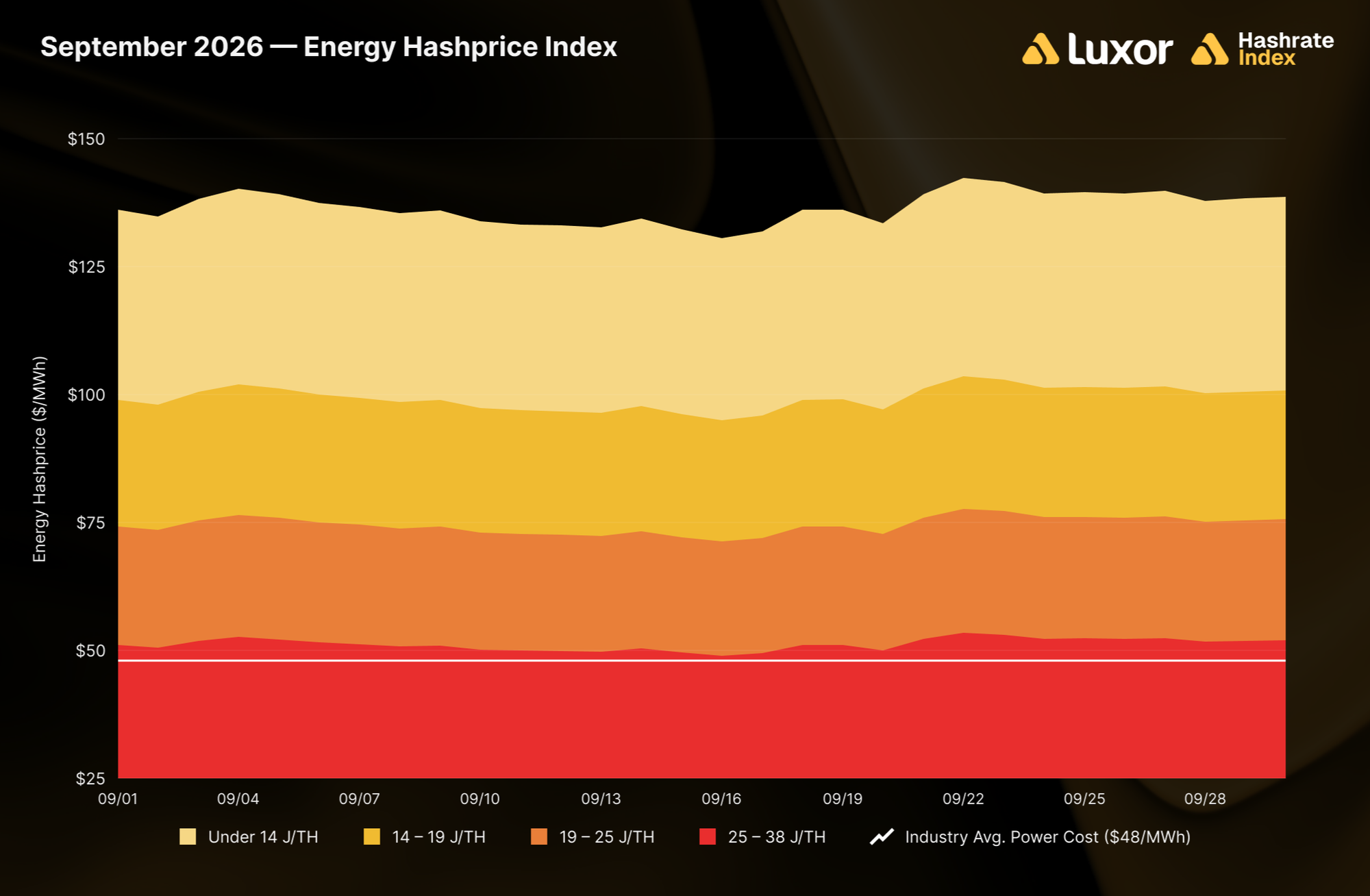
September elevated every fleet efficiency tier in tandem. Energy hashprice metrics rose across the board, with each tier’s monthly average increasing by roughly 13.6% in alignment with broader hashprice trends. Comparing these figures to an average industrial Bitcoin mining power cost of $48 per megawatt-hour, the marginal fleet bucket consisting of machines operating between 25 and 38 joules per terahash finished September above $51 per megawatt-hour on every day of the final week.
Hashrate Market Activity and Forward Trading
Analysis of the September hashrate market highlights how forward contracts traded in preceding months and how the forward curve shifted in response to market conditions. Luxor’s USD and BTC-denominated hashrate forward markets demonstrated active participation from both institutional lenders and mining enterprises.
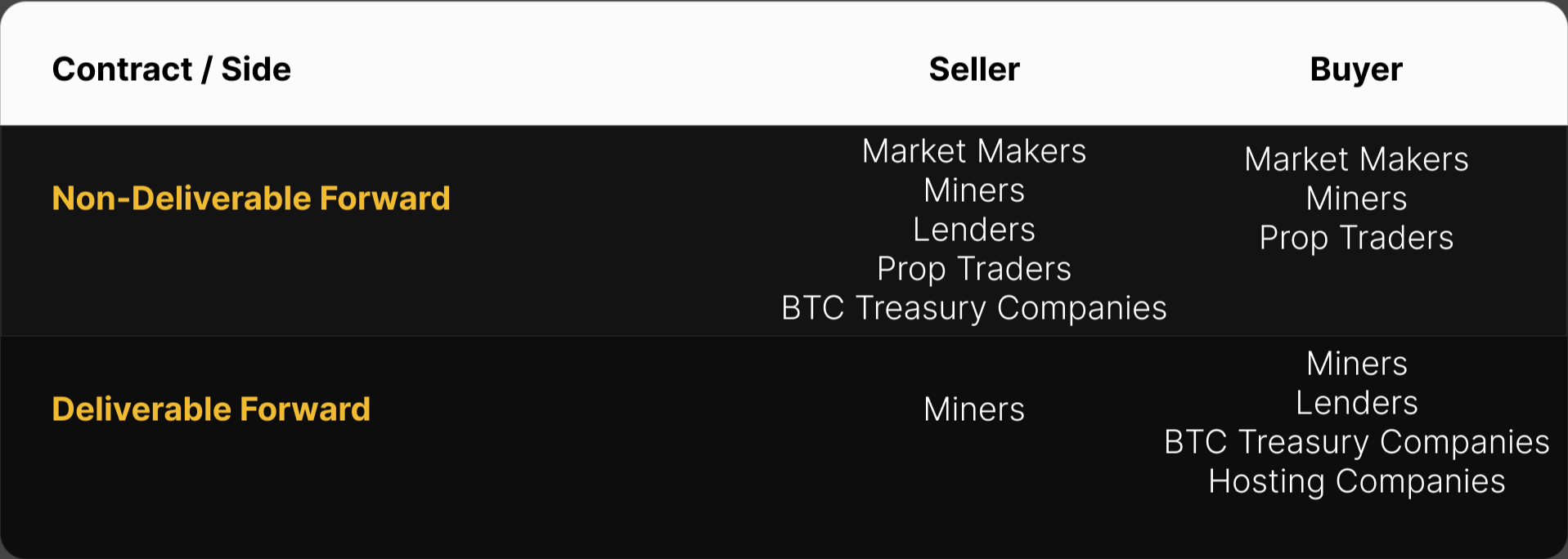
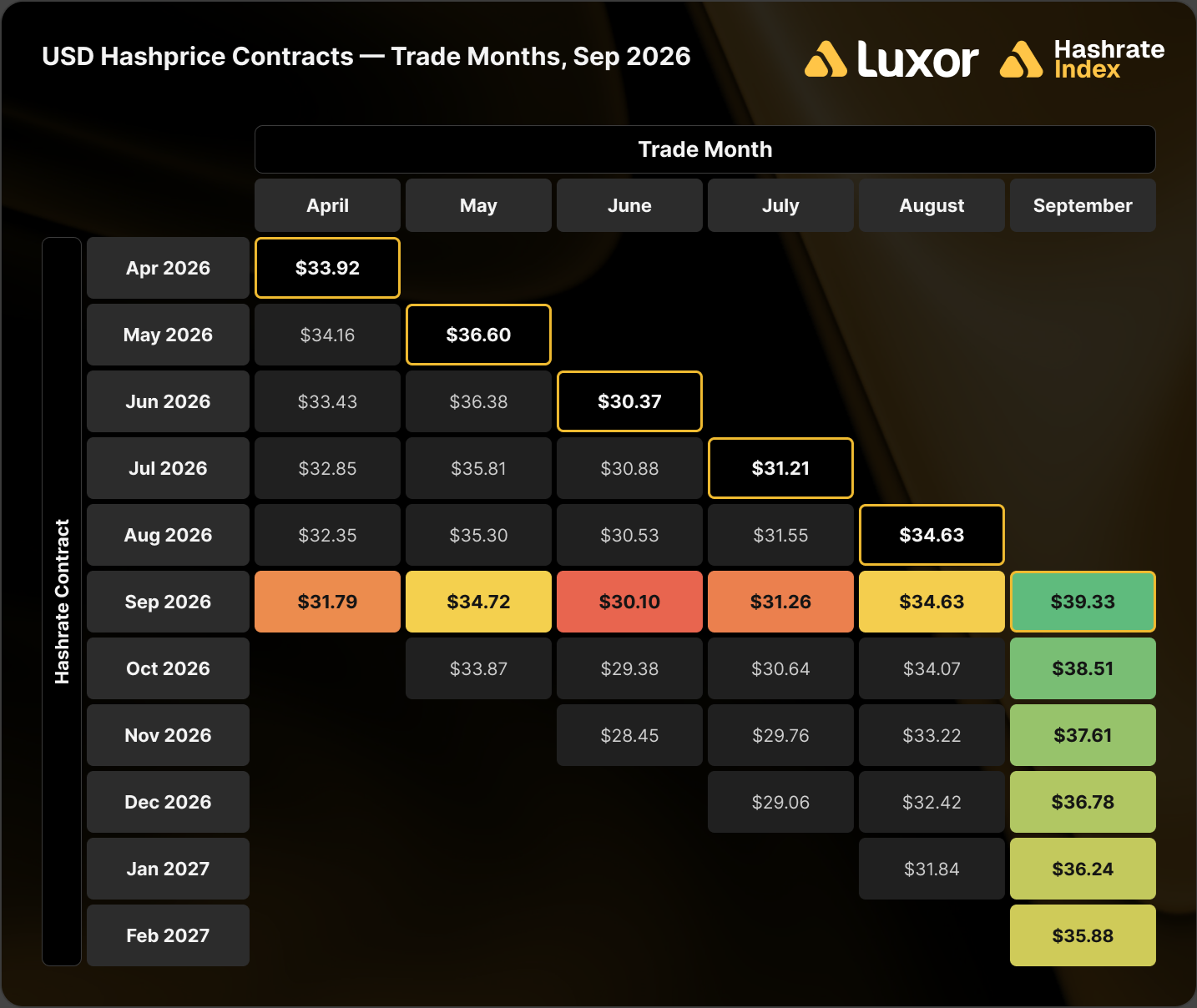
Throughout September, institutional lenders were active on the buy side of deliverable forward contracts, while public and private mining companies utilized the contracts to sell forward, secure non-dilutive financing, and fund ASIC fleet upgrades and expansions. Because deliverable forwards are prepaid, they typically trade at a discount to non-deliverable forwards to compensate buyers for credit risk and capital costs. Combining a deliverable forward with an offsetting non-deliverable forward allows market participants to lock in that spread as a fixed yield for lenders or a predictable cost of capital for miners. Throughout September 2026, this implied cost of capital ranged between 6% and 13% annualized.
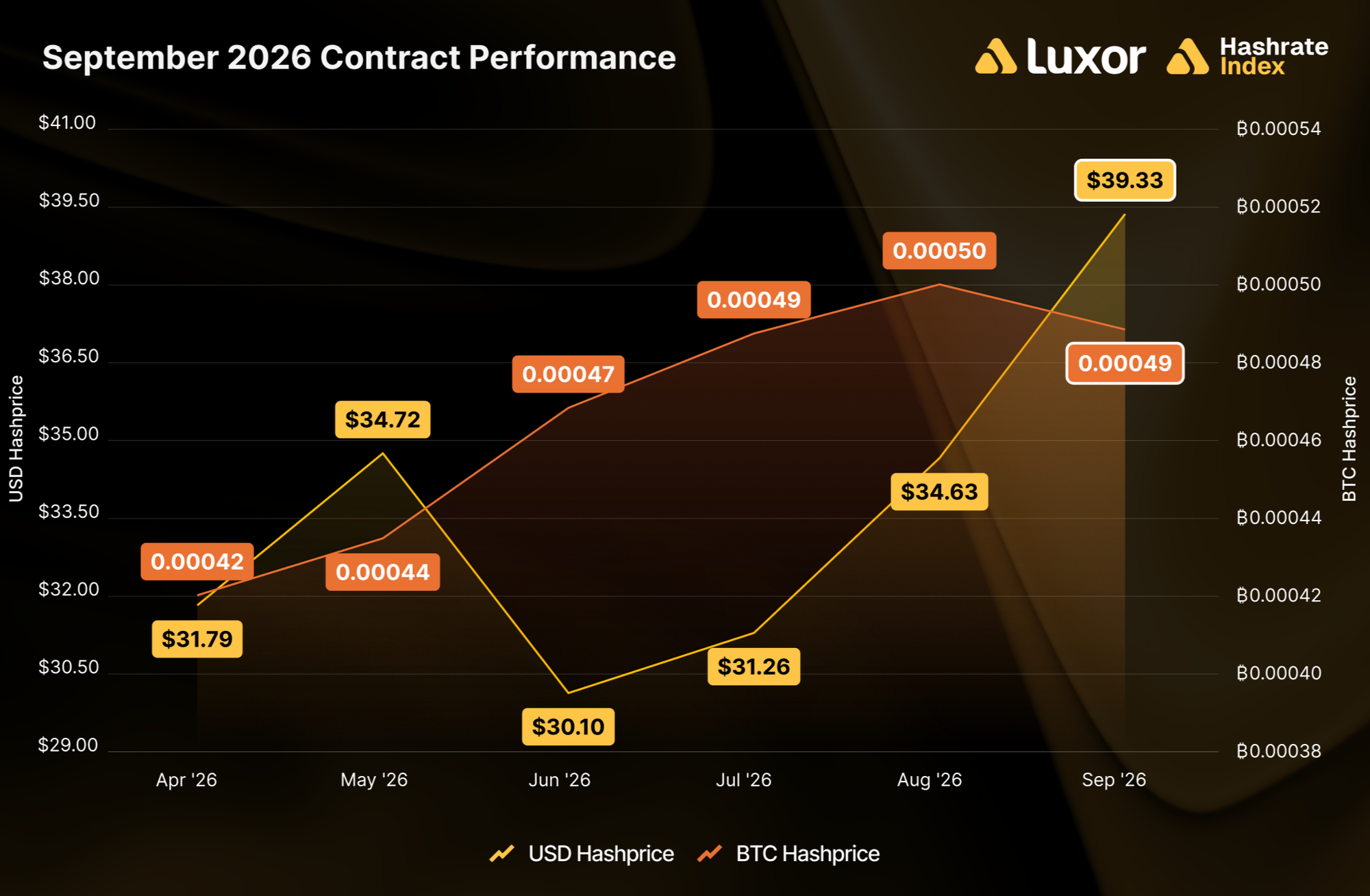
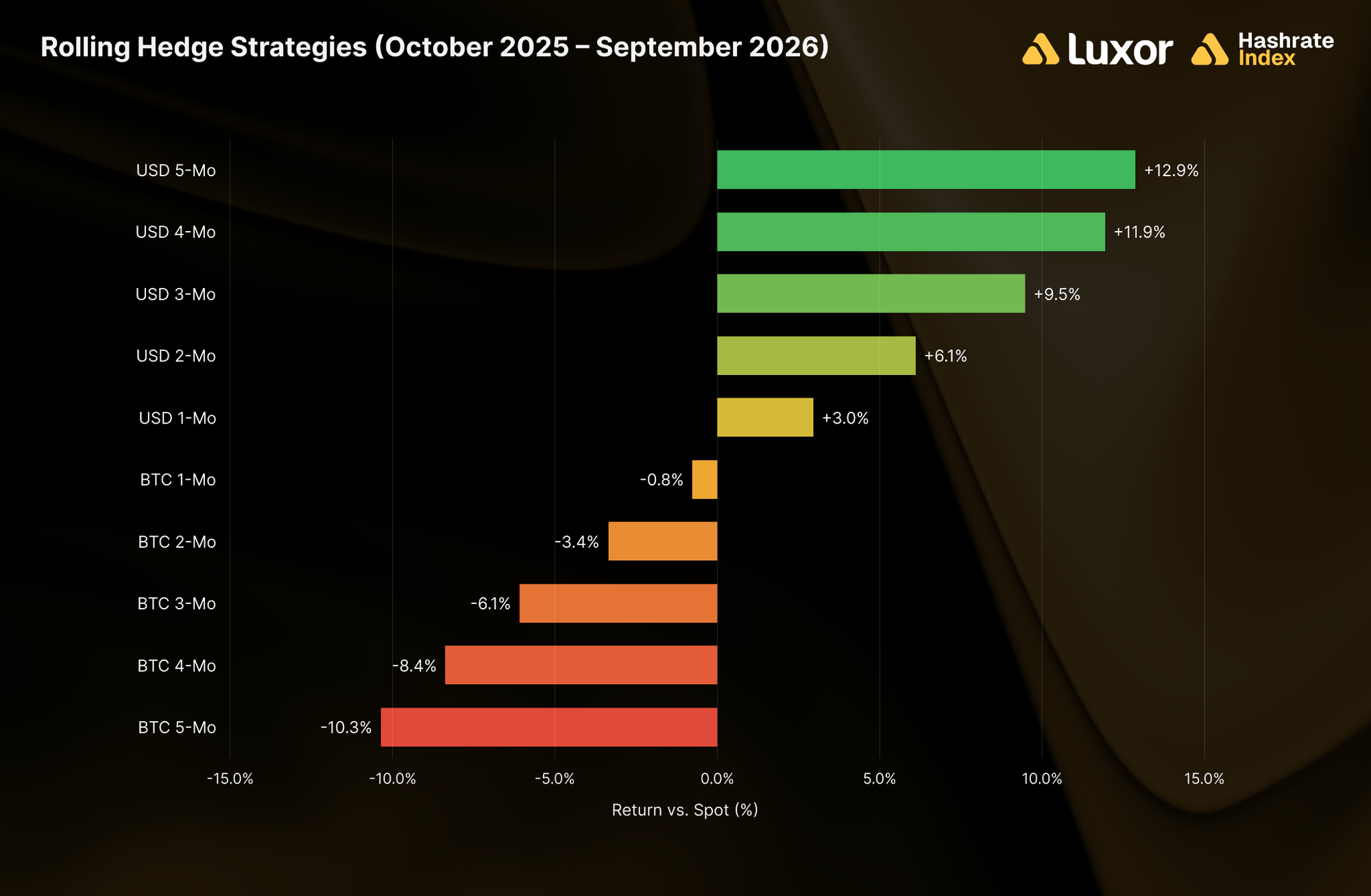
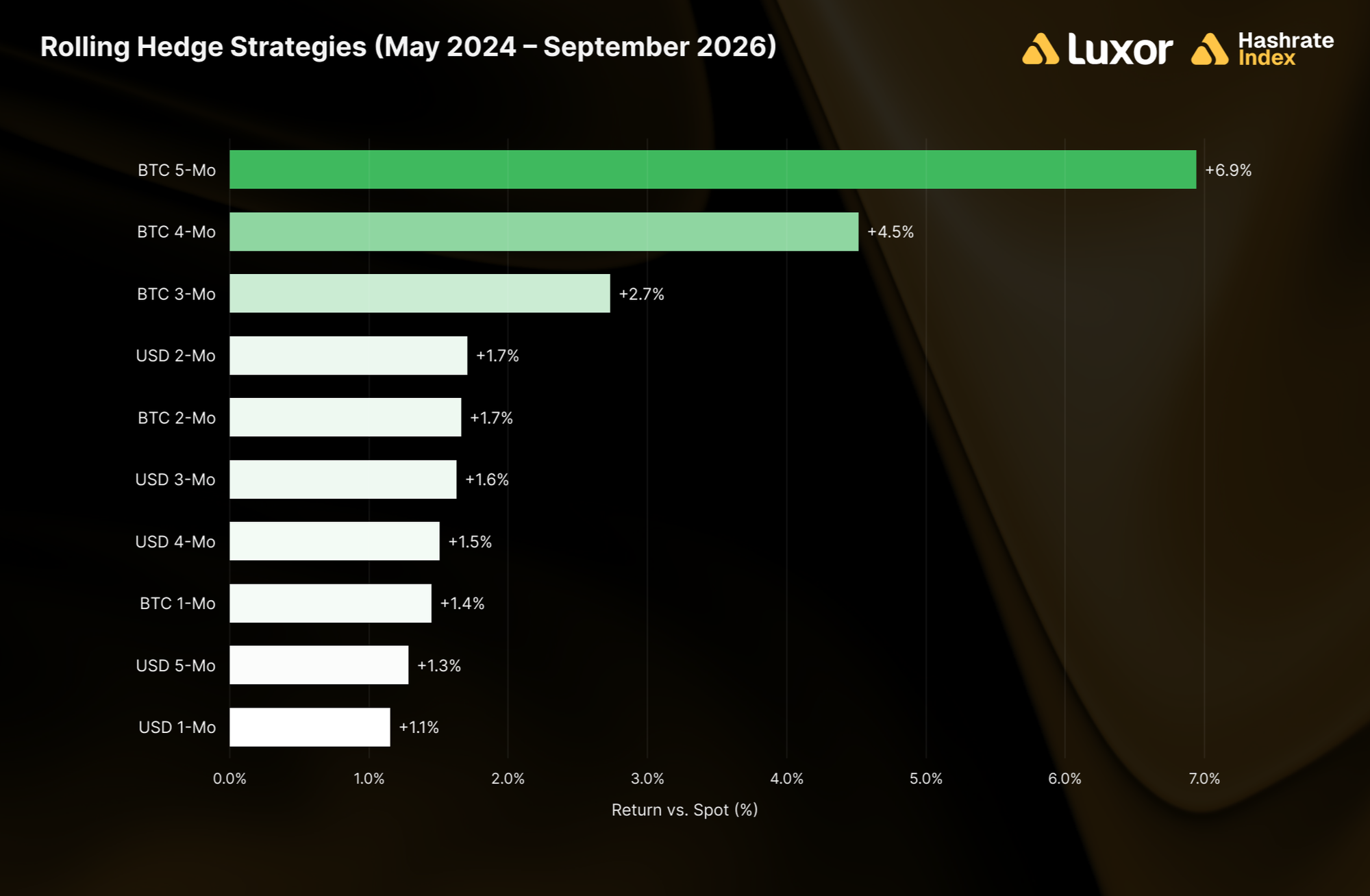
September marked the first month since July 2025 in which all dollar-denominated hedges recorded losses relative to spot settlement. Sellers of the September USD contract locked in rates between $30.10 and $34.72 per PH/s/day against a spot settlement average of $39.33.
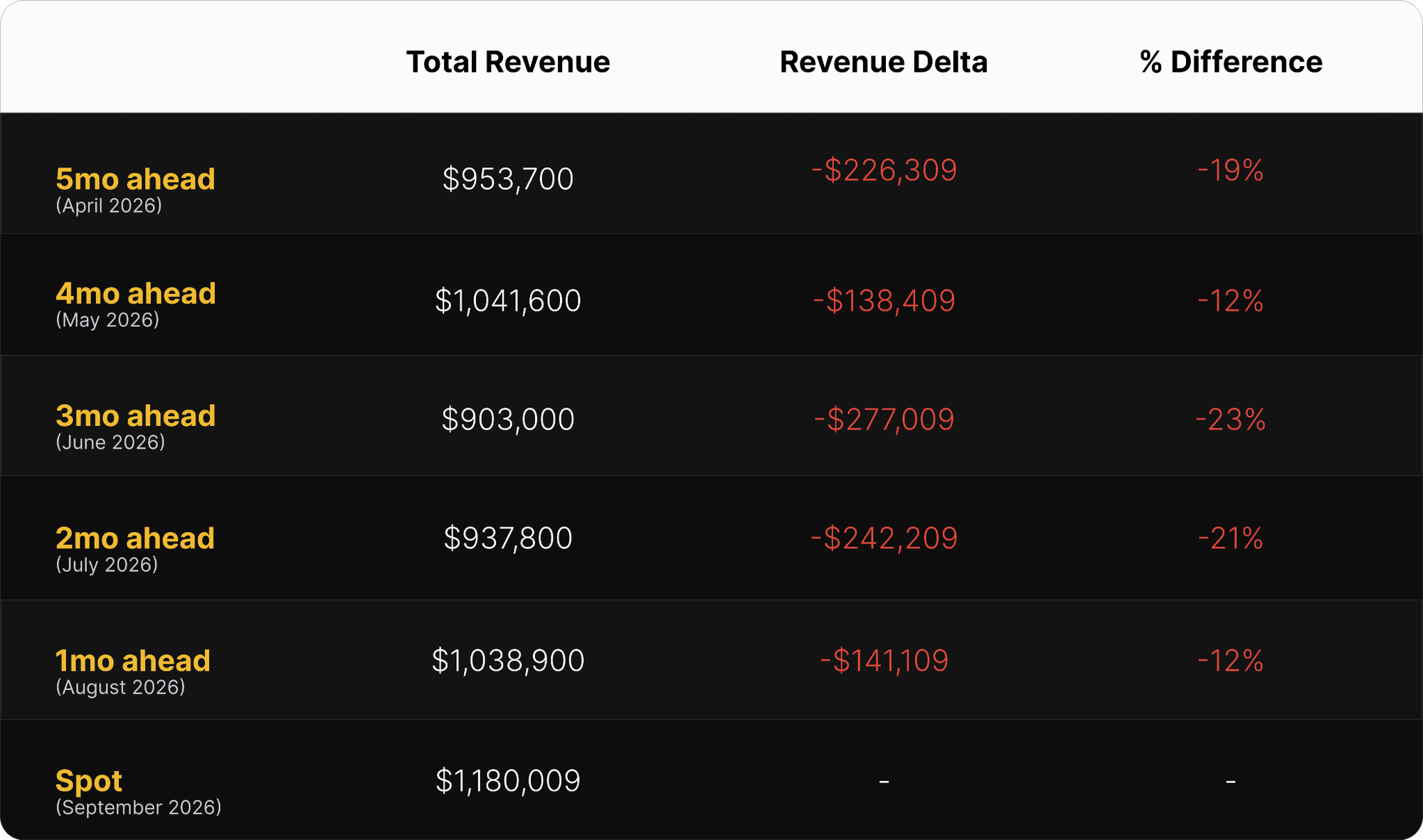
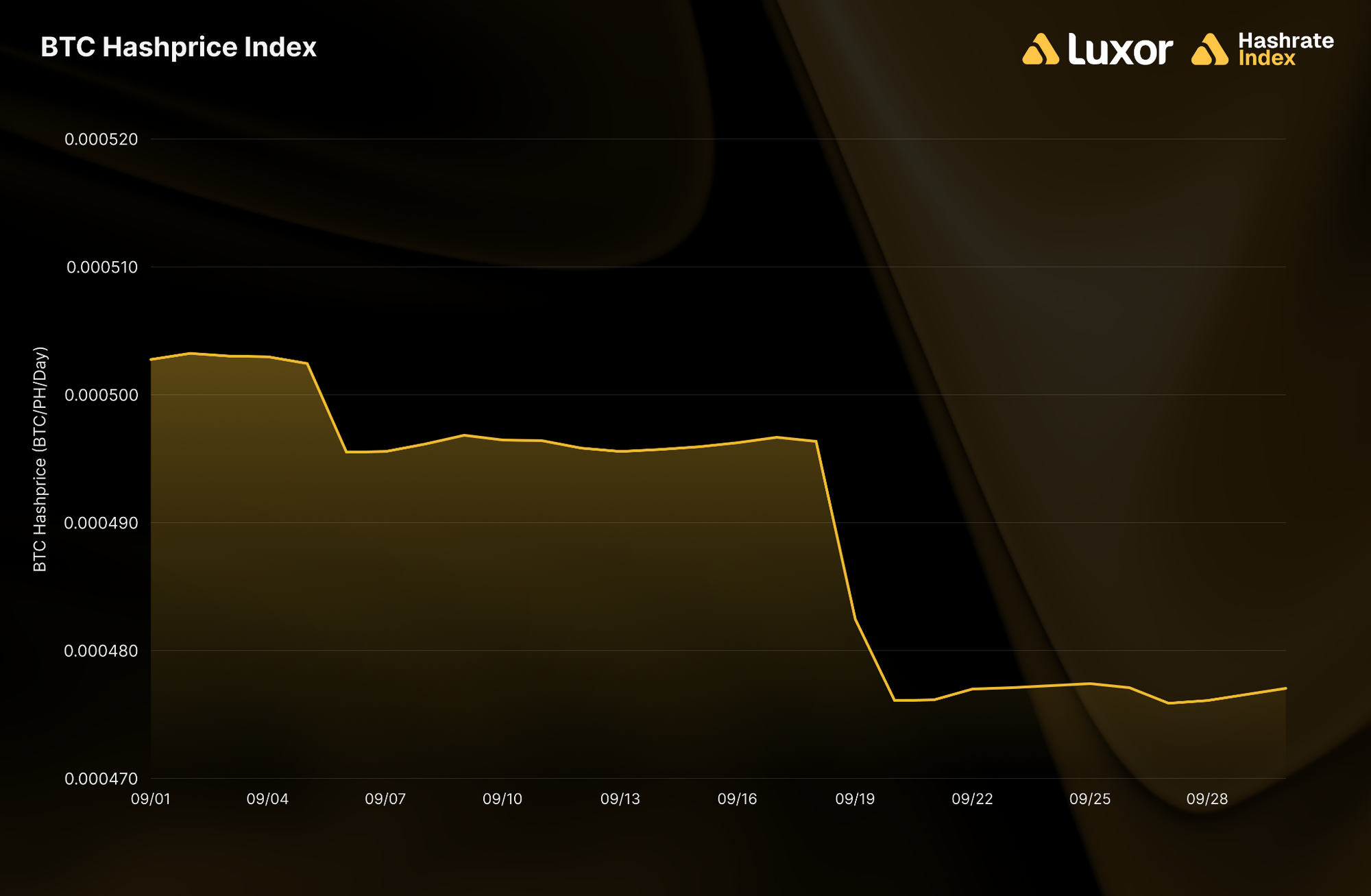
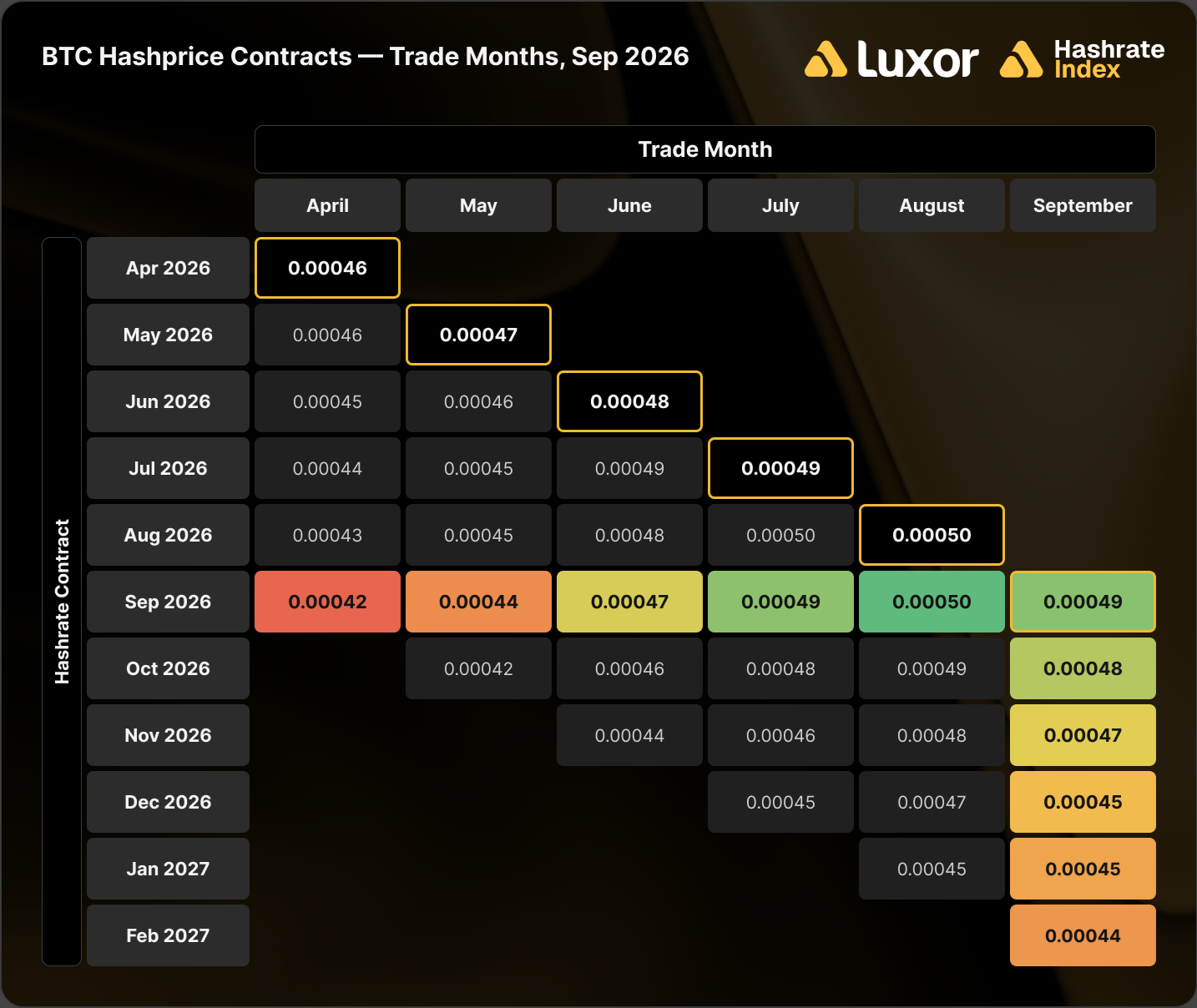
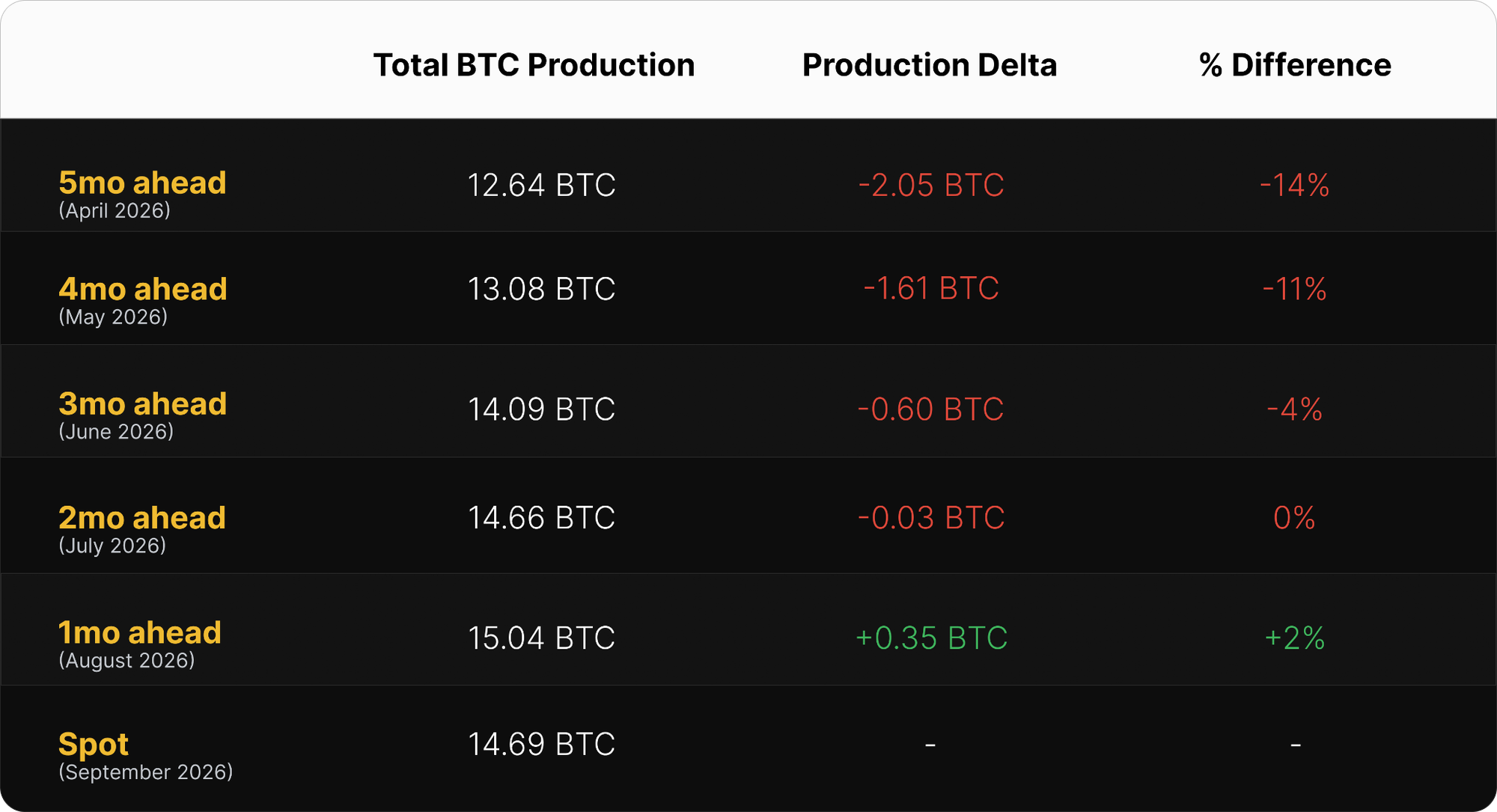
In Bitcoin terms, however, a five-month losing streak was broken. From April through August, every BTC-denominated hedge underperformed relative to spot settlement. In September, the one-month forward sale executed in August at 0.00050 BTC per PH/s/day outperformed the 0.00049 spot settlement by 2.4%. Longer-dated two to five-month horizons continued to lag behind spot settlement, maintaining a trend observed since January.
Evolution of the Forward Curve
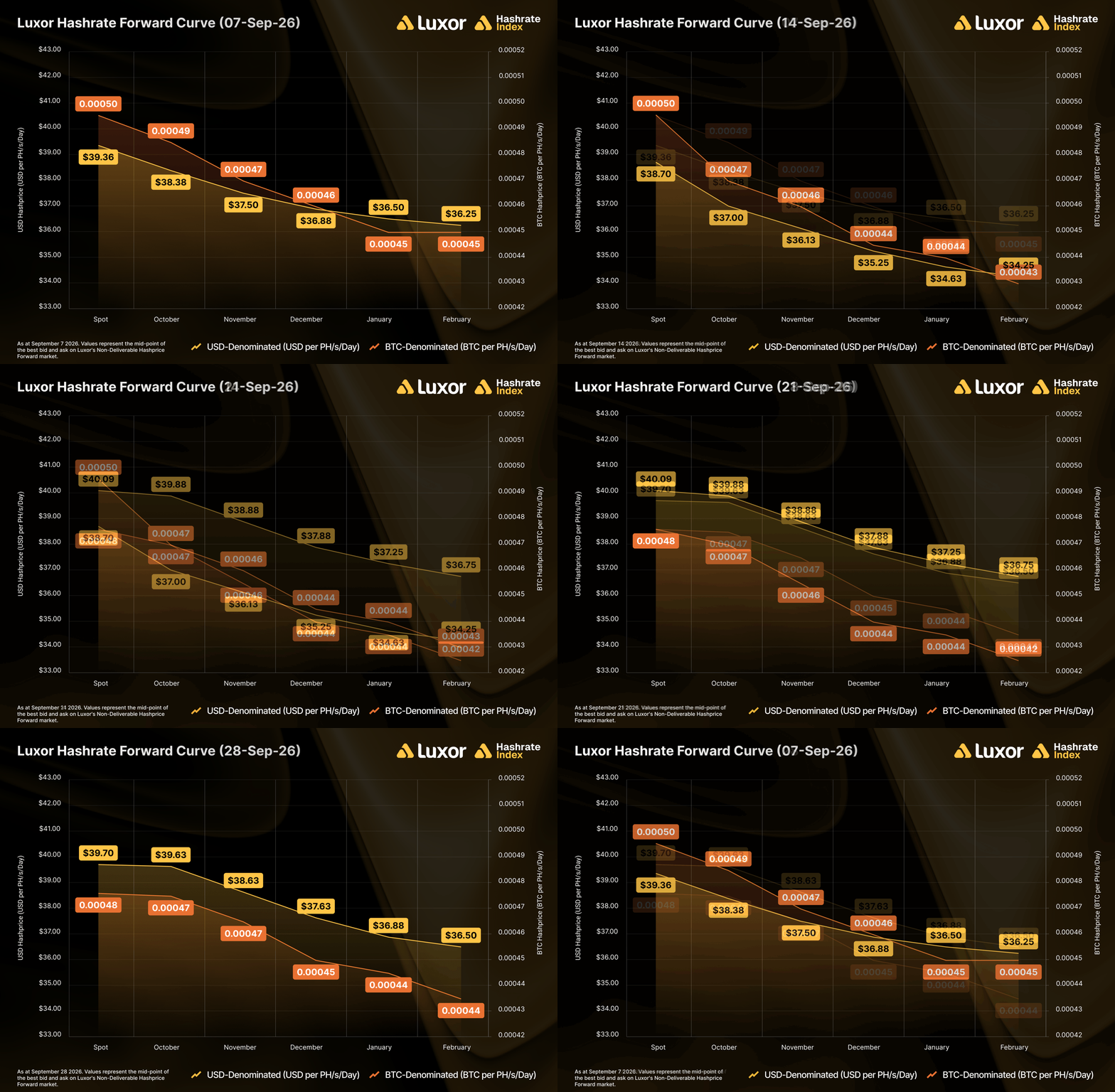
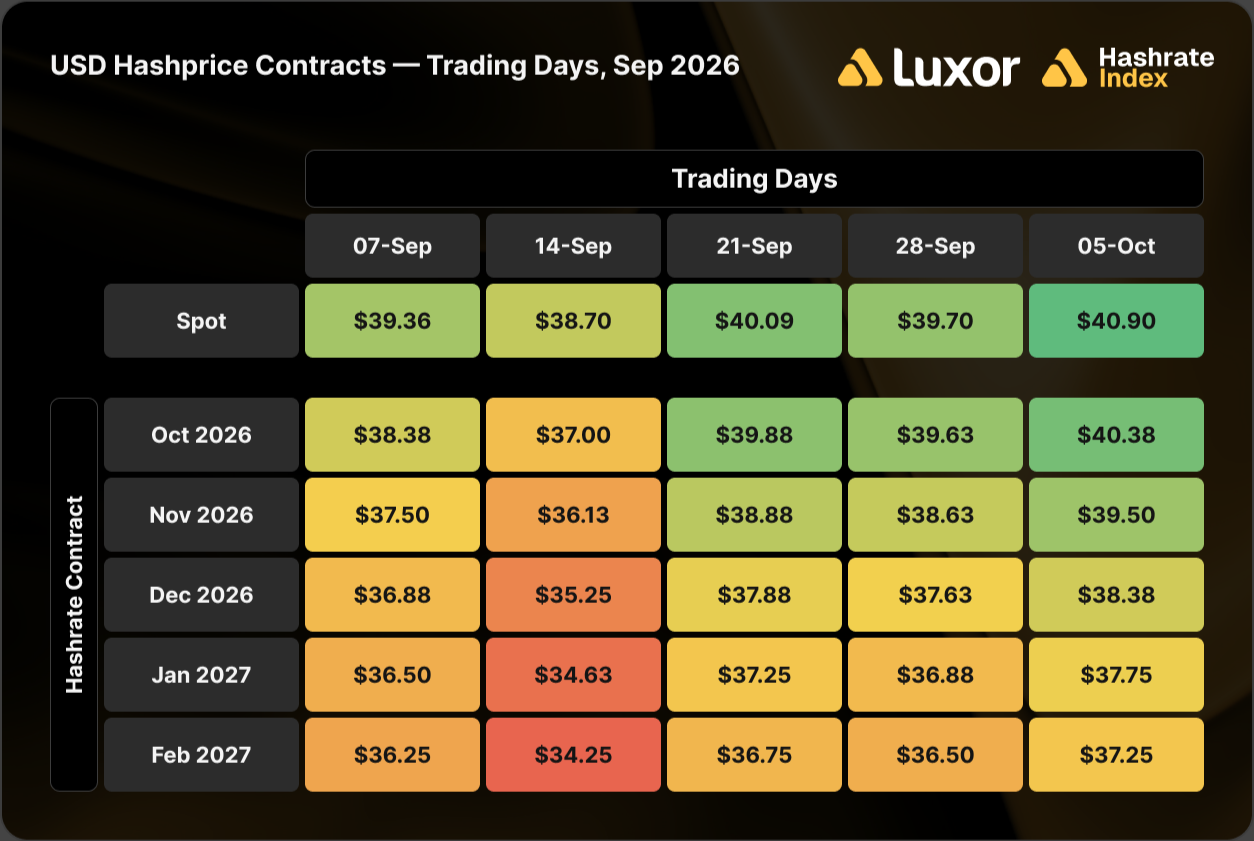
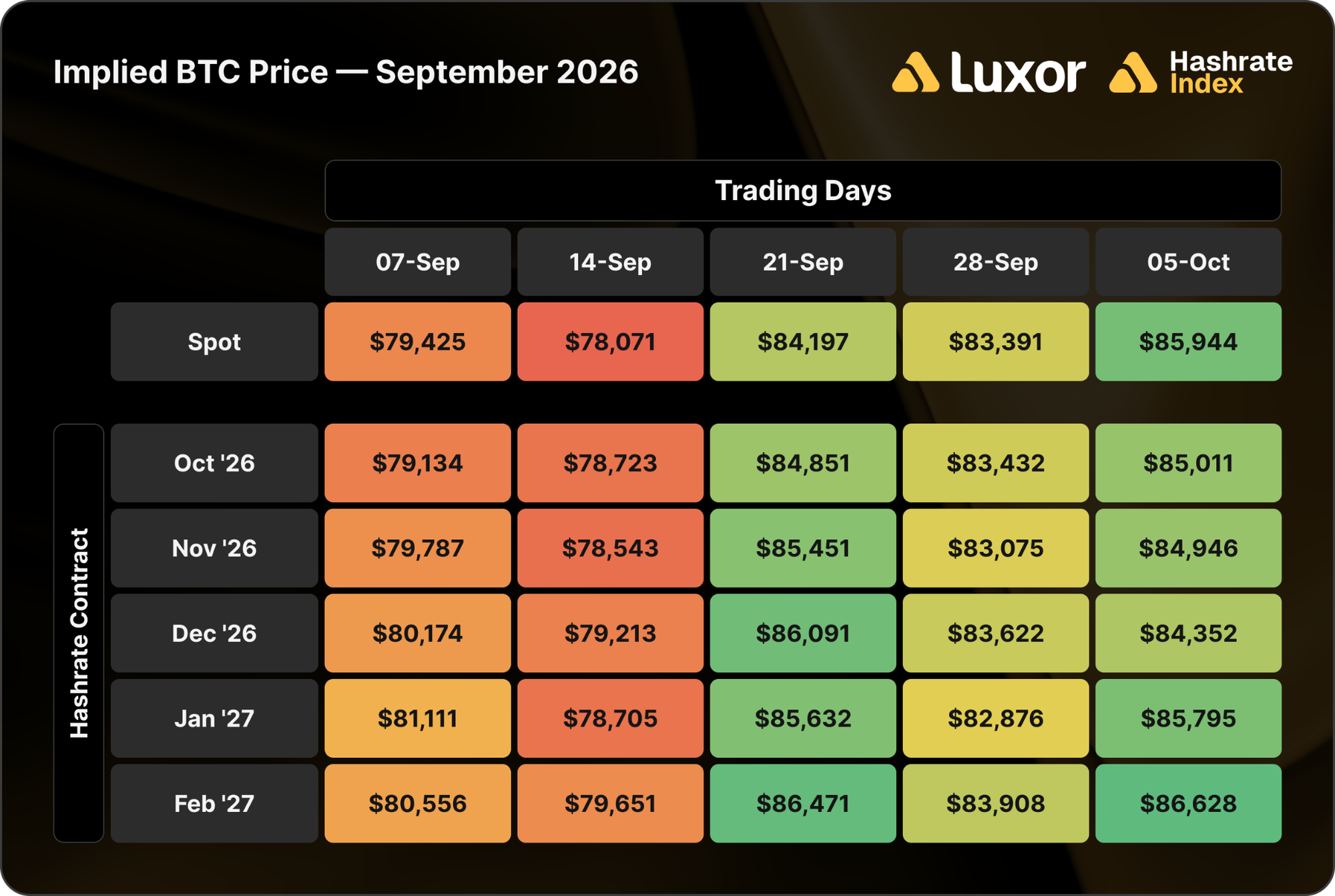
The forward curve for the subsequent five months, spanning October 2026 through February 2027, indicated that the USD-denominated hashrate forward curve rose at a slower pace than spot prices. Lock-in rates for the October-to-February strip increased by 2.8% to 5.3% between September 7 and October 5, compared to a 3.9% increase in spot hashprice, with the front of the curve experiencing the most movement.
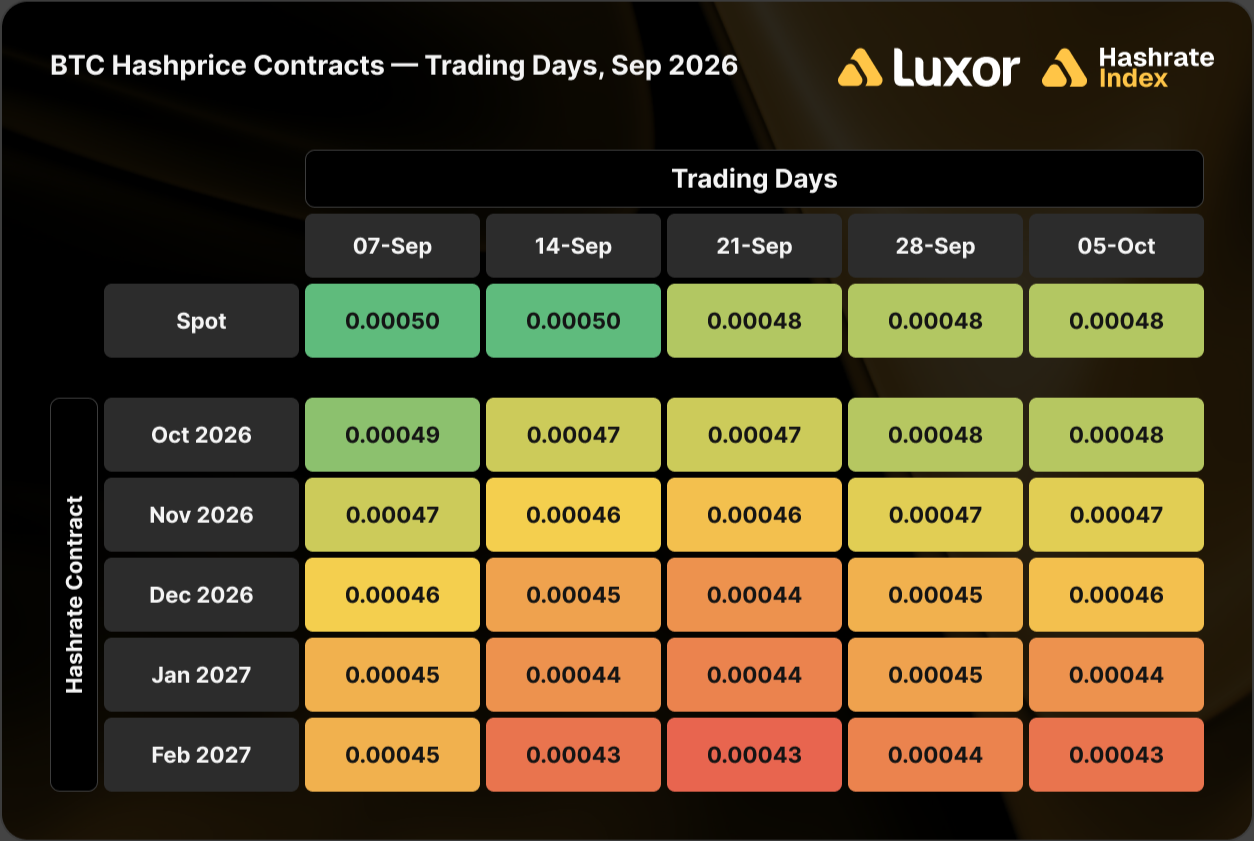
Simultaneously, the BTC-denominated hashrate forward curve declined by 1% to 4% across the strip. Together, these movements indicate that the forward market was simultaneously pricing in a higher Bitcoin price and increased network difficulty driven by expanding hashrate.
By dividing USD contract values by their corresponding BTC contract values, the implied Bitcoin price embedded in the forward hashrate market can be derived. The October contract’s implied Bitcoin price shifted from approximately $79,100 to roughly $85,000, with the broader curve settling between $84,400 and $86,600 across all five months. Assuming September’s realized average transaction fee collection of 0.0199 BTC per block, these contracts imply forward-looking expectations of continued difficulty and network hashrate growth.
The forward curve demonstrated that the market anticipated network hashrate to not only grow, but to accelerate. Implied October difficulty rose 2.1% to 133.2T, while implied February 2027 difficulty climbed 4.7% to 147.1T. In hashrate terms, the strip runs from 953 EH/s in October to 1,029 EH/s in January 2027 and 1,053 EH/s in February, indicating that the market has fully priced in network hash rates crossing the 1 Zettahash per second threshold.
Looking Ahead
As the industry transitions into October, initial market conditions have held above September’s closing levels. Through the first week of October, hashprice has averaged $40.37 while Bitcoin has held near $84,655.
With the 4CP season concluded, the seasonal patterns historically observed in October suggest continued difficulty growth. October has delivered positive difficulty growth in every year since 2022, averaging a 4.38% increase per epoch and roughly 10% across the entire month. The initial retargets of the fourth quarter indicate that the network is pacing above historical averages.
For a $40 hashprice to remain sustainable through the end of the year, Bitcoin’s spot price must continue to outpace network difficulty as expansion resumes. Luxor’s Hashrate Forward Market currently prices an average hashprice of $36.65 or 0.00044 BTC per PH/s/day over the October 2026 through March 2027 window, offering miners a mechanism to lock in forward revenues and secure predictable operational cash flows.
 Cryptocurrency Mining
 Cryptocurrency Mining
 Cryptocurrency Mining