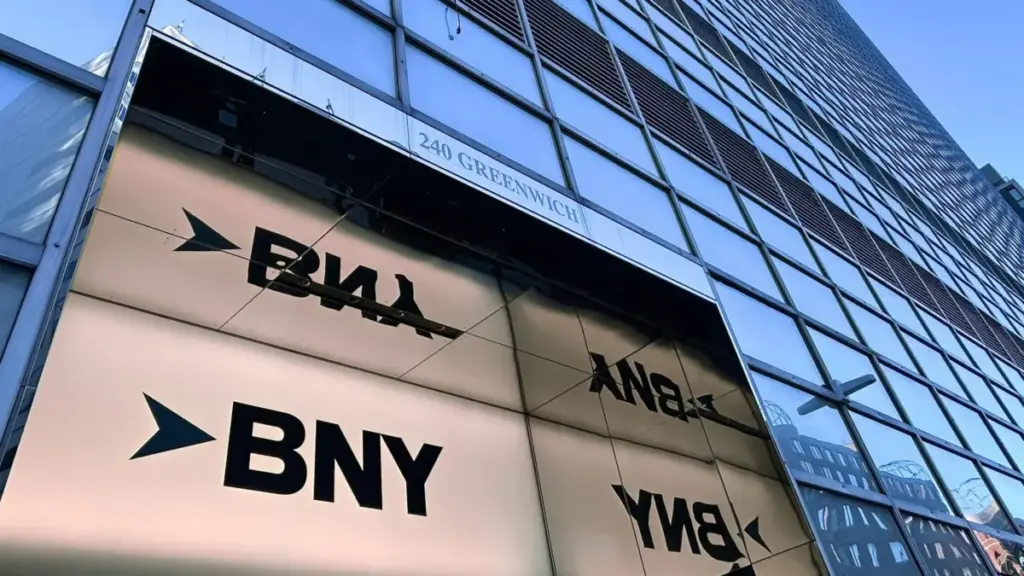
In a significant milestone for institutional finance, BNY—the world’s largest custody bank—and trading giant Citadel Securities announced Tuesday that they have successfully completed a transaction utilizing tokenized U.S. Treasuries. The joint initiative highlights how emerging blockchain technology could fundamentally transform how Wall Street firms manage and transfer vital assets, bridging the operational gap between trade settlement and short-term financing.
The transaction centered on collateral management, a critical mechanism underpinning the stability and liquidity of modern financial markets. Every day, major banks, market makers, and trading firms pledge U.S. government bonds as collateral to secure short-term loans, fund active trading strategies, and manage risk. However, traditional operational workflows required to move these bonds between various institutional accounts, clearinghouses, and settlement systems can often be cumbersome and time-consuming. These administrative delays frequently tie up valuable assets that could otherwise be deployed rapidly to seize new market opportunities or optimize liquidity.
This collaborative test comes at a time when Wall Street is increasingly looking beyond legacy infrastructure, exploring ways to bring traditional financial assets onto distributed ledger technologies. Over the past several years, prominent financial institutions—including asset management powerhouses like BlackRock and Franklin Templeton, alongside global investment banks like JPMorgan—have embraced tokenized funds and securities. These early adopters are betting heavily that blockchain architecture can dramatically shorten settlement cycles, automate routine administrative processes, and make traditionally illiquid or slow-moving assets far more agile.
Putting Tokenized Treasuries to Work
The primary objective of the transaction between BNY and Citadel Securities was to demonstrate the practical viability of moving tokenized government bonds seamlessly from the settlement phase directly into financing workflows. By successfully executing this workflow, the firms aimed to prove that market participants can ultimately reuse their collateral much faster, unlocking trapped capital and freeing up crucial cash reserves to support other trading activities in real time.
"Efficient movement of high-quality collateral is fundamental to well-functioning markets," said Dan Doherty, digital assets operations lead at Citadel Securities, in a public statement following the announcement. He emphasized that eliminating friction and reducing operational delays across the entire trade lifecycle can drive substantial improvements in how institutional markets function on a daily basis.
The successful completion of this workflow underscores the growing momentum behind real-world asset tokenization within traditional banking and trading sectors. As financial institutions look for ways to optimize operational efficiency and reduce counterparty risk, technological solutions that bridge traditional finance with distributed ledgers are moving from conceptual research into live testing and implementation.
Expanding Digital Capabilities and Operating Hours
Building upon the success of this high-profile transaction, BNY outlined broader strategic plans to scale its digital infrastructure. The custody bank announced that it intends to introduce a wider suite of digital cash solutions and tokenized deposit capabilities designed specifically to support blockchain-based settlement and financing ecosystems going forward.
At the same time, BNY is moving to modernize its conventional infrastructure to meet the demands of an increasingly globalized and around-the-clock financial marketplace. The bank stated that it expects to extend the operating hours of its traditional settlement systems for Federal Reserve-eligible securities and U.S. triparty transactions. These enhancements are targeted to reach European and Asian trading hours as early as next year.
Triparty transactions represent a cornerstone of short-term institutional financing, operating as a specialized repurchase agreement where a neutral custodian bank like BNY manages the collateral pool between cash borrowers and lenders to mitigate default risk. By expanding the availability of these critical settlement windows, the bank aims to create a more continuous operating environment for global market participants.
"By using a tokenized representation of a U.S. Treasury across both settlement and financing, we are enabling a more connected, efficient, and always-on financial system," said Carolyn Weinberg, chief innovation and market transformation officer at BNY, in a statement detailing the bank’s long-term digital roadmap.
 Cryptocurrency News
 Cryptocurrency News
 Cryptocurrency News