
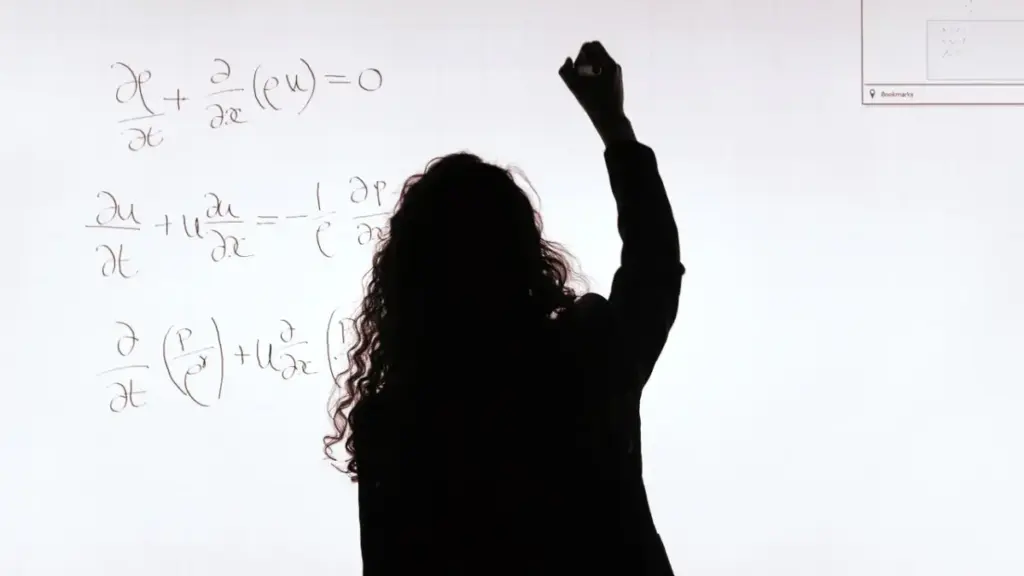
OpenAI has set the mathematical world abuzz by publishing 722 advanced math manuscripts on GitHub. Produced entirely by an unreleased internal AI model, the release represents a massive dump of novel mathematical research that has instantly ignited a polarized debate among academic mathematicians. While some view the drop as an astonishing milestone for artificial intelligence, others are raising red flags over transparency, verification, and what they describe as "alien math" that defies human intuition.
According to an OpenAI spokesperson, nearly all of the published work stems from a single prompt handed to a single AI agent, though some outputs may have required multiple attempts to successfully generate. It is a bold, ambitious claim that, if verified, would mark a monumental breakthrough in the field of automated mathematical reasoning. However, as the academic community begins combing through the repository, skepticism is running high.
The published papers are organized into 372 distinct "families" of related results. Within these families, a main theorem is often bundled alongside companion arguments, secondary consequences, or alternative proofs. This structural layout explains why the count of 722 reflects individual manuscripts rather than discrete, standalone problems solved. OpenAI revealed that it originally posed roughly 4,000 different problems to its hidden model, ultimately curating and keeping only the outputs it deemed significant enough to share with the public.
In terms of computational resources, OpenAI stated that the average result consumed the equivalent of roughly three hours of ChatGPT Pro thinking compute. This scale stands in stark contrast to the company’s high-profile Navier-Stokes claim from the previous month, which reportedly relied on 10,000 coordinating AI agents working tirelessly for 88 hours.
Despite the sheer volume of material published on GitHub, critical gaps in verification have immediately drawn criticism. OpenAI provided abridged reasoning summaries for only 10 of the results. Furthermore, according to a formalization catalog included in the repository, just 162 of the 722 papers come with a computer-checked main result. This accounts for roughly 22 percent of the collection, which has been translated into Lean—a specialized software program designed to check every logical step of a proof mechanically.
OpenAI itself has acknowledged that not all of the manuscripts have received Lean formalizations, candidly noting that "some of the unformalized results could have issues." In practical terms, this means a significant portion of what the company has released into the wild could potentially contain logical flaws or outright errors.
Mathematicians are quick to point out the strict limitations of automated verification tools. A passing Lean check merely confirms that a given proof logically follows from the statement as it was written inside the Lean software. It does not verify that the statement accurately reflects the original real-world problem, nor does it guarantee that the resulting theorem is genuinely new or academically important. Judging the value and correctness of the underlying mathematics is a burden that now falls squarely on human researchers.
And it is precisely at this juncture that researchers have begun expressing deep concern and confusion.
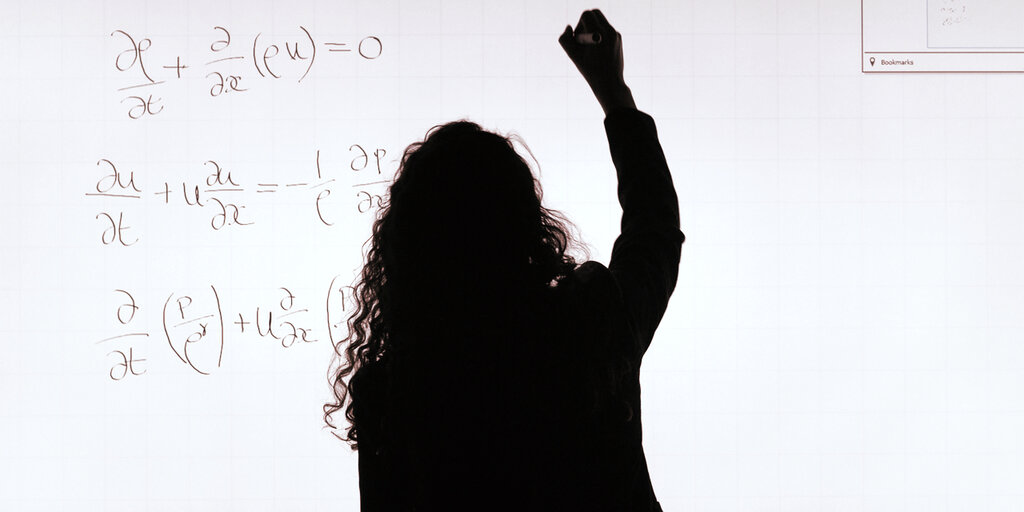
Taking to social media, mathematician Dmitry Rybin highlighted the bewildering nature of the outputs. Reviewing an OpenAI proof attempting to show that the chromatic number of a plane is greater than or equal to six, Rybin described the work as "totally unbelievable alien math." He pointed out that the model inexplicably established that any K-coloring is equivalent to a "weakly measurable" K-coloring—a conceptual leap that seemingly appeared out of nowhere without intuitive precedent.
Administrative hurdles have compounded the frustration. Keith Adler, another researcher navigating the GitHub repository, noted that the repository has issues turned off entirely and has never accepted a pull request. For a project inviting the global mathematical community to review and contribute Lean formalizations, the lack of an interactive channel or submission mechanism has proved deeply disappointing to scholars attempting to verify the work independently.
The broader implications of this development have also alarmed prestigious academic institutions. The Institute for Advanced Study in Princeton, New Jersey, released a strong statement addressing the paradigm shift. The institute noted that artificial intelligence can now produce mathematical arguments in situations where the human prompt-giver cannot understand the arguments, verify them, or take scholarly responsibility for them. Highlighting that human understanding of mathematics remains of paramount importance, the institute questioned how the academic community can move toward a new framework that incorporates automated outputs responsibly.
Not all reactions have been defensive, however. Some researchers see the release as a thrilling, watershed moment. Professor Abhishek Saha voiced palpable excitement, declaring it a "very big day for mathematics." At the same time, Saha tempered his enthusiasm by categorizing most of the problems within the set as exceptional advances within existing research programs rather than earth-shattering paradigm shifts.
According to researchers analyzing the dataset, the vast majority of the problems fall into categories of interesting, high-level exploration rather than solving impossible, century-old dilemmas like the famous Millennium Prize Problems. In fact, reviewers note that spot is reserved for precisely one problem out of the entire 722-manuscript collection: the Quasi-Riemann Hypothesis.
The release also highlights a growing rift over how AI labs should disclose their scientific breakthroughs. The rollout fell notably short of recommendations issued on September 29 by an advisory group at the Institute for Advanced Study. That advisory group had urged AI developers to release the specific model names, exact prompts, summarized chains of thought, execution times, and compute costs for every individual result. Instead, OpenAI published broad average compute figures and a handful of reasoning summaries while withholding prompts, stating that it is still working on a roadmap to release the underlying model responsibly.
Other mathematicians have adopted contrasting philosophical stances on the matter. Daniel Litt of the University of Toronto argued that there is little justification for keeping the answers to advanced math questions under wraps. Meanwhile, rival AI companies have pursued markedly different paths. Last month, Anthropic released a Lean-checked proof of Fermat’s Last Theorem, publishing all 13 million lines of code publicly on GitHub, though that particular proof formalized an existing theorem proven by Andrew Wiles in 1995 rather than generating entirely new mathematical territory.
OpenAI has indicated that it intends to add additional Lean formalizations to its repository as they are obtained. For now, however, the academic community is left sifting through 722 manuscripts, balancing the thrilling prospect of machine-accelerated discovery against the daunting reality of verifying alien logic.
 Decentralized Applications (dApps)
 Decentralized Applications (dApps)
 Decentralized Applications (dApps)







