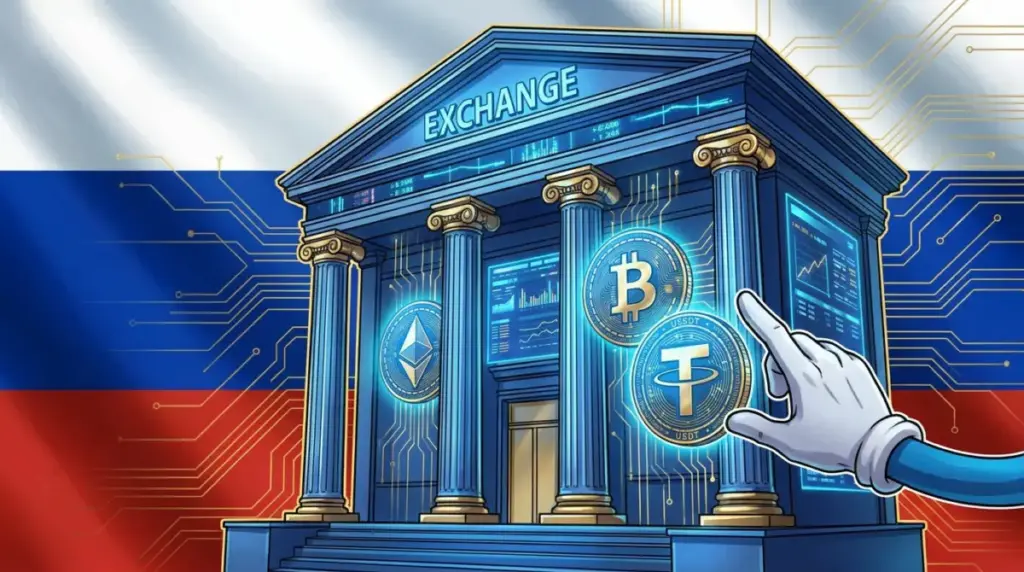
Russia’s central bank has finalized a comprehensive set of rules that will formally allow authorized domestic exchanges to offer prominent digital assets—specifically Bitcoin (BTC), Ether (ETH), and Tether USDt (USDT)—to retail investors starting November 17. The regulatory milestone marks a decisive shift in how the nation integrates digital assets into its official financial architecture, moving away from decentralized workarounds toward heavily monitored, centralized market frameworks.
Under the newly established regulatory framework, non-qualified retail investors will be permitted to purchase up to 300,000 rubles, which amounts to approximately $3,700, in cryptocurrency annually. This acquisition cap applies to each individual intermediary they utilize, encompassing a broad range of authorized financial institutions such as traditional brokers, asset managers, and specialized crypto exchange providers. Meanwhile, qualified investors who meet specific wealth and experience thresholds will face no such purchase limits. However, a crucial consumer protection measure applies universally: all investors, regardless of their classification, must successfully pass a mandatory test evaluating their understanding of digital asset risks before they are permitted to execute any trades.
This latest regulatory directive builds directly upon overarching legislation signed by Russian President Vladimir Putin on August 4. That foundational law established the legal bedrock for a heavily regulated domestic cryptocurrency market operating under the direct oversight of the central bank. The legislative push has moved swiftly through the administrative pipeline, signaling a coordinated effort by Moscow to bring digital assets under state supervision.
Just a week after President Putin signed the legislation into law, the Bank of Russia published its draft regulations on August 11. These preliminary documents explicitly identified Bitcoin, Ether, and Tether as the only digital assets initially eligible for public trading on domestic platforms. Selection criteria for these cryptocurrencies were rigorous, based primarily on substantial market capitalization, robust average daily trading volume, and a verifiable minimum of five years of established price history on foreign exchanges.
The primary legislation formally took effect on September 1. Following this rollout, the Bank of Russia authorized Sberbank—the country’s largest financial institution—to begin offering comprehensive crypto exchange services to its massive client base in October.
These regulatory developments are unfolding concurrently with preparations at the Moscow Exchange, Russia’s largest securities exchange and a major publicly traded company. The institution has announced plans to launch its own cryptocurrency trading operations on December 1. Initially, the exchange will roll out pilot transactions focusing exclusively on the three approved cryptocurrencies, testing market infrastructure and investor demand under the watchful eye of regulators.
Russia to Restrict Peer-to-Peer Crypto Trading
While the Russian government is actively expanding public access to cryptocurrencies through tightly regulated and compliant domestic platforms, it is simultaneously closing the net on financial transactions occurring outside of these approved channels.
Direct peer-to-peer cryptocurrency trading will be strictly prohibited starting July 1, 2027, according to directives issued by the Bank of Russia. Furthermore, transfers from regulated domestic digital accounts directly to self-custody wallets have already been banned, cutting off pathways that allow individuals to hold their digital assets independently of institutional intermediaries. Alongside these structural controls, the country maintains an absolute prohibition on using cryptocurrency as a medium of exchange to pay for goods and services domestically, ensuring that the ruble remains the sole legal tender for commercial transactions within the Russian Federation.
 Crypto Regulation & Policy
 Crypto Regulation & Policy
 Crypto Regulation & Policy