
In the immediate aftermath of the failed CLARITY cloture vote in the United States Senate, financial regulators moved swiftly to reshape the regulatory landscape for digital assets. Both the Securities and Exchange Commission (SEC) and the Commodity Futures Trading Commission (CFTC) stepped into the legislative vacuum, introducing a series of independent rules, exemptions, and guidance frameworks tailored to the evolving crypto markets.
Just two days after the Senate vote concluded without the necessary support, the SEC unveiled a five-year exemption designed to permit the issuing and trading of stock tokens. The regulatory shift immediately catalyzed private sector adoption. OXK teamed up with Intercontinental Exchange (ICE) to launch trading operations encompassing 63 New York Stock Exchange-listed stocks. Simultaneously, Securitize launched 12 tokenized assets known as Securitize Stocks, bringing major traditional equities such as Apple, Nvidia, and Microsoft onto on-chain infrastructure.
Alongside tokenized equities, the SEC issued targeted guidance clarifying that a crypto token does not automatically transform into a security simply because a project engages in the practice of buying back its own tokens. Furthermore, the agency stated explicitly that liquid staking tokens do not qualify as securities, while also proposing a comprehensive set of new rules governing the custody of digital assets.
Meanwhile, the CFTC moved to carve out exemptions releasing certain crypto software providers from traditional registration requirements. The agency proposed a dedicated "crypto asset market" registration category and signaled its intention to allow registered exchanges to offer leveraged trading products to market participants.
Despite the rapid flurry of regulatory action, deep-seated concerns persist within the financial and legal communities. Industry observers and institutional analysts worry that these newly minted rules could be built on shifting sands. Financial services firm TD Cowen has cautioned that agency-level rules "are the easiest to rescind," a vulnerability dramatically demonstrated when incoming commissioners appointed under the Trump administration systematically dismantled the policies and enforcement initiatives of the Gary Gensler era.
Compounding this regulatory volatility, a landmark 2024 Supreme Court decision fundamentally altered the legal environment, making it significantly easier for federal rules to be challenged and overturned in court. The durability of regulatory rulemaking is already facing direct tests in the judicial system. Notably, a community bank group filed a lawsuit against the Office of the Comptroller of the Currency, arguing that the agency exceeded its statutory authority by permitting crypto firms to obtain national trust bank charters.
To explore the complex legal machinery driving these developments, industry discussions turned to Yuriy Brisov from D&A Partners.
Examining the source and boundaries of regulatory authority, legal analysts have questioned whether agencies like the SEC are truly empowered to draft novel rules when Congress fails to legislate, or if their mandate is strictly limited to interpreting existing statutes.
Brisov points out that regulatory agencies possess clear statutory authority to create rules under foundational legislation such as the Securities Exchange Act of 1934. The SEC itself was established in the wake of the catastrophic market crash at the end of the 1920s. From its inception, the Commission was endowed with the power to craft rules and regulations dictating how broader legislative acts should be applied in practice. The American legislative model traditionally functions by establishing broad general frameworks or statutes, paired with an empowered watchdog agency charged with monitoring and adapting regulations over time.
This deliberate architectural design was intended to ensure that when entirely novel technologies—such as blockchain-based tokens—eventually emerged, United States legislation would retain the flexibility to accommodate them. Exercising this long-standing authority is therefore well within the historical purview of the Commission.
A related question concerns whether a newly constituted SEC appointed by a different political administration can interpret existing rules in a manner diametrically opposed to its predecessors.
According to Brisov, any such reversal must be grounded within a legally sound formulation of the body of law. Under former SEC Chair Gary Gensler, the Commission aggressively attempted to apply traditional securities rules to a wide array of digital tokens. Ultimately, that approach encountered significant friction and legal setbacks, leaving persistent regulatory vagueness that drove numerous crypto enterprises to abandon the United States market entirely.
This vacuum created an opening for the incoming Commission to reassess those rules and conclude that past strategies proved unworkable, thereby justifying a transition to alternative regulatory approaches. However, the discretionary power of regulatory bodies is far from limitless. If an agency issues regulations that impose unbearable economic burdens on businesses, or adopts measures that defy rational economic logic, existing administrative law allows affected companies and injured parties to challenge the regulations in court. Litigants can argue that the SEC’s actions inflict unwarranted damage on the broader market.
Historical precedent underscores this vulnerability. In 2011, the SEC attempted to implement new rules governing how shareholders exercise proxy voting rights. The business community heavily criticized the mandates as bizarre, overly burdensome, and economically detrimental. In the resulting landmark litigation, Business Roundtable v. SEC, the business community successfully overturned the agency’s rule in federal court.
The broader legal battlefield was further transformed by the Supreme Court’s 2024 decision to overturn the long-standing Chevron deference doctrine. Established in 1984, the Chevron precedent dictated that when a statute contained ambiguities or uncertainties, courts were required to defer to the federal agency’s reasonable interpretation of the law.
The June 2024 Loper Bright precedent explicitly overruled Chevron, establishing that federal courts are no longer obligated to defer to agency interpretations. While the SEC remains a powerful authority with deep institutional knowledge of securities laws, judges are now expected to exercise independent judgment and apply foundational precedents, such as the Howey test, directly.
This judicial shift increases the probability that SEC-generated rules could be successfully challenged and overturned. However, regulated entities cannot simply approach the judiciary and declare an arbitrary dislike for a specific regulation. Traditional broker-dealers and established market participants suffering economic harm from a new regulation must furnish concrete proof that the agency failed to conduct adequate research, imposed disproportionate operational burdens, and damaged the overall profitability of the US market. If plaintiffs successfully prove both economic damages and insufficient administrative research, the courts retain the power to invalidate the regulation.
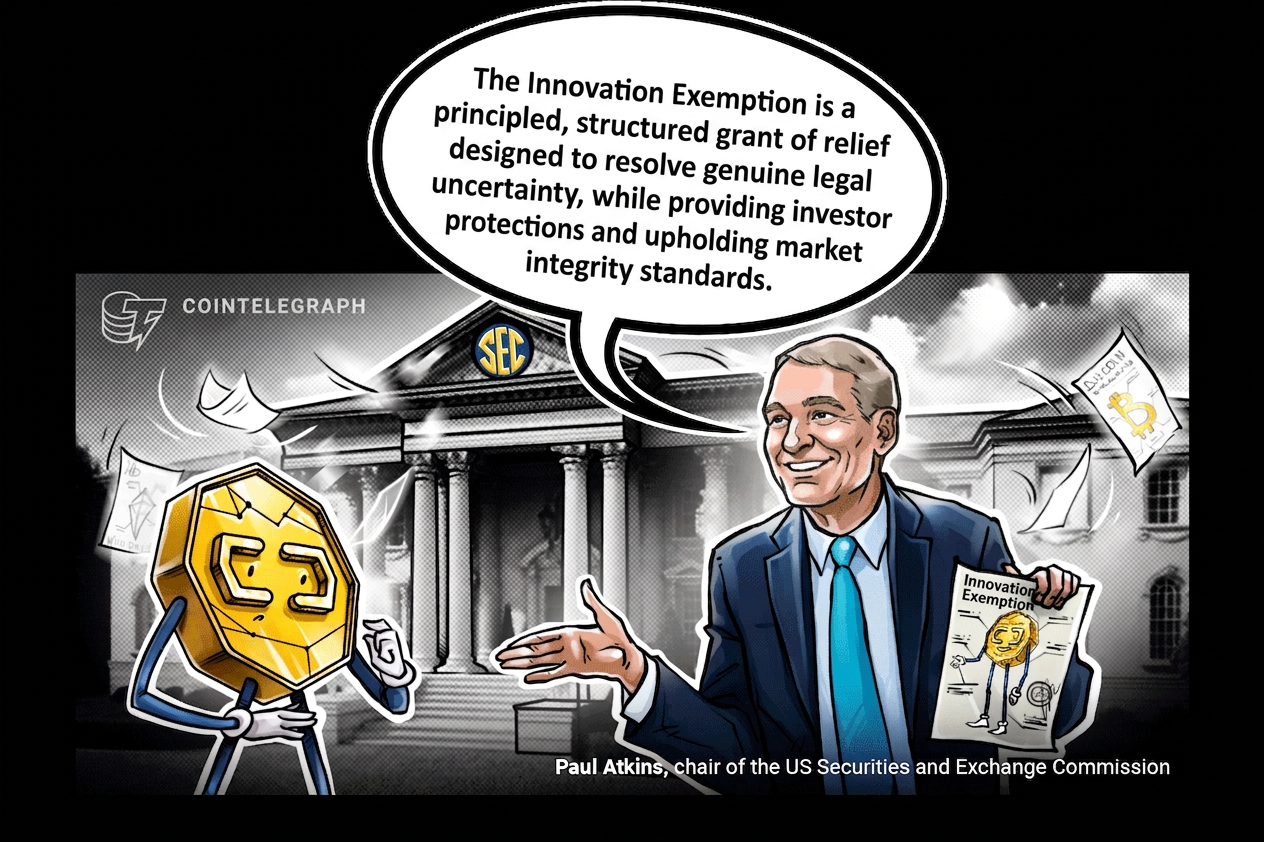
Observers note that current SEC leadership under Paul Atkins has engaged in extensive consultations with crypto firms and venture capital entities, conducting thorough background research to ensure new policies are built on a defensible evidentiary foundation rather than improvised overnight.
Assuming these newly issued SEC and CFTC rules withstand judicial scrutiny over the coming years, and businesses commit substantial capital to building infrastructure around tokenized stocks, a future SEC administration would face strict procedural hurdles if it attempted to unilaterally reverse course. Regulators cannot casually disregard capital investments made in reliance on prior administrative interpretations; they must account for reliance interests and adhere to rigorous analytical standards.
When evaluating regulatory changes, both administrative agencies and federal courts must navigate a structured legal reasoning framework known as IRAC—encompassing the issue, rule, analysis, and conclusion. Any future reversal would require transparent, understandable logic supported by rigorous economic background research and empirical evidence demonstrating that previous policies were insufficient or harmful.
Even if an agency leader personally disfavored foundational precedents like the Howey test, they lack the authority to unilaterally abandon established statutory law. Leadership must continue to recognize Howey as valid federal law, even while explaining transparently how distinct interpretations and individualized legal logic apply to specific factual scenarios.
Recent regulatory maneuvers have also highlighted the distinct legal status of informal guidance. Following years of development surrounding the innovation exemption, the SEC recently released a Frequently Asked Questions (FAQ) document clarifying that a crypto project executing token buybacks does not inherently convert a commodity token into a security.
While market participants naturally seek comfort when launching token buyback schemes, legal experts emphasize that agency FAQs do not constitute formal legislation or binding regulation. Functioning merely as internal staff manuals or interpretive guidebooks, FAQs carry no independent legal authority and are frequently rewritten by agency staff to reflect evolving interpretations.
This fluidity was demonstrated when the SEC amended a newly issued FAQ within a single week following critiques from legal counsel at venture capital firm a16z, who pointed out potential loopholes. Such rapid adjustments underscore the fact that informal guidance is fundamentally distinct from binding regulation and remains subject to continuous administrative refinement.
 Crypto Regulation & Policy
 Crypto Regulation & Policy
 Crypto Regulation & Policy







