Artificial intelligence stocks staged a tentative comeback on Friday, offering a brief respite after a brutal, multi-day rout that swept across international exchanges from Wall Street to Asia. Yet, a single green trading session does little to resolve the deeper, existential question weighing heavily on investors heading into the weekend: Is this dramatic pullback simply an overdue market correction, or does it mark the beginning of the long-feared AI bubble finally bursting?
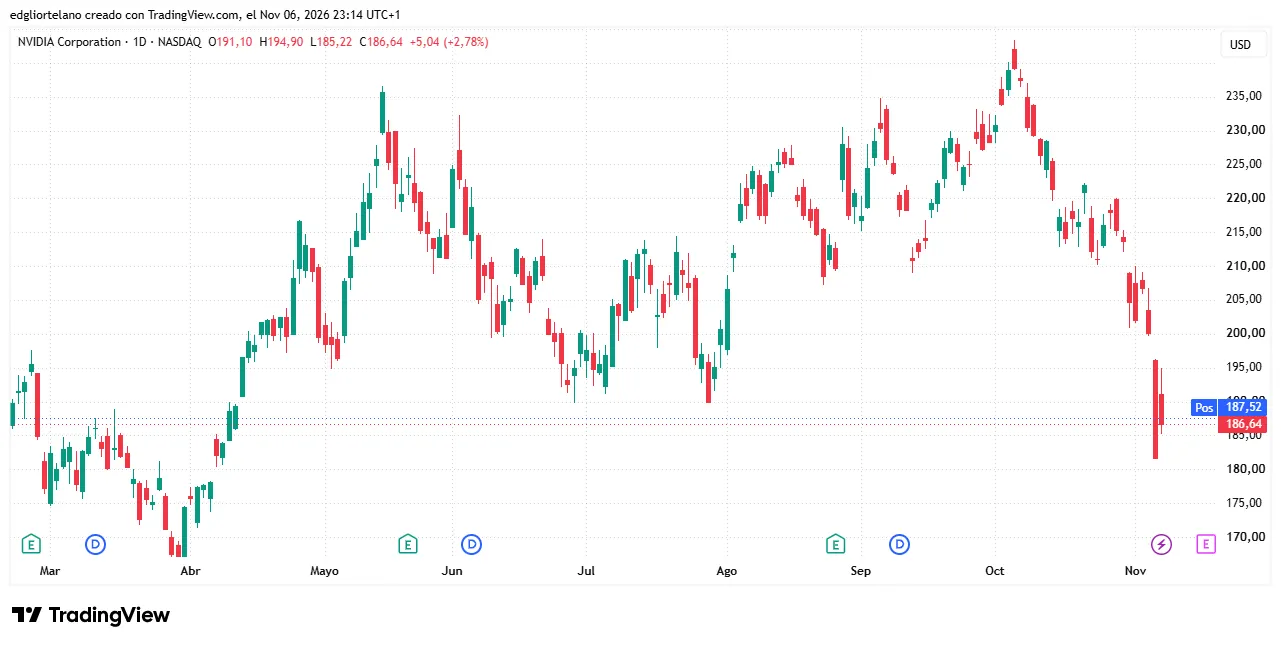
Major industry bellwethers saw modest recoveries at the end of the week. Nvidia rose 2.78% to close at $186.64, attempting to claw back ground after plunging a steep 9.3% just a day earlier. Similarly, Advanced Micro Devices (AMD) bounced back to $449.04 following a staggering 17.3% collapse earlier in the week. Despite these recovery efforts, both high-flying semiconductor stocks remain deeply depressed compared to their lofty October peaks, illustrating just how little a sharp relief rally can accomplish in repairing extensive technical damage.
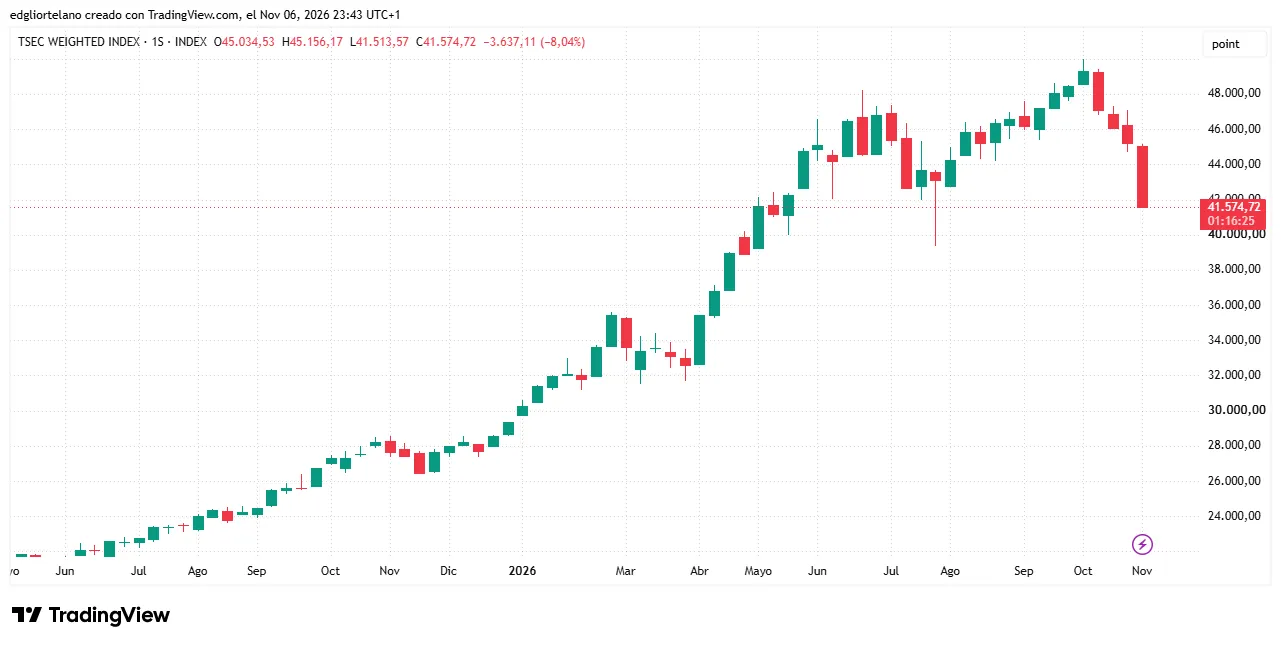
The contagion extended far beyond U.S. borders, hammering major technology hubs across Asia. South Korea’s benchmark KOSPI index tumbled 6% on Friday, while Taiwan’s market suffered its worst weekly performance in months, plunging more than 8% over the course of the week. The selling pressure became so intense that Taiwan Semiconductor Manufacturing Company (TSMC) hit its daily limit-down threshold during the height of the rout. According to reports from Reuters, the situation grew dire enough that Taiwanese officials felt compelled to intervene, asking state-owned banks to step in and help support asset prices.
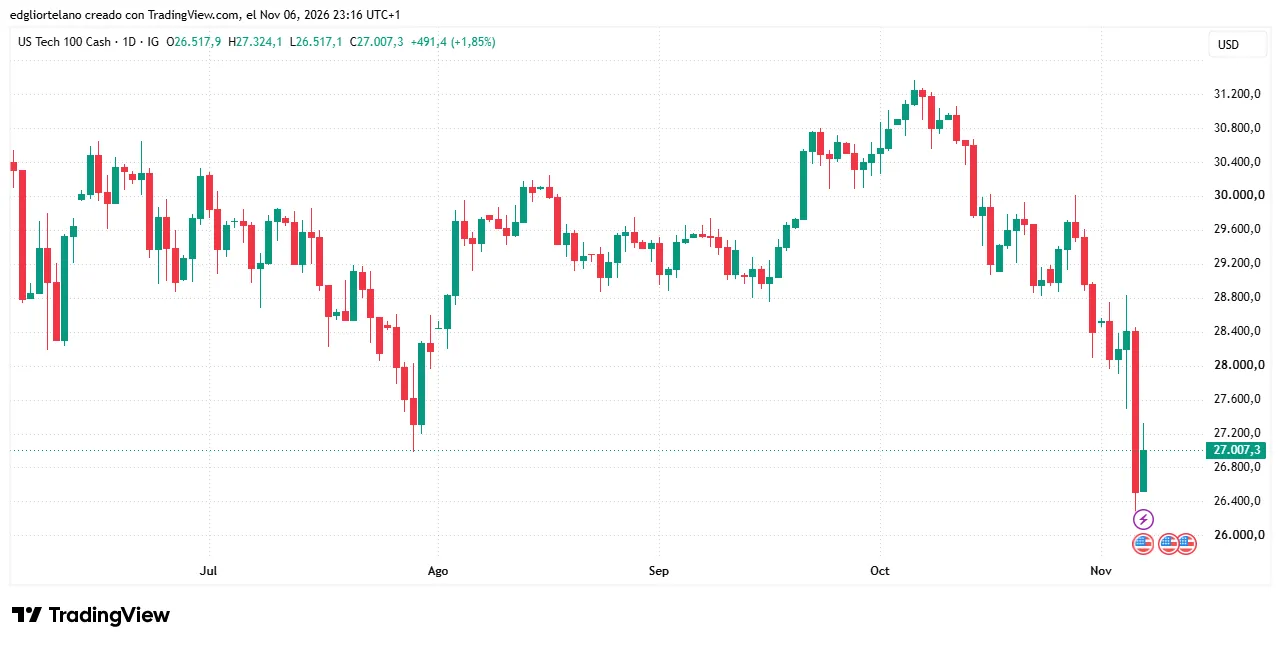
Domestic indices in the United States mirrored the international anxiety. The US Tech 100 cash-market proxy managed a rebound of 1.85% to finish at 27,007.3, but the modest gain leaves the index down more than 5.5% for the week. Daily price charts reveal that this bounce occurred only after a precipitous slide from previous October highs, signaling a defensive pullback rather than a resumption of the previous upward trend.

Why the AI Trade Is Unraveling
The sudden fracture in the AI trade was catalyzed by a confluence of political and macroeconomic headwinds. In the United States, recent midterm election outcomes accelerated underlying market fears that legislative shifts could usher in a regulatory environment characterized by much tougher scrutiny of power-hungry data centers. According to an analysis by Ballotpedia, voters in 40 out of 41 local ballot contests on November 3 favored measures to limit or restrict data center development, frequently rejecting pro-construction initiatives outright. While some of these local votes were purely advisory, the political message delivered to developers and investors was unmistakable.
This localized resistance carries profound implications for semiconductor and hardware manufacturers, as the rapid expansion of data centers has served as the primary engine of their phenomenal growth. Every new data center project requires massive, continuous capital expenditure on advanced processors, dense server racks, specialized cooling systems, and reliable power sources. Emerging municipal restrictions threaten to delay vital orders, increase compliance costs, or force developers to seek alternative, potentially less optimal, construction sites.
However, deep-seated doubts among market participants predated the political outcomes of the midterms. Technology companies and their enterprise customers have been aggressively pouring vast sums of capital into building out artificial intelligence capacity, frequently doing so well in advance of clear, measurable returns on investment. This speculative spending spree has become increasingly difficult to sustain in an environment defined by elevated borrowing costs and tighter monetary policy. Noted market strategist Steve Sosnick told Reuters that heavily owned technology stocks were already priced to perfection, leaving virtually zero margin for operational error or macroeconomic shocks.
Correction or Bubble Bursting?
To understand the current market turmoil, analysts frequently draw a distinction between a routine market correction and the catastrophic bursting of a financial bubble. A standard correction occurs when a market or a specific sector pulls back by at least 10% from a recent peak. This price adjustment does not inherently indicate that the underlying businesses are shrinking or failing. For example, consider a leading chipmaker whose shares trade at 60 times annual earnings because investors anticipate explosive future growth. If market sentiment shifts and investors become willing to pay only 40 times those exact same earnings, the stock can easily lose a third of its market value without the company’s actual profits experiencing any decline whatsoever.
Conversely, a bubble bursting is a far more severe financial event. It transpires when speculative expectations prove fundamentally unrealistic, causing the foundational capital supporting the boom to evaporate entirely.
Historical precedents offer a sobering warning for modern technology investors. During the infamous dot-com crash of the early 2000s, the Nasdaq composite lost approximately 77% of its value between March 2000 and October 2002. History ultimately proved that the internet was not a passing fad; rather, investors had massively and unrealistically overestimated the speed at which enterprises could monetize the technology and turn it into tangible corporate profit.
During that era, telecommunications operators spent fortunes laying vast networks of fiber-optic cables for a customer base that had not yet materialized. Global Crossing, a prominent firm that constructed a massive international telecommunications network, was forced to file for bankruptcy in 2002. The underlying technology survived and ultimately reshaped global commerce, but many of the pioneering companies and their shareholders did not survive the transition.
The artificial intelligence sector now faces a strikingly similar mismatch between its undeniable long-term promise and the harsh realities of near-term financial returns. Already, entrepreneurial pockets of the market are attempting to capitalize on the chaos; former cryptocurrency miners are renting out their specialized hardware, while cloud infrastructure providers and inference startups proliferate across the landscape.
Consider a hypothetical firm that borrows billions of dollars to construct a massive data center packed with expensive Nvidia accelerators, operating under the assumption that it can rent that computing power at premium rental rates for years to come. If end-users ultimately spend less on AI services than anticipated, if borrowing rates remain stubbornly high, or if construction is delayed by local regulations, the underlying debt obligations remain entirely unchanged.
Under such pressure, the operator may be forced to cancel or scale back chip orders. The ripple effects would quickly spread: hardware contractors would lose vital work, and utility companies that planned costly new electrical generation capacity to serve the data center would lose their anticipated industrial customers. Lenders and financial institutions holding the operator’s debt would inevitably absorb substantial losses. Under these conditions, a localized stock market selloff can rapidly evolve into a systemic concern for the broader economy.
Crucially, however, key structural differences distinguish the current AI landscape from the dot-com era. Industry giants like Microsoft, Alphabet, Amazon, and Meta are highly profitable enterprises backed by established enterprise customers and massive, reliable cash flows, contrasting sharply with the speculative, pre-revenue startups that defined the late 1990s. These tech heavyweights possess the financial resilience to withstand cyclical setbacks far better than smaller, independent AI cloud providers that depend heavily on continuous, repeated borrowing to fund their expansion plans.
It remains entirely possible for artificial intelligence to continue fundamentally transforming global industries while a cohort of individual AI companies simultaneously fail, and while investors who chased successful companies ultimately find they significantly overpaid.
Financial warning lights are undeniably beginning to flicker across the credit markets. Reuters reported Friday that the cost of insuring against a potential debt default by specialized AI cloud provider CoreWeave had climbed above 1,000 basis points. This specialized protection functions similarly to insurance on a corporate loan; as the price to purchase protection rises, investors are signaling heightened apprehension regarding the company’s ability to service and repay its mounting debts.
Despite these localized stress points, broader sovereign and corporate bond markets have continued to operate relatively normally. This divergence points to growing financial strain concentrated specifically in the riskiest corners of AI financing, rather than providing definitive proof of a systemic, economy-wide banking crisis.
The coming week will offer much more concrete tests for the market than another day of fluctuating green and red candles. Upcoming financial results and operational updates from CoreWeave, Applied Materials, and Cisco Systems could finally reveal whether enterprise customers are continuing to order processing capacity and hardware equipment at previous paces, or if spending is actively cooling. Meanwhile, incoming inflation data will heavily influence broader expectations for future borrowing costs and monetary policy.
Stable equipment orders and manageable debt refinancing would strongly support the argument that the market is simply experiencing a healthy correction. Conversely, a pattern of repeated project cancellations, failed corporate refinancing rounds, and shrinking sales figures would suggest that the financial foundations supporting the AI boom are beginning to crack. The ultimate question facing investors is not whether artificial intelligence possesses a transformative future, but whether every enterprise currently betting billions of dollars on that future can financially afford to arrive there.
 Decentralized Finance (DeFi)
 Decentralized Finance (DeFi)
 Decentralized Finance (DeFi)