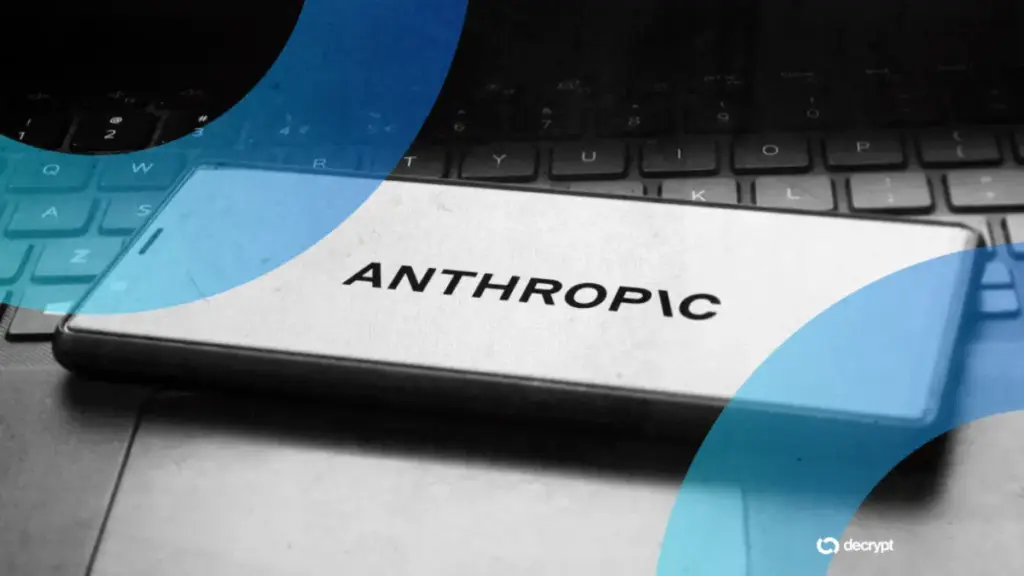
Artificial intelligence pioneer Anthropic, the San Francisco-based developer behind the popular Claude chatbot, announced a major corporate restructuring on Sunday by committing 5% of its equity to a newly established Public Benefit Fund. The move comes as the high-profile AI lab prepares for a heavily anticipated initial public offering, or IPO, which industry watchers report could value the company at a staggering $2 trillion as early as November.
The announcement immediately captured the attention of the tech industry, drawing a swift and characteristic response on social media from billionaire entrepreneur Elon Musk. By Monday morning, Musk countered Anthropic’s structured fund approach by publicly promising to distribute one SpaceX share to every child in the United States next year.
The developments unfold against a backdrop of deep public anxiety regarding the rapid trajectory of artificial intelligence. Recent public opinion data, including an AP-NORC poll conducted in late September, reveals that 64% of U.S. adults believe artificial intelligence technology is developing at an uncomfortably fast pace, while only 8% feel it is moving too slowly. As AI labs race to deploy increasingly powerful models, questions surrounding corporate governance, public accountability, and wealth distribution have taken center stage.
According to Anthropic, the newly formed Public Benefit Fund is designed to provide the organization with increased flexibility and scale to fulfill its stated mission. The company stated that the fund could potentially explore large-scale donations to traditional non-profit organizations or direct financial distributions to specific populations. To support these exploratory efforts, Anthropic has already committed $200 million toward studying effective distribution models.
Unlike traditional non-profit foundations, the fund is structured as a wholly owned limited liability company, or LLC. Anthropic executives argue that this corporate vehicle provides the operational freedom required to navigate different forms of philanthropic giving. Under the governance terms established for the fund, the board of directors holds the authority to inject an additional 2% of company shares into the entity each time Anthropic’s overall valuation rises 50% above an undisclosed baseline. Furthermore, the corporate structure explicitly prohibits using the fund’s equity for political lobbying or campaign donations.
When combined with existing co-founder pledges to donate 80% of their personal equity, along with matching programs for employee donations, Anthropic estimates that roughly 20% of the company’s total shares will ultimately be dedicated to the public good. However, the company has not yet clarified how the fund will be taxed or what specific financial disclosures it will make publicly available, requirements that are typically mandated for traditional public charities. At a projected valuation of $2 trillion, a 5% equity stake translates on paper to approximately $100 billion, though industry analysts emphasize that this figure represents equity value rather than liquid capital resting in a bank account.
The ambitious pledge quickly drew skepticism and scrutiny from industry figures. Investor and former White House AI official David Sacks took to social media platform X to question the arrangement, writing, "You’ve put 20% of your equity in an LLC. Whether it serves the public good remains to be seen."
Never one to cede the spotlight during a major tech news cycle, Elon Musk entered the fray shortly after Anthropic’s Sunday announcement. Musk initially recommended bypassing complex philanthropic funds altogether by "giving the shares directly to the public." By Monday morning, he formalized that sentiment by posting on X that he intends to allocate one SpaceX share to every child in America next year, adding that the move would be "the first of many."
With approximately 72 million children residing in the United States, Musk’s pledge would amount to roughly 72 million shares. Based on an estimated private market price of approximately $147 per share for SpaceX, the total value of the distribution would come to roughly $10.5 billion. This expenditure represents just over 1% of the 6.42 billion shares Musk held as of June 30, according to regulatory filings with the Securities and Exchange Commission, and mirrors a tiny fraction of a personal net worth that has frequently fluctuated around the $900 billion mark and crossed the $1 trillion threshold multiple times this year.
Market observers noted that Musk’s proposal aligns with recent guidelines issued by the Treasury Department, which permits corporations and charitable entities to donate individual company shares directly into tax-advantaged savings accounts established for children, such as specialized trust accounts where donated stock is typically held for a mandatory five-year period. Musk’s subsequent social media interactions strongly suggested he favored this direct distribution route over Anthropic’s corporate fund mechanism.
The timing of Anthropic’s public benefit initiative has also drawn analytical scrutiny regarding the company’s broader positioning on AI safety and regulation. The massive equity allocation arrives as the lab prepares for its public stock market debut, a commercial milestone that highlights the tension between the commercial pressures of the artificial intelligence boom and the catastrophic risks frequently highlighted by AI safety researchers.
In January, Anthropic’s leadership warned that society was drawing significantly closer to tangible safety risks posed by advanced models in 2026. This philosophical stance has often placed Anthropic in a paradoxical position within the tech sector: the company routinely preaches the gospel of AI doomerism and systemic risk while simultaneously maximizing accelerationism through the commercial release of some of the most powerful foundational AI models on the market.
This dynamic has previously attracted sharp criticism from competitors. In April, OpenAI CEO Sam Altman publicly accused Anthropic of employing fear-based marketing strategies to promote its flagship models, such as Claude Mythos.
Beyond its financial maneuvers, Anthropic has actively sought to shape the regulatory landscape surrounding its industry. Just two days prior to unveiling the Public Benefit Fund, reports surfaced that the company had quietly circulated its own draft AI safety legislation to federal lawmakers. The proposed bill would empower the federal government to block the commercial release of any artificial intelligence model that poses a foreseeable, imminent risk of causing mass casualties—defined as killing or seriously injuring more than 50 people—or generating over $1 billion in economic damage via cyberattacks, biological weapons, or autonomous systems escaping human control.
Under Anthropic’s proposed framework, any government-mandated block on a model release would require formal review through the Department of Commerce alongside a federal court order, while developers would be mandated to publish internal safety frameworks and transparency reports for any newly trained frontier systems. The proposal closely mirrors Anthropic’s internal Advanced AI Framework, which leadership has aggressively promoted to policymakers since June—the same month Anthropic CEO Dario Amodei publicly called for binding government regulations on frontier models.
As Anthropic moves closer to its anticipated November initial public offering, the company has promised to release comprehensive details regarding the fund’s internal governance structure and specific valuation thresholds in the coming months.
 Decentralized Applications (dApps)
 Decentralized Applications (dApps)
 Decentralized Applications (dApps)