Recent purchasers of Bitcoin are increasingly transferring their coins to centralized cryptocurrency exchanges at a loss, introducing fresh concerns regarding heightened selling pressure as the leading digital asset drifts downward toward the lower end of the $70,000 range.
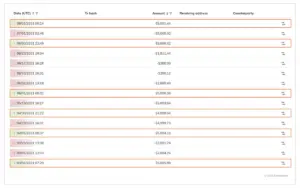
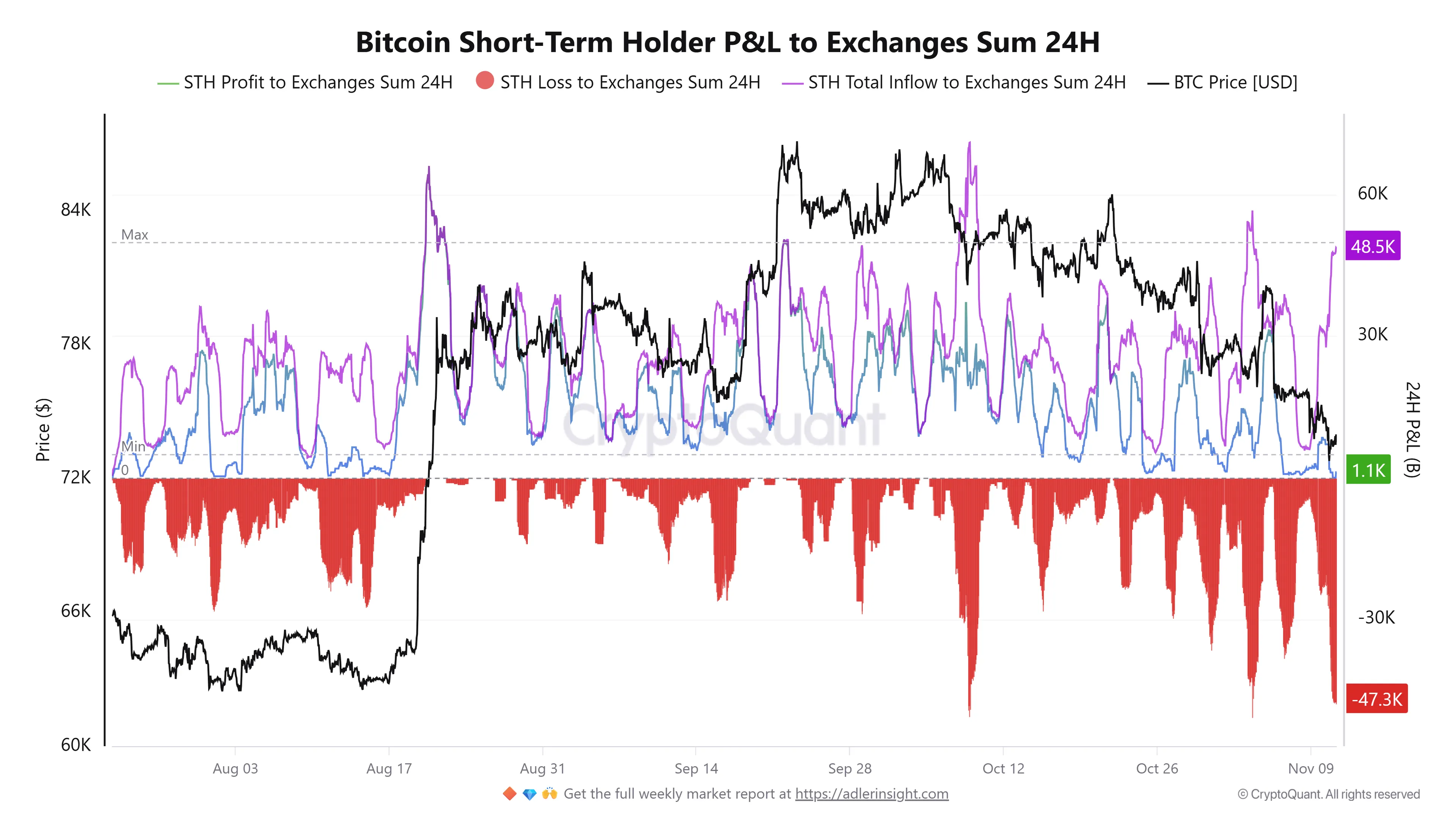
Data compiled by on-chain analytics firm CryptoQuant highlights a notable trend among newly minted market participants. According to the platform’s latest short-term holder profit-and-loss metrics, approximately 47,300 Bitcoin were transferred to various cryptocurrency exchanges below their initial acquisition price over a single 24-hour window. By comparison, only about 1,100 Bitcoin arrived at the same exchanges showing a profit during the exact same timeframe.
When combined, these massive inflows hovered near 48,500 Bitcoin, which translates to roughly $3.6 billion based on prevailing market valuations with Bitcoin trading at approximately $74,000.

Market analysts emphasize that on-chain charts tracking deposits measure transfers rather than immediately executed sales. Depositing digital assets into a centralized exchange often serves as the preliminary step toward liquidating a position, though tokens can also be utilized for alternative purposes such as trading into other cryptographic assets, posting collateral, or accessing various platform-based financial services. Consequently, on-chain metrics do not establish the exact proportion of transferred Bitcoin that was subsequently sold on the open market. Nonetheless, the sheer volume of coins moving while underwater provides a revealing window into current market sentiment.
This distinction holds significant weight because the data specifically isolates the behavior of short-term holders, a demographic that CryptoQuant generally categorizes as market participants who have retained their Bitcoin holdings for less than 155 days. These investors represent the cohort most vulnerable to sudden price reversals and heightened volatility, particularly when the market shifts downward and leaves their portfolios worth considerably less than their initial purchase price.
New Buyers Are Moving Coins Underwater
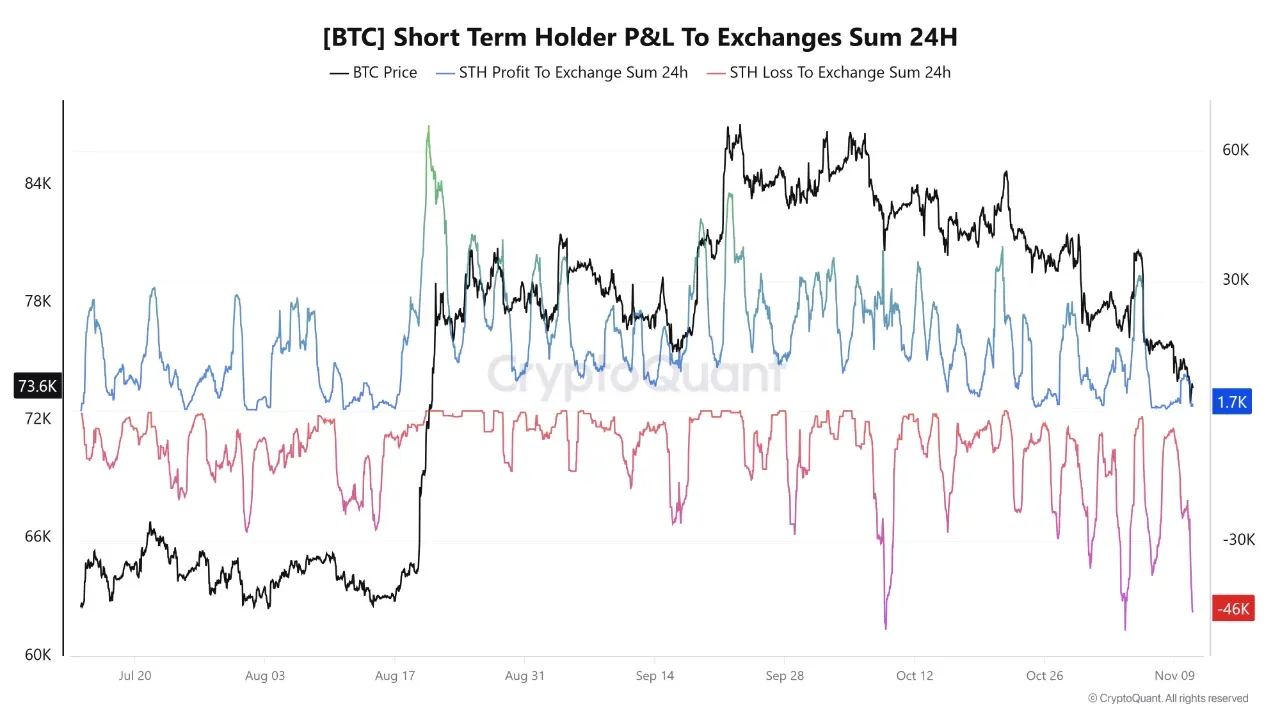
In a comprehensive analysis published by CryptoQuant, contributor Amr Taha underscored the severity of these capital movements by identifying two exceptionally large waves of underwater exchange deposits within a single week. The on-chain records showed 50,790 Bitcoin moving to exchanges at a loss on November 3, closely followed by another 46,060 Bitcoin on November 10.

To illustrate the stark imbalance of these flows, Taha noted that on November 10, profitable transfers stood at a meager 1,700 Bitcoin. This meant that approximately 27 Bitcoin arrived at an unrealized loss for every single Bitcoin transferred at a profit.
Such a starkly one-sided flow highlights a market dominated by defensive positioning or capitulation. Rather than capitalizing on gains generated during preceding market rallies, investors moving their coins into exchange environments are overwhelmingly doing so at price points lower than those at which they originally acquired the assets.
A strikingly similar structural pattern has materialized over several months, marked by recurring upward spikes in loss-making exchange transfers as Bitcoin’s spot price experienced routine swings between gains and losses. The most recent red spikes recorded on CryptoQuant’s charts stand out among the deepest readings observed since the summer months, reflecting persistent stress among newer retail and institutional market participants.
Why Binance Is Seeing Activity From Recent Coins
A separate suite of metrics provided by CryptoQuant offers a granular breakdown of deposits directed specifically to Binance, categorized by the duration of time that has elapsed since each individual Bitcoin last moved on-chain. This perspective provides additional context regarding which specific coin age brackets are currently active within the ecosystem.
According to the exchange-specific data, Binance recorded 3,290 Bitcoin arriving from coins that had last moved between one day and one week prior on November 1. This wave was swiftly dwarfed by a much larger inflow of 8,114 Bitcoin originating from the exact same cohort on November 3. Furthermore, platform activity picked up later in the month when Binance received 1,925 Bitcoin from coins that had previously remained dormant for one to three months, as highlighted in Taha’s market breakdown. While these figures help market observers identify which specific supply segments are shifting, analysts caution that they do not definitively pinpoint the exact historical date when the original owners purchased their assets.
The analytical value of the Binance-specific chart lies in its focus on individual platform behavior and coin dormancy, which complements the broader profit-and-loss tracking of short-term holders across the wider exchange ecosystem.
The timing of these on-chain movements remains a crucial factor for traders attempting to gauge market direction. Bitcoin has experienced a sustained downward drift from its late-September highs, where prices routinely traded above $85,000, sliding steadily down into the $73,000 to $74,000 range. For a newer market participant who entered the market near the highs and acquired Bitcoin at $80,000, the current price environment translates to a paper loss of roughly 7.5%. Electing to transfer those holdings to an exchange and sell at current levels locks in that capital deficit.
This recent price weakness and the resulting stress on market participants is not entirely isolated to short-term speculators. Broader network analysis conducted by rival blockchain intelligence firm Glassnode identified approximately 4 million Bitcoin held by longer-term investors that were accumulated within a high valuation range between $85,000 and $118,000. This immense volume of coins leaves behind another substantial pocket of underwater supply positioned directly above current market prices, serving as a potential overhead resistance level as the broader cryptocurrency market navigates its current cyclical headwinds.
 Decentralized Finance (DeFi)
 Decentralized Finance (DeFi)
 Decentralized Finance (DeFi)