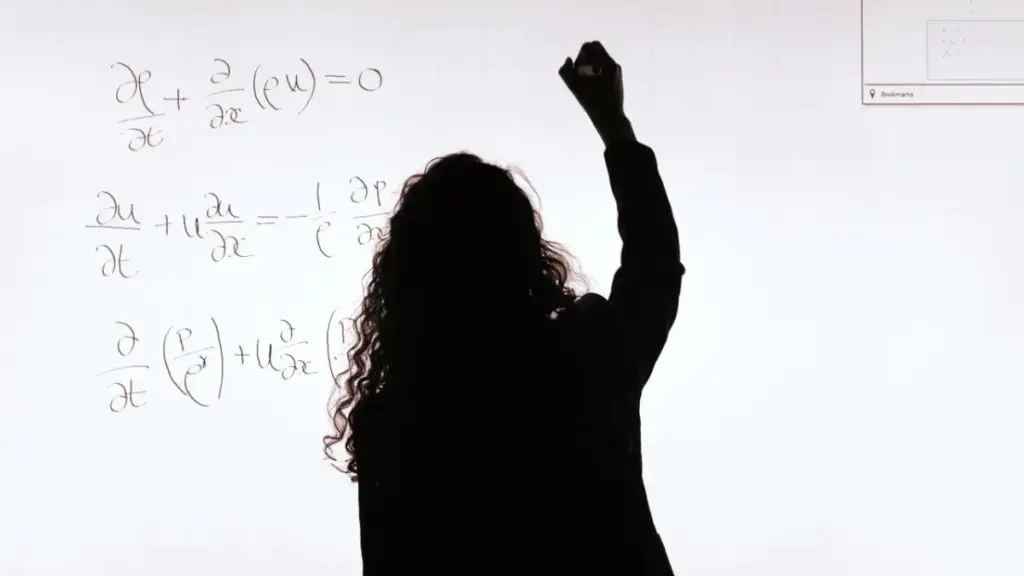
OpenAI has set the mathematical world abuzz by publishing 722 advanced math manuscripts on GitHub. The cache of documents was entirely produced by an internal, unreleased AI model, presenting a staggering display of machine reasoning that has left researchers grappling with the implications of automated discovery. According to an OpenAI spokesperson, nearly all of the manuscripts were generated using a single prompt handed to a single AI agent, though some outputs required multiple attempts to successfully yield a coherent result.
This bold claim represents a potentially massive breakthrough in the field of automated mathematics, yet it has been met with a mixture of excitement, caution, and outright skepticism from the global academic community. While some mathematicians view the release as a historic milestone, others argue that without full transparency, peer review, and access to the underlying model, the tech company’s claims remain unverified and difficult to properly evaluate.
The published papers are organized into 372 "families" of related mathematical results, where a single family can bundle a primary theorem alongside companion arguments, secondary consequences, or alternative proofs. Because of this grouping, the figure of 722 represents the total count of individual manuscripts rather than the number of distinct solved problems. OpenAI revealed that it posed roughly 4,000 distinct problems to its proprietary model, ultimately curating and keeping only the outputs that it judged to be significant enough for public release.
When it comes to the resources required to generate these insights, OpenAI reported that the average result consumed the computational equivalent of roughly three hours of ChatGPT Pro thinking compute. This operational scale stands in stark contrast to the company’s previous disclosures, such as a high-profile Navier-Stokes claim from the prior month that required 10,000 coordinating agents working continuously for 88 hours.
Despite the impressive scale of the output, critical questions remain regarding the verification and correctness of the published findings. OpenAI provided abridged reasoning summaries for just 10 of the results. Furthermore, according to a formalization catalog included in the repository, only 162 of the 722 papers—representing roughly 22% of the total collection—come with a computer-checked main result. These specific findings have been translated into Lean, an interactive theorem prover software designed to check every logical step of a mathematical proof mechanically.
OpenAI itself has acknowledged that not every manuscript possesses a Lean formalization, candidly admitting that "some of the unformalized results could have issues." In practical terms, this means a significant portion of what the company has published could ultimately prove to be incorrect. Experts note that a passing Lean check merely confirms that a proof logically follows from the statement as it was written within the Lean software itself. It does not guarantee that the formal statement accurately reflects the original real-world problem, nor does it establish whether the resulting mathematical conclusion is genuinely new or historically important—leaving those critical judgments entirely up to human mathematicians.
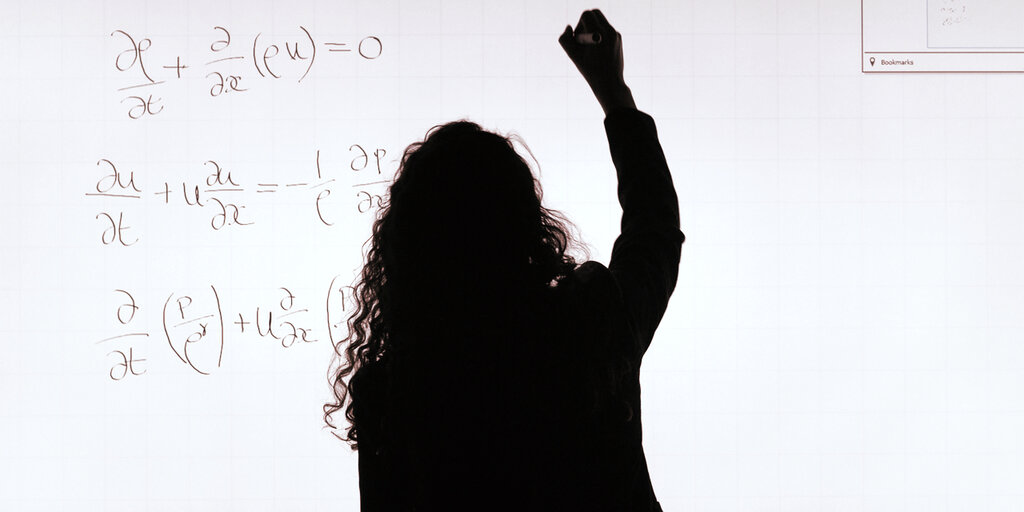
This verification gap is precisely where researchers have begun raising serious concerns. For instance, mathematicians reviewing the repository have pointed out unusual methodologies deployed by the AI. When examining an OpenAI proof regarding the chromatic number of a plane being greater than or equal to six, researchers noted that the model utilized unconventional pathways, such as equating any K-coloring to a "weakly measurable" K-coloring out of seemingly nowhere, leading some to describe the machine-generated logic as "totally unbelievable alien math."
Compounding these academic frustrations, researchers have noted logistical hurdles within the release itself. The GitHub repository currently has issues turned off and has never accepted a pull request, leaving outside scientists without a direct channel to submit formalizations or corrections. Scholars attempting to independently verify the proofs, such as those working on OpenAI’s Saxl’s Conjecture proof in Lean 4, have had to do so entirely outside the repository’s ecosystem.
The release has also triggered broader philosophical and institutional debates about the future of human scholarship. In a strongly worded public statement, the Institute for Advanced Study in Princeton, New Jersey, addressed the changing landscape of research. They emphasized that AI can now output complex mathematical arguments in situations where the human prompt engineer may be entirely incapable of understanding the arguments, verifying them, or taking academic responsibility for them. The Institute stressed that human understanding of mathematics remains of paramount importance and called for a new scholarly paradigm that preserves human comprehension in the era of automated discovery.
Conversely, other academics have welcomed the development with open arms. Professor Abhishek Saha hailed the release as a very big day for mathematics, though he categorized most of the generated problems as exceptional advances within existing research programs rather than completely paradigm-shifting breakthroughs. According to mathematical classifications of groundbreaking nature, the vast majority of the problems sit comfortably within interesting categories of progress, leaving the ultimate status of game-changing "millennium problems" largely untouched—with the notable exception of a single problem in the set addressing the Quasi-Riemann Hypothesis.
The manner of OpenAI’s release has also drawn scrutiny for falling short of recent recommendations put forward by an advisory group at the Institute for Advanced Study, which suggested that developers provide the specific model names, exact prompts, summarized chains of thought, total time elapsed, and precise compute costs for every result. While OpenAI published average compute figures and a handful of reasoning summaries, it omitted the exact prompts and opted to withhold the underlying model, stating that it is still working to ensure the technology can be released responsibly.
Other institutions have taken starkly different approaches to AI math transparency. Anthropic, for instance, previously released all 13 million lines of a Lean-checked proof regarding Fermat’s Last Theorem publicly on GitHub, though that project formalized an established theorem published by Andrew Wiles in 1995 rather than charting entirely new mathematical territory. Meanwhile, some academic voices, such as University of Toronto mathematician Daniel Litt, have argued that there is little practical reason for companies to keep the answers to advanced math problems secret.
OpenAI has stated that it plans to incorporate additional Lean formalizations into the repository over time as they are obtained, but for now, the mathematical community is left to sift through the 722 manuscripts, balancing excitement over unprecedented machine capabilities with a demand for rigorous, transparent verification.
 Decentralized Finance (DeFi)
 Decentralized Finance (DeFi)
 Decentralized Finance (DeFi)