
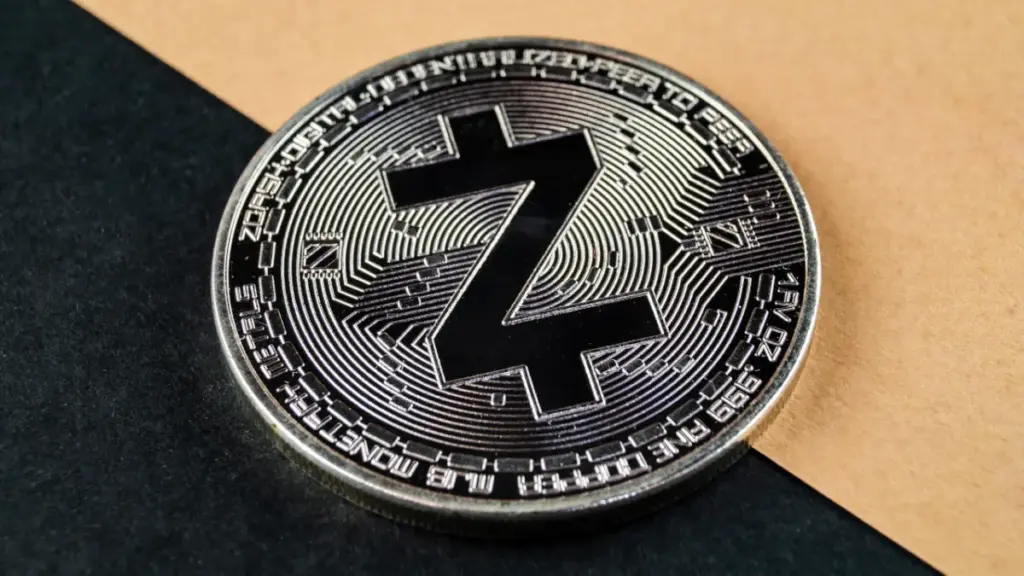
While much of the broader cryptocurrency market remains locked in anxious debates over cryptographic vulnerabilities and what industry insiders have termed "bunker mode," a dedicated team of Zcash developers is moving forward with a concrete roadmap. Zakura, a prominent development team building a Zcash full node, has announced that it expects post-quantum signature opcodes to arrive on the Zcash network as early as January.
Opcodes serve as low-level instructions executed by a blockchain network. In this context, introducing these specific opcodes will give the Zcash network the foundational capability to verify an entirely new class of digital signatures designed to withstand attacks from advanced computing architectures. According to a detailed engineering post published by Zakura developer Roman Akhtariev, the ultimate objective of this initiative is to establish "full post-quantum safe transparent pools with hash-based signatures."
To understand the significance of this development, it helps to examine how Zcash handles transactions. The privacy-focused network famously supports two distinct payment mechanisms: shielded transactions, which utilize zero-knowledge proofs to obscure the sender, recipient, and transaction amount, and transparent transactions. Transparent addresses operate in a manner largely identical to Bitcoin, where details remain publicly visible on the ledger. A standard transparent address contains a cryptographic hash of a public key. This public key remains safely hidden on-chain until the owner initiates a transaction, at which point the key is revealed to the network to authorize the transfer.
Zakura’s proposed defense mechanism ingeniously combines two distinct cryptographic safeguards to protect these transparent operations against future threats. Under their blueprint, user wallets would automatically rotate to a fresh, unused address after every single transaction. This constant rotation ensures that public keys are never exposed repeatedly, significantly minimizing the window of vulnerability. To reinforce this structure, the system incorporates a hash-based backup signature scheme known as WOTS, or Winternitz One-Time Signature. Unlike traditional cryptographic schemes, hash-based methods deliberately avoid the complex elliptic-curve mathematics that modern researchers fear could eventually be cracked by advanced artificial intelligence systems or quantum computers.
However, implementing address rotation introduces a complex privacy challenge. In standard blockchain architectures, when a wallet application queries a remote server to check balances across multiple addresses, that server can easily analyze the request patterns and determine that all of those disparate addresses belong to a single user. To solve this dilemma, Zakura’s architecture incorporates Private Information Retrieval, commonly known as PIR. This advanced cryptographic technique enables a user’s wallet to fetch necessary ledger records from a server without revealing which specific records it is actually requesting, effectively shielding user metadata from prying eyes.
The practical application of this technology is already taking shape. Zakura’s privacy-preserving features are rolling out in the Vizor wallet, where everyday users can begin testing the capabilities immediately simply by toggling on "private queries" within the application settings.

"While others are worrying about the viability of rotating transparent addresses, we’re already solving linkability," the Zakura team stated in a public post on the social media platform X.
This defiant stance serves as a direct nod to recent warnings issued by Ethereum Foundation researcher Justin Drake. Earlier this week, Drake publicly urged cryptocurrency holders to calmly take proactive measures by moving their digital assets to fresh addresses. However, the broader public reaction to Drake’s sudden call to action was characterized largely by widespread anxiety rather than calm preparation.
Drake issued a stark warning suggesting that rapid advancements in artificial intelligence-driven mathematics could potentially break the ECDSA signatures currently securing mainstream cryptocurrencies like Bitcoin and Ethereum long before quantum computers actually materialize. In a worst-case scenario, Drake cautioned, these AI-driven mathematical breakthroughs could threaten existing encryption methods in a matter of months rather than years.
The gravity of this warning prompted high-profile figures within the blockchain space to weigh in. Ethereum co-founder Vitalik Buterin subsequently addressed the unfolding debate, noting that he believes it is entirely "plausible" that AI-driven advancements in mathematics could successfully break conventional blockchain encryption within the next two years, validating the need for the industry to take preventative measures seriously.
Despite the ambitious scope of Zakura’s engineering roadmap, important limitations remain. The current blueprint formulated by Zakura covers exclusively the transparent side of the Zcash ecosystem. Furthermore, the engineering post did not specify the exact governance mechanisms or timeline for how these critical opcodes will be officially activated across the entire decentralized network.
This technical push toward quantum resilience coincides with a period of growing institutional momentum for Zcash. The privacy-centric cryptocurrency has recently attracted significant traditional financial interest, highlighted by a proposed U.S. exchange-traded fund backed by the Winklevoss twins, as well as the launch of Europe’s very first Zcash exchange-traded product. These developments follow closely on the heels of a major network upgrade designed to make private payments roughly three times faster than before.
 Decentralized Finance (DeFi)
 Decentralized Finance (DeFi)
 Decentralized Finance (DeFi)







