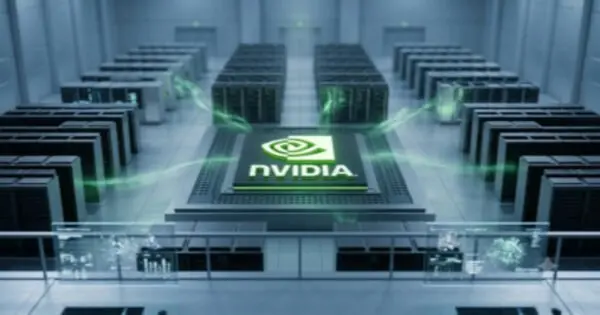
NVIDIA has unveiled a transformative approach to optimizing modern AI factory operations by combining advanced digital twins and autonomous AI agents, emphasizing their critical role in dramatically reducing validation times and improving overall production efficiency. In a detailed publication released by NVIDIA, company technologist Avi Alkobi outlined how these sophisticated technologies are seamlessly integrated within the newly highlighted NVIDIA DSX Air platform. This strategic rollout is designed to empower enterprise operators to simulate, test, and validate complex, full-stack AI workloads long before any physical infrastructure or hardware is actually deployed in the data center.
The introduction of these tools comes as the technology sector increasingly shifts its focus toward the rapid scaling of generative artificial intelligence, large-scale model fine-tuning, and heavy enterprise computational workloads. By bridging the gap between virtual planning and physical execution, NVIDIA aims to tackle some of the most persistent bottlenecks in modern infrastructure deployment, paving the way for a more streamlined, predictable, and cost-effective path from concept to commercial production.
Understanding the Evolution of the Modern AI Factory
To fully appreciate the significance of NVIDIA’s latest platform update, it is necessary to examine how the definition of a data center has evolved. Traditional data centers were historically engineered for generalized cloud computing, web hosting, and standard enterprise applications, where performance was typically measured by storage capacity, uptime, and network bandwidth. In stark contrast, modern AI factories are high-performance computing powerhouses designed from the ground up to continuously produce artificial intelligence outputs at scale.
As detailed by NVIDIA, these next-generation facilities combine cutting-edge graphics processing units, central processing units, data processing units, high-speed network switches, and sophisticated orchestration software into a unified, highly cohesive technology stack. This entire infrastructure is meticulously optimized to handle demanding AI workloads, ranging from complex token generation and real-time model fine-tuning to broad enterprise AI services. Consequently, the operational efficiency of an AI factory is no longer measured by traditional metrics alone, but rather by its ability to efficiently turn raw data and massive amounts of electrical energy into actionable intelligence, with overall performance gauged fundamentally by token throughput.
Because these environments are exceptionally intricate and capital-intensive, even minor misconfigurations in hardware architecture or software orchestration can lead to significant delays, budget overruns, and suboptimal performance. This underlying complexity has created an urgent industry-wide demand for comprehensive validation frameworks capable of mitigating financial and operational risks prior to physical installation.
Leveraging DSX Air for Virtual Simulation and Risk Mitigation
At the heart of NVIDIA’s newly detailed methodology is the DSX Air platform, which serves as a highly accurate digital twin environment. A digital twin in this context is a comprehensive virtual replica that mirrors both the physical infrastructure and the complex operational interfaces of a full-scale AI factory. By utilizing this virtual sandbox, operators are given the unique ability to model, test, and thoroughly validate diverse hardware and software configurations long before the physical servers, racks, and cooling systems arrive at the facility floor.
According to NVIDIA’s insights, this simulation-first approach fundamentally transforms the deployment lifecycle by minimizing the time required to achieve the elusive "first token." By shifting rigorous testing and validation much earlier into the production cycle, organizations can proactively identify and resolve architectural bottlenecks, compatibility issues, and resource constraints in a risk-free virtual space. This proactive strategy not only curtails the substantial financial costs associated with physical prototyping and hardware troubleshooting, but it also dramatically shortens the overall window required to bring an AI factory from an initial blueprint to full operational readiness.
Furthermore, the platform’s capabilities are strategically complemented by NVIDIA’s Brev GPU resources. By providing on-demand computational power specifically tailored for testing AI workloads, Brev aligns seamlessly with the digital twin ecosystem, granting operators the flexibility required for scalable experimentation and validation within a unified, cohesive operational context.
The Integration of Autonomous AI Agents in Factory Operations
Beyond the foundational capabilities of the digital twin environment, NVIDIA has integrated autonomous AI agents into the DSX Air platform to further streamline and elevate the validation process. These intelligent agents are designed to interact directly with the digital twin, executing automated validation checks, meticulously comparing operational outcomes against expected benchmarks, and autonomously initiating follow-up workflows when discrepancies or optimization opportunities are detected.
This agentic integration facilitates a continuous validation framework that spans every critical phase of the AI factory lifecycle. This spans across Day 0 planning and architectural design, Day 1 physical and virtual deployment, and Day 2 ongoing operations and maintenance. By automating routine validation tasks and providing real-time analytical feedback, AI agents reduce the heavy manual burden traditionally placed on infrastructure engineers, ensuring that the facility maintains peak performance standards throughout its operational lifespan.
The ability of these agents to run continuous simulations and autonomously adapt to changing workload demands underscores NVIDIA’s broader vision of creating self-optimizing computing environments. As enterprise AI deployments grow increasingly vast and complex, the reliance on human-driven oversight alone becomes increasingly impractical, making automated, agent-driven validation a vital component of future data center management.
Broader Market Context and Industry Implications
NVIDIA’s continued refinement of its AI factory ecosystem reinforces its dominant market position as a premier provider of the hardware, software, and architectural frameworks essential for modern artificial intelligence operations. The broader concept of the AI factory has gained significant traction across multiple enterprise sectors over recent years, driven by an insatiable corporate appetite for generative AI capabilities and autonomous systems. This growing market demand has been underscored by major strategic partnerships throughout the industry, such as NVIDIA and Cisco’s expanded collaboration, which highlights the widespread corporate push toward building highly optimized, future-proof data centers.
As businesses worldwide race to integrate generative AI into their core operations, AI factories are increasingly recognized as critical national and enterprise infrastructure. However, the sheer financial investment required to construct these facilities means that organizations are under immense pressure to realize a rapid and tangible return on investment. By introducing advanced tools like DSX Air and leveraging digital twins and AI agents to streamline adoption and eliminate operational friction, NVIDIA is actively addressing these enterprise concerns, helping to bolster the business case for large-scale AI factory deployments.
NVIDIA has consistently promoted the AI factory model as a revolutionary paradigm for enterprise computing. The initial introduction of the DSX platform served as a foundational playbook for full-stack AI factory builds, and these latest advancements in digital twin technology and agentic workflows clearly demonstrate the company’s persistent focus on accelerating time-to-market for complex AI workloads. As enterprises continue to navigate the intricate challenges of scaling artificial intelligence infrastructure, comprehensive validation frameworks will undoubtedly remain a cornerstone of successful digital transformation initiatives across the global technology landscape.
 Blockchain Technology
 Blockchain Technology
 Blockchain Technology