A powerful coalition of traditional commodity market giants is actively pushing back against Kalshi’s expansion into energy derivatives, urging federal regulators to step in and block the platform’s latest offering. The Commodity Markets Council, an influential trade association whose membership includes some of the largest traditional derivatives exchanges in the world such as the Chicago Mercantile Exchange (CME), the New York Mercantile Exchange (NYMEX), and ICE Futures US, formally urged the Commodity Futures Trading Commission (CFTC) on Thursday to withhold approval of Kalshi’s newly proposed product.
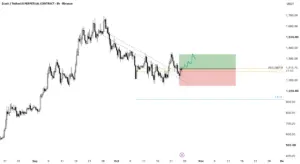
The regulatory pushback centers on WTIPERP, a no-expiry West Texas Intermediate (WTI) crude oil perpetual contract that Kalshi officially filed for earlier in the week on Tuesday. This novel financial product aims to bring perpetual futures-style trading—a staple of the cryptocurrency derivatives sector—into the regulated realm of traditional commodity benchmarks. However, the entry of this product into the mainstream regulatory pipeline has immediately triggered alarms among legacy commodity institutions, who argue that the structure and oversight of such perpetual contracts could pose unprecedented challenges to established energy markets.
The controversy comes at a time of massive growth and expanding distribution for Kalshi. The prediction market platform recently crossed a staggering milestone, hitting $55.33 billion in trading volume for the month of October alone. This explosive commercial momentum highlights the surging demand for alternative financial products and event-based contracts among retail and institutional participants alike. At the same time, Kalshi’s reach is widening significantly through strategic integration efforts across the broader financial technology landscape. Notably, Phantom—a widely used digital asset wallet—has begun rolling out Kalshi’s prediction markets directly to its user base in the United States, bridging the gap between decentralized application interfaces and regulated prediction markets.

The simultaneous pressure from legacy commodity exchanges and the rapid expansion of retail access via platforms like Phantom underscore a pivotal moment for market structure and regulatory oversight in the United States. As event contracts and perpetual structures continue to bleed into traditional asset classes, traditional market participants are fiercely defending their territory against innovative upstarts. The unfolding battle before the CFTC will likely set a crucial precedent for how innovative financial products are evaluated, regulated, and integrated into the broader macroeconomic landscape in the months and years ahead.
 Tokenomics & Digital Assets
 Tokenomics & Digital Assets
 Tokenomics & Digital Assets