
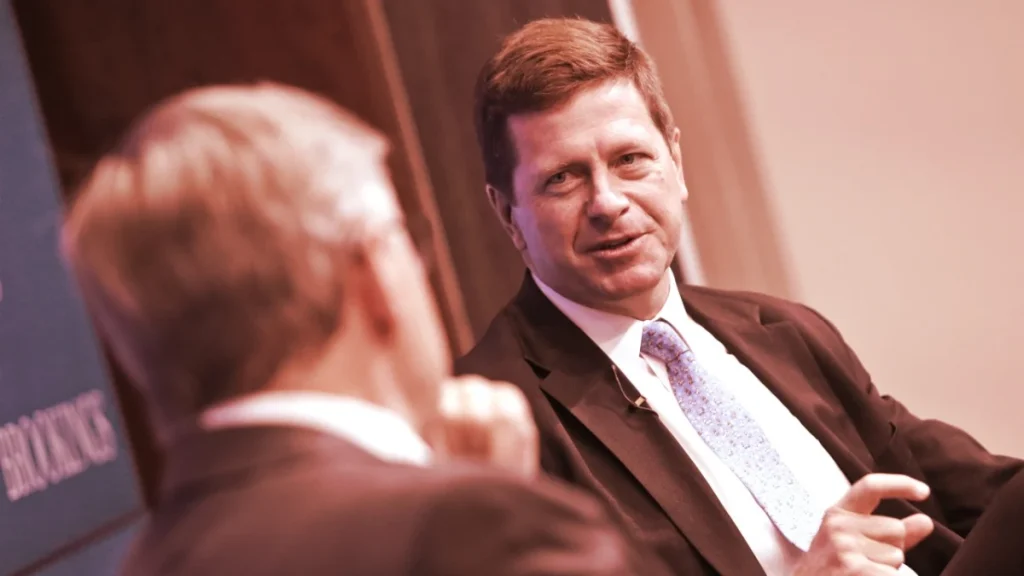
The architect of the Securities and Exchange Commission’s initial crackdown on the cryptocurrency industry is transitioning to a new, monumental role at the helm of Washington’s artificial intelligence strategy.
President Donald Trump announced the creation of a specialized federal initiative via Truth Social on Sunday, establishing what the administration has dubbed the "Super Intelligence Force." The newly minted task force has been charged with coordinating the federal government’s expansive efforts to ensure the United States maintains its competitive and technological edge in the rapidly evolving artificial intelligence landscape.
While "Super Intelligence" is the administration’s preferred nomenclature for the technology, the governance structure behind the initiative is already taking shape. Director of National Intelligence Jay Clayton is positioned first among the task force’s listed leaders and has been widely reported as the administration’s newly appointed AI czar, steering federal policy and strategic engagement for the sector.
According to the announcement, the group will serve as a central hub for coordinating federal engagement across a broad spectrum of American society. This includes managing interactions with consumers, public interest groups, religious organizations, critical infrastructure providers, and the major artificial intelligence companies driving the technology forward.
Working alongside Clayton on the task force are several other high-ranking government officials: Federal Trade Commission Chairman Andrew Ferguson, Under Secretary of War for Research and Engineering Emil Michael, and Office of Personnel Management Director Scott Kupor. The newly formed force will report directly to President Trump and White House Chief of Staff Susie Wiles, underscoring the high-level priority the administration is placing on national AI coordination.
The launch of the Super Intelligence Force follows closely on the heels of what President Trump described as the "Historic White House Accord on Super Intelligence." Under this voluntary agreement, major artificial intelligence companies formally confirmed their operational responsibilities and commitments to the American people. The accord came together after industry leaders and top executives met directly with Trump at the White House to discuss governance, safety, and national competitiveness.
A Polarizing Figure in the Crypto Ecosystem
For the cryptocurrency sector, Jay Clayton is far from a new or neutral face; he is a familiar and deeply polarizing figure. As the chairman of the SEC during President Trump’s first term in office, Clayton set the foundational machinery in motion for the agency’s aggressive, regulation-by-enforcement posture toward digital assets.
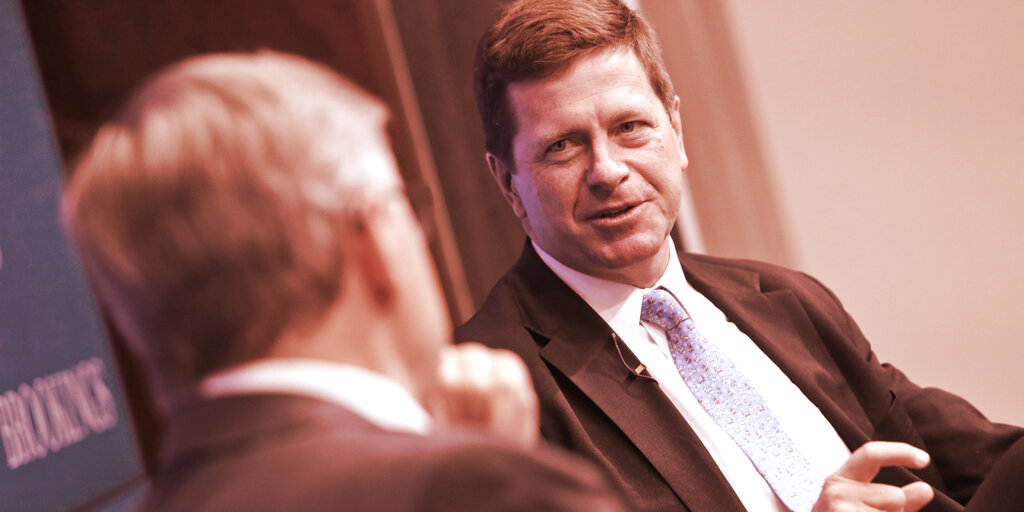
During his tenure at the securities regulator, Clayton brought a staggering 57 enforcement actions against cryptocurrency firms, initial coin offerings (ICOs), and various blockchain-based projects—a regulatory tally that he openly touted as a key achievement on his way out the door.
His most consequential and lasting crypto maneuver arrived precisely at the end of his time leading the agency. In December 2020, in one of his final acts as SEC chair, Clayton’s agency filed a landmark $1.3 billion lawsuit against Ripple Labs, alleging that the company and its executives had conducted an unregistered securities offering by selling XRP.
That lawsuit ultimately served as a blueprint and a legal template for many of the aggressive enforcement actions that Gary Gensler’s SEC later brought against a wide array of major token issuers, decentralized finance projects, and digital asset exchanges throughout the subsequent years.
A Complex Post-Government Trajectory
Despite his legacy as a fierce regulator of digital assets, Clayton’s relationship with the cryptocurrency ecosystem has taken several unexpected turns since he left public service. Shortly after stepping down from the SEC in 2021, Clayton pivoted toward the private sector in a surprising move, joining One River Asset Management as a crypto adviser. He also took on a role sitting on the advisory board of Fireblocks, a prominent institutional digital asset custodian and blockchain security firm.
President Trump initially attempted to position Clayton in a different high-profile prosecutorial role in 2020, trying to place him at the head of the U.S. Attorney’s Office for the Southern District of New York (SDNY) while he was still serving as SEC chairman. That specific appointment did not materialize at the time, but the dynamic shifted years later.
In 2025, Trump successfully installed Clayton as the interim U.S. Attorney for the Southern District of New York, marking a high-profile return to government service with his extensive crypto record following closely behind him. During his tenure leading the SDNY office, prosecutors pushed forward with high-stakes crypto-related cases, including the ongoing prosecution of Tornado Cash developer Roman Storm.
As Clayton transitions into his latest role overseeing the nation’s artificial intelligence initiatives, the broader mandates, operational timelines, and enforcement powers of the newly formed Super Intelligence Force remain to be fully detailed. However, the appointment signals that the administration is turning to a battle-tested regulator with a history of steering aggressive federal interventions in nascent technology sectors to take command of America’s AI future.
 Web3 & Decentralized Web
 Web3 & Decentralized Web
 Web3 & Decentralized Web







