In March 2022, just two weeks after Moscow initiated its full-scale invasion of Ukraine, an extraordinary act of defiance pierced the tightly controlled landscape of Russian state television. During a live broadcast on Russia’s Channel One, editor Marina Ovsyannikova burst onto the set directly behind the evening news anchor. She hoisted a hand-drawn placard declaring, “Stop the war. Don’t believe propaganda. They’re lying to you,” and shouted anti-war slogans until security personnel forcefully dragged her away from the cameras.
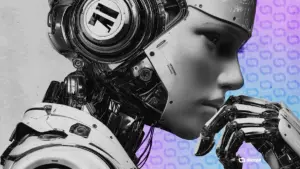
That striking breach of state messaging remains a rare anomaly. In the years since, no similar protests have materialized on Russian television, suppressed by increasingly draconian security measures and a pervasive climate of fear. Yet, by October 2024, Margarita Simonyan, one of the Kremlin’s most prominent chief propagandists, offered a different, more futuristic explanation for the silence during a televised interview. A growing proportion of anchors across the RT network, she revealed, are entirely artificial. “That face doesn’t exist. We generated the voice and everything else,” Simonyan explained, acknowledging that these broadcasters are products of advanced artificial intelligence. In a subsequent interview with the business newspaper Vedomosti, she elaborated on the immense operational utility of the technology: “These anchors don’t need a salary or insurance. They won’t get arrested, and the police won’t search their homes. It’s all wonderful and terrifying at the same time.”
This dynamic encapsulates the core promise that artificial intelligence extends to autocratic rulers worldwide: the seductive capability to maintain absolute social and political control without the persistent hazard of delegating critical tasks to unreliable human subordinates. For dictators throughout history, this has represented an agonizing paradox. No matter how formidable an autocrat’s authority may seem, absolute rulers have invariably relied on complex layers of intermediaries—including censors, propagandists, security guards, police officers, intelligence analysts, and regional bureaucrats—to enforce their edicts.
However, human subordinates inherently represent a vulnerability. They possess the capacity to shirk duties, misappropriate funds, leak state secrets, falsify reports, or conspire against the regime. Consequently, autocrats have long wrestled with the fundamental dilemma of how to empower agents to execute commands without inadvertently enabling those same agents to challenge or overthrow leadership. Traditionally, dictators have managed this precarious trade-off by popuring key administrative posts with mediocre individuals whose operational limitations serve, in the famous words of political theorist Hannah Arendt, as “the best guarantee of their loyalty.” Unfortunately, this systematic reliance on incompetence inevitably degrades the overall efficiency of dictatorial governance and severely impairs the state’s capacity to navigate complex crises.
Artificial intelligence appears to offer modern autocrats a definitive escape from this historical compromise through two distinct mechanisms. First, machine learning systems enable leaders to continuously monitor, evaluate, and discipline their followers in real time. Anomalies in a regional official’s spending patterns, communication logs, or scheduling habits can be flagged instantaneously by an automated algorithm, bypassing the need for self-serving human informants. Second, advanced automation promises to eliminate underlings entirely. By executing administrative and operational tasks that previously required human discretion, rulers can substitute fallible intermediaries with faithful algorithms immune to bribery, personal ambition, or ideological drift.
Senior officials within autocratic governments have openly acknowledged this transformative vision. Speaking at a data forum in Moscow in April 2025, Russia’s Digital Development Minister, Maksut Shadaev, asserted that artificial intelligence “can definitely replace half of officials,” before adding, “maybe slightly more.”
Yet, these visions of a seamlessly self-running state harbor a fundamental illusion, because artificial intelligence systems are never genuinely autonomous. Sophisticated digital architectures must be designed, deployed, and continuously maintained by a specialized cadre of engineers and data scientists whose profound technical expertise political leaders are utterly incapable of evaluating. Consequently, an autocrat who embraces artificial intelligence to minimize reliance on fallible humans may ultimately find themselves dependent, far more blindly than before, on the narrow circle of technical specialists responsible for keeping the infrastructure operational. This emerging digital Praetorian Guard carries vulnerabilities strikingly similar to those of the traditional human elites it replaces, ultimately presenting a latent threat to the supreme ruler.
Eyes and Ears
Globally, the People’s Republic of China has assumed a leading role in developing artificial intelligence systems designed to monitor, evaluate, and ultimately replace human subordinates. Comprehensive smart city initiatives deployed across municipal centers such as Beijing and Shanghai utilize algorithmic performance reviews to track and centralize the oversight of local officials who historically operated within comfortable obscurity.
Furthermore, over the past decade, China deployed an experimental “Zero Trust AI system” across approximately 30 counties and municipalities. This program automatically cross-referenced more than 150 distinct government databases to detect financial embezzlement and nepotism among local cadres. The system proved remarkably effective—perhaps excessively so—flagging roughly 8,700 officials before local governments, subjected to intense political pressure from the very bureaucrats being scrutinized, began scaling back its deployment.
Despite such pushback, Beijing has steadfastly maintained its e-government portals, which employ automated workflows to issue official documents and administrative permits, thereby minimizing face-to-face interactions that historically fostered petty corruption and bureaucratic favoritism. Concurrently, the Chinese Communist Party has aggressively funded research into what state planners term “thought management,” exploring how machine learning can generate microtargeted propaganda. Across the domestic internet, China’s vast corps of paid human commentators is steadily being superseded by automated bots.
The Russian Federation has pursued parallel objectives with similar fervor. Moscow’s municipal facial recognition network, integrated across a vast grid of 200,000 public surveillance cameras, was extensively deployed to identify and apprehend participants during anti-government demonstrations. At the federal level, the central government has increasingly relied on automated data collection systems to bypass regional administrators who might otherwise distort reporting or exploit regional data to advance personal political ambitions. In 2023, Russia’s federal internet censorship agency launched Oculus, an advanced artificial intelligence platform engineered to scan hundreds of thousands of digital images daily for prohibited content, including unauthorized political commentary—operating at a scale orders of magnitude beyond the capacity of human censors. Simultaneously, the Russian security services developed a tool designated Meliorator, which has been utilized to generate over a thousand fictitious American user profiles, primarily on the platform formerly known as Twitter, to amplify official Kremlin narratives at a fraction of the financial cost required to sustain traditional human troll farms.
Other authoritarian governments have rapidly followed the precedents established by Beijing and Moscow. In April 2025, the United Arab Emirates established a specialized Regulatory Intelligence Office tasked with leveraging artificial intelligence to draft and amend federal legislation—responsibilities previously managed by legislative staff. One year later, UAE Prime Minister Sheikh Mohammed bin Rashid al-Maktoum announced that autonomous AI agents would assume control over half of all federal government operations within a two-year timeframe, declaring that the performance of ministers, directors-general, and institutional entities would henceforth be formally evaluated based on their successful adoption of this digital transformation.
While these technological innovations undoubtedly reduce the raw quantity of bureaucrats required by autocratic states, they remain incapable of fulfilling the ultimate ambition of dictators: the creation of a fully self-running state. Even synthetically generated television anchors require human technicians to construct and maintain them, and automated censorship architectures require ongoing human intervention to retrain algorithms as the linguistic signifiers of dissent continuously evolve. Behind every deployed machine learning model stands a compact group of software engineers and data scientists performing indispensable maintenance, operating within a domain of technical complexity that political leaders cannot independently decipher.
This structural dependence inexorably translates into a potent form of political leverage. The specialists who maintain an autocrat’s surveillance apparatus, for instance, retain the capacity to shape precisely what intelligence reaches the ruler. They dictate which incoming streams of information are designated as critical, determine how those insights are visually and narratively presented, and calibrate the parameters that govern which threats are highlighted or suppressed. Furthermore, they retain the ability to silently adjust the underlying algorithms that determine whose content is censored or who is targeted for arrest—all without detection within the corridors of power. Autocrats who turn to artificial intelligence to escape their historical dependence on unreliable human subordinates have merely transferred their fundamental vulnerabilities to a specialized new class of technological elites.
Indeed, this emerging digital Praetorian Guard harbors the potential to be significantly more dangerous than preceding bureaucratic elites. This heightened risk stems partly from the inherent opacity of advanced software systems, but equally from the highly consolidated nature of the group. While Roman emperors relied on tens of thousands of soldiers serving within the Praetorian Guard, and modern dictators depend on sprawling standing armies, maintaining large-scale artificial intelligence infrastructure requires only a tightly knit clique of specialized engineers.
While this concentration initially appears advantageous to rulers by reducing the sheer number of individuals requiring direct surveillance, it simultaneously creates catastrophic single points of failure. A systemic disruption requires only a handful of actors, and the small size of the group facilitates covert coordination against the leadership. Furthermore, the members of this new technological guard are frequently irreplaceable in the short term. While a dictator can readily purge military generals without destroying the structural integrity of an armed forces division, operating complex machine-learning architectures demands such hyper-specialized expertise that displaced engineers cannot be easily or rapidly substituted without severe institutional disruption, granting these actors immense bargaining power.
The Indispensables
The critical nature of technical talent to autocratic survival has already manifested tangibly. When a large wave of information technology specialists fled the Russian Federation following the initiation of the full-scale invasion of Ukraine in February 2022, the Kremlin refrained from deploying heavy-handed coercion, opting instead for targeted financial and legal inducements. The state offered tech professionals formal deferments from military conscription, exempted their corporate entities from taxation, and subsidized residential mortgages. When Russian President Vladimir Putin subsequently announced the mobilization of 300,000 reservists seven months later, domestic IT professionals were granted comprehensive exemptions.
While these policy measures appeared disproportionate given that an automated system technically requires only a small cohort of engineers to operate, the regime could not predict precisely which specialists would prove vital, nor could it train competent replacements on short notice. Consequently, the state was compelled to preserve the broader talent pool from which its essential technicians were drawn.
Despite these incentives, roughly 100,000 specialists—representing approximately one-tenth of Russia’s domestic tech workforce—departed the country throughout 2022. Nevertheless, Moscow persevered with financial co-optation, recognizing that highly technical expertise cannot be effectively conscripted at gunpoint, and that coerced experts are inherently more likely to subvert instructions. Yet, capital and privilege offer no absolute guarantee of enduring political loyalty. Modern autocrats would do well to recall the historical trajectory of the original Roman Praetorian Guard: initially established to provide emperors with absolute security, the guard eventually recognized its own indispensability, culminating in the second century when its members literally auctioned off imperial authority to the highest financial bidder.
A similar dynamic could readily unfold among contemporary technological elites. In June 2023, when an armed column led by Yevgeny Prigozhin’s Wagner paramilitary organization advanced up the highway toward Moscow, President Putin relied extensively on his security infrastructure to provide real-time intelligence regarding the mutiny. Future autocrats facing analogous existential crises will receive such critical warnings exclusively through machines: intercepted communications synthesized by software algorithms, camera feeds filtered through automated recognition systems, and regional status reports compiled into centralized executive dashboards.
The engineers who maintain those underlying networks could theoretically strike clandestine bargains with emerging political challengers, subtly undermining the regime through passive resistance. They could intentionally delay data transmission, allow security alerts to arrive hours late, degrade digital video feeds during critical moments, or manipulate recognition software to malfunction. Under such a scenario, a ruler would effectively govern in total darkness. Historically, the Praetorian Guard did not need to physically assassinate Emperor Nero to replace him; they simply abandoned his defense and transferred their allegiance to a rival.
While software programmers are statistically unlikely to seize direct executive power themselves—largely because they lack the physical instruments of violence traditionally required by coup leaders—historical precedent demonstrates that technical specialists can wield decisive influence over political transitions. In August 1991, when hardline elements within the Soviet military attempted to depose Mikhail Gorbachev, a small group of computer programmers operating the Relcom network successfully maintained the outward flow of independent information to international audiences while simultaneously relaying Russian President Boris Yeltsin’s decrees both domestically and abroad. Unable to suppress the rapid dissemination of news regarding Yeltsin’s resistance, the conspirators’ coup collapsed within three days.
Slimming Down
Ultimately, artificial intelligence will not allow authoritarian regimes to completely dispense with traditional enforcers. Physical coercion remains an inescapable requirement of state control; individuals are still required to execute arrests, interrogate dissidents, and administer penal institutions, and autocrats will continue utilizing state employment to distribute patronage and secure political loyalty.
However, the technology will enable authoritarians to significantly streamline their administrative apparatuses. Ultimately, the absolute number of subordinate officials matters far less to a dictator than the efficiency with which those subordinates can be monitored. Managing the constant threat of bureaucratic incompetence or political conspiracy has historically constituted the primary burden of autocratic rule. Artificial intelligence promises to lighten that burden, empowering rulers to supervise administrative agents with greater scrutiny while expending less active personal attention.
In the near term, therefore, artificial intelligence may deliver profound advantages to autocratic regimes. Despite formidable logistical and technical hurdles to widespread deployment, the technology is already providing authoritarian governments with tangible benefits: significantly cheaper surveillance capabilities, more sophisticated censorship mechanisms, and a reduced reliance on fallible human subordinates who inspire personal distrust.
Yet, for autocratic leaders, the powerful temptations of artificial intelligence threaten to recreate the precise structural trap they seek to escape. The deeper an authoritarian regime becomes entangled in its dependence on artificial intelligence, the more profoundly it becomes reliant on the narrow class of human technicians who maintain the technology. And those specialists, much like every other praetorian class throughout recorded history, will inevitably calculate the true value of their own indispensability.
 Cyber Security & Cryptography
 Cyber Security & Cryptography
 Cyber Security & Cryptography