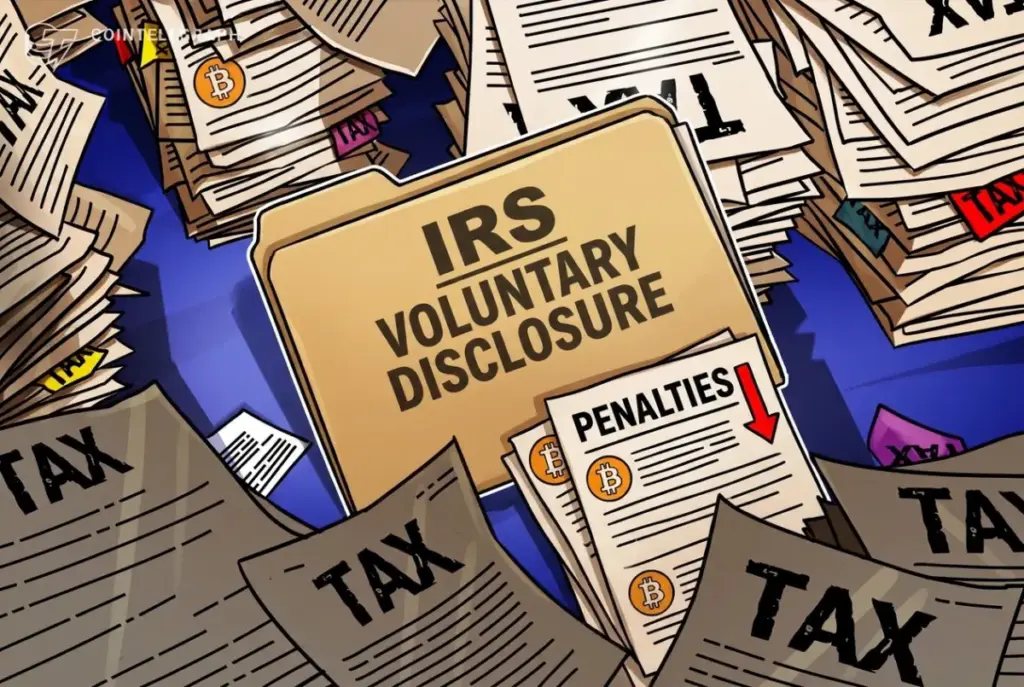
The United States Internal Revenue Service (IRS) is actively preparing a comprehensive overhaul of its voluntary disclosure program, with sweeping plans designed to significantly reduce financial penalties and dramatically accelerate the resolution of complex tax violations. According to a recent report published by Forbes, these impending updates will apply broadly to various forms of tax noncompliance, including those involving digital assets and cryptocurrencies, marking a potentially pivotal shift in how federal tax authorities approach individuals seeking to bring their accounts into good standing.
Speaking at the recent UCLA Extension Tax Controversy Conference, IRS Criminal Investigation Chief Jarod Koopman outlined the agency’s ambitious timeline, stating that officials aim to officially introduce the revised program before the arrival of December. A cornerstone of the upcoming overhaul is a strict operational target: the IRS wants to completely resolve participating cases within a streamlined window of just 120 days after taxpayers successfully complete the required submission process. This targeted turnaround time represents a radical departure from the current administrative reality, which frequently leaves cases lingering for a year or much longer before a final resolution is reached.
Despite the growing prominence of digital currencies in financial portfolios and regulatory discussions, the upcoming IRS overhaul will reportedly not establish a standalone, separate disclosure process specifically designated for digital assets. Instead, Koopman clarified to conference attendees that the agency intends to handle digital assets seamlessly through the exact same voluntary disclosure procedures that are already utilized for traditional forms of tax noncompliance. By integrating crypto into the established framework rather than building a siloed system, the agency hopes to maintain consistent standards while accommodating the unique reporting challenges that have emerged across the broader digital economy in recent years.
While specific financial figures and penalty structures have not yet been publicly detailed by the agency, Koopman strongly indicated that the penalties levied under the newly revised program will be substantially lower than those currently imposed on taxpayers who come forward. Furthermore, to ease the burden of compliance and encourage greater participation, the federal tax agency is actively considering provisions that would allow qualifying taxpayers to settle their outstanding liabilities through flexible financial arrangements, such as structured installment plans or formal offers in compromise.
These proposed structural changes represent a notable evolution from the existing administrative process, which has historically been characterized by prolonged delays and steep financial penalties. As it stands today, the IRS’s voluntary disclosure program is specifically intended for taxpayers whose willful failure to comply with federal tax laws exposes them to the severe risk of criminal prosecution, rather than individuals who made honest reporting errors or minor administrative mistakes out of simple oversight. The existing framework demands meticulous preparation and a high degree of transparency, often requiring extensive engagement with tax authorities while navigating complex legal parameters over extended periods.
While the IRS moves forward with its internal administrative updates, federal lawmakers on Capitol Hill are simultaneously evaluating a separate legislative pathway designed to address crypto taxpayers who may have made unintentional reporting errors. Under Section 502 of the proposed Digital Asset Tax Certainty Act, a distinct voluntary disclosure program would be established specifically to help crypto participants correct past reporting violations under clearly defined and predictable penalty guidelines. Unlike the IRS’s administrative voluntary disclosure program, which focuses heavily on willful tax noncompliance and potential criminal exposure, this legislative measure aims to offer a practical safety valve for everyday market participants who struggled with the complexities of digital asset taxation. Momentum behind this legislative effort picked up notably when the bill successfully cleared the House Ways and Means Committee, reflecting a broader congressional interest in providing regulatory clarity and fairer resolution mechanisms for the rapidly evolving cryptocurrency sector.
 Crypto Regulation & Policy
 Crypto Regulation & Policy
 Crypto Regulation & Policy