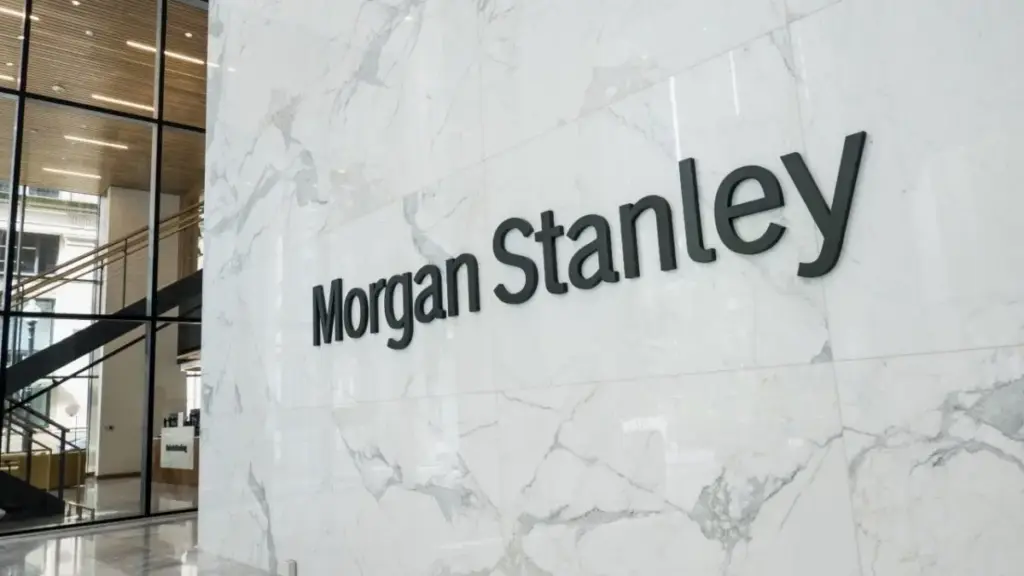
Wall Street heavyweight Morgan Stanley has announced that it stands among the first major financial institutions to successfully tokenize real-world assets leveraging the newly launched Depository Trust and Clearing Corporation Tokenization Service. This significant development, officially disclosed by the firm, highlights an accelerating industry-wide shift toward integrating distributed ledger technology directly into the core plumbing of traditional global finance, bridging decades-old settlement systems with modern, programmable digital infrastructure.
Digitizing Legacy Instruments
The official announcement from Morgan Stanley on November 4 follows closely on the heels of the official commercial launch of the Depository Trust & Clearing Corporation Tokenization Service, commonly known as DTS, which went live on October 28. By embracing this innovative platform, the Wall Street giant has begun utilizing the infrastructure to generate tokenized representations of vital mainstream financial instruments, specifically focusing on U.S. equities and U.S. Treasury securities.
This strategic integration effectively maps traditional, highly regulated financial assets onto distributed ledger networks. For decades, the movement and settlement of these traditional instruments have relied on legacy systems that, while robust, often involve structural bottlenecks, operational friction, and complex clearing procedures. The advent of the DTCC’s tokenization platform aims to transcend these traditional limitations by providing a secure, institutional-grade environment where authorized entities can issue, track, and manage digital representations of assets that are held in custody by the Depository Trust Company.
When the DTCC originally rolled out the DTS infrastructure, the clearing and settlement giant outlined a comprehensive and ambitious vision centered on modernizing core market infrastructure. At its debut, the platform was established with initial connectivity to prominent digital networks, including the Canton Network and the DTCC’s private Besu blockchain. According to statements released by the organization during the launch, the architecture of the tokenization service was specifically engineered to tackle deeply entrenched structural inefficiencies within legacy trading environments.
The overarching design of the platform focuses squarely on achieving three vital operational objectives: enhancing overall asset liquidity, boosting collateral mobility across various accounts and jurisdictions, and drastically reducing operational overhead. By streamlining the settlement process and minimizing friction, the service allows major financial institutions to optimize how capital is deployed across their complex, fast-paced trading operations. Rather than existing as a mere theoretical exercise, this implementation represents a tangible bridge between the physical and digital realms of asset management.
Shift to Production-Grade Workflows
The rapid adoption of the DTCC Tokenization Service by an institution as prominent as Morgan Stanley underscores a broader, highly consequential macroeconomic trend taking place across the global banking sector. For several years, major financial institutions explored blockchain technology primarily through exploratory proofs-of-concept, isolated pilot programs, and localized sandbox environments. Today, however, the industry is witnessing a steady and deliberate migration from these experimental phases toward live, production-grade operational workflows that interact directly with real market assets.
Amy Oldenburg, head of digital assets strategy at Morgan Stanley, emphasized the profound significance of this transition. In an official statement regarding the firm’s integration of the service, Oldenburg noted that the hands-on experience gained from working directly with tokenized securities on established market infrastructure will play a foundational role in shaping the firm’s strategic roadmap. As market structures continue to evolve and mature, the insights gathered from these live deployments will directly influence how Morgan Stanley builds out its broader digital asset capabilities.
The integration serves as a real-world test of whether distributed ledger technology can successfully scale within the demanding, highly regulated environment of global traditional finance. As early adopters begin testing, issuing, and deploying tokenized equities and Treasuries at an institutional scale, industry observers and market watchers are viewing the DTCC’s DTS as a critical proving ground. The success of these implementations could pave the way for a wider, more permanent transformation of how traditional financial assets are created, cleared, settled, and managed on a global scale.
 Bitcoin & Major Altcoins
 Bitcoin & Major Altcoins
 Bitcoin & Major Altcoins