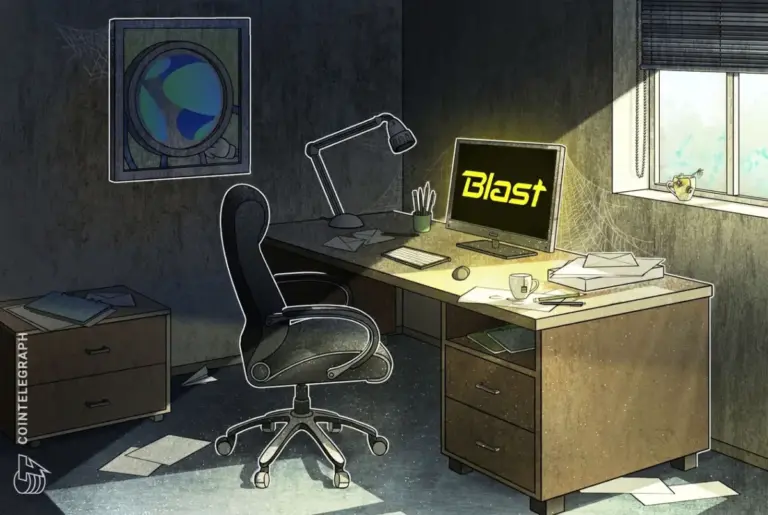
Nonfungible token marketplace Blur, which once stunned the digital asset ecosystem by briefly overtaking OpenSea as the largest NFT platform by trading volume, has announced that it will shut down its website next month. The decision has drawn a remarkably polarized reaction from the digital collectibles community, with some veteran collectors expressing outright celebration over the platform’s impending departure.
Blur revealed the major development in a post on social media platform X on Monday, marking its first communication on the channel in more than a year. According to the announcement, the platform’s frontend interface will officially shut down on November 12. However, the protocol emphasized that its underlying onchain marketplace will remain operational for users interacting directly with the smart contracts.
Alongside the website shutdown, Blend, the peer-to-peer perpetual NFT lending protocol built by the Blur team, will also cease matching new loans. Blur stated that active borrowers have until November 12 to either repay their outstanding loans in full or allow them to default. Additionally, the platform promised to provide a dedicated withdrawal interface following the shutdown to allow users to retrieve remaining assets safely.
The announcement immediately reignited deep-seated divisions within the digital asset community, exposing lingering resentment among digital artists, creators, and traditional collectors over Blur’s historical market strategies.
"Good riddance. You destroyed NFTs. Please shut down and never come back," wrote prominent NFT collector Cryptobscure in a direct reply to the company’s post on X.
Another collector, known as starfruit, echoed the sentiment in a separate post, writing, "You may not have been able to complete your mission to destroy NFTs. But you acted with extreme determination and tried everything. Congratulations to us for surviving you."
A Controversial Rise to Prominence
The sudden shutdown announcement has naturally renewed fierce criticism of the aggressive token-reward and fee structure that helped propel Blur to the absolute peak of the NFT trading charts in 2023. When Blur officially launched on October 19, 2022, it introduced an innovative yet disruptive model that allowed sellers to customize royalty payments while offering significantly larger prospective token rewards to market participants who elected to pay higher creator royalties.
Blur entered the market during a period when royalty protections were already beginning to erode. Competitor marketplace Magic Eden had shifted its policy to optional creator royalties just the week prior. Nevertheless, Blur’s rapid ascension accelerated a profound industry-wide shift toward lower creator royalties. Following Blur’s market penetration, rival platform OpenSea subsequently moved to adopt optional creator fees for newly listed collections, abandoning its previously strict enforcement policies.
The impact on creators was swift and measurable. By July of the following year, a comprehensive report published by blockchain analytics platform Nansen revealed that effective creator royalty fees across the ecosystem plummeted to an average of just 0.6% in July 2023, down sharply from an average of 2.5% throughout 2022. Nansen’s analysts attributed a significant portion of this steep decline directly to Blur’s rapid market growth, its minimum royalty framework, and the defensive policy adjustments made by OpenSea and other platforms attempting to remain competitive.
NFT Sales Slump from Boom-Era Highs
Blur did not publicly disclose the specific strategic or financial rationale behind its decision to shutter its website frontend and wind down new lending activity on the Blend protocol. However, the sudden withdrawal arrives at a time when the broader nonfungible token market remains severely depressed, trading at a fraction of the astronomical valuations and volumes seen during its historical boom era.
Recent data compiled by CryptoSlam highlights the stark contrast between the market’s previous heights and its current reality. Total NFT sales across the entire ecosystem reached just $167 million in September, spread across approximately 2.9 million total transactions. In stark contrast, the market hit its all-time peak in January 2022, when monthly sales volume touched an astonishing $6 billion generated across 13.7 million transactions.
This prolonged trading slump has taken a heavy toll on infrastructure providers and digital marketplaces across the entire crypto sector. Gemini-owned Nifty Gateway and social collecting platform Rodeo both announced formal plans to wind down their operations in January. Meanwhile, digital art platform Foundation announced its closure in April after a last-ditch corporate sale intended to keep the marketplace operating ultimately fell through. Major centralized entities have also scaled back their footprint; Binance formally ended support for NFT services on its primary exchange, shifting asset management functionalities exclusively to Binance Wallet.
Cointelegraph reached out to Blur founder Tieshun “Pacman” Roquerre for additional comment regarding the platform’s upcoming closure and the future of its onchain infrastructure.
 Non-Fungible Tokens (NFTs)
 Non-Fungible Tokens (NFTs)
 Non-Fungible Tokens (NFTs)