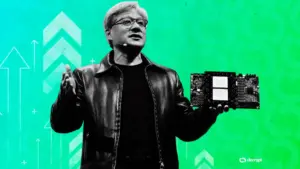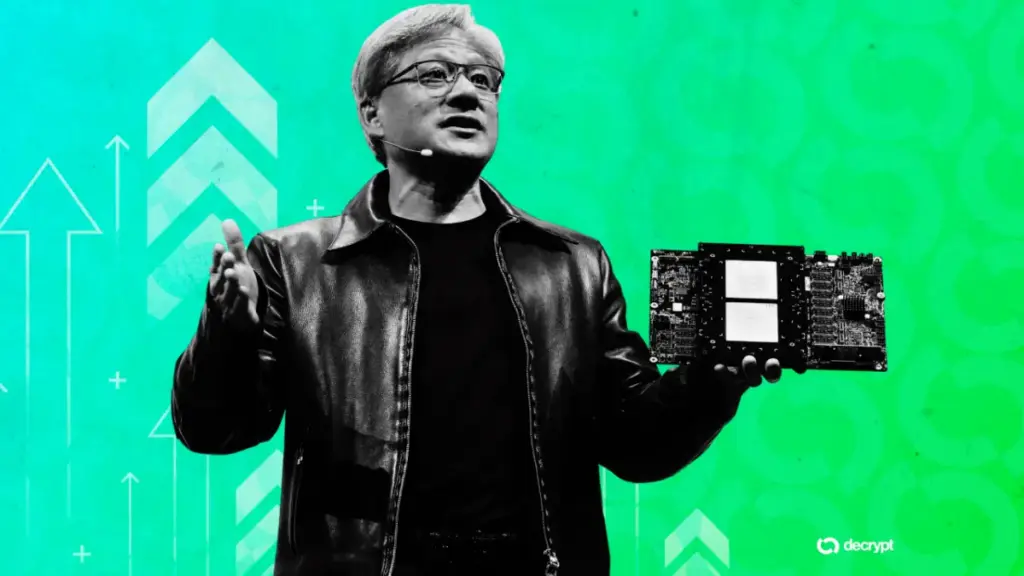
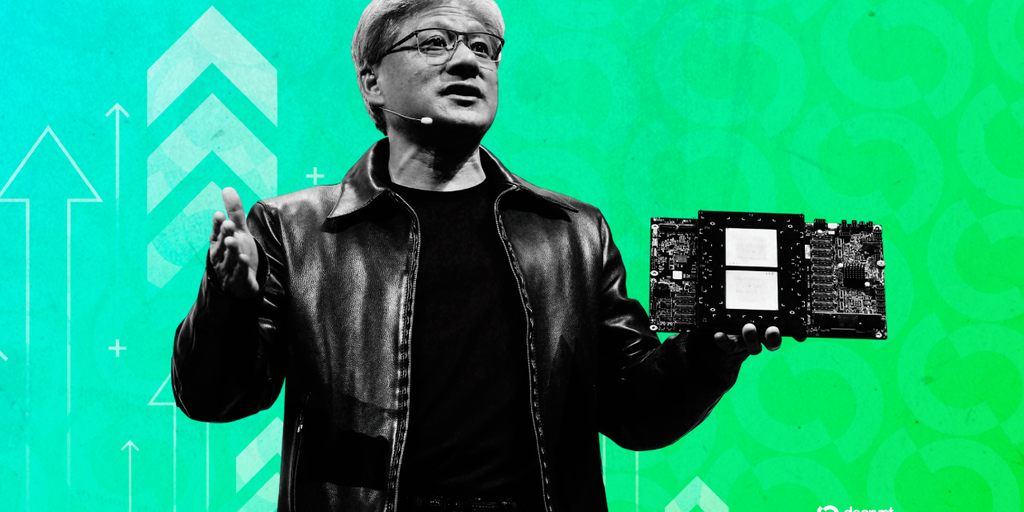
Nvidia shares plunged as much as 8% on Monday, briefly threatening to erase roughly $350 billion in market value as investors weighed the possibility that Chief Executive Officer Jensen Huang could lose his job over an alleged Chinese intelligence operation. For a corporation that has firmly established itself as the very face of the global artificial intelligence boom, that represents a remarkably expensive corporate scandal. And by all accounts, the independent investigation into the matter is only just getting started.
The turbulence began after Nvidia’s board of directors opened an independent investigation following reports that Huang had been involved in a romantic relationship with a business executive whom United States intelligence agencies believe was recruited by China’s Ministry of State Security. In response to the unfolding crisis, Huang acknowledged being unfaithful to his wife in a direct message sent to company employees, where he formally apologized and pledged his full cooperation with the board’s review. Meanwhile, Nvidia’s board stated publicly that it currently has no reason to believe that company secrets or U.S. national security interests have been compromised, while also expressing full confidence in his continued leadership.
While the ongoing allegations have not established that Huang disclosed sensitive proprietary information or knowingly cooperated with foreign intelligence, investors are already confronting the possibility of a much broader and more systemic problem. The sudden crisis compounds existing market anxieties surrounding the high-flying semiconductor giant, injecting a severe dose of unpredictability into a stock that was already navigating a turbulent financial landscape.
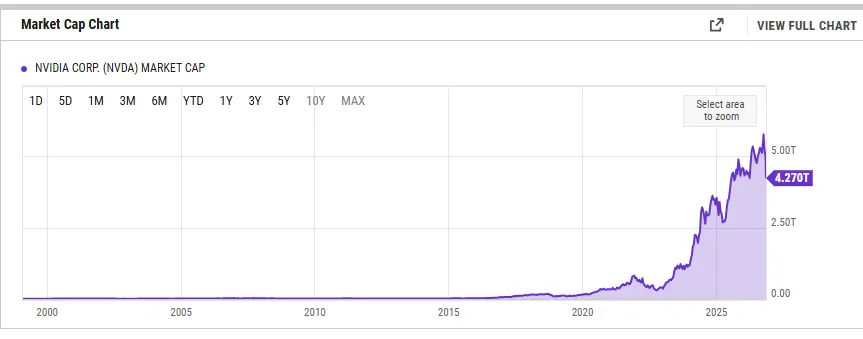
Nvidia was already losing trillions before the investigation came to light. The company’s market capitalization had declined from a lofty peak of roughly $5.78 trillion on October 6 down to $4.51 trillion by November 6, according to data from YCharts. That equates to approximately $1.27 trillion in lost market value even before the board publicly announced its ongoing investigation into the CEO. This latest controversy adds yet another layer of risk to a stock that was already facing tough questions from Wall Street regarding the long-term financial sustainability of massive, multi-billion-dollar AI infrastructure spending by major tech conglomerates.
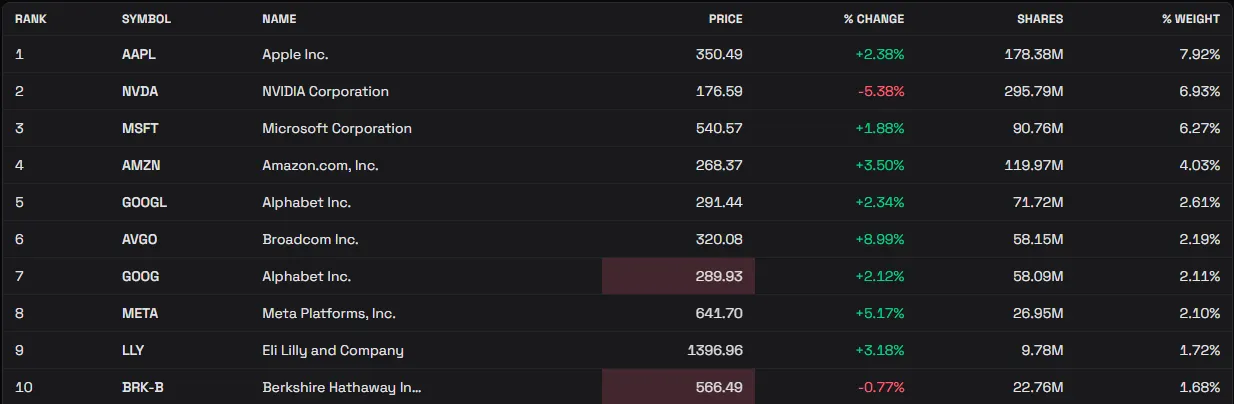
Furthermore, Nvidia carries enough sheer weight to move the entire broader financial market. A November 6 market snapshot placed the company at a staggering 6.93% weighting in the SPDR S&P 500 ETF, which tracks the market-capitalization-weighted index of major United States corporations. At that massive weight, a significant percentage decline in Nvidia alone subtracts a notable fraction of a percentage point from the S&P 500’s overall performance, assuming everything else remains unchanged—though in reality, broader market dynamics rarely remain static, especially given that Nvidia serves as the primary hardware backbone for numerous other companies in the country, including several within the prestigious top ten.
Despite the heavy pressure on Nvidia, broader market sentiment remained resilient on Monday. The S&P 500 actually rose 1.48% during morning trading, while the tech-heavy Nasdaq gained 1.87%. Other major semiconductor stocks also rallied throughout the session, signaling that institutional investors and traders were largely treating Nvidia’s current troubles as a company-specific event rather than fleeing from the broader artificial intelligence trade altogether.
The central question dominating financial circles is whether Jensen Huang could actually be forced to resign from the company he helped co-found back in 1993. Replacing Huang would involve considerably more than simply finding another executive capable of presenting a new graphics processing unit at a keynote event. The 63-year-old CEO has meticulously built an unusually centralized management structure over more than three decades and maintains deeply critical, irreplaceable relationships with key global customers, major hardware suppliers, and foreign governments. Industry analysts have repeatedly questioned whether Nvidia has any obvious, ready-made successor capable of stepping into his shoes without missing a beat.
Chris Weston, head of research at Pepperstone, told Reuters that he did not expect Huang to resign over the matter. However, he cautioned that if investors were to genuinely believe his departure was imminent, the stock’s downward reaction could turn into an absolute bloodbath. Bloodbath or not, the stock would inevitably be exposed to a tremendous amount of structural uncertainty. After all, Huang is the visionary architect responsible for building an entire technological empire. His potential departure would draw parallels to scenarios like Mark Zuckerberg leaving Meta, Elon Musk departing Tesla, or Vitalik Buterin disowning Ethereum. Beyond pure fundamental market analysis, Huang is the defining persona behind Nvidia, and market sentiment is uniquely sensitive to his presence.
Dan Ives of Yorkville Ives & Co. similarly described Huang as completely irreplaceable, though he acknowledged that the ongoing independent investigation could conceivably result in his eventual removal if findings warrant it. Legal and corporate governance experts note that an extramarital affair alone does not automatically justify the dismissal of a sitting chief executive. Unless the scandal escalates into a severe reputational hazard for Nvidia, it remains entirely possible that Huang could weather the storm and markets would eventually recover, provided the company continues delivering astronomical financial profitability. The far more consequential question for regulators and the board is whether Huang’s personal conduct inadvertently exposed sensitive corporate information, created unforeseen cybersecurity vulnerabilities, or compromised Nvidia’s core business interests. So far, the company has announced no findings that establish any such failures.
A sudden resignation could trigger another sharp selloff across the board, particularly in the absence of a credible, pre-vetted succession plan. At present, however, there is no reliable way to calculate just how far the stock might fall, or whether investors would ultimately welcome a fresh era of management under a different leader.
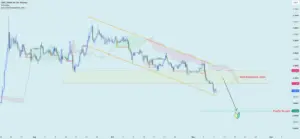
From a technical perspective, Nvidia’s stock has been locked in a sustained bullish trend ever since the explosive arrival of ChatGPT sparked the generative AI revolution in 2023. Even so, the company’s weekly trading charts were already flashing notable warning signs well before the current allegations emerged into the public eye. The stock traded near $179.34 on Monday, sitting significantly below its 50-week exponential moving average of approximately $199.16. That crucial technical indicator tracks longer-term price momentum while assigning greater weight to recent trading sessions.
This technical breakdown is particularly significant because Nvidia had spent the vast majority of its recent multi-year bull market comfortably trading well above that specific moving average line. Its last comparable breach occurred during the broader market correction of 2025 and during the pre-ChatGPT market lows of 2022 and 2023. Because the stock had already crossed below that indicator prior to the breaking news of the scandal, the independent investigation essentially accelerated an existing bearish technical trend rather than causing the entire structural breakdown single-handedly. Technical analysts note that a sustained recovery above the $190 threshold, followed by a decisive move back above the 50-week exponential moving average near $199, would be required to significantly improve the stock’s medium-term technical outlook. Because Monday’s weekly trading candle remained unfinished, a confirmed weekly close below the indicator would ultimately carry much more analytical weight than a transient intraday price movement.
Amid the mounting corporate uncertainty, political figures have begun weighing in on the controversy. President Donald Trump has already publicly defended Huang, describing him as an exceptionally honorable person who has performed an outstanding job for the United States technology sector. Speaking to reporters on Sunday, the president remarked that Huang likely has a valid context for the situation and that the public should hear his side of the story.
While presidential support could potentially offer Huang some political insulation, the timing of the controversy is particularly delicate as Nvidia continues to navigate complex geopolitical waters, including strict Washington-mandated export controls on advanced artificial intelligence chips destined for China. Huang has historically been an outspoken advocate for allowing Nvidia to continue selling high-performance processors to Chinese corporate customers. Allegations involving a suspected foreign intelligence operation could significantly complicate those ongoing policy negotiations, even in the complete absence of any verified evidence that the CEO knowingly participated in espionage activities. Meanwhile, China’s Foreign Ministry has formally rejected the allegations, labeling them as entirely baseless.
On Capitol Hill, congressional Republicans have also requested a private briefing regarding Nvidia’s internal security protocols and risk management procedures. Lawmakers have sought Huang’s agreement on a definitive date for the briefing, according to reports by Axios.
As the independent board review continues without a publicly announced completion date, investors are bracing for another crucial milestone on the horizon. Nvidia is officially scheduled to report its third-quarter financial results and host a corresponding conference call on November 17. That upcoming earnings report will provide the broader market with a vital opportunity to rigorously assess the underlying health and robust profitability of Nvidia’s core business against the backdrop of mounting executive and geopolitical uncertainty.
 Decentralized Finance (DeFi)
 Decentralized Finance (DeFi)
 Decentralized Finance (DeFi)