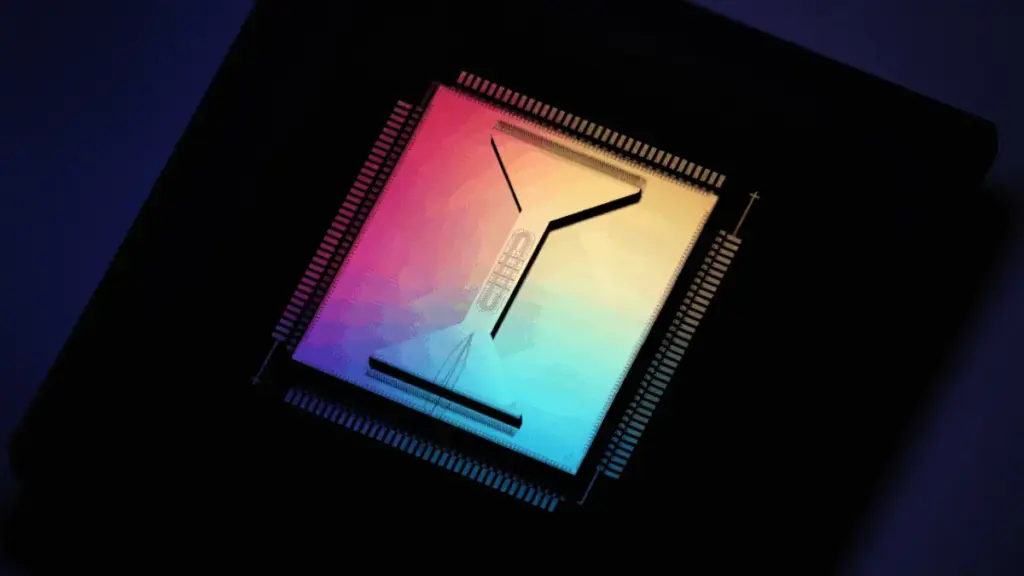
Quantum computing firm Quantinuum has announced a major breakthrough in quantum error correction, achieving a record 99.9995% logical fidelity. According to the company, this milestone significantly strengthens its trajectory toward delivering a commercially viable, fault-tolerant quantum computer by 2029. This technological leap forward arrives amid growing scrutiny and mounting concerns across the technology and financial sectors that increasingly powerful quantum machines could eventually undermine the robust cryptography currently protecting Bitcoin and other major cryptocurrencies.
Quantum Accuracy Is Rapidly Improving
Quantinuum announced that its Helios quantum computer achieved a remarkable logical error rate of just five errors per million operations. This performance represents a tenfold improvement over the company’s previous record, which was established just months prior in September. Furthermore, Quantinuum claims that this latest result is 100 times better than the best previously published outcomes utilizing competing quantum hardware architectures, a benchmark that had been held by Google Quantum AI.
This latest breakthrough directly addresses one of the most formidable and persistent challenges in the field of quantum computing: keeping complex calculations accurate despite the extreme sensitivity of quantum bits, or qubits, to environmental noise and operational errors. Unlike conventional computers, which process information in deterministic binary states of zeros and ones, quantum systems rely on superposition and entanglement. These fragile states require sophisticated, highly resource-intensive error-correction techniques to reliably execute complex calculations without collapsing into noise.
To achieve this historic level of accuracy, Quantinuum utilized a specialized technique known as a “color code.” This method successfully combines multiple physical qubits into vastly more reliable logical qubits, shielding the quantum information from degradation. During their experiments, the company’s researchers also demonstrated that logical errors declined exponentially as they increased the level of protective architecture. Each tested increase in protection successfully reduced the remaining logical errors by a factor of 12.
These cutting-edge results build directly upon Quantinuum’s September breakthrough, which utilized a different error-correction methodology operating on the exact same Helios hardware platform. By proving that multiple error-correction schemes can yield exceptional results on the same underlying hardware, the company has bolstered confidence in its broader engineering roadmap.
“We’ve crossed the threshold necessary for exponential improvements in accuracy, reinforcing our path to Apollo and how we can help users unlock commercial value from quantum at scale,” said Quantinuum CEO Rajeeb Hazra in an official statement addressing the milestone.
The company confirmed that this latest achievement brings its overall error-correction performance precisely into the target operational range required for Apollo, its planned universal fault-tolerant quantum computer slated for release by 2029.
External experts have taken note of the achievement, acknowledging its weight within the scientific community. Robin Blume-Kohout, co-director of the Quantum Performance Lab at Sandia National Laboratories, who was not independently involved in the research, described the milestone as highly significant. He noted that the findings strongly suggest a future scaled-up system could ultimately achieve useful, fault-tolerant quantum computing utilizing fewer than one million physical qubits—a lower hardware overhead than many industry projections previously assumed.
At the same time, researchers and industry analysts emphasize that these results represent a victory concerning a specific error-correction benchmark rather than a full demonstration of a large-scale, general-purpose quantum computer. Substantial engineering hurdles and scaling challenges remain before such complex systems can execute arbitrary, large-scale algorithms reliably in a commercial environment.
Bitcoin’s Quantum Threat Comes Into Focus
The timing of Quantinuum’s announcement has amplified ongoing anxieties within the digital asset ecosystem. It follows closely on the heels of a separate breakthrough announced by Google Quantum AI, where researchers demonstrated a technique called “magic state cultivation” that successfully reduced errors by a factor of 40. That specific research achieved 99.99% logical fidelity in producing the specialized quantum states required to drive advanced computations.
As industry observers have increasingly noted, Google’s steady progress has renewed acute concerns regarding “Q-Day”—the hypothetical yet increasingly plausible future point at which quantum computers achieve the raw processing power and stability required to break widely used public-key cryptographic systems.
Earlier this year, foundational research published by Google estimated that cracking the elliptic-curve cryptography utilized in Bitcoin’s digital signatures could require fewer than 500,000 physical qubits. This estimate is roughly 20 times lower than some of the more conservative projections put forward in previous academic literature.
That same research outlined a theoretical scenario in which a sufficiently advanced, fault-tolerant quantum computer could successfully derive a Bitcoin private key from an exposed public key in approximately nine minutes. The implications of such a vulnerability are profound for the broader cryptocurrency landscape. Researchers estimated that approximately 6.9 million bitcoins—representing nearly one-third of the total possible circulating supply of the digital asset—could theoretically be vulnerable because their public keys have already been exposed on the blockchain. This exposed supply includes funds held in older legacy wallet formats and addresses where funds have been reused across multiple transactions.
While Quantinuum’s latest milestone does not demonstrate any immediate capability to crack Bitcoin’s cryptographic architecture, it represents essential, tangible progress toward the reliable, fault-tolerant quantum computation that would eventually make such sophisticated attacks feasible.
These intersecting developments have intensified urgent discussions among developers, custodians, and financial institutions regarding the absolute necessity of preparing cryptocurrency networks for a post-quantum world. Fidelity Digital Assets has previously warned that exposed Bitcoin public keys could represent a significant long-term risk, while major exchanges like Coinbase have actively mapped out the technical challenges involved in transitioning the decentralized Bitcoin network to quantum-resistant cryptography.
Potential defenses and mitigations include the adoption of new, post-quantum digital signature schemes. However, implementing such cryptographic upgrades across a decentralized network is far from trivial. It would likely require substantial, highly coordinated changes to Bitcoin’s core infrastructure, including larger signature sizes, mandatory wallet upgrades, and global consensus among network participants.
A particularly difficult structural challenge involves dormant bitcoin holdings whose original owners may be entirely unreachable or unable to migrate their funds to modern, quantum-resistant addresses, potentially leaving a permanent tranche of early coins exposed.
For the present moment, no existing quantum computer possesses the necessary scale or fidelity required to break Bitcoin’s cryptographic protections. Yet, with Quantinuum aggressively targeting 2029 for the rollout of its fault-tolerant Apollo system and competitors like Google making rapid, parallel strides in underlying quantum hardware and software, the race to develop and deploy quantum-resistant cryptocurrency infrastructure is rapidly taking on greater urgency across the global financial technology sector.
 Bitcoin & Major Altcoins
 Bitcoin & Major Altcoins
 Bitcoin & Major Altcoins