
Just when market participants might have assumed that the crypto space was settling into a quiet routine, an unexpected and vibrant phenomenon has begun illuminating Crypto Twitter: Fake World Assets, or FWAs.
Representing the latest evolution of the rapidly expanding onchain gacha craze, FWAs allow users to deposit funds into smart contracts and receive a randomized digital collectible—or a bundle of collectibles. While many of these prizes carry modest valuations, occasional rewards are worth substantial sums, drawing immediate and intense participation from traders across the decentralized ecosystem.
Within a mere four days of its public launch, the FWA protocol ignited a firestorm of activity on the Ethereum network, consuming so much computational resource that it briefly crowned itself the blockchain’s largest gas consumer over a 24-hour period. At the height of the craze on July 25, FWAs generated approximately $1.53 million in daily transaction fees. In doing so, the protocol managed to leapfrog stablecoin heavyweights Tether and Circle to rank prominently among Ethereum’s most dominant blockspace consumers.
The protocol’s creators, TokenWorks, were quick to highlight the milestone, proclaiming on social media that four days after launch, Fake World Assets were shaping up to be the next major trend in the digital asset landscape.
While TokenWorks is far from an impartial observer, the underlying financial metrics demonstrate significant early traction. Total Value Locked (TVL) continued a steady climb, scaling past $6.15 million by July 31. Although daily fee revenue eventually eased to a more moderate $350,000, this figure still translates to an annualized run rate of roughly $268 million. By August 1, the protocol had notched 10,000 ETH in cumulative volume alongside 100,000 individual purchases.
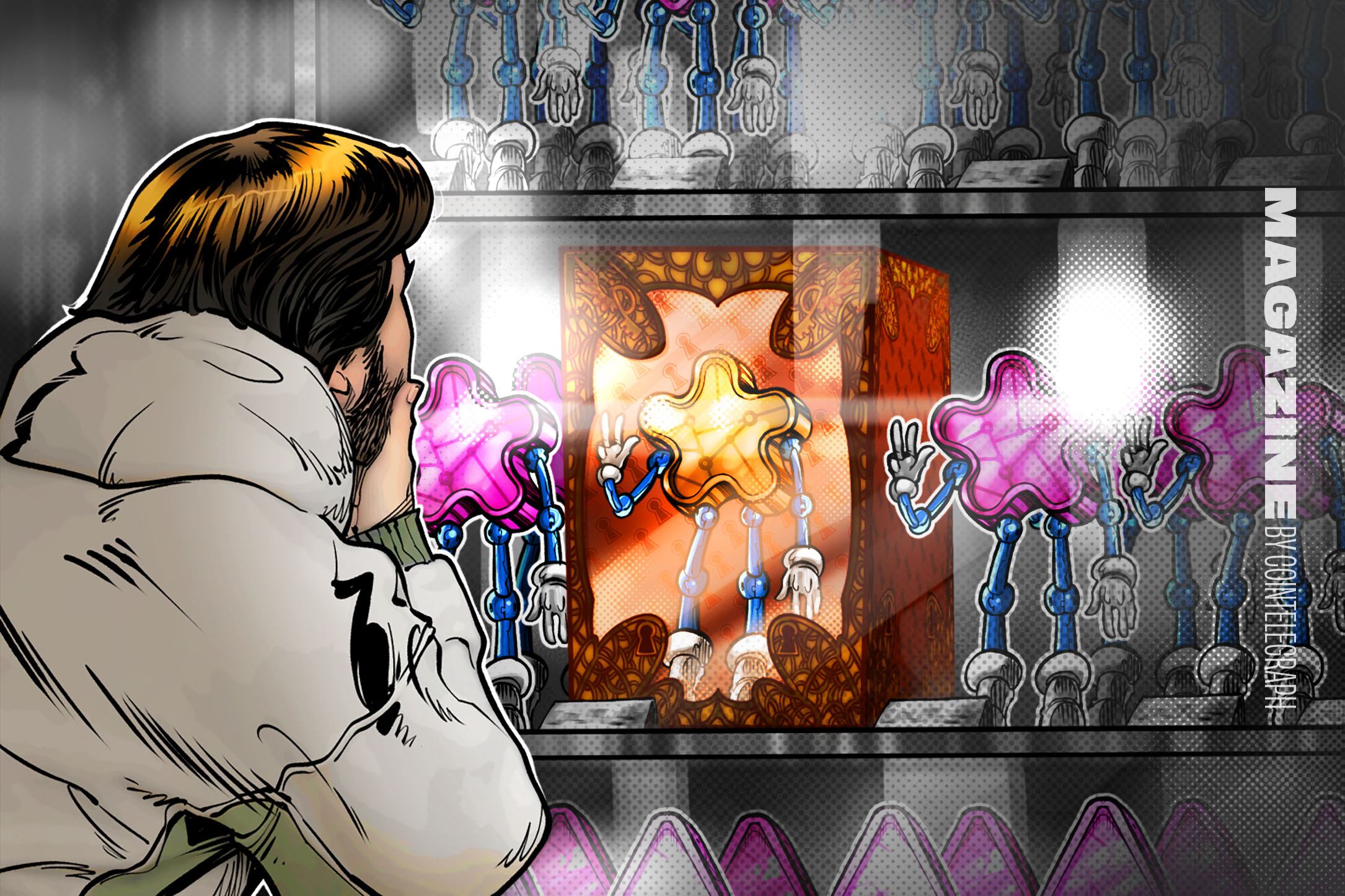
Much of this early momentum has been propelled by users attempting to position themselves for anticipated FWA token incentives. However, industry observers note that there is also a genuine underlying appetite for the gamified mechanics driving the platform.
Not everyone within the venture capital and builder community is convinced that the excitement surrounding FWA will stand the test of time. Simon Dedic, founder of venture capital firm Moonrock Capital and an early supporter of various onchain collectible platforms, offers a nuanced perspective on the trend. While expressing enthusiasm for gamified commerce as a broader generational shift, Dedic maintains specific reservations regarding the FWA model itself. He argues that a substantial portion of the current transactional volume is being artificially stimulated by generous token incentives rather than organic demand, noting that the entire architecture seems primarily designed for crypto speculators looking for new avenues to gamble and take risks.
The broader question facing market participants is whether FWA represents another fleeting obsession born of a slow market cycle or if the industry has finally stumbled upon a durable, gamified primitive built to last.
Understanding the Mechanics of Fake World Assets
To understand the sudden fascination with FWAs, it helps to examine how they flip years of conventional crypto development on its head. For quite some time, the digital asset industry has dedicated vast resources toward bringing real-world assets onchain—ranging from tokenized corporate stocks, government bonds, and collectible cards to niche assets like Brazilian agricultural collateral.
TokenWorks decided to invert this paradigm entirely by introducing Fake World Assets, which fundamentally function as dynamic NFTs. Instead of purchasing a specific, predetermined collectible such as a prized Bored Ape, users pay to spin an onchain gacha machine. This grants them a randomized digital asset backed directly by Ether. The prizes seeded into these pools originate from dozens of highly recognizable collections across the NFT ecosystem, including prominent projects like CryptoPunks, Azuki, Lil Pudgys, and Art Blocks.
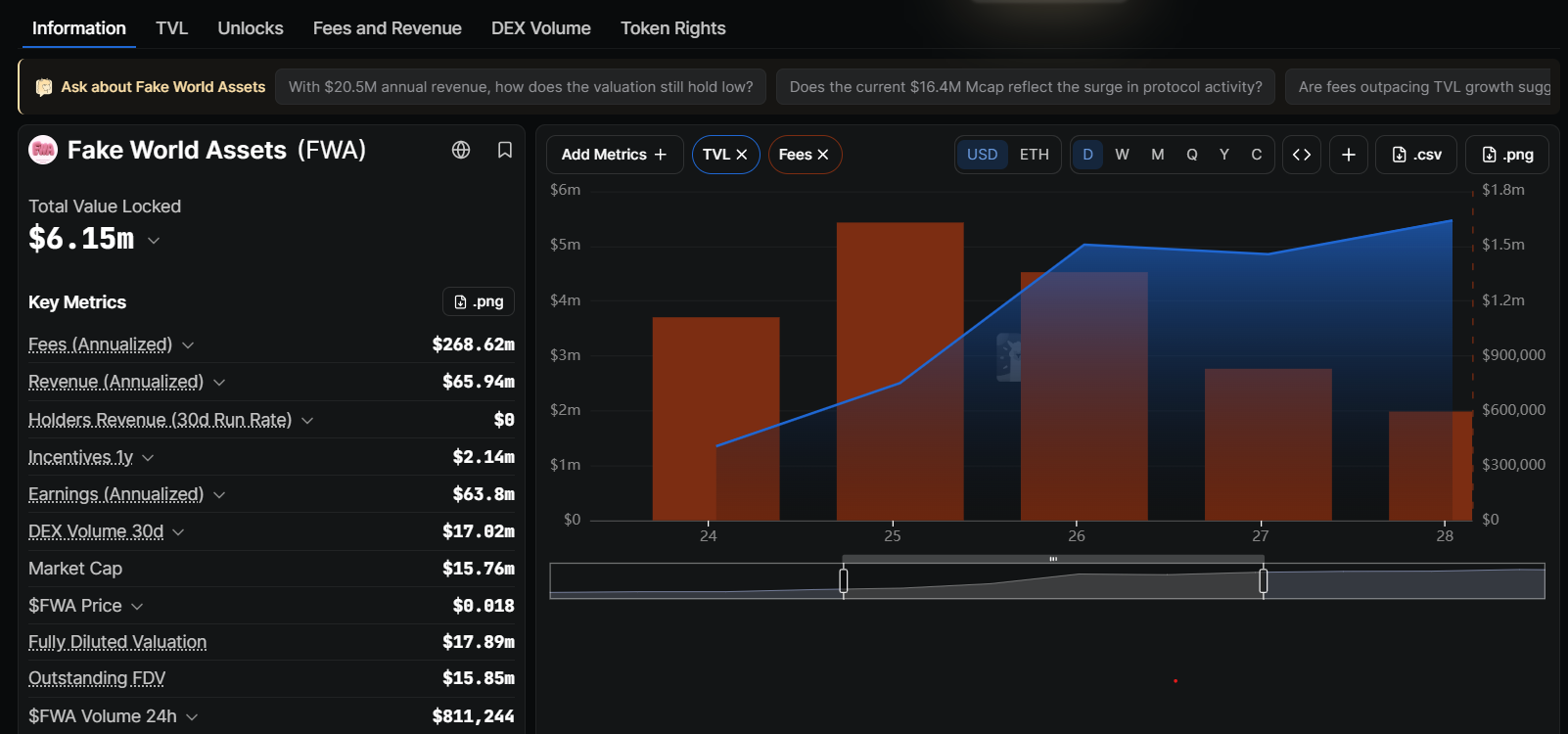
The underlying concept draws its name from gachapon, the popular capsule-toy vending machines invented in Japan during the 1960s that dispense random trinkets in sealed containers. This psychological loop eventually migrated into mobile and browser video games, with loot boxes in titles like Dragon Collection in 2010 widely cited as a foundational milestone for digital gacha mechanics. A parallel phenomenon has long existed in the physical world through Pokémon trading card booster packs, which offer randomized assortments of cards spanning various rarity tiers and monetary values.
In recent years, these physical collectibles have been successfully tokenized onchain by specialized projects such as Collector Crypt, Beezie, and Courtyard. As previous industry reports have highlighted, onchain gacha mechanisms recently hit a record $324 million in monthly trading volume. Many of these tokenized physical cards have even been wrapped and integrated directly into the FWA ecosystem.
The experimental wave continues to broaden across multiple chains and token standards. Developers are actively testing randomized token packs containing various ERC-20 assets, while tools like StockRip on the Robinhood chain demonstrate how tokenized equities can be seamlessly packaged into NFT-based gacha bundles. As AzFlin, founder of the DAO launchpad daos.world and a former Uniswap engineer, observes, just when observers assume every conceivable financial primitive has already been invented in crypto, a novel variation emerges.
The Behavioral Appeal of Onchain Gacha
The enduring appeal of onchain gacha lies at the intersection of decentralized finance, digital collectibles, and traditional speculation. As pseudonymous crypto commentator 2Lambroz describes it from a player’s standpoint, participants are essentially purchasing a lottery ticket tied to a collective liquidity pool.
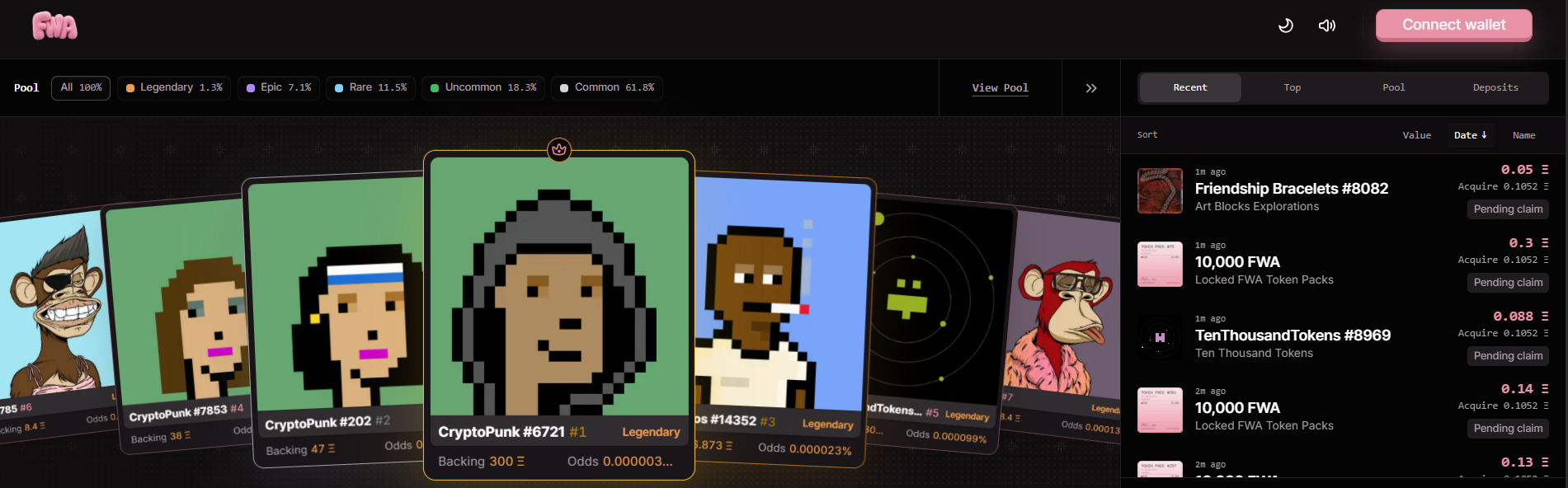
This behavior taps into deep-rooted psychological drivers. Benjamin Lockwood, an economist at Wharton whose academic research into state-run lotteries examined the motivations behind continuous play, found that participants frequently value the entertainment and experiential aspects of the gamble itself, rather than calculating purely rational probabilities of a financial payout.
Meir Statman, a behavioral finance pioneer, professor at Santa Clara University, and author of A Wealth of Well-Being, draws a compelling parallel between onchain gacha and the public fascination with bidding on the contents of abandoned storage units. Most units yield items destined for the trash, but occasional discoveries yield valuable treasures that can be flipped for substantial profits on secondary markets. Statman notes that these activities successfully blend a playful sense of hope for sudden riches with pure entertainment—the exact formula that traditional lotteries have leveraged for generations.
The Dual Architecture of the Protocol
The internal design of the FWA protocol relies on a symbiotic relationship between two distinct participant groups: liquidity providers and players.
NFT holders act as liquidity providers by depositing their valuable digital collectibles alongside matching amounts of ETH into the protocol’s smart contracts. While their positions remain active within the pool, these liquidity providers earn a continuous share of the transaction fees generated by ongoing activity.
Players, meanwhile, pay a set fee for the chance to draw a randomly selected NFT from the pool. Once a draw occurs, the player decides whether to keep the acquired NFT or redeem it immediately for the bulk of its attached ETH value through the protocol. Market research indicates that roughly 70% of successful purchasers currently opt to convert their winnings back into protocol-native tokens or associated assets.
This dynamic creates a fascinating financial standoff. Liquidity providers gamble that their specific NFTs will remain safely within the pool long enough to accrue substantial fee revenue before being selected and pulled out by a player. Players, conversely, are chasing the statistical possibility of landing a blue-chip prize worth significantly more than the initial cost of a single spin.
For proponents of decentralized finance, the model represents a return to creative composability. Materkel, an outspoken Ethereum advocate, describes the protocol as one of the most entertaining native gambling primitives seen in years, pointing out that participants are uniquely empowered to act as both the players and the house simultaneously, signaling a vibrant return for advanced financial lego architectures on the Ethereum network.
Assessing the Longevity of the Trend
While skepticism remains regarding the longevity of token-incentivized speculative volume, broader industry figures see the underlying trend pointing toward a permanent shift in consumer habits. Simon Dedic reiterates that while the current iteration relies heavily on short-term incentives, he remains deeply bullish on gamified commerce for structural, generational reasons.
As Generation Z continues to mature into the demographic with the highest aggregate purchasing power, retail shopping experiences are increasingly expected to incorporate gamification elements designed to provide immediate dopamine engagement. Furthermore, Dedic suggests that the underlying distribution mechanism is ultimately better suited for assets that consumers already actively desire—such as verified Pokémon cards, luxury timepieces, and rare spirits—rather than speculative tokens created solely to manufacture demand where none previously existed.
The ultimate test for onchain gacha will arrive when the initial wave of novelty subsides and token incentives gradually cool down. If participants continue to spin the wheel regardless of external rewards, the crypto industry may well have unlocked a sustainable retail use case that it has pursued for years. If not, the phenomenon will likely join the archive of short-lived crypto experiments that burned brightly before fading into obscurity.
 Non-Fungible Tokens (NFTs)
 Non-Fungible Tokens (NFTs)
 Non-Fungible Tokens (NFTs)