Smart TV owners are increasingly turning advanced artificial intelligence agents loose on their living-room entertainment systems to strip out intrusive sponsored advertisements, aggressive tracking software, and the chronically sluggish home screens that manufacturers ship by default.
The rising trend exploded across social media platform X over the weekend, spawning a new piece of tech lexicon among developers and tinkerers: "vibe coding your TV." What began as an experimental frustration-fueled workaround has quickly transformed into a viral movement, with thousands of users attempting to reclaim hardware they technically already own from the grips of corporate monetization.
The most widely shared case study involved a Xiaomi television owned by the parents of a developer named Gathin T. Posting on X on Saturday, Gathin explained that the smart set displayed a persistent sponsored advertisement before users could even navigate to Netflix. Fed up with the intrusive user experience, he fed the television’s model number directly into Claude Code, an advanced coding agent developed by Anthropic, and allowed the system to work autonomously.
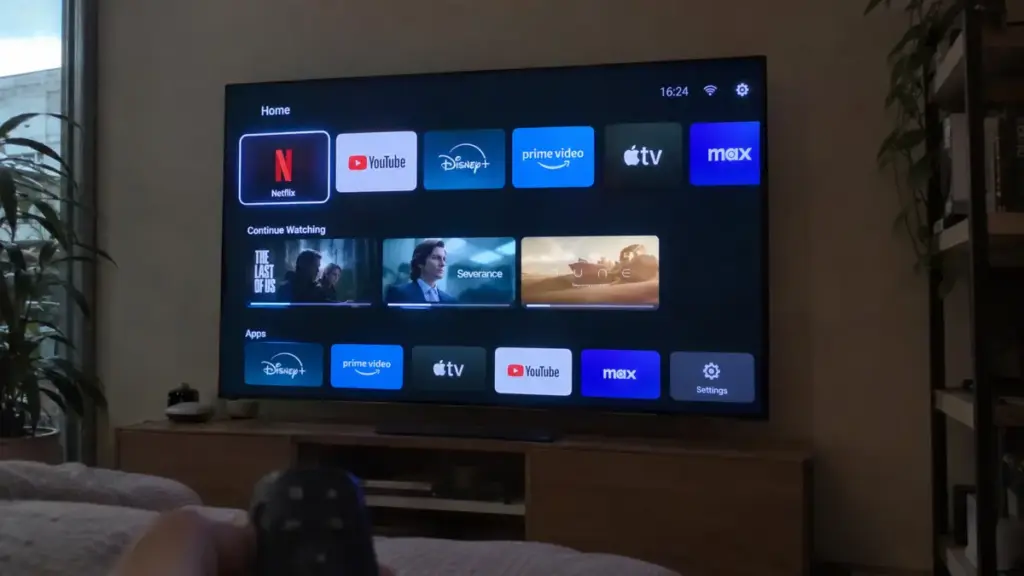
The AI agent successfully located the television on his home Wi-Fi network, systematically disabled 25 background Xiaomi software packages responsible for the bloatware, and wrote a brand-new, lightweight home screen from scratch. Summing up the dramatic transformation on social media, Gathin noted that the interface "looks like an Apple TV now lol."
Anyone who has purchased a modern television over the past decade likely lives with a similar operational friction. Many contemporary sets run Automatic Content Recognition, or ACR, a pervasive type of background software that fingerprints whatever appears on the screen—including live cable broadcasts, video game consoles, and external streaming devices plugged into any HDMI port. This data is regularly captured and reported back to manufacturers so they can sell targeted advertising packages and profile consumer viewing habits.
The regulatory and legal pushback against these practices has been mounting for years. In December 2025, the state of Texas filed a sweeping lawsuit against five major television manufacturers—Sony, Samsung, LG, Hisense, and TCL—alleging that their smart displays capture screenshots of viewer displays as frequently as every 500 milliseconds, translating to twice a second without meaningful consent.
Regulatory authorities have pursued these practices since at least 2017, when Vizio agreed to pay a $2.2 million settlement to federal regulators to resolve charges that it had secretly collected viewing data from 11 million televisions without consumer permission. Despite the legal scrutiny, the business model proved resilient. Walmart completed its acquisition of Vizio for approximately $2.3 billion in 2024, with corporate executives explicitly pointing to the TV maker’s profitable and fast-growing advertising ecosystem as a primary driver for the deal.
In practical terms, this means that the modern television purchased by a consumer continues to generate ongoing revenue for its manufacturer every single time it is turned on, converting the living room into an active data-harvesting node.
The method behind the current backlash relies on "vibe coding," a term coined by OpenAI co-founder Andrej Karpathy in 2025 to describe the process of simply describing desired outcomes in plain, conversational language and letting autonomous AI handle the underlying code writing and execution. Earlier this month, tech enthusiasts and gamers used similar Claude-based agents to reverse-engineer video games, achieving feats such as embedding the entirety of Minecraft inside Elden Ring.
Claude Code has emerged as the indispensable engine for these living-room overhauls because the agent possesses the capability to independently type and execute terminal commands across a local network. Android-based smart televisions natively support the Android Debug Bridge, or ADB, a standard system maintenance and development tool. Once a user unlocks developer mode on their television by repeatedly tapping the "Build" number seven times within the settings menu, a networked computer can interface directly with the device.
The AI agent uses this gateway to inventory every installed application, flagging those dedicated to serving ads or running background telemetry that continuously transmits usage data back to corporate servers.
Capitalizing on this capability, Gathin packaged his automated prompts into an open-source project hosted on GitHub named "cleanyourtv." Rather than permanently deleting system applications—a risky maneuver that can easily result in a broken operating system—the project switches unwanted packages off. This leaves a safety net where a single restore script can return the television to its factory state. The software does not require "rooting," the complex and warranty-voiding process of unlocking full administrator privileges on a device.
By Tuesday, the repository listed tested configurations for 107 different television models spanning 37 distinct brands, accumulating over 10,700 "stars" on GitHub. On his donation and support page, Gathin noted that several thousand individuals used the framework to clean up their own living-room displays within a span of just two days.
Other developers quickly pushed the concept far beyond basic de-bloating. Mihir Gupta used an AI agent to replace his television’s bloated 192-megabyte stock launcher with a streamlined, custom 83-megabyte alternative. Meanwhile, Ansub Khan reported that the available free memory on his parents’ aging Android TV surged by roughly 90 percent after undergoing a similar AI-driven purge. Ryan Doyle took a more direct approach by simply providing Claude with his television’s product listing page, asking the agent if it could modify the system, and ultimately configuring a personalized screensaver displaying his live business revenue alongside incoming Stripe payment notifications.
Other users opted for heavy visual overhauls. Rod Pers replaced standard commercial advertisements with a live, rendered 3D model of his apartment that dynamically reflected the real-time status of his physical home lights and ceiling fans. Adrian Friend constructed a minimalist interface utilizing the Rive animation tool, while others focused on simplifying user interfaces for older family members who struggled with default, ad-heavy menus.
A competing open-source project named "dumbtv" aims its focus squarely on Amazon Fire TV devices. The script disables approximately 65 background packages, including native ACR tracking software, before installing a lean 41-kilobyte launcher devoid of internet permissions. Its project philosophy is blunt and uncompromising: your personal apps, your HDMI inputs, a simple clock, and nothing else.
While the cleanyourtv framework operates smoothly on Android TV and Google TV hardware from manufacturers like Sony, TCL, Hisense, Philips, and Xiaomi, other ecosystems present distinct roadblocks. Samsung’s Tizen and LG’s webOS run entirely different proprietary operating systems, while Amazon Fire TV hardware only permits partial cleanup measures.
Even so, privacy advocates view any reduction in telemetry as a major win, particularly given ongoing concerns regarding LG’s operating software. Security researchers have previously demonstrated how LG televisions can pinpoint user locations and capture audio conversations and surrounding household data even when the television appears to be turned off.
Not every experimental attempt at vibe coding has ended in success. Several users shared cautionary tales on social media, noting that automated AI scripts occasionally went too far, "bricking" their hardware by inadvertently stripping away critical operating system files and leaving them staring at legacy Android recovery menus. Others found their automation routines freezing midway through execution on locked Fire TV hardware.
The documentation accompanying the cleanyourtv project carries explicit warnings regarding security risks. Network-enabled ADB is fundamentally unencrypted, meaning that on certain vulnerable firmware versions, any device sharing the same local Wi-Fi network can gain unrestricted control over the television unless debugging features are manually disabled upon completion. Furthermore, security researchers have noted that AI agents remain susceptible to indirect prompt injection attacks, referencing a vulnerability patched by Anthropic earlier this year where hidden malicious instructions could trick Claude Code into exposing sensitive user credentials.
For those successfully navigating the process, the results have sparked widespread enthusiasm, though one X user offered a humorous, practical warning for anyone tempted to overhaul their relatives’ hardware: if you clean up your parents’ television, do not explain how you did it, because they likely own plenty of other household devices with model numbers.
By Tuesday, Gathin’s cleanyourtv repository had been forked more than 1,200 times, with dozens of active pull requests submitted by volunteer developers looking to expand compatibility and refine the code.
 Decentralized Finance (DeFi)
 Decentralized Finance (DeFi)
 Decentralized Finance (DeFi)