As the global race for reliable, large-scale electrical power accelerates, data centers are increasingly forced to pit entirely different classes of digital hardware against one another for the exact same megawatt-hour. In this high-stakes arena, three distinct computing machines—specialized cryptocurrency mining Application-Specific Integrated Circuits (ASICs) for Zcash and Bitcoin, alongside rented artificial intelligence graphics processing units (GPUs)—are locked in a silent competition. Which technology ultimately wins the power grid depends entirely on how the math is calculated, balancing revenue generation against energy efficiency, capital expenditure, and operational utilization rates.
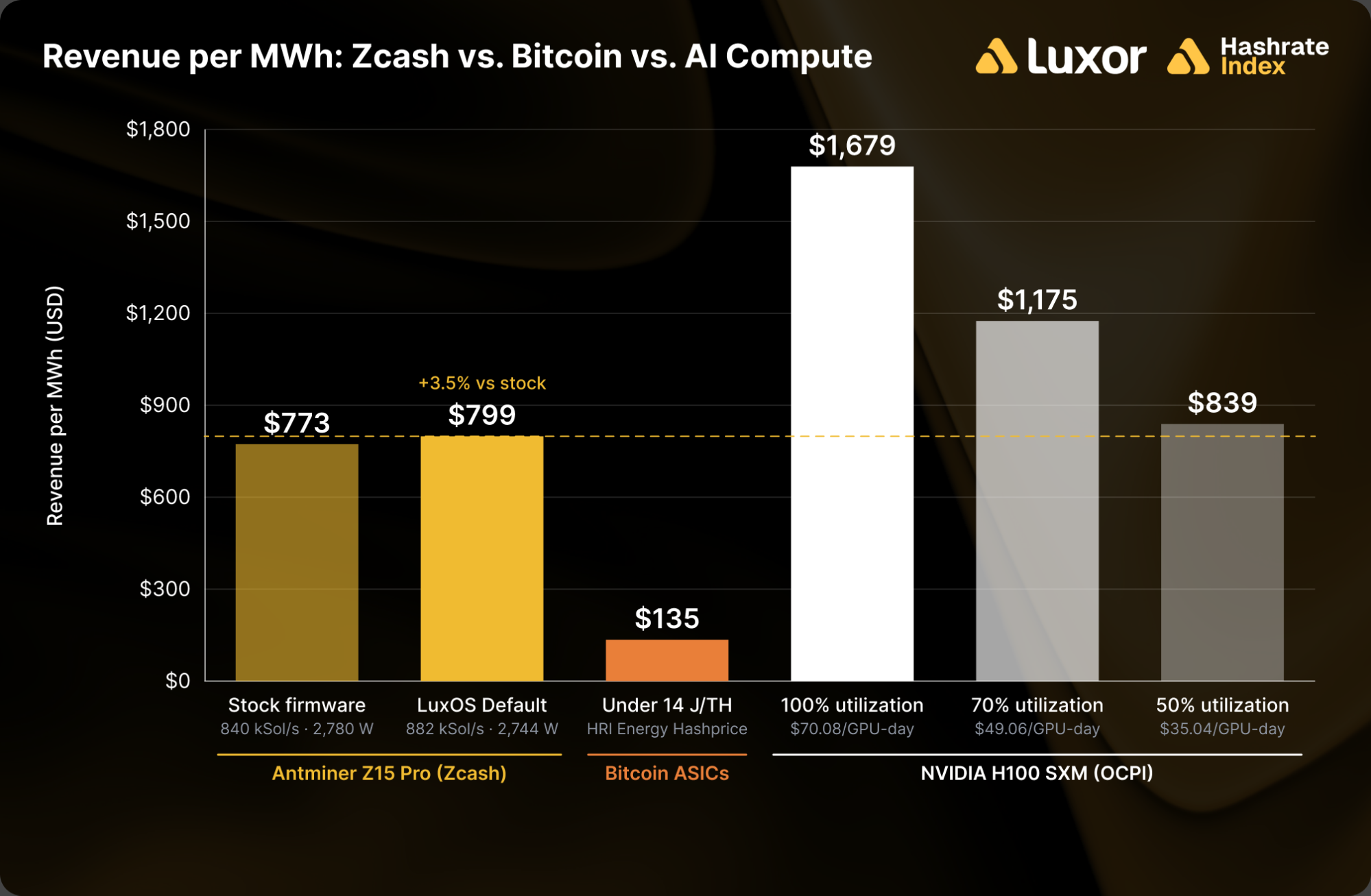
Evaluating these systems on an identical energy baseline provides a clear framework for understanding their relative economic power. Priced at an industrial baseline of $0.08 per kilowatt-hour, with Zcash (ZEC) trading at $1,185 and the broader network hashrate sitting at 27.8 GSol/s, the revenue captured per megawatt-hour reveals stark performance disparities. A stock Antminer Z15 Pro mining Zcash generates approximately $770 of revenue per megawatt-hour. Meanwhile, top-tier Bitcoin ASICs lag significantly behind, bringing in roughly $135 per megawatt-hour under current energy hashprice conditions. In contrast, a fully utilized, rented NVIDIA H100 GPU surges ahead, capturing about $1,680 per megawatt-hour when operating continuously.
Three Machines, One Megawatt
Because energy serves as the foundational shared input for all three computing classes, analyzing gross revenue per megawatt-hour provides the cleanest initial metric for comparison. Under operational parameters benchmarked in mid-October 2026, Zcash miners collectively receive a fixed daily reward of 1,440 ZEC. For a stock Antminer Z15 Pro, this translates to a gross daily return of $51.54. After accounting for $5.34 in electricity costs at standard industrial rates, the machine retains $46.20 in daily gross profit, marking an impressive 90 percent profit margin.
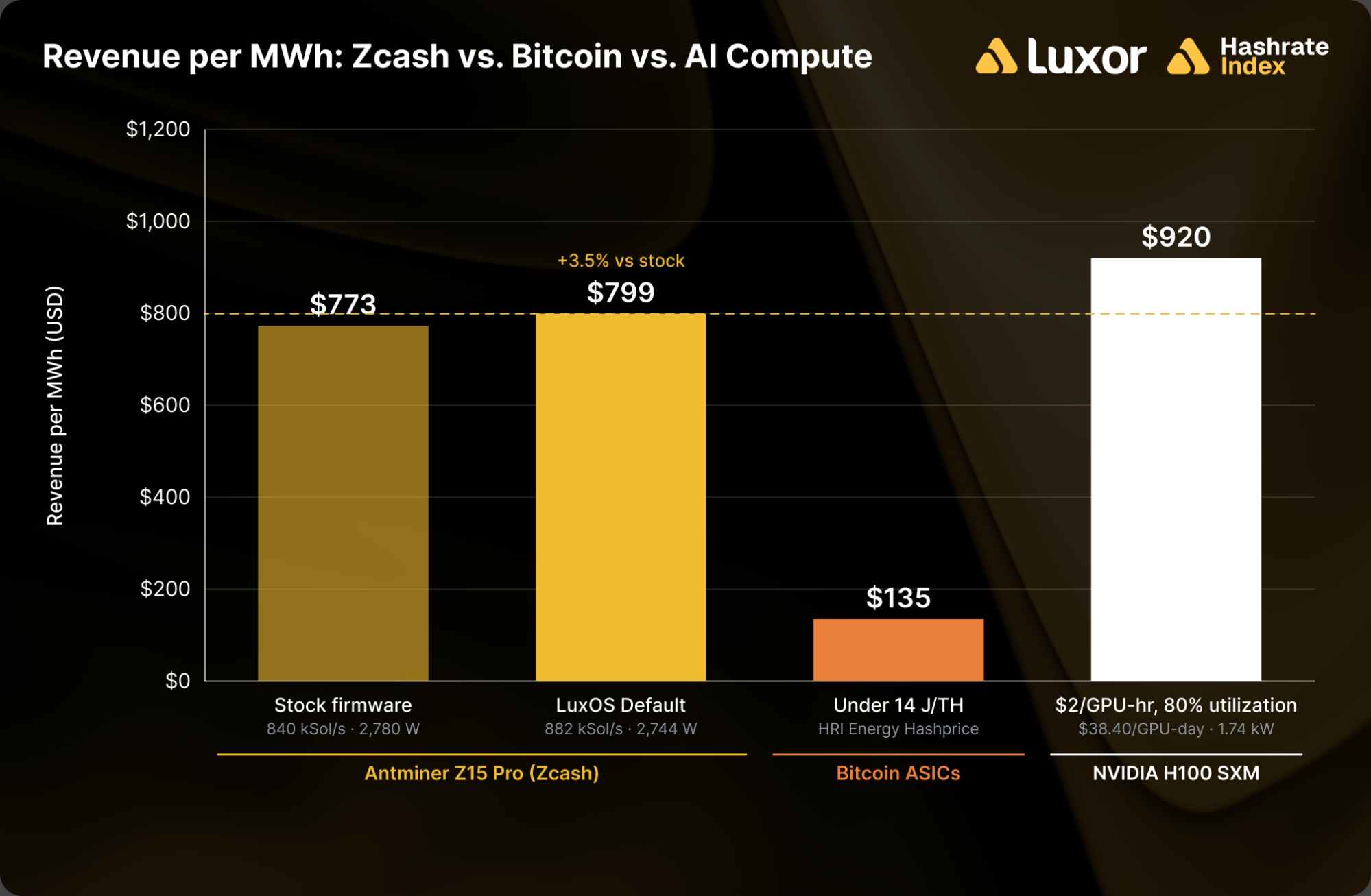
This financial cushion grants the Z15 Pro a power break-end threshold of $0.77 per kilowatt-hour, a figure nearly ten times higher than what most industrial cryptocurrency miners typically pay for electricity. Bitcoin mining hardware cannot compete with these margins on a per-megawatt basis. With hashprice hovering near $39.71 per petahash per second daily, modern Bitcoin fleets equipped with hardware under 14 joules per terahash generate roughly $135 per megawatt-hour, while Antminer S21-class machines bring in closer to $98. Market estimates regarding Zcash’s structural outperformance against traditional digital asset mining have proven conservative as ZEC maintained an extended upward trajectory.
The true wild card in this infrastructure matrix is the NVIDIA H100. Based on standard cluster settlement rates of $2.92 per GPU-hour, a single H100 generates $70.08 daily. When factoring in facility power consumption—calculated at 1.74 kilowatts per GPU including power usage effectiveness overhead—the machine yields roughly $1,679 per megawatt-hour. This return is more than double that of the stock Z15 Pro. However, this premium is entirely contingent on continuous rental demand. If utilization drops to 50 percent, the H100’s revenue generation declines to approximately $839 per megawatt-hour, bringing it into direct parity with the Zcash mining rig. The crossover point where GPU economic dominance wanes sits precisely between 46 and 48 percent utilization.
Capital Intensity Versus Energy Efficiency
While GPUs often win the battle for revenue per unit of energy, the financial hierarchy completely flips when evaluated on a capital expenditure basis. Deploying one megawatt of Z15 Pro miners requires roughly 360 units. Given current retail and secondary market list prices ranging from $8,800 to $16,000 per unit, coupled with basic containerized shell infrastructure costing a few hundred thousand dollars per megawatt, the total upfront financial commitment remains relatively modest. Furthermore, the Z15 Pro achieves complete capital payback in approximately six to eleven months on its standard daily gross profit.
Deploying a megawatt of H100 hardware presents a vastly different financial scale. Such an installation comprises approximately 575 advanced GPUs. With new eight-GPU H100 nodes commanding between $31,000 and $40,500 per GPU since their market introduction, the hardware acquisition alone demands $18 million to $23 million, with refurbished alternatives still requiring around $13 million. Crucially, these processors must be housed within Tier-3 data center facilities where specialized cooling and power redundancy infrastructure can easily exceed the cost of the computing hardware itself.
This capital dynamic explains the structural viability of mining Zcash over deploying pure artificial intelligence infrastructure for certain operators. While Zcash mining enjoys a decisive advantage in capital intensity and deployment speed, it cannot match the raw revenue-per-energy density of fully utilized AI cloud clusters at peak rental rates. Nevertheless, as artificial intelligence rental rates fluctuate downward—such as drops toward $2.00 per GPU-hour at 80 percent utilization—the financial gap narrows rapidly, reducing the H100’s edge to a marginal 15 percent premium over optimized Zcash hardware.
Network Growth and the Zcash Supply Bottleneck
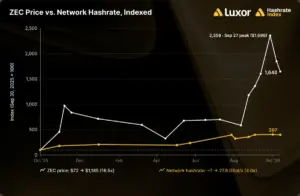
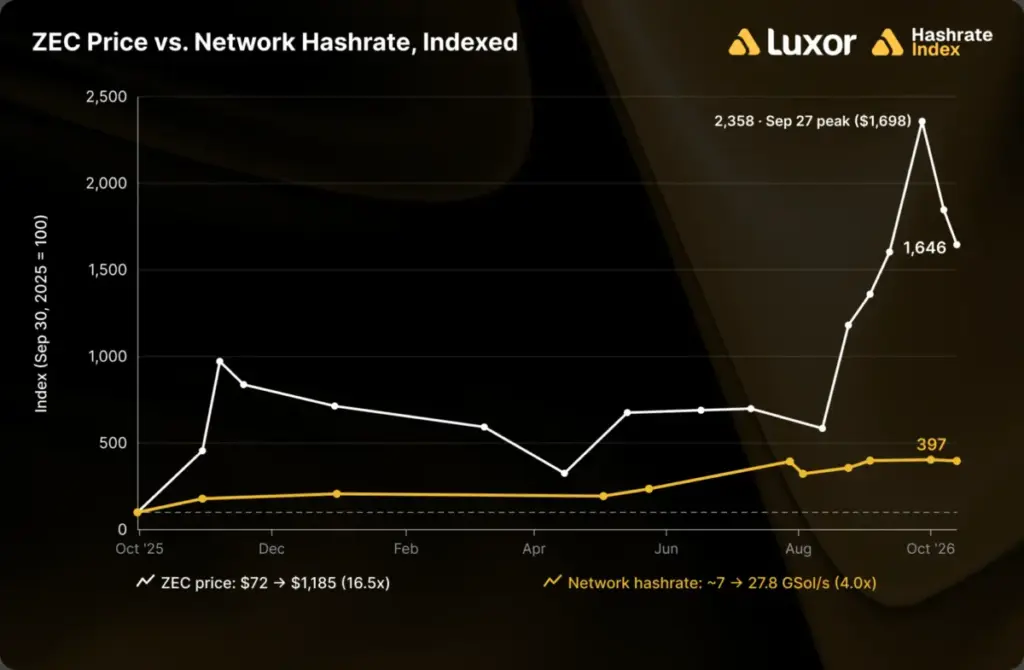
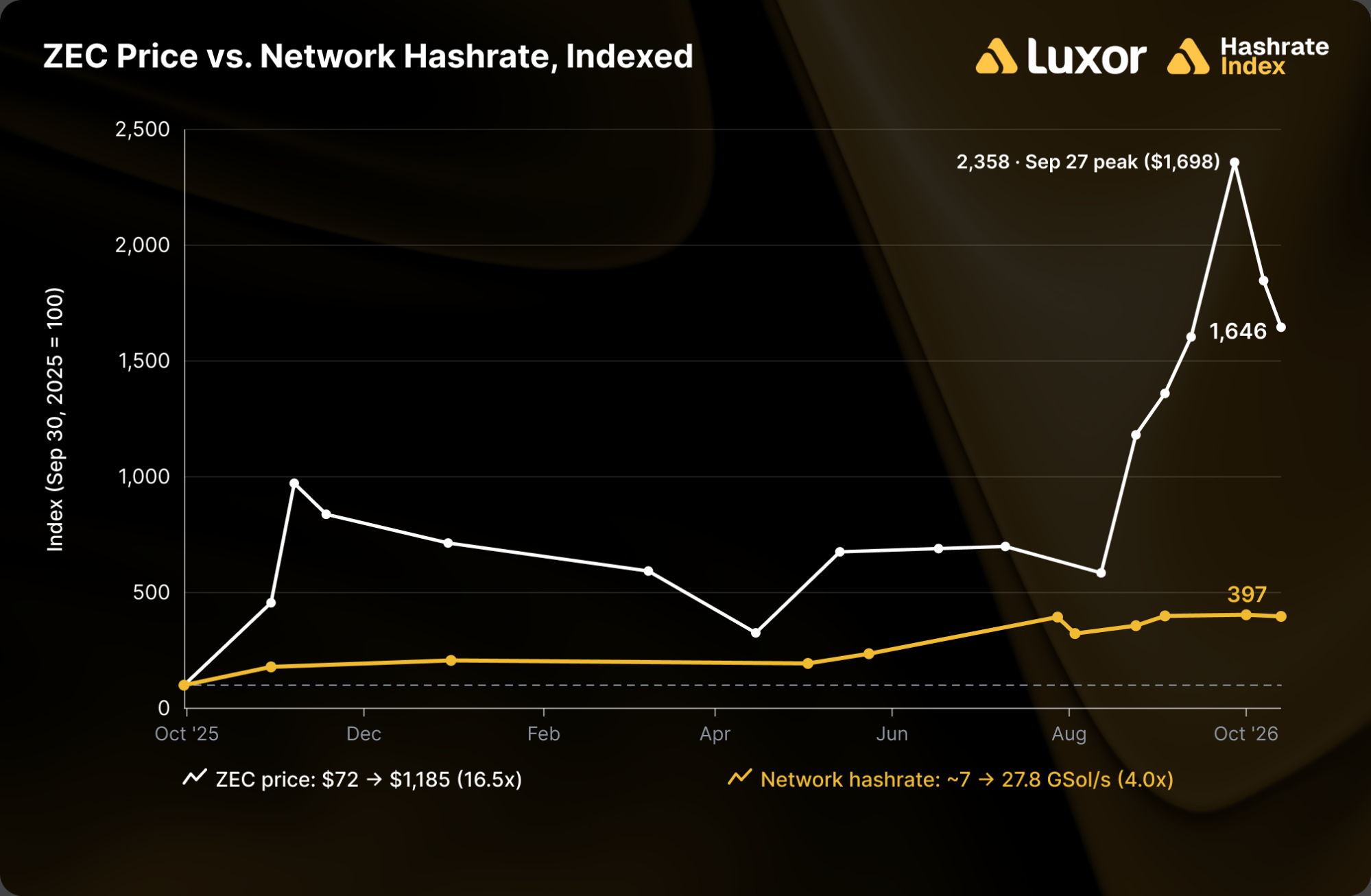
Over the preceding twelve months, Zcash’s network hashrate expanded roughly fourfold, climbing from approximately 7 GSol/s prior to a major market rally to 27.8 GSol/s. Concurrently, the price of ZEC surged from $72 to a peak of nearly $1,698 before experiencing a subsequent market correction of roughly 30 percent. Despite this volatility, per-machine revenue remained remarkably resilient because token price appreciation consistently outpaced the influx of new mining hardware chasing the rewards.
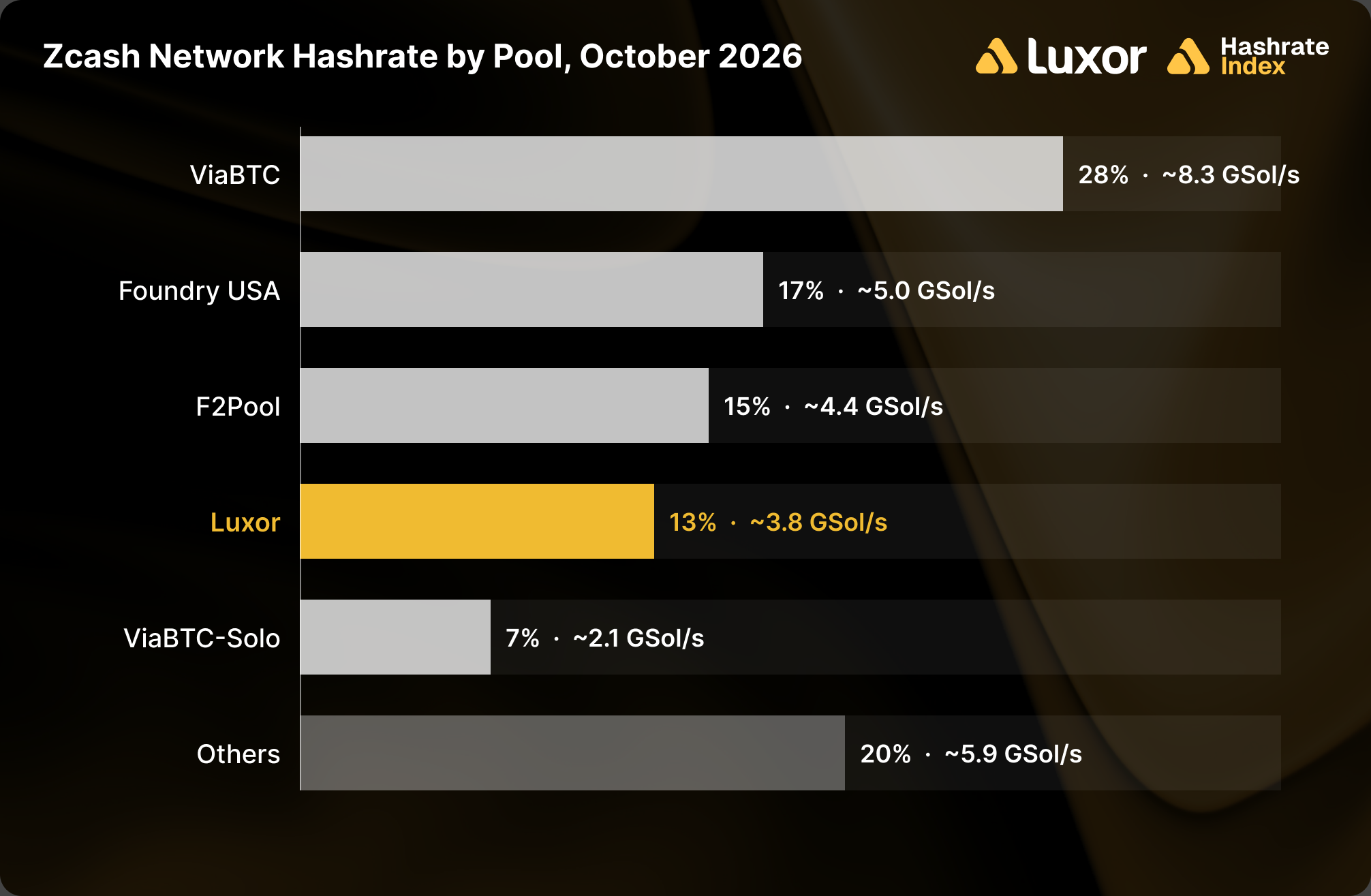
Because the daily miner emission schedule is structurally fixed at approximately 1,440 ZEC, every newly deployed machine dilutes the revenue share of existing units. The current global Zcash network equates to roughly 33,000 active Antminer Z15 Pros consuming approximately 90 megawatts of power. At prevailing token valuations, these machines remain strongly cash-positive and will continue operating profitably even if aggregate network hashrate expands by another factor of ten. Consequently, the primary binding constraint for Zcash mining expansion is hardware availability rather than electrical grid capacity. In-stock Z15 Pros have grown notably scarce, pushing secondary market equipment prices higher while next-generation Equihash silicon remains absent from commercial markets until the second half of 2027.
Firmware Optimization as the Primary Near-Term Lever
In the absence of new physical hardware deliveries, data center operators seeking to expand Equihash computing capacity are forced to rely entirely on advanced firmware optimization. Third-party operational tuning profiles have introduced granular overclocking and underclocking capabilities to Zcash mining fleets, mirroring the optimization strategies long utilized in the Bitcoin mining sector.
Performance testing across various firmware profiles demonstrates that moderate tuning configurations can increase hashrate by approximately 5 percent while simultaneously reducing power consumption by 1 percent. This optimization elevates revenue generation per megawatt-hour from $773 to $799. While more aggressive overclocking profiles can boost individual machine hashrate by up to 18 percent, they trade away electrical efficiency, diminishing overall returns per megawatt-hour as power draw scales faster than computational output. At standard industrial electricity rates and robust profit margins, selective tuning remains a viable strategy for maximizing existing infrastructure, though network-wide adoption yields only modest incremental hashrate gains.
Ultimately, the contemporary compute competition does not represent a single unified race. When measured by energy efficiency, a continuously rented artificial intelligence processor outperforms a cryptocurrency mining ASIC, which in turn surpasses legacy Bitcoin hardware by a wide margin. Conversely, when measured against initial capital expenditure and payback duration, specialized mining hardware secures a decisive advantage. Across all sectors, profitability remains tethered to operational uptime, ensuring that idle hardware—whether an underutilized GPU or a stock-configured ASIC—destroys potential revenue in an increasingly competitive infrastructure market.
 Cryptocurrency Mining
 Cryptocurrency Mining
 Cryptocurrency Mining