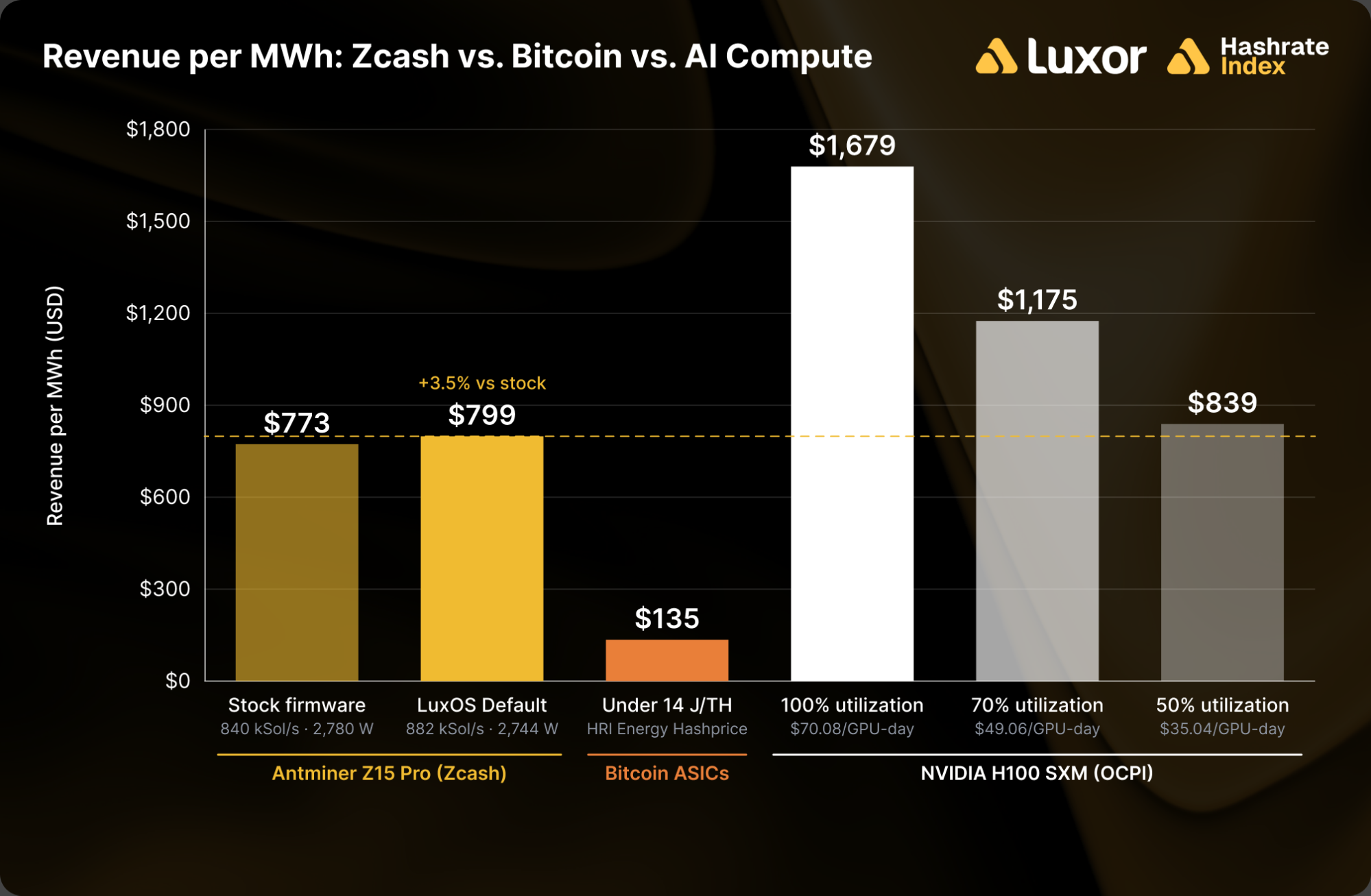
The global competition for digital infrastructure power has evolved into a high-stakes balancing act where three distinct classes of specialized hardware continuously vie for the exact same kilowatt-hours. At an assumed power cost of $0.08 per kilowatt-hour, an Antminer Z15 Pro mining Zcash yields approximately $770 in daily revenue per megawatt-hour. Meanwhile, top-tier Bitcoin ASICs capture roughly $135 under current market metrics, and a rented NVIDIA H100 high-performance GPU pulls in about $1,680, provided its utilization remains consistently high.
This dynamic convergence underscores a profound shift in industrial-scale power consumption. Energy has become the universal bottleneck and common denominator shared by these competing technologies. Consequently, evaluating operational viability requires analyzing revenue generation strictly through the lens of power consumption, capital expenditures, and equipment utilization rates.
Three Machines, One Megawatt
Because energy serves as the primary operational input for all three computing architectures, calculating revenue per megawatt-hour provides the clearest baseline for comparison. Market metrics established on October 13, 2026, pegged Zcash at $1,185 with a total network hashrate of 27.8 gigasol/s. With the Zcash network distributing 1,440 ZEC daily to miners, a stock Antminer Z15 Pro grosses roughly $51.54 per day. After accounting for $5.34 in electricity costs, the machine retains a net daily profit of $46.20, translating to an impressive 90% operating margin and a power break-even ceiling of $0.77 per kilowatt-hour—nearly ten times the electricity rates paid by most industrial-scale cryptocurrency operations.
In contrast, leading Bitcoin mining machines struggle to match these returns. Under current hashprice conditions hovering near $39.71 per petahash per day, fleets operating below 14 joules per terahash generate approximately $135 per megawatt-hour, while Antminer S21-class hardware captures closer to $98. Early institutional estimates suggesting Zcash mining yields quadruple the economic returns of legacy bitcoin operations have proven conservative, especially as Zcash market valuations extended their upward trajectory for weeks following initial assessments.
The true wild card in this compute competition remains the NVIDIA H100 GPU. Evaluated against recent cloud compute settlement benchmarks of $2.92 per GPU-hour, a single H100 generates $70.08 daily. When factoring in standard facility power draw—estimated at 1.74 kilowatts per GPU paired with a 1.3 Power Usage Effectiveness—the resulting revenue scales to approximately $1,679 per megawatt-hour. This figure doubles the output of a standard Z15 Pro. However, isolating board-level power consumption alone inflates this metric to over $4,100 per megawatt-hour, demonstrating precisely why GPU-versus-ASIC analyses demand a standardized denominator, with total facility power offering the most accurate reflection of true resource utilization.
Despite its high revenue potential per megawatt-hour, the H100 maintains its financial lead only when rental demand remains robust. If utilization rates drop to 50%, the GPU’s revenue generation declines to approximately $839 per megawatt-hour, bringing its performance roughly in line with the Z15 Pro. Market crossover points generally hover between 46% and 48% utilization.
Where the ASIC Wins: Capital Intensity Over Energy Efficiency
When the evaluation shifts from operational power efficiency to capital expenditure efficiency, the economic hierarchy reverses entirely. Deploying one megawatt of capacity using Antminer Z15 Pros requires acquiring approximately 360 machines at prevailing market listings of $8,800 to $16,000 per unit, housed within a basic physical enclosure costing a few hundred thousand dollars per megawatt. By comparison, outfitting a megawatt with H100 accelerators demands roughly 575 individual GPUs. With new eight-GPU H100 nodes commanding anywhere from $31,000 to $40,500 per unit, the hardware alone represents a capital outlay between $18 million and $23 million, or roughly $13 million for refurbished alternatives. Furthermore, these GPUs must reside inside Tier-3 data center facilities that often incur construction costs exceeding the value of the computing hardware itself.
This stark disparity highlights the fundamental trade-off of the modern digital infrastructure landscape. While Zcash ASICs deliver rapid capital payback periods—recouping their initial investment in roughly six to 11 months on strong daily margins—AI-focused infrastructure demands massive upfront capital commitments balanced against high rental yields and continuous operational uptime.
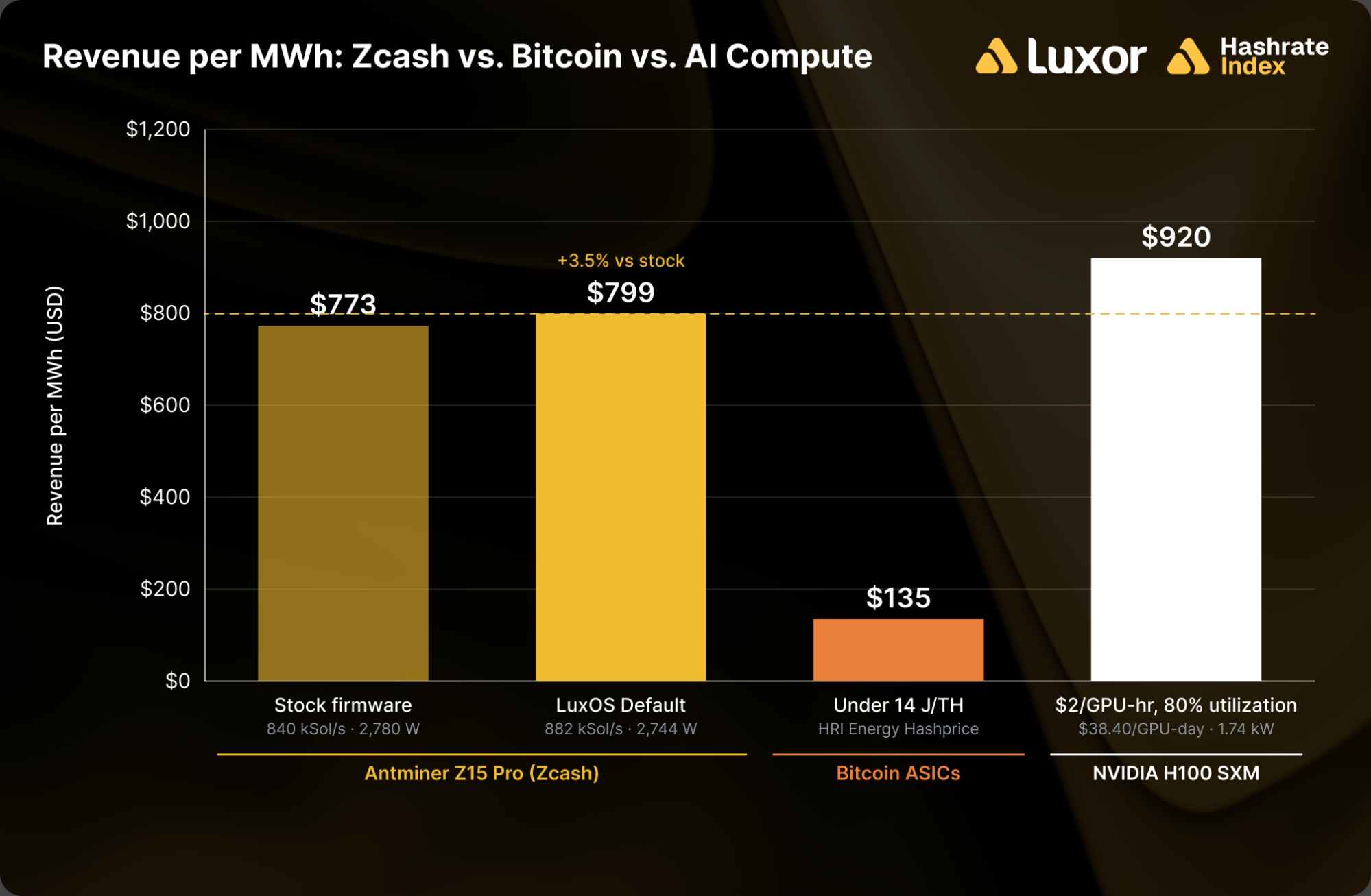
Lower rental pricing structures compress these margins rapidly. If H100 rental rates decline to $2.00 per GPU-hour while maintaining an 80% utilization rate, earnings dip to approximately $920 per megawatt-hour, representing a modest 15% premium over an optimized Z15 Pro. Should utilization fall below 70% at that rental rate—or if rental rates drop below $1.70 while maintaining 80% utilization—the Equihash ASIC ultimately generates superior revenue per megawatt-hour before even factoring in its substantial capital expenditure advantages. Transitioning operations from cryptocurrency mining hardware to artificial intelligence accelerators is, at its core, a high-stakes wager on maintaining both persistently high rental rates and unwavering fleet utilization.
Market Dynamics: Price Outrunning Hashrate
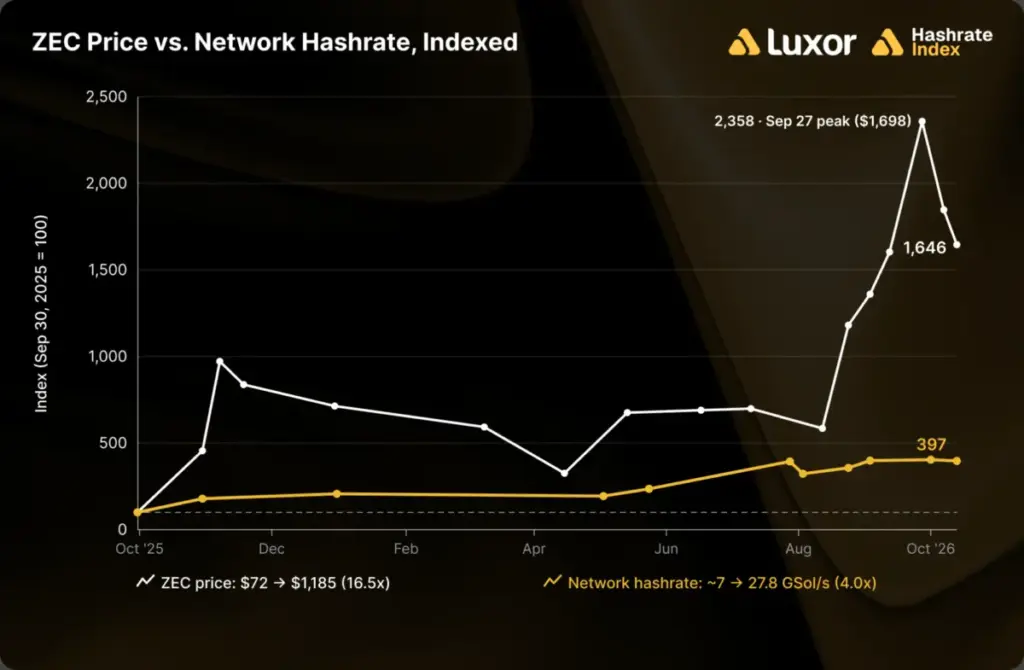
Zcash network statistics over a twelve-month period reveal a dramatic expansion in underlying network difficulty, with total hashrate multiplying roughly fourfold from about 7 gigasol/s prior to a major market rally to 27.8 gigasol/s. ZEC token prices experienced an explosive 23.6x surge from $72 to a peak of approximately $1,698 before correcting downward by roughly 30%. Crucially, network hashrate lagged behind price movements throughout both phases of the rally, remaining largely stagnant through subsequent market contractions. Consequently, per-machine revenue held relatively steady because asset valuations consistently outpaced the influx of new hardware entering the ecosystem.
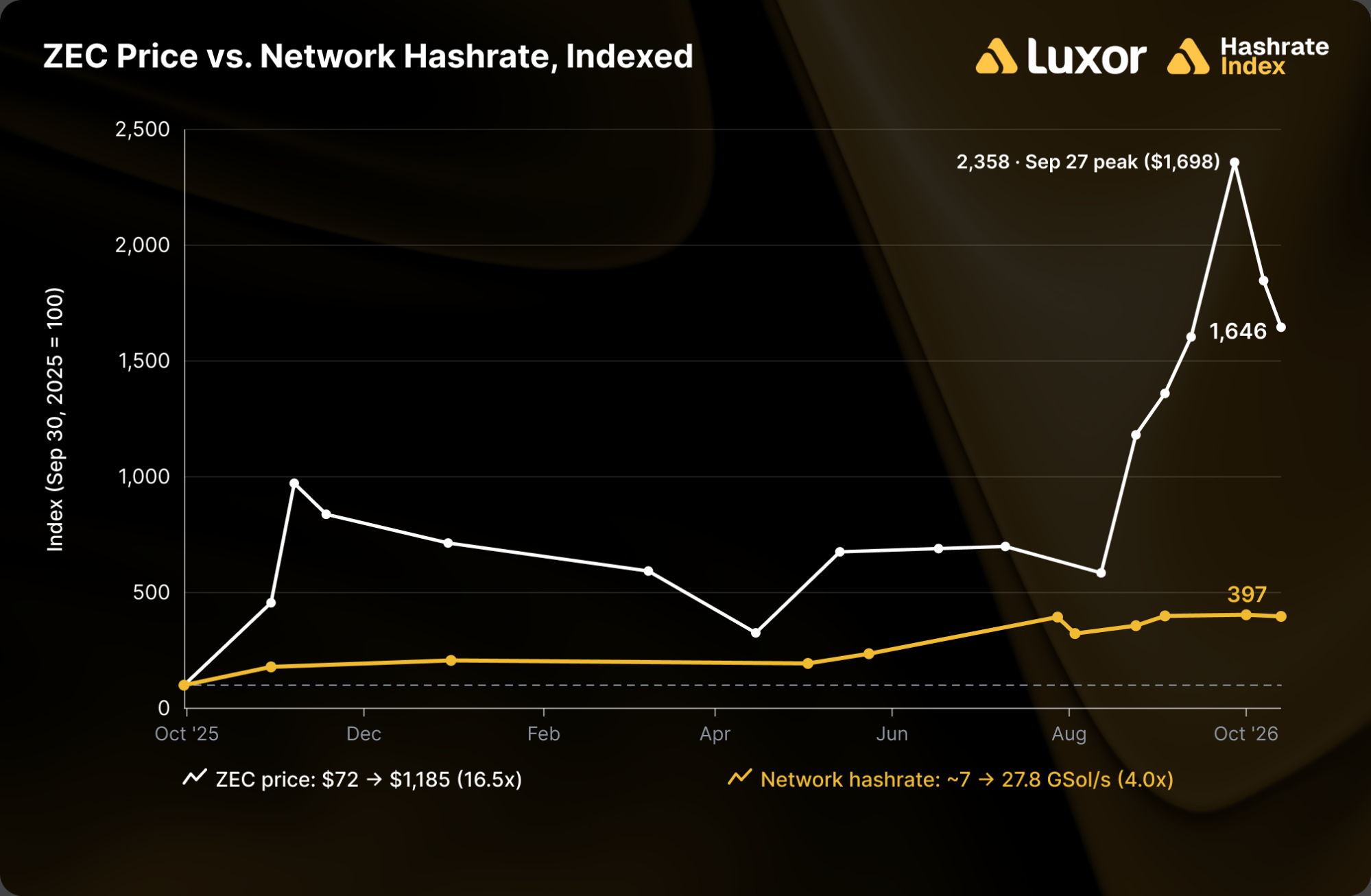
Because the daily issuance pool for Zcash miners remains fixed at approximately 1,440 ZEC, every newly deployed machine dilutes the earnings of existing operators. The current network capacity equates to roughly 33,000 active Z15 Pro units drawing 90 megawatts of power. At prevailing token prices, these machines remain strongly cash-positive unless network hashrate expands by another tenfold. Instead of electricity availability, hardware supply has emerged as the primary binding constraint for operators. In-stock Z15 Pros have grown increasingly scarce, pushing secondary market prices up significantly, while next-generation Equihash silicon from manufacturers like Bitmain remains constrained by advance enterprise allocations.
Firmware Optimization as a Near-Term Lever
With major deliveries of next-generation mining silicon largely deferred, operators seeking to maximize Equihash hashrate from existing hardware deployments must rely primarily on advanced third-party firmware solutions. The integration of specialized tuning profiles allows operators to modify performance parameters in a manner similar to established Bitcoin mining fleets. Performance bench-testing demonstrates that while aggressive overclocking profiles trade energy efficiency for absolute revenue generation, balanced default profiles can successfully enhance hashrate output while slightly reducing power consumption, thereby elevating overall revenue per megawatt-hour.
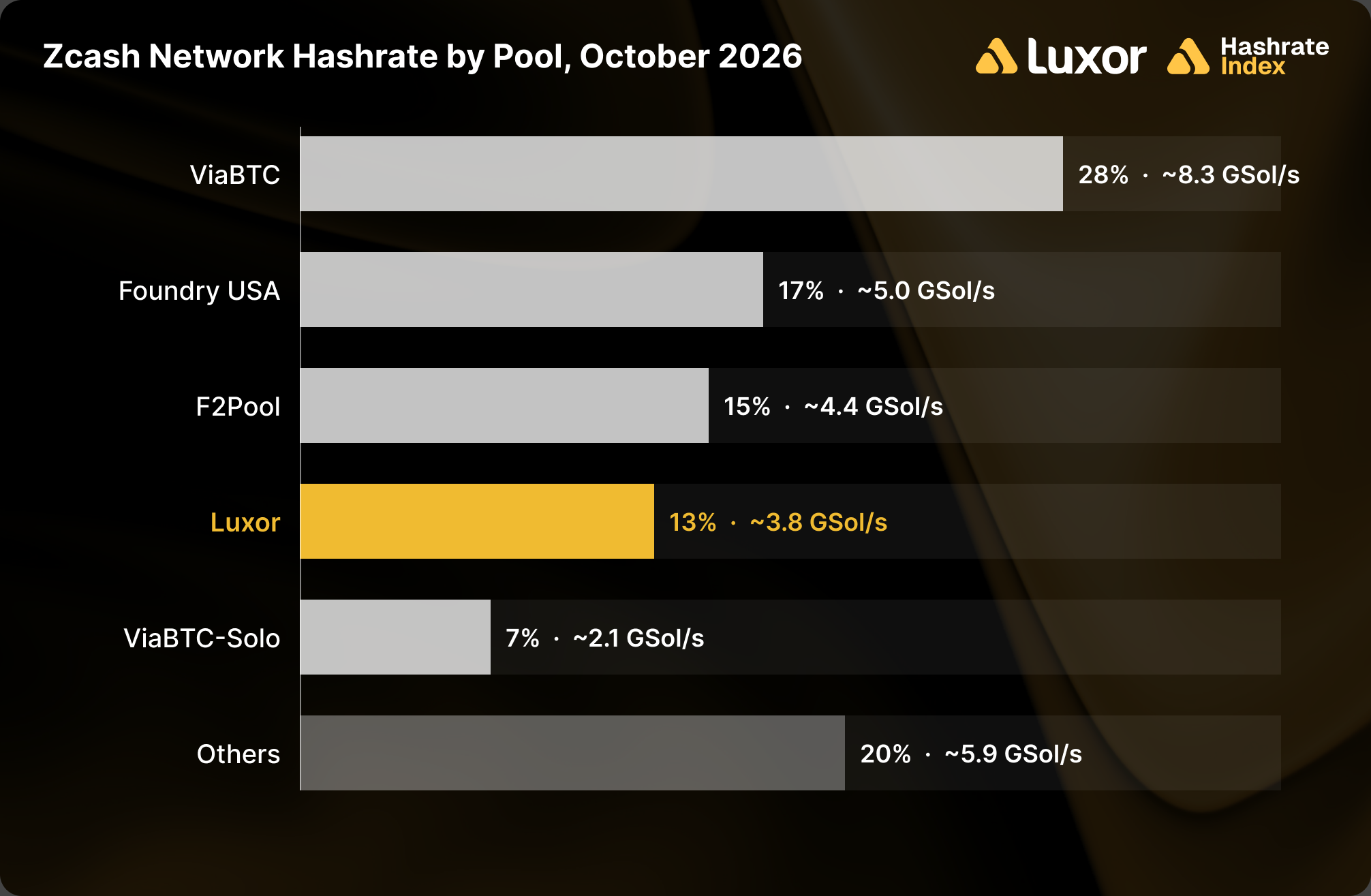
As infrastructure providers increasingly evaluate the economic viability of running mixed computing workloads—spanning artificial intelligence, Bitcoin mining, and alternative proof-of-work protocols within shared facilities—the ultimate determinant of success remains operational uptime. Whether managing high-performance graphics processing units or specialized application-specific integrated circuits, maintaining continuous operations is essential to capturing optimal economic returns across an increasingly competitive global energy grid.
 Cryptocurrency Mining
 Cryptocurrency Mining
 Cryptocurrency Mining