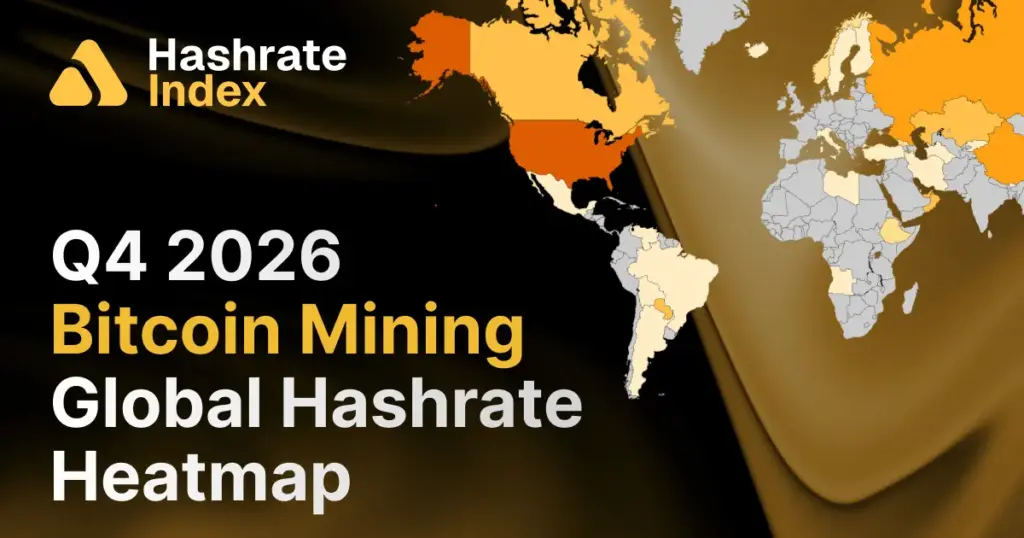
After two consecutive quarters of contraction, the Bitcoin network’s global hashrate has finally stopped its downward slide. According to the latest Q4 2026 Global Hashrate Heatmap update from Hashrate Index, total network compute finished the third quarter at approximately 941 exahashes per second (EH/s), effectively flat compared to the ~940 EH/s recorded in the previous quarter.
While a flat headline figure might suggest a period of quiet consolidation, beneath the surface lies a remarkably active quarter characterized by significant geographic redistribution. The United States shed another 10 EH/s while Russia added 8 EH/s, Ethiopia experienced a sharp drop as water levels fell, and Pakistan saw its hashrate more than triple. Although the global map is no longer shrinking in overall size, compute power continues to migrate rapidly across international borders in response to shifting economic, environmental, and technological pressures.
From Falling to Flat
Following two successive quarters of decline, the network’s 30-day simple moving average registered ~941 EH/s, marking the first quarter of 2026 in which aggregate compute capacity did not fall. However, market observers emphasize that a flat quarter is not synonymous with a robust recovery. The Bitcoin network remains roughly 8.7% smaller than it was at this time last year, when it stood at approximately 1,031 EH/s in Q4 2025, and it remains about 15% off its all-time peak reached in November 2025.
The primary change this quarter is the deceleration of the bleed. Marginal mining machines that were bound to switch off under prevailing hashprice conditions have largely been powered down already. Concurrently, network difficulty has adjusted downward sufficiently to keep surviving operations above water. This stabilization has left the most compelling industry narratives at the country level, where major capacity relocations highlight how miners continuously seek out the most advantageous operating environments.
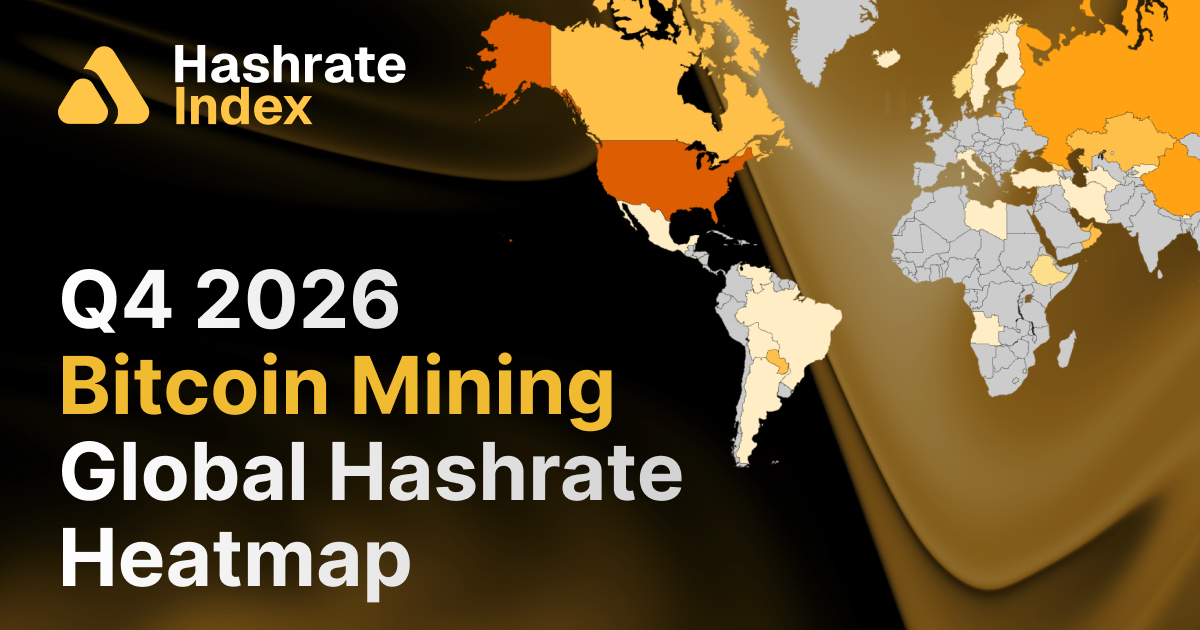
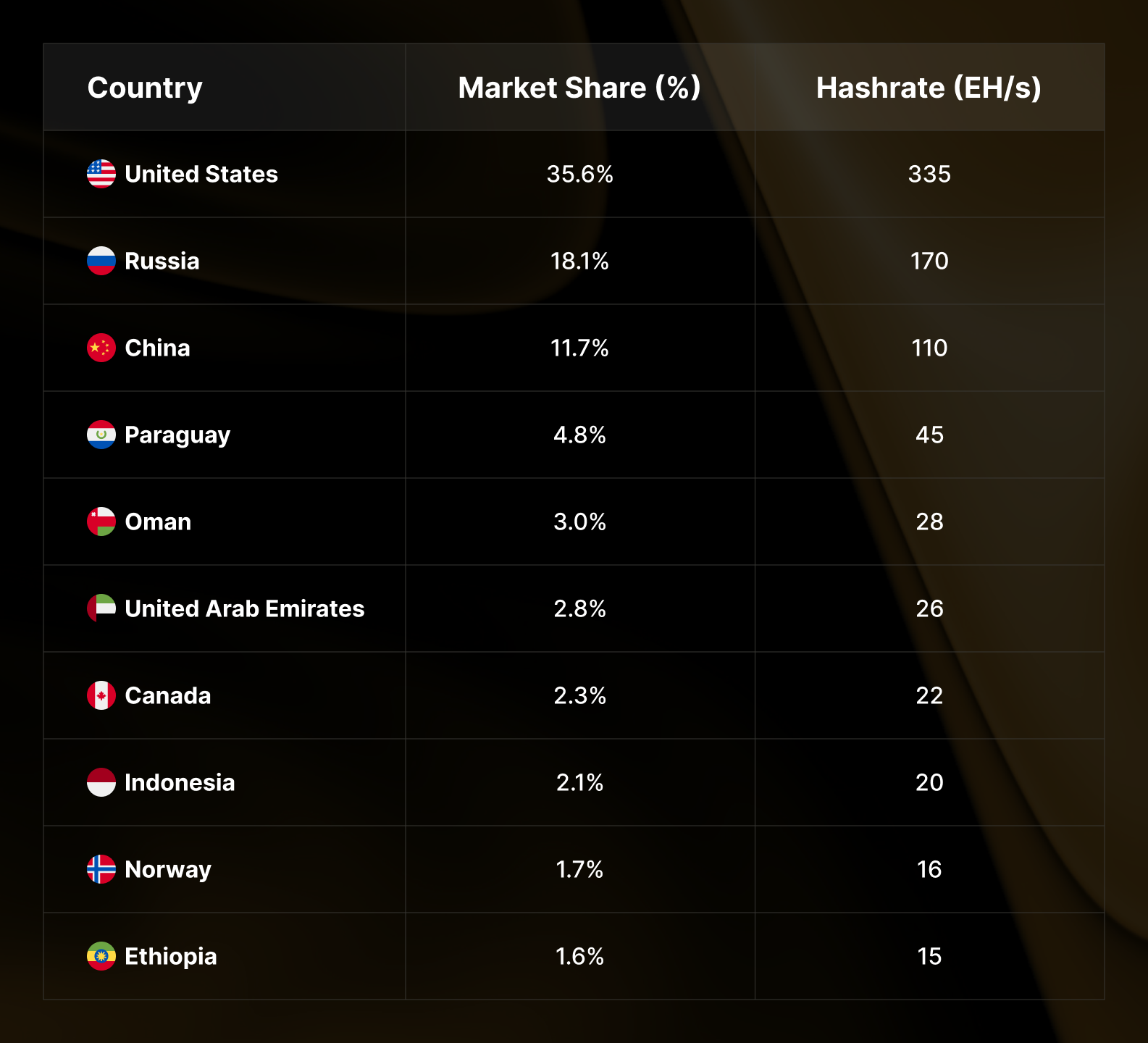
Despite these shifts, Bitcoin mining remains heavily concentrated, with the top three countries commanding roughly two-thirds of global hashrate. The United States, Russia, and China continue to hold the top three spots, though cumulative concentration among the top three slipped slightly from 66.2% to 65.4% over the quarter. This marks the second consecutive drop in top-tier concentration, driven largely by the United States giving up market share faster than Russia is able to absorb it.
Further down the rankings, five of the top ten country positions changed hands during the quarter. Oman climbed past the United Arab Emirates to secure the fifth position, while Indonesia advanced from ninth to eighth on the back of a genuine 3 EH/s gain. Conversely, Ethiopia slipped from eighth to tenth place, sitting neck-and-neck with Kazakhstan, which held steady at the eleventh spot with roughly 15 EH/s heading into the final stretch of the year.
Quarter-over-Quarter Movers and the Long View
Comparing Q4 2026 to the previous quarter reveals a clear bifurcation in the global mining landscape: a shrinking developed core contrasted with a rapidly expanding frontier. On one side of the ledger, traditional mining powerhouses saw notable declines. The United States and Canada experienced continued retrenchment, while Ethiopia faced severe weather-related curtailments. On the other side, frontier and emerging markets stepped in to fill the void. Pakistan added roughly 5.5 EH/s in what represents its largest absolute quarterly expansion to date, and Venezuela grew by 4 EH/s, pushing its total market size to approximately 10 EH/s—surpassing established mining hubs like Laos, Finland, and Malaysia.
Looking at the broader year-over-year perspective helps strip away quarterly noise to reveal more durable structural trends. Nearly every market that achieved significant growth over the twelve-month period represents a low-cost or stranded-energy story. However, the decliners do not form a simple mirror image of this trend. Jurisdictions like Canada and the UAE did not lose hashrate because local power became prohibitively expensive. Canadian operations draw heavily from reliable hydro resources in Quebec, Manitoba, and British Columbia, while Abu Dhabi relies on a mix of gas, solar, and nuclear energy.
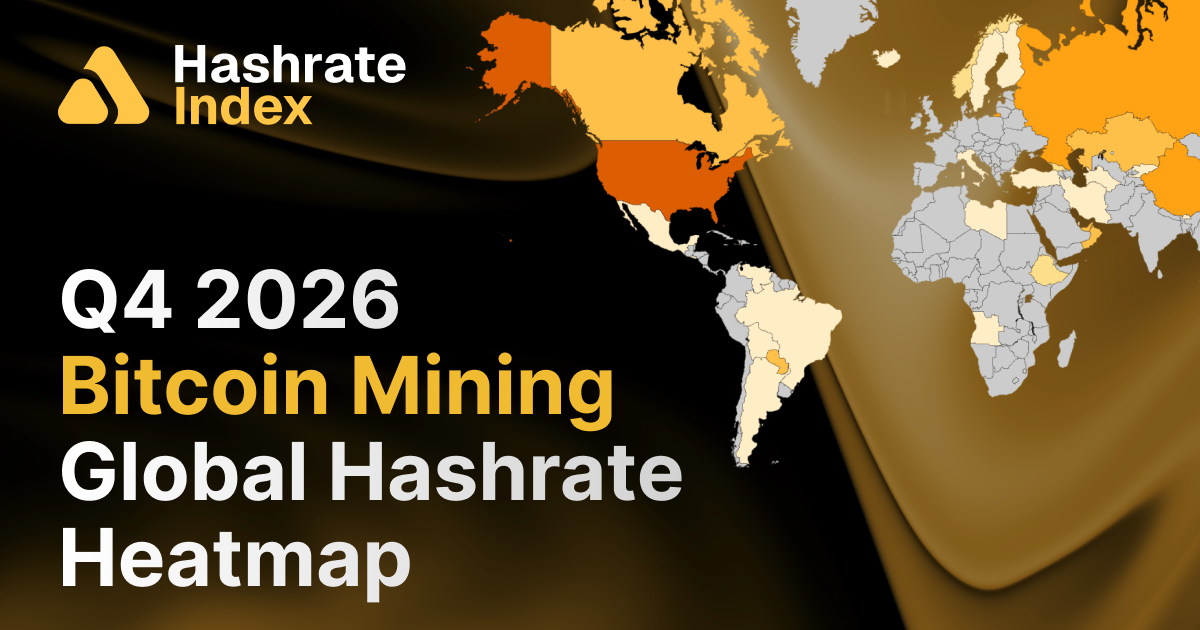
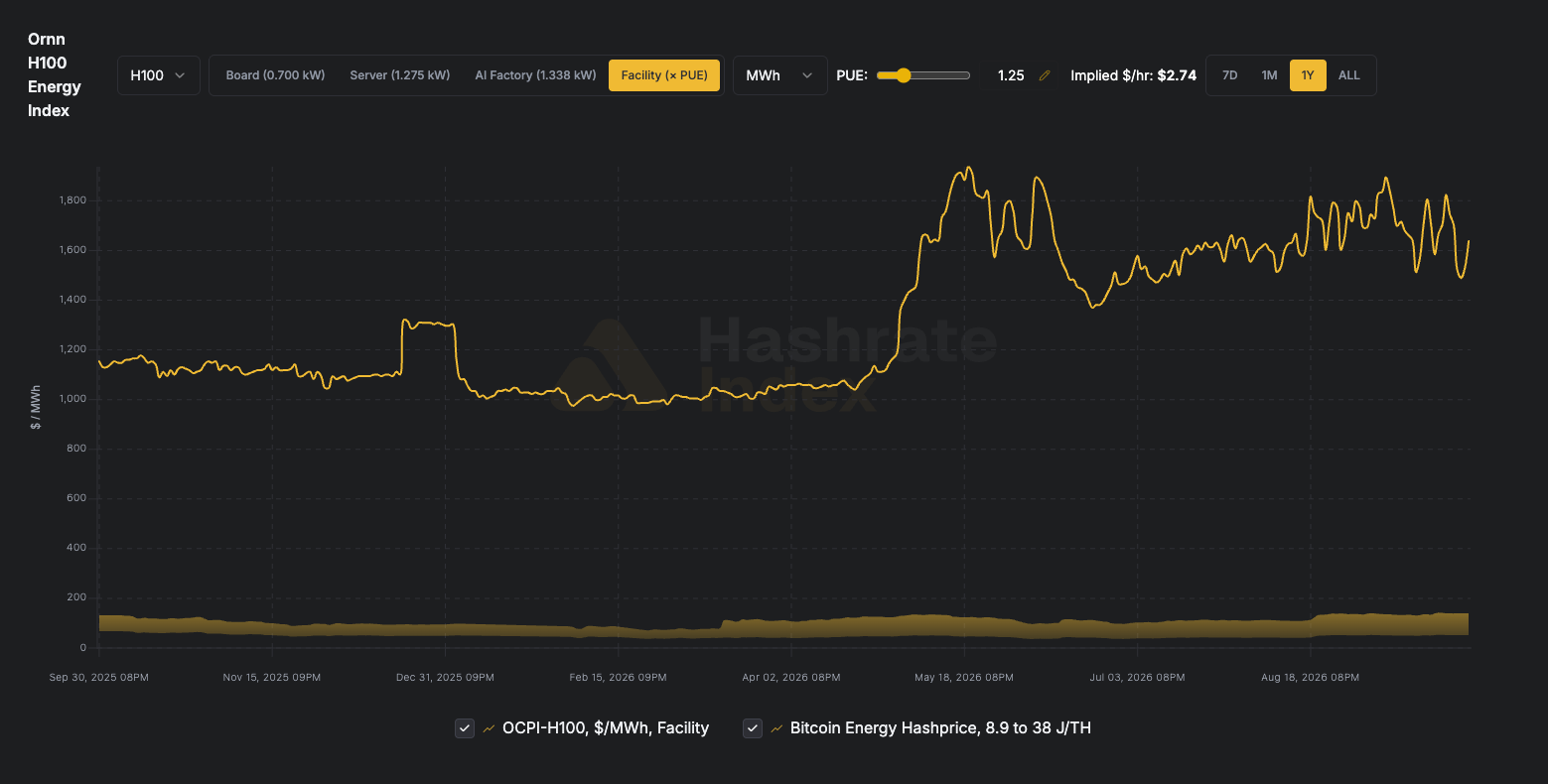
Instead, these developed markets lost hashrate because their energy resources found a vastly more lucrative application. During 2026, many operators advanced aggressively into artificial intelligence and high-performance computing infrastructure. The economic reality driving this shift is stark: AI compute can generate anywhere from $1,500 to $3,500 per megawatt-hour, compared to a range of just $50 to $150 for traditional Bitcoin mining.
This distinction carries profound implications for the future distribution of global compute. A marginal mining machine that goes offline because the hashprice drops can easily be powered back on if market conditions improve. By contrast, power capacity committed to a multi-year AI tenant cannot be reclaimed on short notice, even if the price of Bitcoin rallies and mining difficulty decreases. Consequently, the recent contraction across developed markets stems from a mix of capacity converting to AI and high-performance computing, ongoing regulatory pressures in regions like Kazakhstan and China, and macroeconomic instability in places like Argentina.
Standouts and the Ethiopian Hydro Crunch
Amidst these broader shifts, certain countries have managed to anchor their positions or expand through the down-cycle. Paraguay continues to solidify its status as a major regional player, adding another 1 EH/s to reach roughly 45 EH/s—securing the fourth global ranking with a 12% year-over-year increase—anchored by the Itaipú hydroelectric dam. Similarly, Indonesia has emerged as the quarter’s clearest structural gainer, climbing to approximately 20 EH/s and a top-eight slot on the strength of Southeast Asian hydro diversification. Meanwhile, Norway has maintained a remarkably steady output of around 16 EH/s for four consecutive quarters.
The most dramatic reversal of the quarter, however, unfolded in Ethiopia. Once heralded as one of the fastest-growing frontier mining destinations in Africa, the country saw its estimated hashrate plunge from roughly 23 EH/s down to 15 EH/s. This 35% quarterly decline drops Ethiopia from eighth to tenth place globally, pulling it back to mid-2025 levels and representing a steep 45% drop from its peak of 27.5 EH/s earlier in the year.
The driving force behind Ethiopia’s contraction is not a change in government policy, but an acute environmental challenge. On September 15, Ethiopian Electric Power drastically curtailed electricity supplies to Bitcoin miners, cutting contracted volume down to roughly 23%—a reduction of approximately 75%. The emergency measure was enacted after reservoir inflows plummeted by roughly 20% due to severe El Niño-driven dry conditions. Because Ethiopia’s mining industry relies almost entirely on state-owned hydroelectric generation, the sector proved uniquely exposed to hydrological volatility. Unless seasonal water inflows recover significantly, industry analysts expect Ethiopian hashrate to face further downward pressure.
The Frontier Reaccelerates
As traditional powerhouses contract and emerging hubs navigate local hurdles, frontier markets are demonstrating remarkable resilience and agility. Pakistan more than tripled its compute capacity, surging from roughly 2.5 EH/s to 8 EH/s and comfortably surpassing previous peaks. This sharp increase places Pakistan on par with Bhutan and ahead of nations like Finland and Malaysia, though still trailing regional neighbor Laos at approximately 9 EH/s.
Venezuela also crossed a notable threshold, climbing to an estimated 10 EH/s—representing a 122% year-over-year increase—despite a sweeping state prohibition on cryptocurrency mining that has remained in active enforcement since mid-2024. Industry analyses of geolocated network traffic suggest that surviving operations are largely informal or semi-legitimate rather than state-backed. Elsewhere in the region, Iran recorded a modest uptick, moving from 2 EH/s to 3 EH/s in its first quarterly increase since geopolitical tensions escalated earlier in the year.
Reviewing regional dynamics across the globe demonstrates the multifaceted nature of the current market cycle. North America remains the dominant geographic region, accounting for 35.6% of global hashrate, though the United States recorded its third consecutive quarterly decline down to roughly 335 EH/s, down 14% year-over-year from its Q1 peak of 400 EH/s. Canada continued its downward slide to 22 EH/s, marking the sharpest annual percentage decline among developed markets.
In Europe and Central Asia, Russia established itself as the quarter’s largest absolute gainer, adding 8 EH/s to reach approximately 170 EH/s, which translates to an 18.1% global market share. Kazakhstan stabilized its output following a prolonged period of losses, while Norway and Georgia held steady. Across the Asia-Pacific region, China’s compute capacity continued its gradual multi-quarter bleed down to 110 EH/s, while Southeast Asian nations like Indonesia and Malaysia absorbed regional growth.
In the Middle East, Oman added 2 EH/s to reach 28 EH/s, successfully overtaking the UAE, which experienced a 21% year-over-year decline. Latin America saw continued strength in Paraguay and expanding informal operations in Venezuela, alongside steady growth in Bolivia and ongoing macroeconomic headwinds in Argentina. Finally, the sharp contraction in Ethiopia weighed heavily on the African continent’s overall footprint, as no other regional market possessed the scale to offset the deficit caused by the East African hydro shortfall.
 Cryptocurrency Mining
 Cryptocurrency Mining
 Cryptocurrency Mining