
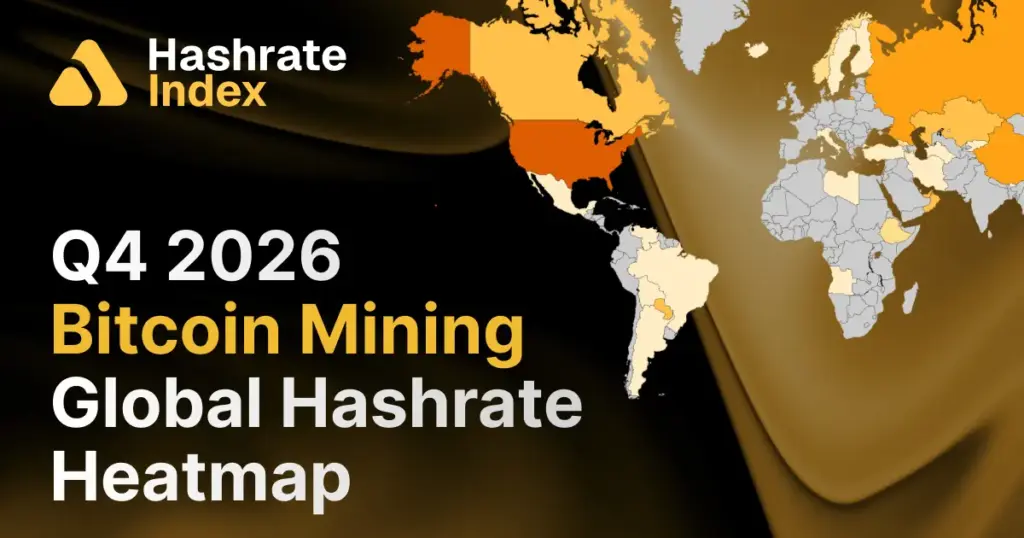
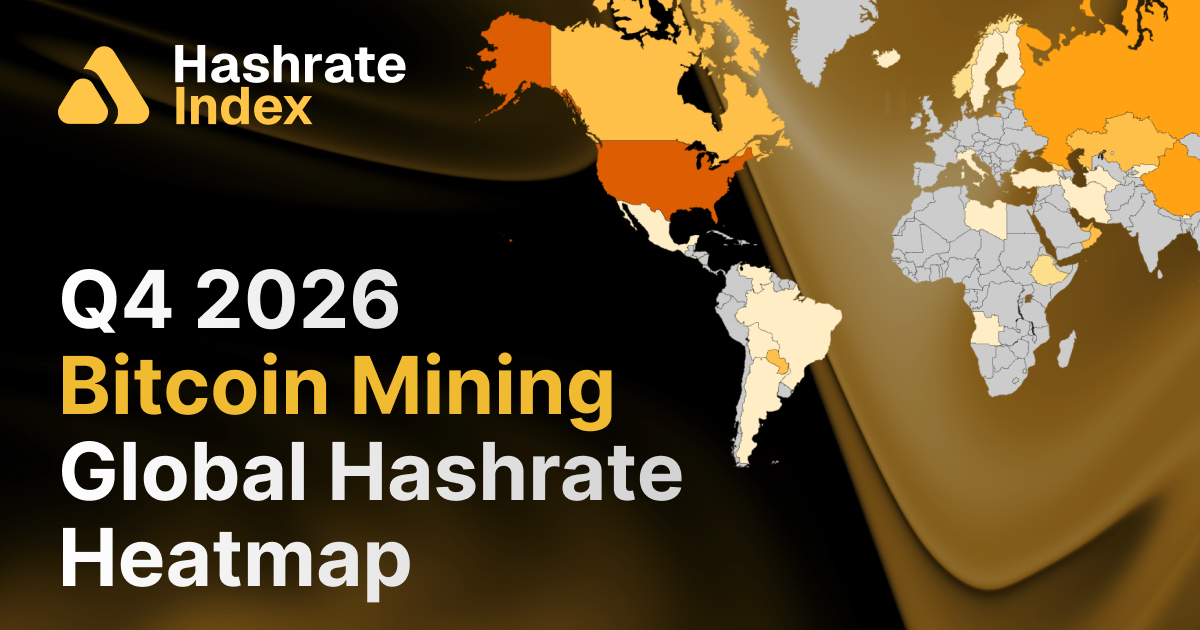
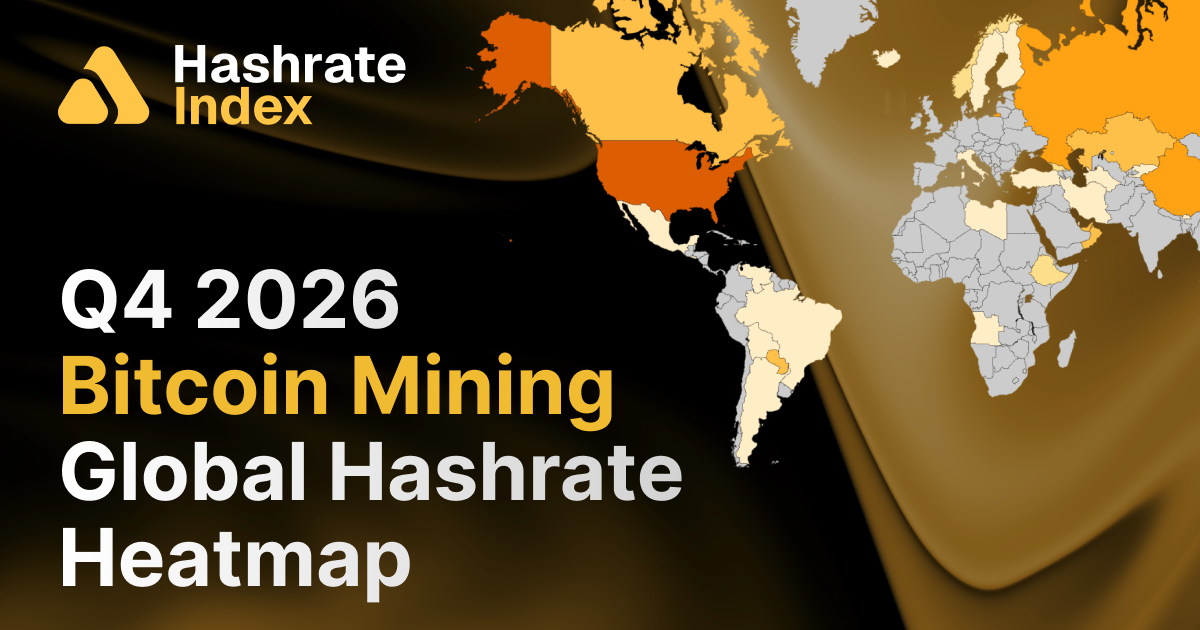
After two consecutive quarters of contraction, the Bitcoin network’s hashrate has finally halted its decline. According to the Q4 2026 Global Hashrate Heatmap update from Hashrate Index, global computational power finished the third quarter at approximately 941 EH/s, marking a flat performance compared to the ~940 EH/s recorded in the previous quarter. While the headline figure appears steady, a deeper examination reveals a period of intense geographic redistribution. The United States shed additional share, Russia expanded its footprint, Ethiopia faced severe reductions due to hydroelectric constraints, and several frontier markets experienced dramatic surges.
The stabilization indicates that the bleeding across the network has slowed. The network remains roughly 8.7% smaller than it was a year prior, when it stood at approximately 1,031 EH/s in Q4 2025, and sits about 15% below its all-time peak from November 2025. Marginal machines that were destined to be unplugged under prevailing hashprice conditions have largely been deactivated, while adjustments to mining difficulty have successfully lowered the threshold for operational viability, allowing surviving miners to remain online.
Despite the flat aggregate figure, significant geographic reallocation occurred. Five major countries recorded shifts of more than 4 EH/s in either direction, underscoring a continuous migration of Bitcoin’s global compute infrastructure.
Concentration Slips as Top Markets Shift
Bitcoin mining continues to be characterized by high geographic concentration, with the top three countries commanding roughly two-thirds of the network’s total hashrate. However, the collective dominance of the top three jurisdictions slipped slightly from 66.2% to 65.4%, marking the second consecutive quarterly decline. This drop stems primarily from the United States shedding market share at a pace faster than Russia can absorb it.
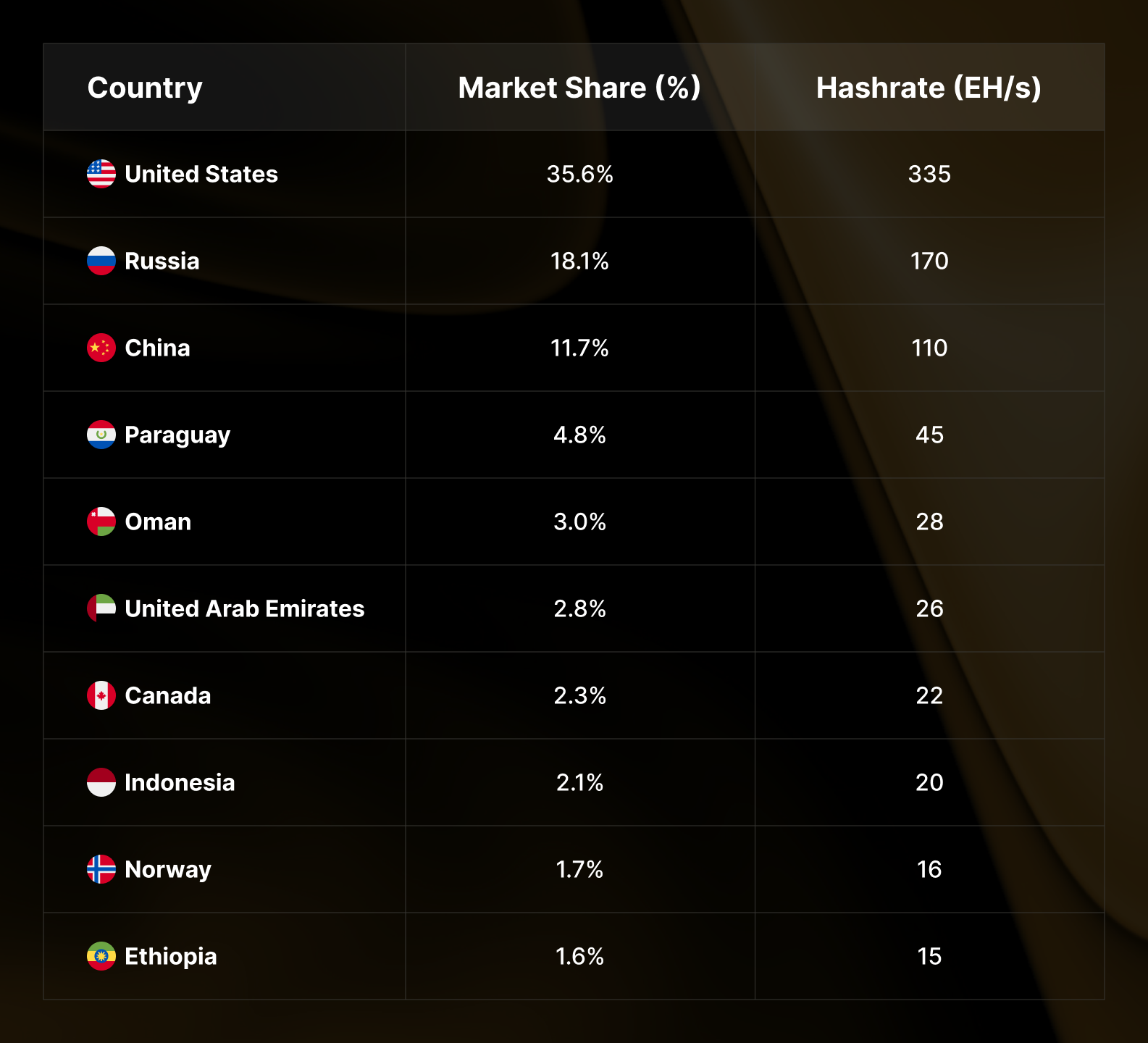
While the roster of the top ten mining nations remained unchanged from the previous quarter, five of those positions changed hands. Oman climbed past the United Arab Emirates to secure the fifth spot globally. Indonesia advanced from ninth to eighth on the strength of a genuine 3 EH/s increase, while Ethiopia slid from eighth to tenth place following steep power curtailments. Meanwhile, Kazakhstan held steady at the eleventh position with approximately 15 EH/s, remaining statistically tied with Ethiopia for the final spot in the global top ten as the industry heads toward 2027.
Quarter-over-Quarter Movers: The Great Redistribution
Comparing the fourth quarter to the third quarter reveals a clear bifurcation in the global mining map, characterized by a shrinking developed core and expanding frontier territories.
The most prominent decliners were led by the United States, which lost another 10 EH/s, alongside Ethiopia’s sharp drop. On the other side of the ledger, the growth was concentrated in developing and frontier markets. Russia added 8 EH/s to solidify its second-place ranking, while Pakistan and Venezuela posted substantial increases that effectively offset the contraction seen in North America. Pakistan more than tripled its output with a jump of 5.5 EH/s, and Venezuela crossed into double digits with a 4 EH/s gain, bringing its total to approximately 10 EH/s despite operating under a formal government prohibition on mining that has been enforced since mid-2024.
Year-over-Year Perspective and the AI Infrastructure Pivot
Looking at annual trends helps strip away short-term quarterly noise to reveal more durable structural trajectories. Every market that registered year-over-year growth shared a common characteristic: access to low-cost or stranded energy resources.
Conversely, the markets losing hashrate are not necessarily experiencing high power costs. Jurisdictions like Canada and the United Arab Emirates feature abundant and relatively inexpensive energy supplies, powered by hydro in provinces like Quebec, Manitoba, and British Columbia, and a mix of gas, solar, and nuclear energy in Abu Dhabi. These nations did not lose mining capacity because energy became unaffordable; rather, they lost hashrate because local power infrastructure found more lucrative applications.
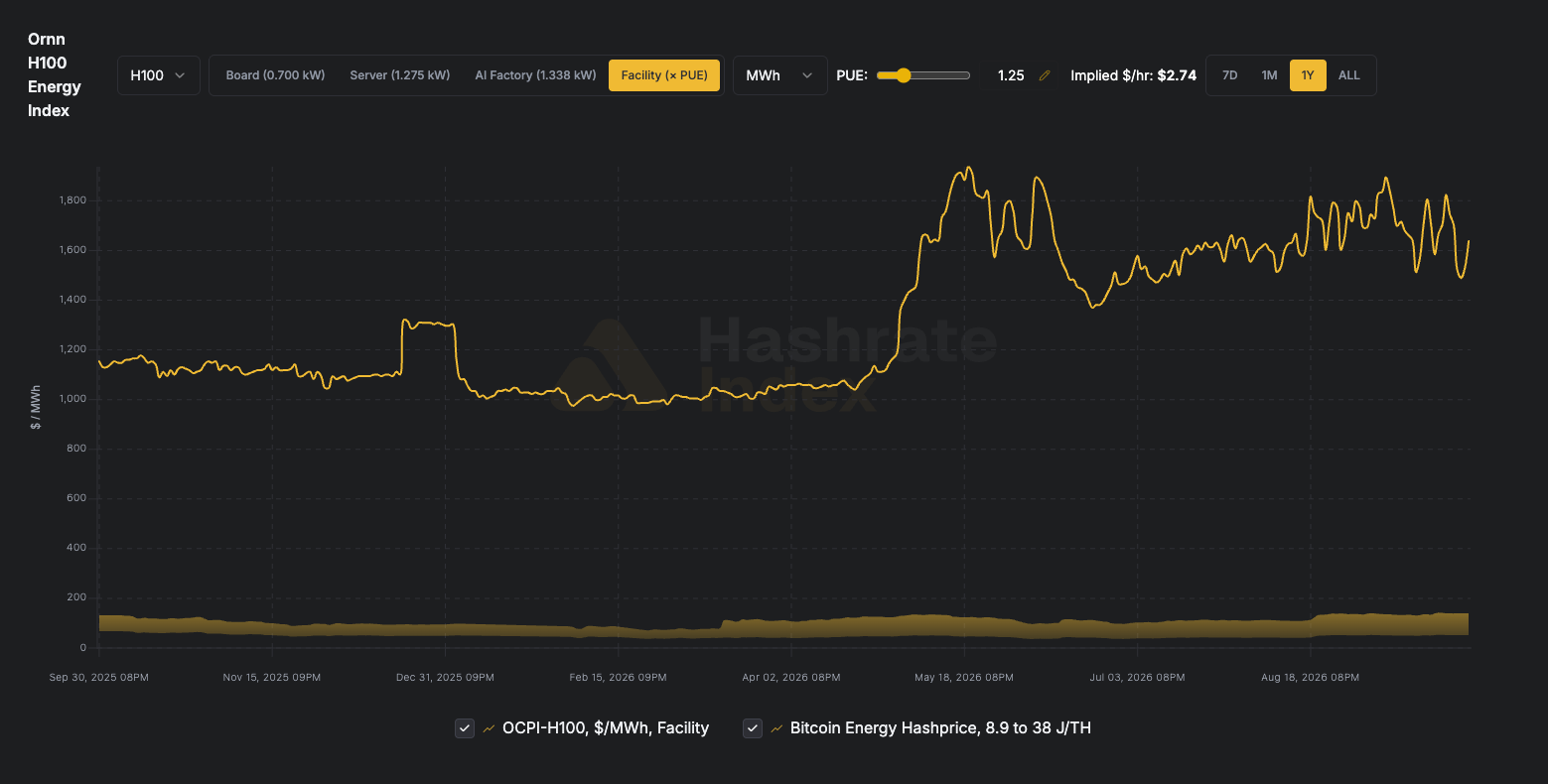
Throughout 2026, major operators in advanced economies increasingly pivoted toward Artificial Intelligence and High-Performance Computing infrastructure. The economic incentives heavily favor this transition, with AI compute generating revenues ranging from $1,500 to $3,500 per megawatt-hour, compared to a range of $50 to $150 per megawatt-hour for Bitcoin mining.
This distinction is crucial for the future trajectory of the network. A marginal ASIC machine that is powered down due to a dip in hashprice can easily be brought back online if market conditions improve. However, electrical capacity and infrastructure committed to multi-year AI enterprise tenants cannot be rapidly reversed, even in the event of a significant Bitcoin rally and downward difficulty adjustments. Consequently, global mining decliners fall into three distinct categories: capacity converting to AI and high-performance computing in regions like the United States, Canada, and the UAE; ongoing regulatory pressures in countries such as Kazakhstan, China, and Iran; and macroeconomic instability in markets like Argentina.
Ethiopia Faces Severe Hydroelectric Constraints
Ethiopia’s steep decline stands apart from broader regulatory or AI-driven trends, driven entirely by environmental and infrastructure factors. The nation’s hashrate dropped from approximately 23 EH/s down to 15 EH/s, representing a 35% quarterly contraction that pushes the country back to mid-2025 levels and down to the tenth global ranking. Measured from its peak of 27.5 EH/s in the first quarter of 2026, the Ethiopian market has contracted by 45% over three quarters.
The downturn followed an announcement by Ethiopian Electric Power on September 15, which curtailed electricity supplies to Bitcoin miners to roughly 23% of their contracted volumes—a reduction of approximately 75%. The cuts were implemented after reservoir inflows plummeted by roughly 20% due to El Niño-driven dry weather conditions. Ethiopia’s heavy reliance on seasonal hydroelectric generation left its burgeoning mining sector uniquely vulnerable to hydrological shortages, raising questions about the near-term viability of the region unless subsequent wet seasons replenish water levels.
Regional Dynamics Across the Globe
In North America, the United States remains the undisputed leader with a 35.6% global share, though it recorded its third consecutive quarterly decline down to approximately 335 EH/s, representing a 14% year-over-year drop from its peak of 400 EH/s in early 2026. Canada experienced a parallel decline, sliding to 22 EH/s for a 27% annual decrease, marking the sharpest yearly drop among developed markets.
Across Europe and Central Asia, Russia emerged as the quarter’s largest absolute gainer, expanding by 8 EH/s to reach roughly 170 EH/s, which translates to an 18.1% global share. Kazakhstan stabilized around 15 EH/s following a protracted period of losses, while Norway maintained a consistent output of 16 EH/s for four consecutive quarters and Georgia held steady at 11 EH/s.
In the Asia-Pacific region, China’s hash capacity continued a steady multi-quarter bleed, easing down to approximately 110 EH/s, down 24% year-over-year. Meanwhile, Southeast Asian nations continued to absorb regional capital, with Indonesia rising to 20 EH/s and Malaysia climbing to 7 EH/s, while Laos added 1 EH/s to reach 9 EH/s.
The Middle East saw Oman overtake the UAE after adding 2 EH/s to reach 28 EH/s, while the UAE slipped to 26 EH/s. Iran recorded a modest recovery, ticking up to 3 EH/s despite ongoing geopolitical tensions. In Latin America, Paraguay maintained its strong position at the head of the region with approximately 45 EH/s, supported by the Itaipú hydroelectric dam, while Venezuela’s growth to 10 EH/s served as a regional highlight alongside Bolivia’s rise to 4 EH/s, contrasting with Argentina’s ongoing macro-driven decline.
 Cryptocurrency Mining
 Cryptocurrency Mining
 Cryptocurrency Mining







