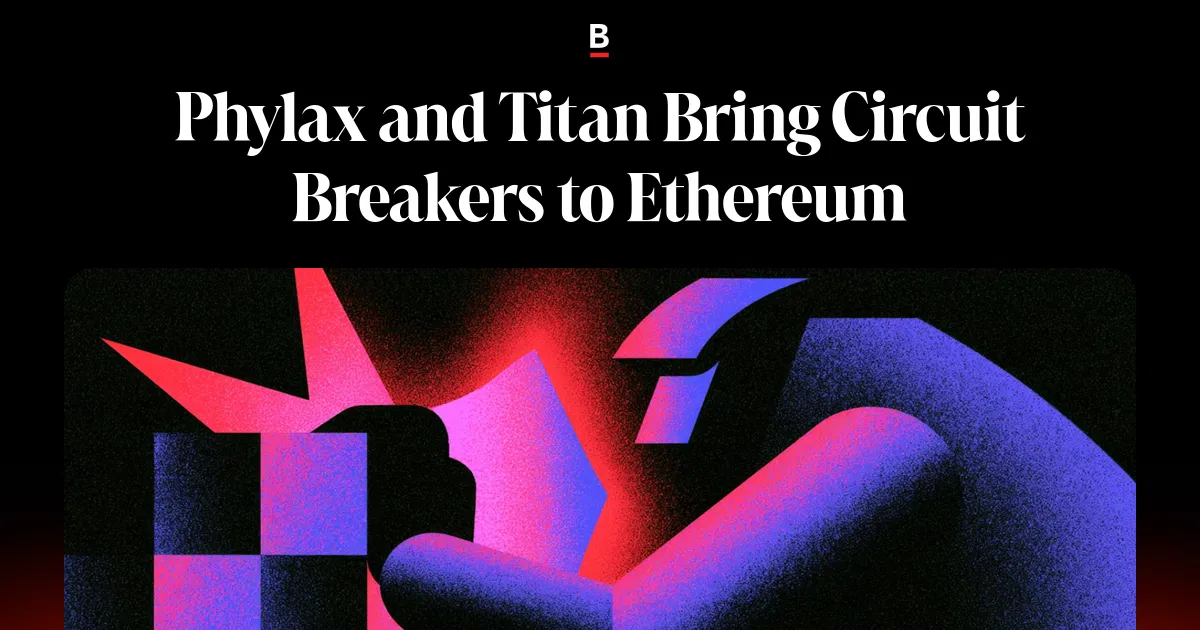
In a significant development for Ethereum network security, security startup Phylax has officially launched a novel block-level transaction checker in collaboration with Titan, one of the ecosystem’s leading block builders. Titan, a major infrastructure entity responsible for assembling roughly half of all Ethereum blocks, is now integrating app-specific safety rules directly into its block-building pipeline. This new capability allows the block builder to evaluate incoming transactions against the custom security logic of individual decentralized applications before those transactions are finalized and settled on the blockchain.
The core mechanism introduces a proactive defense layer directly at the sequencer and builder level. Under this new partnership, if a malicious actor or
exploiters attempt to drain funds from a participating decentralized application—such as through an unauthorized withdrawal or a sequence of operations that violate the application’s designated safety parameters—Titan can intercept the threat before inclusion. Instead of allowing the malicious transaction to be bundled into the proposed block, Titan simply excludes that specific transaction from the block it is constructing, effectively neutralizing the attack vector at the earliest possible stage of execution.
This technical integration addresses a long-standing structural challenge in decentralized finance and smart contract security. Traditionally, applications deployed on Ethereum rely entirely on reactive security measures. When a vulnerability is exploited or an unauthorized withdrawal is initiated, the malicious transaction must execute on-chain, and security teams or automated bots must race against the block creation process to deploy defensive measures, pause contracts, or execute white-hat counter-exploits. By shifting the defensive boundary upstream to the block builder level, protocols can now prevent harmful state changes from ever being recorded on the blockchain in the first place.
The collaboration between Phylax and Titan highlights an evolving shift in how Ethereum infrastructure providers approach network safety. Block builders occupy a uniquely powerful position in the modern Ethereum transaction supply chain, sitting between end-users, decentralized applications, and block proposers. Because builders determine the exact ordering and inclusion of transactions within a block, they possess the technical capability to filter or validate transactions based on custom criteria. By leveraging Phylax’s infrastructure, Titan is demonstrating how major block builders can actively participate in safeguarding the applications that drive the network’s economic activity, moving beyond a purely neutral transaction-sequencing model to incorporate intelligent safety checks.

The implementation of these app-level circuit breakers marks an important milestone for protocols seeking robust protection against complex exploits. Decentralized finance applications often manage vast amounts of capital, making them prime targets for sophisticated attackers who utilize flash loans, sandwich attacks, and intricate transaction ordering strategies to drain liquidity pools. By allowing applications to define their own safety rules and enforce them through a major builder like Titan, the ecosystem gains a decentralized, modular defense mechanism that can be tailored to the specific risk profile of individual protocols.
As the Ethereum network continues to mature, the collaboration between Phylax and Titan sets a precedent for how infrastructure providers and security specialists can work together to protect users and developers. While transaction censorship and neutrality remain heavily debated topics within the blockchain community, the ability of protocols to opt into custom safety checks at the builder level offers a powerful tool for mitigating systemic risks and preventing catastrophic exploits before they can materialize on-chain.
 Tokenomics & Digital Assets
 Tokenomics & Digital Assets
 Tokenomics & Digital Assets