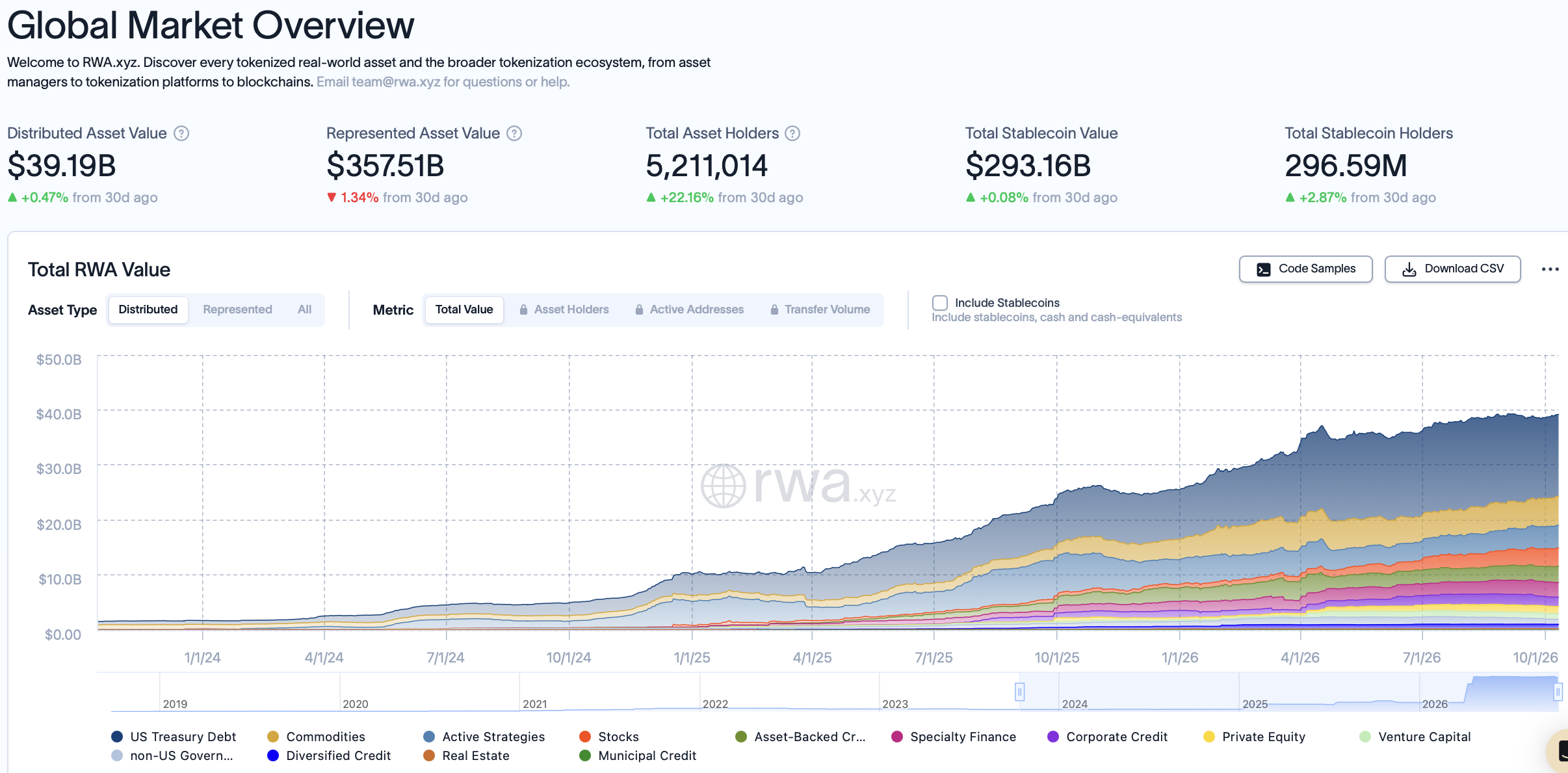
Tokenized assets are rapidly expanding new trading opportunities across global financial markets, yet the accelerating supply of real-world assets (RWAs) brought onchain continues to outpace actual investor demand. This structural mismatch, alongside broader challenges involving fragmented liquidity, stablecoin utility, and institutional risk management, took center stage at the recent industry gathering.
Speaking during a panel dedicated to liquidity and market fragmentation at CONNECT by Cointelegraph: Singapore Edition on Oct. 9, Alex Taaffe, chief revenue officer at prominent crypto trading firm GSR, addressed the shifting dynamics of traditional finance meeting decentralized infrastructure. Taaffe noted that while liquidity conditions are undeniably improving for alternative instruments—such as pre-initial public offering stocks, commodities, and global equities that historically remained difficult for retail and digital asset participants to access—the market for fully tokenized RWAs tells a very different story.
The event itself brought together a diverse cross-section of Web3 founders, institutional investors, and senior industry executives for four comprehensive panel discussions. These sessions tackled critical verticals including asset tokenization, stablecoin payments, onchain trading infrastructure, and venture capital exits, complemented by a live startup pitch competition designed to highlight emerging talent in the space.
Addressing the RWA sector directly, Taaffe highlighted a profound market imbalance. He pointed out that every traditional asset manager and corporate issuer seemingly wants to execute capital formation directly onchain, resulting in an overwhelming influx of supply. However, the depth of active buyers has yet to catch up, creating a bottleneck in market adoption.
Compounding the supply-demand imbalance is the issue of structural fragmentation. Taaffe explained that the proliferation of numerous asset issuers alongside a rapidly expanding web of distinct blockchain networks has severely fractured liquidity across tokenized markets. Instead of a unified global pool of capital, liquidity remains siloed across various chains and protocols, making efficient price discovery and execution considerably more complex.
Lingling Jiang, a partner at DWF Labs, echoed these concerns during the discussions, emphasizing that fragmentation remains a persistent hurdle for the industry. Jiang pointed out that the problem is particularly acute when multiple distinct issuers choose to tokenize the exact same underlying asset, inadvertently splitting potential liquidity into competing, isolated pools. Despite these structural inefficiencies, Jiang maintained an optimistic outlook, noting that cryptocurrency liquidity has improved significantly over recent years, even if substantial work remains to mature the ecosystem fully.
Stablecoin Adoption Hinges on Everyday Payments

The conversation surrounding digital currency utility shifted toward practical adoption during the panel titled "Stablecoins at the Point of Sale: Cards, Wallets and the Race for Everyday Spend." Mike Silagadze, founder and chief executive officer of ether.fi, argued that while stablecoins have successfully streamlined cross-border capital transfers and institutional settlements, their path to mainstream consumer adoption relies entirely on real-world utility—specifically, whether everyday people can seamlessly utilize them for daily living expenses.
Drawing a parallel to jurisdictions like Singapore, Silagadze observed that a tech-savvy consumer might hold digital dollars such as USDC in a digital wallet, but they still ultimately require fiat local currency to pay ordinary utility bills or buy groceries. This friction underscores the wide chasm that still exists between cutting-edge blockchain payment infrastructure and the mundane realities of everyday financial services.
Yvonne Chia, head of communications at USDD, approached the challenge from the perspective of user-centric design. She argued that stablecoin issuers must prioritize the end-user experience above all else to drive genuine adoption. The long-term goal, according to Chia, is to create an ecosystem where stablecoin transactions become so intuitive and frictionless that users do not even consciously realize they are utilizing blockchain rails; it simply functions as a transparent, everyday part of their financial lives.
Silagadze reiterated this sentiment, emphasizing that the primary reason stablecoins remain underutilized for daily commerce in many parts of the world is that they fail to plug naturally into a person’s daily routine.
Beyond user experience, regulatory compliance presents another formidable barrier. Ilya Podoynitsyn, co-founder and CEO of FinHarbor, highlighted that payment providers must constantly navigate a labyrinth of conflicting regulatory frameworks that vary wildly across international jurisdictions. This regulatory patchwork forces infrastructure providers to continuously adapt their technical systems and compliance protocols to satisfy localized legal mandates.
Adding to the industry perspective, Ashna Vaghela, chief customer officer at crypto payments provider Mercuryo, suggested that stablecoin payments should ultimately mirror the frictionless nature of mainstream consumer applications like Apple Pay, allowing individuals to execute transactions instantly without ever needing to navigate away from an application interface. The ultimate objective, Vaghela noted, is complete invisibility.
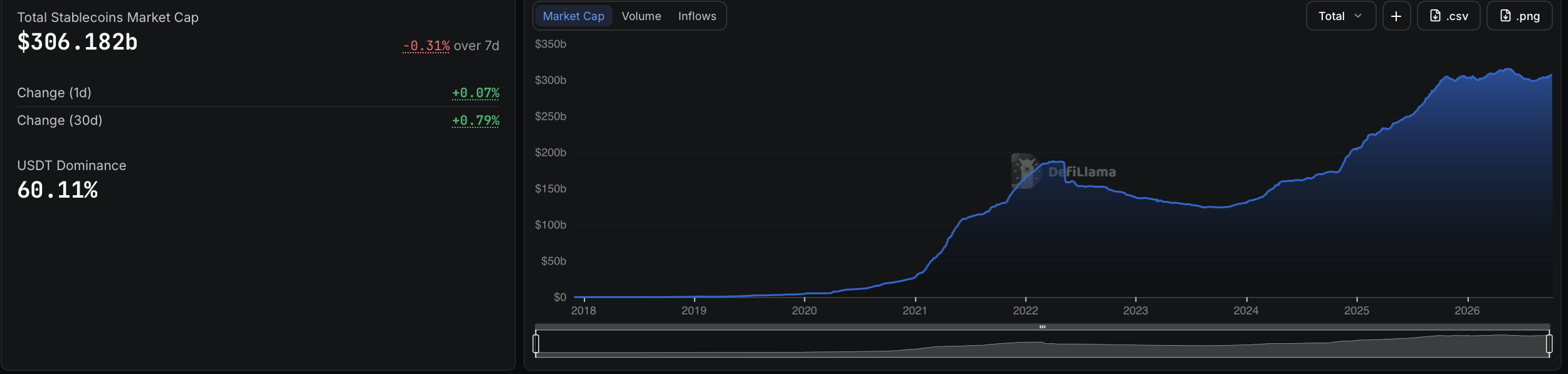
This discussion unfolded against the backdrop of a massive stablecoin economy, with total market capitalization hovering around $306 billion. While this represented a modest 2% increase year-over-year, it followed a staggering 74% expansion during the preceding 12-month cycle, signaling both rapid historical growth and a period of consolidation.
Onchain Trading Faces Liquidity Fragmentation and Risk Management Challenges

As digital asset markets mature, trading platforms continue to grapple with the technical hurdles of discovering genuine liquidity across disparate blockchain environments and mitigating counterparty risk. These themes dominated the panel titled "What’s Still Missing in the Onchain Trading Stack in 2026."
Austin Federa, co-founder of DoubleZero, explained that shifting liquidity across various blockchain networks remains remarkably more difficult than moving capital within traditional financial markets. Fragmentation, according to Federa, extends far beyond mere execution mechanics; it is fundamentally a data visibility problem. He noted that it remains surprisingly difficult for market participants to accurately calculate how much liquidity genuinely exists onchain at any given moment.
On the risk management front, Miguel Morel, founder and CEO of blockchain analytics firm Arkham Intelligence, emphasized how advanced onchain data tools can help trading firms evaluate counterparty risk. This is especially vital within prediction markets and derivative platforms, where certain participants may possess asymmetric informational advantages over others.
By utilizing granular blockchain analytics to identify counterparties and understand transaction histories, trading desks can operate with greater confidence and offer tighter spreads, ultimately benefiting everyday customers through superior pricing. Furthermore, Morel noted that the same analytical infrastructure allows cryptocurrency exchanges to evaluate incoming customer deposits for compliance purposes without resorting to intrusive paperwork. Exchanges can trace the provenance of funds to determine whether a deposit meets regulatory standards or requires a formal compliance review, all without needing to request physical identification documents like a passport.
Crypto Investors Face Tougher Exits as Markets Mature
The realities of evolving market structures also trickled into the venture capital sector, where panelists on "The Exit Problem: How Investors Get Their Money Back" discussed the mounting difficulties associated with liquidity events in a maturing crypto economy.
Pulkit Gupta of Nomad Capital pointed out that market liquidity has faced notable headwinds, with available capital remaining heavily concentrated within the largest, most established digital assets. For venture firms heavily exposed to alternative tokens, achieving a smooth and profitable exit has proven exceptionally challenging over recent quarters. Nomad Capital has previously backed several high-profile crypto projects featuring publicly traded tokens, including Movement, Solayer, and Berachain.
Sonia Shaw, CEO of OneAsset, viewed this cooling-off period as a natural evolution of market maturity rather than an outright crisis. She noted that the era of unrealistic investor expectations—such as anticipating a rapid liquidity exit within a compressed six-month window—has officially come to an end. Startups are now rightly expected to demonstrate robust, sustainable business fundamentals.

Aleksandr Nechaev, partner at Funders VC, underscored the unique pressures introduced by the relentless pace of product and market evolution within the technology sector. He noted that the extreme speed of change places an extraordinary burden on founding teams, making their individual expertise and resilience central pillars of any prudent investment decision. These themes of adaptability and navigation through profound industry uncertainty resonated throughout the remainder of the event, particularly during the startup pitch competition powered by Funders VC.
 Crypto Startups & Venture Capital
 Crypto Startups & Venture Capital
 Crypto Startups & Venture Capital