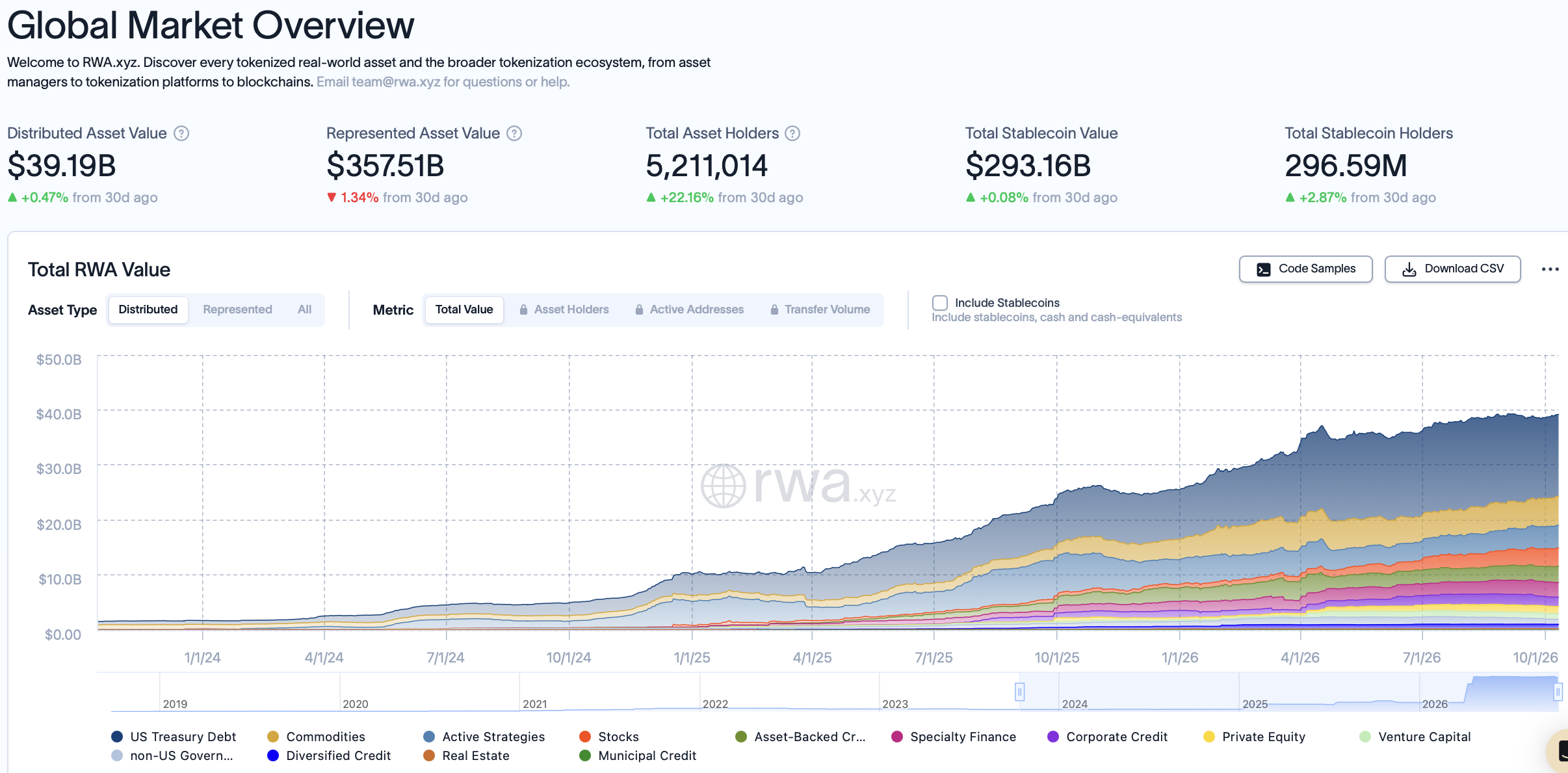
Tokenized assets are rapidly opening up sophisticated trading opportunities across traditional and emerging financial markets, but the rapidly growing supply of real-world assets (RWAs) being brought onchain has yet to be matched by commensurate investor demand. This structural imbalance threatens to create bottlenecks in capital formation, according to industry executives and market makers speaking at major Web3 gatherings across the globe.
Addressing the audience during a panel discussion focused on liquidity and market fragmentation at the CONNECT by Cointelegraph: Singapore Edition on Oct. 9, Alex Taaffe, chief revenue officer at prominent crypto trading firm GSR, detailed the state of the market. Taaffe noted that while liquidity is visibly improving in trading categories such as pre-IPO stocks, commodities, and global equities—asset classes to which everyday investors previously had severely limited access—demand for fully tokenized real-world assets has simply not kept pace with the accelerating volume of assets being issued.
The event brought together an influential mix of Web3 founders, institutional investors, and senior industry executives for four intensive panel discussions. These conversations tackled critical subjects including the future of asset tokenization, mainstream stablecoin payments, the evolution of onchain trading infrastructure, and the notoriously complex problem of venture capital exits, complemented by a high-stakes startup pitch competition.
Elaborating on the core dilemma facing asset issuers, Taaffe emphasized that the disconnect is most pronounced when looking at tangible off-chain instruments. Specifically regarding real-world assets and fully tokenized assets, he pointed out a glaring supply and demand imbalance characterized by an overwhelming wave of supply. Every major asset manager and corporate issuer seemingly wants to execute capital formation directly onchain, creating a market saturated with product offerings ahead of organic retail and institutional adoption.
Compounding this supply-demand mismatch is the structural architecture of the current blockchain ecosystem. Taaffe explained that the proliferation of an ever-growing number of asset issuers alongside a fragmented landscape of competing blockchains has further fractured liquidity across tokenized markets, preventing capital from pooling efficiently.
Lingling Jiang, a partner at DWF Labs, shared a similar perspective during the discussions, agreeing that market fragmentation remains an enduring and formidable challenge. She highlighted how inefficiencies become particularly glaring when multiple independent issuers tokenize the exact same underlying asset class, inadvertently creating isolated, non-communicating liquidity pools that dilute trading depth. Despite these friction points, Jiang offered a note of optimism, observing that overall cryptocurrency liquidity has matured and improved significantly over recent years, even if the industry still has substantial work ahead to achieve seamless interoperability.
Stablecoin Adoption Hinges on Everyday Payments

Moving from asset tokenization to currency utility, the panel titled "Stablecoins at the Point of Sale: Cards, Wallets and the Race for Everyday Spend" explored the practical hurdles preventing digital dollars from achieving absolute ubiquity. Mike Silagadze, the founder and CEO of ether.fi, argued that while stablecoins have revolutionized cross-border value transfer and institutional settlement, their broader, society-wide adoption ultimately depends on whether ordinary consumers can effortlessly utilize them for mundane, everyday expenses.
Silagadze drew attention to developed financial hubs like Singapore, where tech-savvy consumers might hold digital assets like USDC in their wallets, yet still find themselves relying on traditional local fiat currency to pay routine utility bills or buy groceries. This glaring friction underscores the persistent gap separating advanced blockchain payment infrastructure from the demands of everyday consumer financial services.
Echoing this user-centric philosophy, Yvonne Chia, head of communications at USDD, asserted that if stablecoin issuers genuinely want to capture mainstream market share, they must view the ecosystem entirely from the perspective of the end-user. According to Chia, the absolute most important priority is perfecting the user experience. The ultimate goal is to evolve the technology to a point where acquiring and spending stablecoins is so frictionless that it never crosses the consumer’s mind that they are interacting with blockchain infrastructure; it should simply feel like a regular, reliable part of their daily lives.
Silagadze reinforced this sentiment by diagnosing the fundamental barrier to entry: the reason stablecoins are still largely ignored in many parts of the world is simply because they do not natively plug into a person’s day-to-day existence.
Beyond consumer habits and interface design, regulatory hurdles continue to complicate operational expansion. Ilya Podoynitsyn, co-founder and CEO of FinHarbor, explained that payment providers and fintech builders
are forced to navigate a maze of disparate rules that differ drastically across international jurisdictions. This regulatory fragmentation requires firms to continuously adapt their technical infrastructure and compliance frameworks on a market-by-market basis.
Ashna Vaghela, chief customer officer at crypto payments provider Mercuryo, added that the gold standard for stablecoin payments is to make transactions feel as straightforward and effortless as using Apple Pay, enabling users to complete purchases instantly without ever leaving an application or confronting technical prompts. The whole point, Vaghela suggested, is for the underlying technology to become completely invisible.
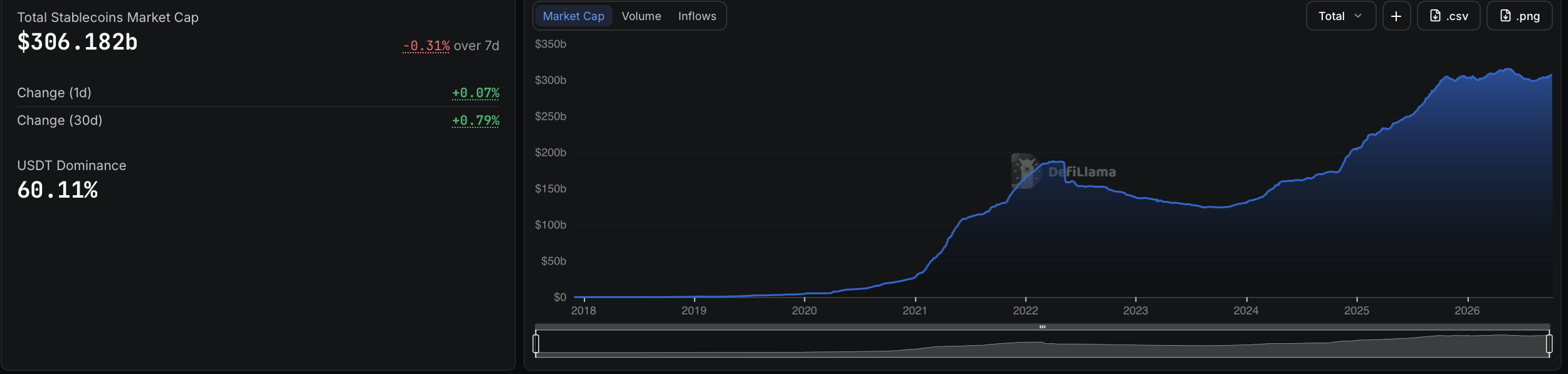
These discussions unfolded against a backdrop where the global stablecoin market capitalization hovered at approximately $306 billion. This figure represented a modest 2% increase year-over-year, following a massive 74% growth surge observed over the preceding 12-month cycle, signaling a period of stabilization after explosive initial expansion.

Onchain Trading Faces Liquidity Fragmentation and Risk Management Challenges
As the focus shifted toward market mechanics during the panel "What’s Still Missing in the Onchain Trading Stack in 2026," industry leaders detailed the persistent difficulties crypto trading platforms encounter when attempting to map available liquidity across a sprawling network of blockchains while simultaneously managing counterparty risk.
Austin Federa, co-founder of DoubleZero, noted that shifting capital and liquidity between distinct blockchain networks remains significantly more difficult and less efficient than moving assets within traditional, legacy financial markets. He characterized the issue not merely as an execution problem, but fundamentally as a data problem, explaining that it is surprisingly difficult to accurately calculate how much liquidity truly exists onchain at any given moment.
On the risk management front, Miguel Morel, founder and CEO of blockchain analytics firm Arkham Intelligence, explained how modern trading desks and platforms can leverage granular onchain data to rigorously assess counterparty risks. This capability is particularly critical in emerging sectors like prediction markets, where certain active participants frequently hold informational advantages over the general public.
By knowing precisely who is on the other side of a trade and thereby taking on significantly reduced risk, market makers can confidently offer tighter spreads, Morel noted. This structural enhancement ultimately translates to better pricing, deeper liquidity, and superior execution for everyday customers. Furthermore, Morel pointed out that this exact same transparent blockchain data can empower centralized and decentralized exchanges alike to evaluate customer deposits more efficiently. Platforms can scrutinize the historical origin of incoming funds to inform immediate compliance decisions without imposing intrusive administrative burdens. Without needing to ask for a passport or physical documentation, an exchange can analyze where incoming deposits originate from and instantly determine whether to permit immediate trading or route the funds for a deeper compliance review.
Crypto Investors Face Tougher Exits as Markets Mature
The realities of market maturation also took center stage during a panel titled "The Exit Problem: How Investors Get Their Money Back," where venture capital investors examined how structural liquidity challenges have fundamentally complicated exit strategies across the cryptocurrency ecosystem.
Pulkit Gupta of Nomad Capital explained that liquidity conditions in the broader crypto markets have proven particularly sluggish, with available capital heavily concentrated inside a handful of larger, established cryptocurrencies. For alternative tokens and early-stage project assets, Gupta admitted that securing timely and profitable exits has proven remarkably difficult for venture funds. Nomad Capital has notably backed several prominent crypto projects featuring publicly traded tokens, including Movement, Solayer, and Berachain.

Reflecting on this broader transition toward longer-term investment horizons, Sonia Shaw, CEO of OneAsset, observed that the market has visibly matured, forcing early-stage startups to demonstrate robust, sustainable business fundamentals rather than relying solely on speculative hype. Recalling a time when impatient investors routinely expected full liquidity exits within a mere six months, Shaw stated bluntly that the market simply does not operate that way anymore. She characterized this painful shift away from rapid, speculative exits as a remarkably positive and healthy sign of long-term market maturation.
Aleksandr Nechaev, partner at Funders VC, highlighted the unique challenges introduced by the relentless, blistering pace of technological and market evolution. He emphasized that the immense velocity of change makes a founder’s core expertise and strategic adaptability the single most critical factor in driving investment decisions. The complexities of navigating uncertainty and unpredictable market cycles remained a central theme throughout the remainder of the event, particularly during the startup pitch competition powered by Funders VC, where emerging founders presented their solutions to a panel of industry veterans.
 Crypto Startups & Venture Capital
 Crypto Startups & Venture Capital
 Crypto Startups & Venture Capital