
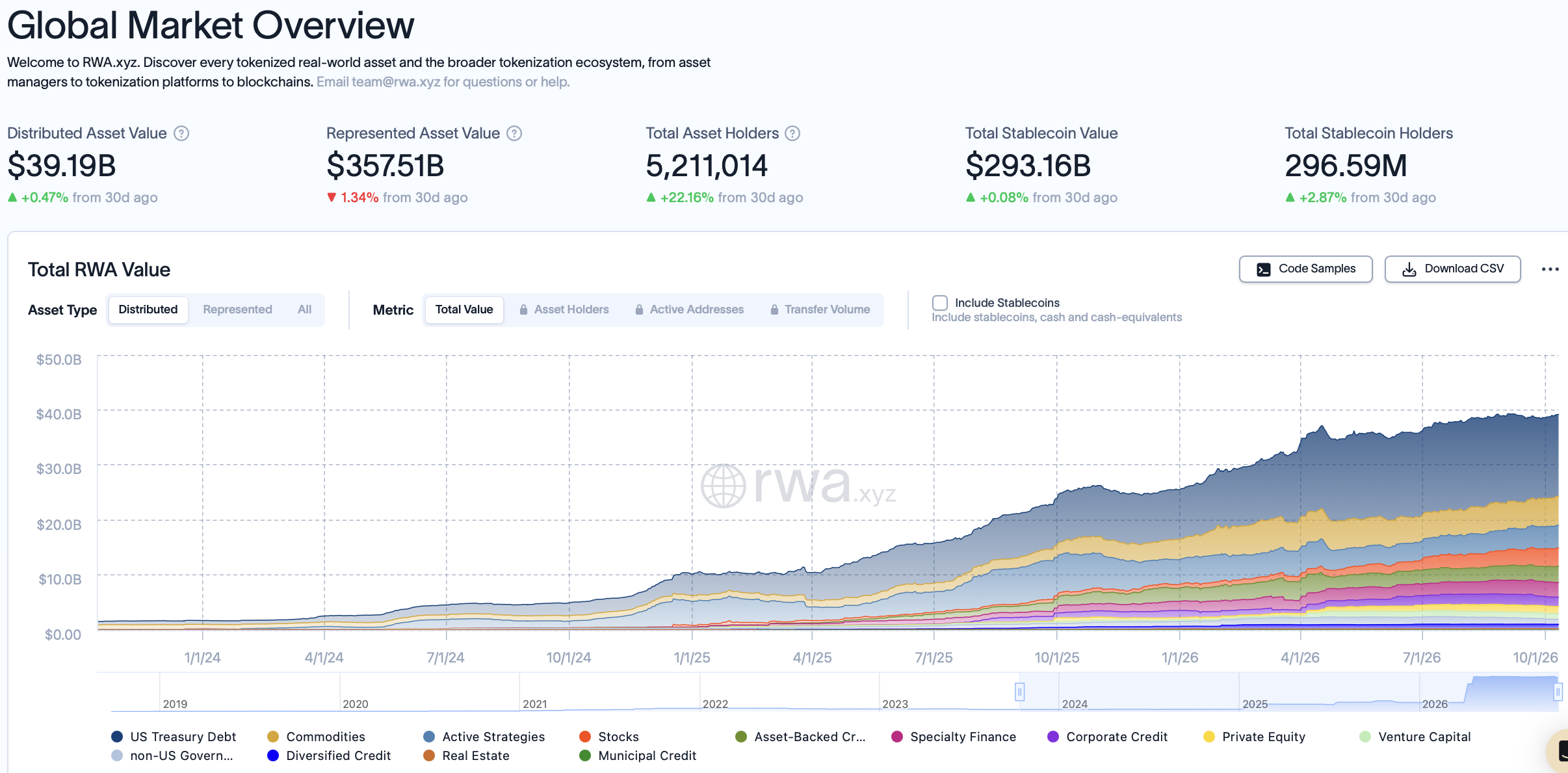
Tokenized assets are rapidly reshaping trading dynamics across global financial markets, offering new avenues for capital formation and liquidity. However, the accelerating supply of real-world assets (RWAs) being brought onchain has yet to find a corresponding match in investor demand, according to industry experts.
Speaking during a panel focused on liquidity and market fragmentation at the CONNECT by Cointelegraph: Singapore Edition on Oct. 9, Alex Taaffe, chief revenue officer at prominent crypto trading firm GSR, highlighted the structural mismatch currently facing the tokenization sector. While market activity and liquidity are demonstrably improving for alternative instruments such as pre-initial public offering (IPO) stocks, commodities, and global equities—asset classes that historically suffered from limited accessibility—the appetite for fully tokenized RWAs is lagging far behind the aggressive pace of issuance.
The event brought together a diverse cohort of Web3 founders, institutional investors, and senior industry executives for a series of high-level discussions. The panels explored critical themes including asset tokenization, stablecoin payments, onchain trading infrastructure, and venture capital exits, complemented by an active startup pitch competition designed to spotlight emerging talent in the space.
Addressing the core challenge in the RWA sector, Taaffe pointed directly to a widening disparity between market participants. Specifically focusing on RWAs and fully tokenized instruments, he noted that a distinct supply and demand imbalance has taken root. According to Taaffe, an overwhelming volume of asset managers and corporate issuers are eager to conduct capital formation directly onchain, creating a glut of supply that retail and institutional buyers are not yet absorbing at an equal rate.

Compounding this imbalance is the issue of market fragmentation. Taaffe explained that the proliferation of diverse asset issuers alongside a rapidly expanding array of independent blockchain networks has severely fractured liquidity across newly minted tokenized markets.
Lingling Jiang, a partner at DWF Labs, echoed these concerns during the discussion, agreeing that fragmentation remains a stubborn obstacle for the industry. Jiang emphasized that the friction is particularly acute when multiple distinct issuers attempt to tokenize the exact same underlying asset, inadvertently fracturing what should be unified liquidity pools into isolated pockets. Despite these hurdles, Jiang acknowledged that the broader cryptocurrency liquidity landscape has undergone significant improvements over recent years, even as the ecosystem continues to grapple with the structural growing pains of nascent financial technology.
The discussions in Singapore underscored a broader narrative of maturation across the digital asset economy, where infrastructural innovation frequently outpaces regulatory alignment and organic user adoption. This tension was particularly evident in explorations of stablecoin utility, onchain trading mechanics, and the evolving strategies of venture capital investors navigating tighter exit windows.
Stablecoin Adoption Hinges on Everyday Payments
Moving from asset tokenization to currency infrastructure, the panel titled “Stablecoins at the Point of Sale: Cards, Wallets and the Race for Everyday Spend” tackled the friction points preventing stablecoins from achieving ubiquitous consumer adoption. Mike Silagadze, founder and chief executive officer of ether.fi, argued that while stablecoins have undeniably revolutionized the efficiency of cross-border value transfer, their long-term viability and broader acceptance ultimately depend on a fundamental shift: whether everyday consumers can seamlessly utilize them for routine, day-to-day expenses.

Silagadze drew attention to developed financial hubs like Singapore, where tech-savvy consumers might hold digital dollars such as USDC in their wallets, yet still find themselves relying entirely on traditional local fiat currency to settle everyday obligations like utility bills or retail purchases. This disconnect starkly illustrates the lingering chasm between advanced blockchain payment rails and the pragmatic demands of everyday financial services.
Echoing the necessity of a consumer-centric approach, Yvonne Chia, head of communications at USDD, emphasized that placing the end-user’s perspective at the forefront is paramount. Chia stated that when designing payment products, the primary objective must be delivering an effortless user experience, steering the industry toward a future where holding and spending stablecoins becomes so frictionless that it fades entirely into the background of a consumer’s daily routine, functioning invisibly as a natural part of modern life.
Elaborating on this perspective, Silagadze noted that the primary reason stablecoins remain underutilized for daily transactions in many parts of the world is simply that the infrastructure fails to plug into the rhythms of daily existence.
Beyond pure usability, regulatory complexities continue to present formidable barriers to expansion. Ilya Podoynitsyn, co-founder and CEO of FinHarbor, highlighted the compliance burdens facing providers who must constantly navigate a patchwork of conflicting regulatory frameworks across different sovereign jurisdictions. These disparate rules force payment providers to continuously adapt their technical infrastructure and compliance protocols to satisfy localized legal mandates.
Adding to the payment discussion, Ashna Vaghela, chief customer officer at digital asset payments provider Mercuryo, asserted that the ultimate benchmark for stablecoin transactions is absolute invisibility—equating the desired user journey to established mainstream mechanisms like Apple Pay, where transactions are completed smoothly within an application without demanding specialized technical knowledge from the user.
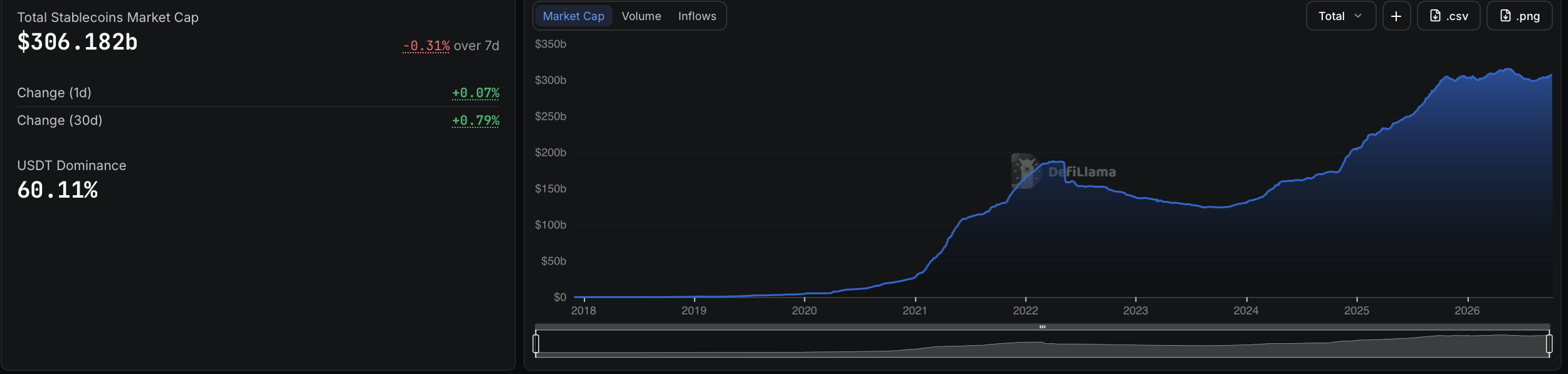
This dialogue on stablecoin utility unfolded against a robust macroeconomic backdrop. At the time of the discussions, the total global stablecoin market capitalization hovered around $306 billion, reflecting a modest year-over-year increase of roughly 2% following a staggering 74% growth surge over the preceding 12-month period.
Onchain Trading Faces Liquidity Fragmentation and Risk Management Challenges
As decentralization continues to permeate traditional financial workflows, crypto trading platforms are grappling with the complex realities of tracking available liquidity spread thin across disparate blockchain networks, all while attempting to fortify their counterparty risk management frameworks. These operational hurdles took center stage during the panel session examining the current gaps in the onchain trading stack.
Austin Federa, co-founder of DoubleZero, pointed out that routing liquidity across multiple distinct blockchain environments remains significantly more complex and inefficient than in legacy financial markets. Describing the core obstacle, Federa noted that fragmentation is not merely an execution problem but fundamentally a data problem, explaining that it is surprisingly difficult to accurately calculate just how much liquidity genuinely exists onchain at any given moment.

On the risk mitigation front, Miguel Morel, founder and CEO of blockchain analytics firm Arkham Intelligence, emphasized the invaluable role that transparent onchain data plays in helping trading firms evaluate counterparty exposure. This capability is especially critical in specialized sectors like prediction markets, where asymmetric information can give certain participants a distinct trading advantage over others.
Morel explained that understanding who is on the other side of a trade allows institutions to take on reduced risk, which in turn enables them to offer tighter spreads and more competitive pricing for everyday customers. Furthermore, Morel noted that the exact same public blockchain data can be harnessed by centralized and decentralized exchanges alike to vet incoming customer deposits, allowing compliance teams to trace the provenance of funds without resorting to invasive documentation requests. By analyzing the transactional history of deposits, exchanges can determine whether to immediately clear funds for trading or flag them for deeper regulatory review, bypassing the need to ask for physical passports while maintaining strict compliance standards.
Crypto Investors Face Tougher Exits as Markets Mature
The maturation of the digital asset ecosystem has likewise introduced new complexities for institutional backers, with structural liquidity challenges notably complicating exit strategies for crypto venture capital investors. These dynamics were deeply analyzed during the panel discussion titled “The Exit Problem: How Investors Get Their Money Back.”
Pulkit Gupta of Nomad Capital observed that liquidity within the broader cryptocurrency markets has experienced a distinct contraction over recent quarters, with whatever liquidity remains heavily concentrated in a handful of large-cap digital assets. For venture funds holding positions in altcoin projects, Gupta noted that securing viable, timely exits has proven exceptionally difficult. Nomad Capital has notably backed several prominent crypto infrastructure and layer-1 initiatives featuring publicly traded tokens, including Movement, Solayer, and Berachain.
Reflecting a broader philosophical shift in the venture ecosystem toward sustainable growth and long-term value creation, Sonia Shaw, CEO of OneAsset, argued that the market has evolved past the speculative excesses of previous cycles, now requiring early-stage startups to demonstrate robust and verifiable business fundamentals. Reflecting on past market behaviors where investors routinely anticipated rapid liquidity events within a matter of months, Shaw stated her belief that the industry environment has permanently changed, viewing the painful transition away from short-term speculative exits as a healthy and necessary indicator of true market maturity.
Aleksandr Nechaev, partner at Funders VC, further elaborated on the operational realities confronting founders, pointing out that the relentless pace of technological and market evolution places an extraordinary premium on the deep expertise and adaptability of founding teams. Nechaev noted that a founder’s ability to navigate deep market uncertainty has become the single most critical variable in modern investment decision-making—a theme that resonated strongly throughout the day’s activities, culminating in the event’s startup pitch competition, which was powered by Funders VC to highlight resilient new builders in the Web3 space.
 Crypto Startups & Venture Capital
 Crypto Startups & Venture Capital
 Crypto Startups & Venture Capital