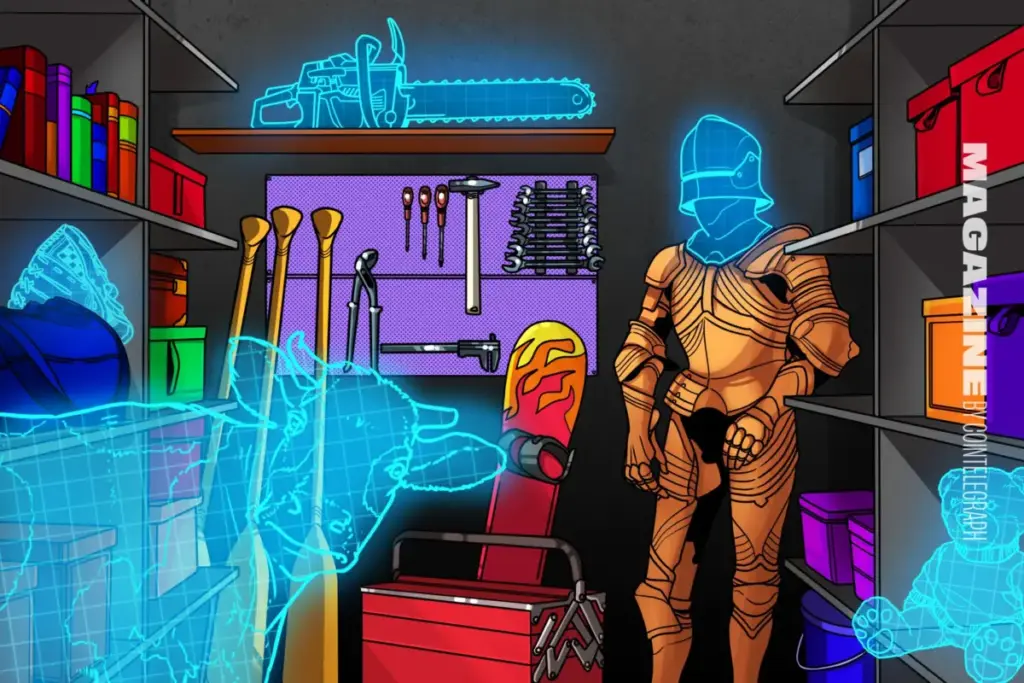
When Brazil’s B3 stock exchange made headlines last month, it wasn’t because of a traditional tech IPO or a major macroeconomic shift in Latin America. Instead, the exchange captured global attention due to an asset class that is reshaping conventional finance: tokenized cows.
A livestock farmer in southern Brazil successfully used a herd of 10 cows as collateral for a 100,000 Brazilian real—equivalent to approximately $19,600—loan. By virtually herding the animals into a blockchain-based holding pen, the operation demonstrated a novel way for agricultural producers to literally milk their physical assets to access credit. Structured by the Brazilian investment fund Target FIDC, each cow received a unique digital token linked to an encrypted digital identity. While the inaugural loan was modest, it served as a proof of concept with massive scalability potential. Industry projections suggest the framework could eventually support roughly $80 million in livestock-backed financing across regional farms.
This unusual transaction naturally raises a broader question about the expanding limits of distributed ledger technology: if cows can be tokenized, what can’t?
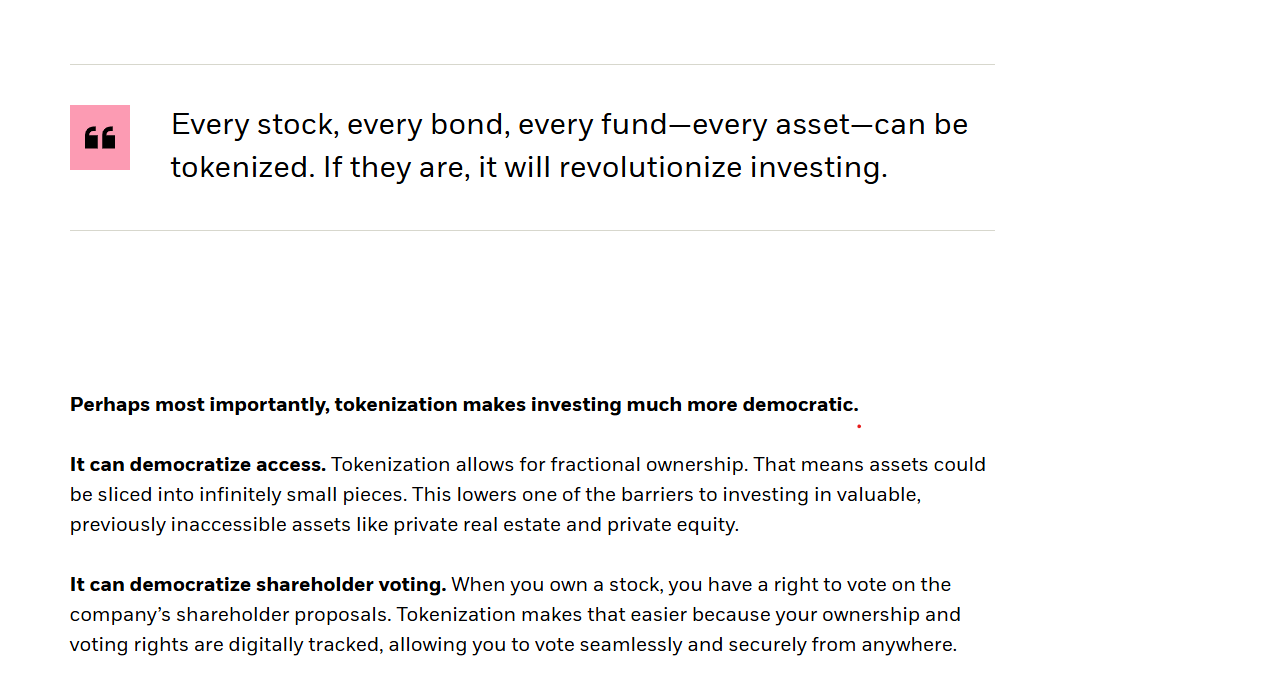
As major traditional financial players increasingly eye the tokenization of real-world assets (RWAs)—with BlackRock Chief Executive Larry Fink famously predicting that every asset will eventually be tokenized—the market has witnessed a surge of creative, and sometimes bizarre, blockchain experiments. From traditional commodities to bodily fluids and burnt masterpieces, the journey of bringing physical assets onchain has yielded some of the strangest milestones in financial history.
The Spectrum of Onchain Oddities
Long before Wall Street began exploring tokenized treasuries and private credit, the nonfungible token (NFT) boom of the pandemic era inspired creators to push the boundaries of digital ownership in unconventional directions. During a period when many people turned to baking bread or language apps, filmmaker Alex Ramírez-Mallis decided to record his own flatulence and mint each audio file as an NFT.
While the concept of owning a year’s worth of farts might test the limits of aesthetic appeal, the novelty factor allowed the filmmaker to sell individual tokens for 0.05 Ether each, translating to about $85 at the time. It was an early, eccentric reminder of a fundamental market rule: every asset has its price if there is a willing buyer.
The agricultural sector, which generated roughly $4 trillion in global value added in 2023, offers far more practical applications that bridge the gap between traditional farming and high finance. Following the success of tokenized cattle in Brazil, industry observers note that sheep, goats, and chickens could soon find their way onto blockchain platforms as viable collateral.
Similarly, luxury goods and commodities that appreciate over time have become prime candidates for fractional ownership. Whiskey barrels naturally lend themselves to tokenization because, much like high-end art, Scotch whisky typically increases in value as it matures in bonded warehouses. Several experimental projects allow investors to buy whole units or fractional shares of tokenized casks. However, market analysts offer a sobering reminder: unlike traditional financial instruments, a digital JPEG of a whiskey barrel cannot be consumed if the market crashes.
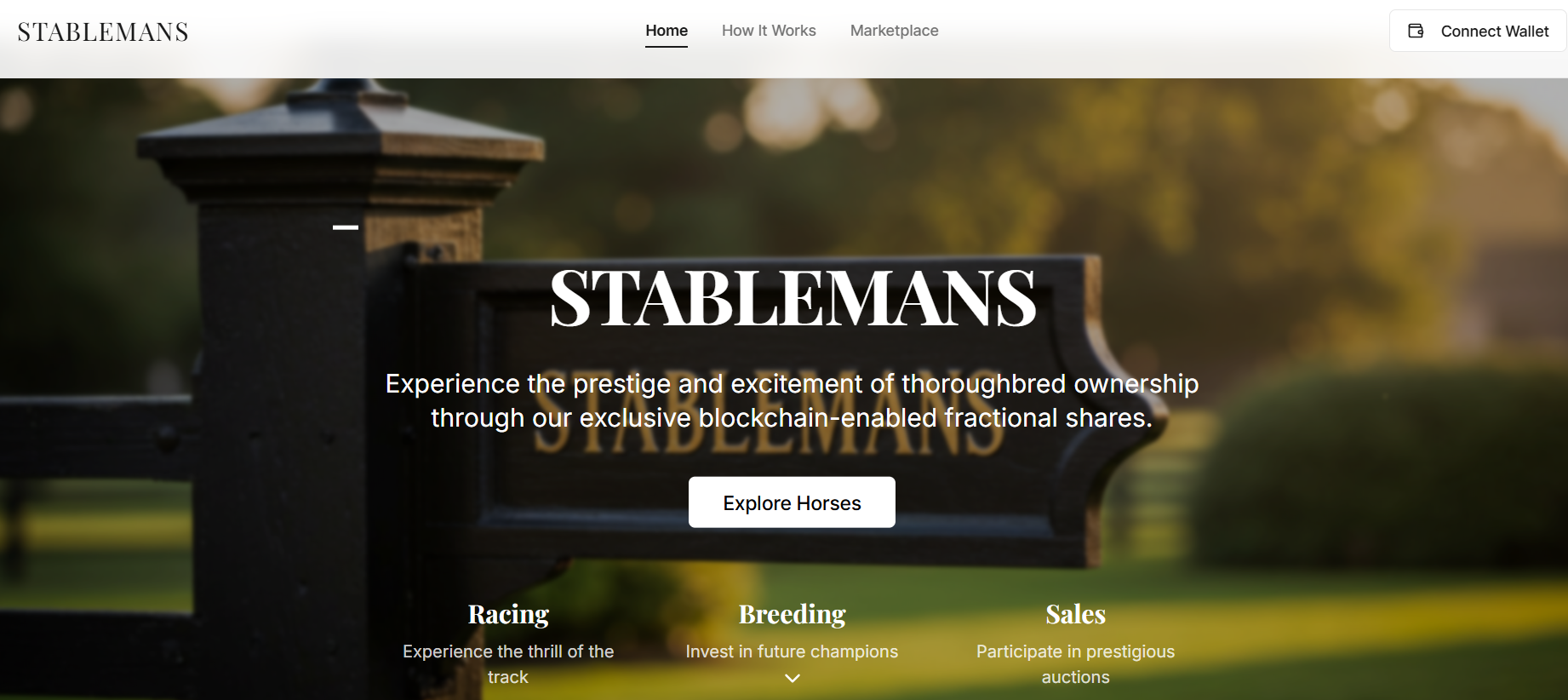
A similar democratization narrative drives the tokenization of thoroughbred racehorses. Traditionally, racehorse ownership has been restricted to the ultra-wealthy, requiring deep pockets to cover hundreds of thousands of dollars in breeding, training, and upkeep. Platforms are now chipping away at these elitist barriers by dividing the ownership of real thoroughbreds into digital shares. Investors can buy a stake in an animal and share in corresponding prize money, breeding income, or future sale proceeds without purchasing an entire horse.
Despite the enthusiasm surrounding these fractional investments, industry experts urge caution. Chris Turner, co-founder of the impact investment firm KULA, points out a fundamental economic reality that applies to luxury items, collectibles, and large four-legged animals alike. According to Turner, putting a collectible or luxury item on a blockchain does not automatically make it more liquid or valuable if the underlying legal rights, transfer process, and market structure remain unchanged.
Pushing Boundaries into Industrial and Biological Realms
The scope of tokenized assets extends far beyond agriculture and luxury collectibles into heavy industry. While market participants often associate RWAs with government bonds and corporate debt, firms like the Tezos-backed metals.io have explored tokenizing uranium, the radioactive metal essential for nuclear power generation.
Tezos co-founder Arthur Breitman argues that blockchain technology excels at building reliable, auditable, and cost-efficient financial rails for any asset, but is particularly well-suited for technology-flavored commodities. Data from the platform indicates that trading volume between November 2024 and July 2026 reached $21.5 million across approximately 18,200 trades involving roughly 7,400 unique wallets. While institutional players have shown interest, Breitman acknowledges that overall growth remains modest as major financial institutions continue to approach tokenized infrastructure with caution.
Financial innovation has also intersected with unusual revenue streams. Tokenization platform Brickken once received a proposal from a Chilean fish-processing company that wanted to issue tokenized debt with returns tied directly to the value of its fish sales. Edwin Mata, chief executive of Brickken, explains that the token represented the lender’s contractual claim, with interest payments adjusting according to verified sales performance. In effect, it was a tokenized, revenue-linked debt instrument.
The proposal highlighted a broader principle: almost any cash flow can support a tokenized financial instrument, provided the underlying rights and data can be independently verified. Ultimately, however, the fish never made it onchain. The underlying sales still relied on traditional audits, commercial reporting, and legal agreements that could not yet be fully automated. The stalled project demonstrated that the biggest obstacle to tokenization is often not the blockchain itself, but the complexities of the physical world.
Music royalties have followed a similar path of experimentation. High-profile examples emerged during the 2021 digital asset boom, when DJ and producer 3LAU launched a blockchain platform called Royal to give fans 50% of the streaming rights to his single "Worst Case." Rapper Nas subsequently utilized the platform to sell streaming royalty rights to his tracks "Ultra Black" and "Rare." Although onchain royalties gained considerable traction during the NFT craze, they have yet to evolve into a mainstream asset class, partly due to the notoriously modest payouts generated by digital streaming platforms. Owning a tiny fraction of a track can mean that millions of streams are required to generate even modest financial returns.
In some of the most unconventional cases, individuals have tokenized parts of their own identity and physical presence. Croatian tennis player Oleksandra Oliynykova auctioned the advertising rights to a 15-by-18-centimeter patch of skin on her right arm as an NFT, raising 3 Ether—about $5,400 at the time—from a winning bidder who gained the right to choose her tournament tattoos for a year.
Meanwhile, the art world witnessed extreme conceptual statements when a group calling itself Burnt Banksy purchased a physical Banksy print titled "Morons (White)" for roughly $95,000, livestreamed themselves setting it on fire, and minted its destruction as an NFT. The digital token subsequently sold for approximately $382,000, sparking intense debate over whether the group had destroyed a valuable work of art or successfully transformed it into a new digital medium.
That same year, Twitter co-founder Jack Dorsey tokenized his first-ever tweet—"just setting up my twttr"—and sold it as an NFT for $2.9 million to crypto entrepreneur Sina Estavi. The sale became an emblematic moment of the era’s speculative fervor. When Estavi attempted to resell the digital certificate a year later for $48 million, he received only a fraction of his asking price, with the highest reported bid reaching just $6,800.
While anyone can still read the historic tweet on X, only one person holds the blockchain certificate tied to its initial digital auction. Reflecting on the wide spectrum of tokenized assets, Edwin Mata emphasizes a timeless financial truth: tokenization can improve access, administration, settlement, and transferability, but it cannot transform a poor investment into a good one.
 Non-Fungible Tokens (NFTs)
 Non-Fungible Tokens (NFTs)
 Non-Fungible Tokens (NFTs)