The European Parliament’s influential Economic and Monetary Affairs Committee has officially called on the European Commission to evaluate whether the bloc’s regulatory framework should be expanded to encompass a wider array of emerging digital asset sectors, including decentralized finance, crypto lending and borrowing, staking, and non-fungible tokens.
The far-reaching recommendations were formally adopted as part of an own-initiative report brought forward for an upcoming plenary vote. Beyond exploring oversight for decentralized and alternative crypto segments, the legislative text actively encourages the broader promotion of tokenization across traditional and modern financial services. It also urges policymakers to foster the growth of euro-denominated stablecoins, aiming to bolster the European Union’s cross-border payment infrastructure and strengthen the international utility and competitive standing of the single currency.
Drafted by Belgian Member of the European Parliament Johan Van Overtveldt, the report serves as a foundational policy roadmap originating directly from the Committee on Economic and Monetary Affairs, commonly referred to as ECON. The comprehensive document outlines strategic recommendations for the European Commission regarding the future trajectory of digital asset regulation across the 27-member economic bloc.
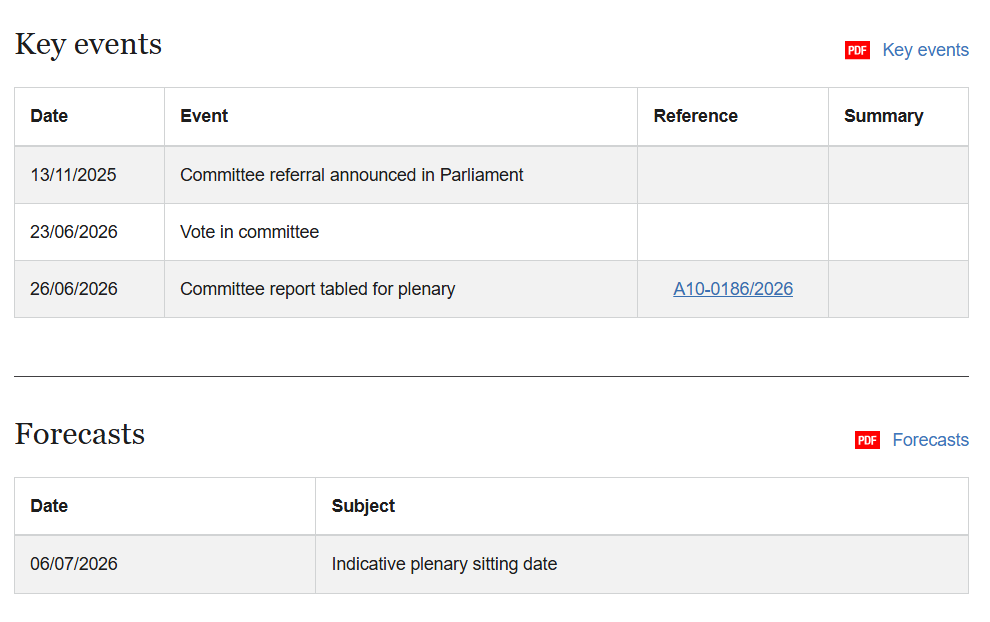
The report is scheduled to head before the full European Parliament for a crucial plenary vote. If formally adopted by the parliamentary assembly, the resolution will establish the official institutional position of the European Parliament on digital assets policy. However, while carrying substantial political and strategic weight, the resolution itself will not directly amend the existing Markets in Crypto-Assets Regulation, nor will it instantly create new binding legal obligations for market participants.
The legislative milestone arrives as the European Union continues to refine its overarching approach to financial technology, digital money, and systemic risk management. The ongoing policy discussions reflect a careful balancing act between encouraging financial innovation and safeguarding consumer protection, financial stability, and market integrity within the European single market.
EU Warms Up to Regulated Stablecoins
The committee’s latest recommendations mark a notable evolution in how European policymakers view stablecoins within the broader financial ecosystem. The shift in tone comes shortly after former Bank for International Settlements general manager and long-standing cryptocurrency critic Agustín Carstens softened his public stance on stablecoins, acknowledging their potential for peaceful coexistence with traditional fiat currencies.
Building on this changing sentiment, the ECON report explicitly welcomes euro-denominated stablecoins operating under the parameters of the Markets in Crypto-Assets Regulation. It encourages their active development and integration to support the bloc’s evolving payment sector, arguing that such digital assets could effectively complement tokenized commercial bank deposits and wholesale central bank digital currencies.
Proponents within the committee suggest that robust euro-denominated stablecoins could dramatically streamline cross-border transactions, making them significantly faster and cheaper for businesses and consumers alike. Furthermore, the report emphasizes that wider adoption of these regulated digital instruments could substantially strengthen the competitiveness of EU financial markets while enhancing the global role and international footprint of the euro.
This pragmatic stance aligns closely with ECON’s broader vision for a harmonious digital money ecosystem in Europe. The committee recently backed foundational legislation advancing the digital euro project, with supporting lawmakers repeatedly arguing that public and private forms of digital money should peacefully coexist and complement one another rather than engage in destructive competition.
The supportive outlook on stablecoins stands in sharp contrast to the turbulent policy environment of 2023. During the height of the banking turmoil that rattled institutions such as Silicon Valley Bank, Signature Bank, and Silvergate Bank, Johan Van Overtveldt publicly called for much tighter restrictions on cryptocurrencies. That crisis was intimately intertwined with the stablecoin market itself; notably, USD Coin issuer Circle held approximately $3.3 billion of its cash reserves at Silicon Valley Bank when the institution collapsed, triggering a temporary loss of the stablecoin’s crucial one-to-one peg with the United States dollar. At the height of the panic, Van Overtveldt drew sharp comparisons between certain cryptocurrencies and illicit substances. The new report, by contrast, demonstrates a nuanced distinction between unregulated algorithmic tokens and strictly compliant, euro-denominated stablecoins anchored within a transparent regulatory perimeter.
Lawmakers Look Beyond MiCA’s Current Scope
The path toward the current committee-approved report involved months of intense negotiations, strategic debates, and numerous amendments by ECON members following Van Overtveldt’s initial draft presentation. While early iterations of the text largely concentrated on solidifying the immediate implementation of MiCA’s existing framework—such as precise stablecoin classifications and legal certainty for multi-issued digital assets—the final committee text sets its sights on the regulatory horizon.
The newly endorsed report strongly urges the consistent and uniform application of MiCA across all European Union member states to preserve a level playing field for crypto-asset service providers. At the same time, it issues a stern warning against individual national governments introducing fragmented or overlapping requirements that exceed MiCA’s provisions, noting that such unilateral rules could fracture the bloc’s nascent digital asset industry and undermine the core principle of the single market.
The European Commission is already actively engaged in reviewing the broader impact and operational realities of MiCA. Earlier in the year, the Commission launched a formal public consultation seeking detailed feedback from industry stakeholders, legal experts, and regulatory bodies. The consultation specifically explores whether the existing regulatory framework should be expanded to capture complex areas that were initially left out or treated peripherally, including decentralized finance protocols, staking services, crypto lending operations, non-fungible tokens, and tokenized financial instruments. The review has also reignited passionate debates within policy circles regarding MiCA’s controversial restrictions on interest-bearing stablecoins.
Meanwhile, the European crypto sector is facing an immediate operational milestone. The transitional period established under MiCA is drawing to a close, with the deadline set for July 1. From that date onward, crypto-asset service providers generally must secure formal authorization under the regulation to legally continue offering their services and operating seamlessly across the European Union. As the deadline approaches and regulatory scrutiny intensifies, European lawmakers are clearly laying the groundwork for the next generation of digital finance oversight.
 Non-Fungible Tokens (NFTs)
 Non-Fungible Tokens (NFTs)
 Non-Fungible Tokens (NFTs)