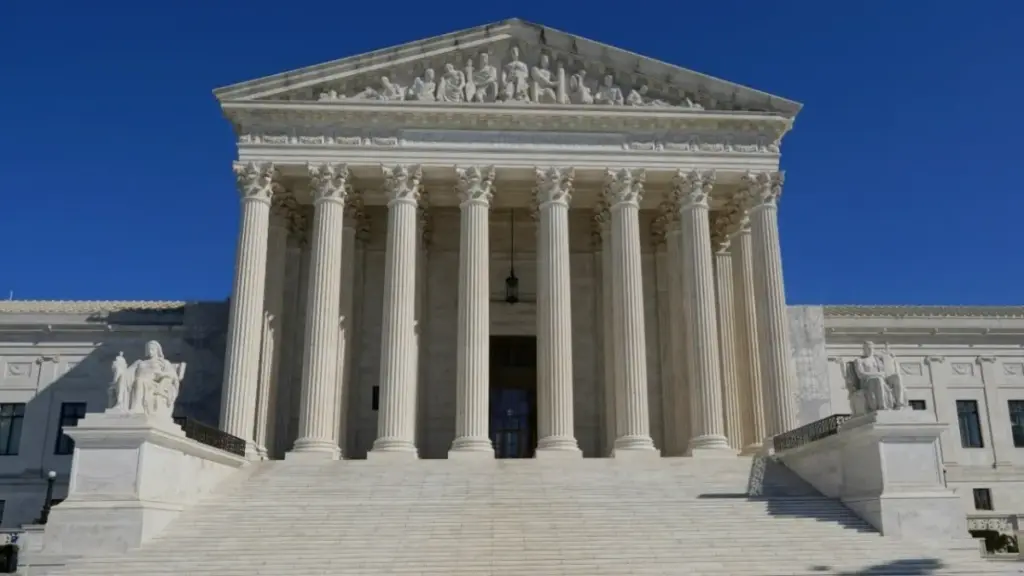
Crypto-focused Custodia Bank has issued a renewed and forceful plea to the U.S. Supreme Court, urging the high court to intervene in its protracted legal battle against the Federal Reserve. In a newly filed reply brief, the institution argued that only the nation’s highest judicial authority can effectively put an end to what it describes as the Federal Reserve’s unchecked authority over financial innovation and core payment systems.
The latest legal filing supports Custodia’s ongoing petition for a writ of certiorari, asking the justices to scrutinize and overturn a decision handed down by the 10th U.S. Circuit Court of Appeals. That previous appellate ruling upheld the broad discretion claimed by the Federal Reserve System to deny master accounts to depository institutions that are otherwise statutorily eligible under federal law. Custodia contends that leaving the lower court’s interpretation intact poses a profound and systemic threat to the traditional structure of American banking.
According to Custodia, the appellate court’s ruling improperly equips unappointed regional Federal Reserve bank presidents with sweeping authority to block what they deem "disfavored" banking institutions from accessing essential payment rails. Emphasizing the far-reaching legal and economic stakes involved in the dispute, the bank described the real-world consequences of the decision as profound. Furthermore, Custodia stressed that the fundamental statutory questions presented by the case have generated deep disagreement among a range of respected jurists, pointing to thoughtful opinions on both sides of the issue. This division, the bank argues, makes immediate Supreme Court intervention necessary, even in the absence of a direct and traditional circuit split.
If the lower court’s ruling is allowed to stand, Custodia warns that it threatens to fundamentally undermine the nation’s longstanding dual banking system. Such an outcome, the bank argues, would severely cripple the ability of individual states to foster competition, modernization, and financial innovation within their respective jurisdictions.
"The decision vests extensive regulatory authority in unappointed bureaucrats, creating a judicially sanctioned safe harbor for a newly constituted fourth branch of government," Custodia asserted in its strongly worded reply brief. "The practical stakes are likewise staggering. The Fed’s asserted discretion to deprive depository institutions of master-account access hangs over every bank like a sword of Damocles."
At the center of this complex legal dispute is the precise statutory interpretation of the Monetary Control Act of 1980. Custodia argues that the statutory language explicitly mandates that the Federal Reserve "shall" make its payment services available to eligible banks, leaving no discretionary leeway for regional Reserve Banks to enact policy-based rejections rooted in subjective risk assessments.
Conversely, the Federal Reserve has maintained a different reading of the statutory text. The central bank has argued that the absence of the word "all" immediately prior to the phrase "nonmember depository institutions" implies that payment services are only required to be made available to such institutions "as a class," rather than guaranteeing individual access to every single applicant that meets basic criteria.
However, Custodia pushed back aggressively against that reading in its reply brief. The bank pointed out that the Monetary Control Act explicitly incorporates a statutory definition of a "depository institution" that broadly covers "any bank which is eligible" to apply for Federal Deposit Insurance Corporation insurance. Consequently, Custodia argues that the statutory text legally obligates regional Reserve Banks to open payment services to any legally eligible nonmember bank without arbitrary discrimination.
The origins of this high-profile confrontation trace back to 2022, when Custodia initially filed a lawsuit against the Federal Reserve Bank of Kansas City, alleging undue and unreasonable delay in the processing of its master account application. Custodia subsequently renewed and expanded its litigation in early 2023 after the Federal Reserve formally rejected the application. At the time of the denial, the central bank cited concerns that Custodia’s specialized risk management framework was allegedly inadequate for safely managing the unique risks associated with digital assets and cryptocurrency activities.
Following the formal rejection, a federal judge in Wyoming initially ruled in favor of the Federal Reserve, a decision that was later affirmed by a panel of judges at the 10th Circuit. However, that appellate panel was notably split, highlighting the complex legal grey areas surrounding the central bank’s regulatory powers. Circuit Judge Timothy M. Tymkovich authored a sharp dissent, warning that the majority decision effectively granted the Federal Reserve "unreviewable discretion" to deny master accounts and effectively handed unelected central bankers an absolute veto over state-level banking chartering authorities.
Since Custodia first filed its petition for a certiorari writ with the Supreme Court, the bank’s position has attracted significant backing from prominent political figures and influential industry advocacy groups. Among the most notable supporters are former U.S. Senator Pat Toomey and U.S. Senator Cynthia Lummis, who jointly filed an amicus brief in support of the bank’s appeal. In their filing, the lawmakers argued that the 10th Circuit fundamentally misconstrued congressional disclosure mandates, mistakenly treating them as a broad structural grant of agency discretion rather than routine administrative reporting requirements. As the Supreme Court weighs whether to take up the case, the outcome of Custodia’s appeal is widely expected to set a definitive legal precedent regarding the balance of power between state banking charters and federal monetary authorities.
 Bitcoin & Major Altcoins
 Bitcoin & Major Altcoins
 Bitcoin & Major Altcoins