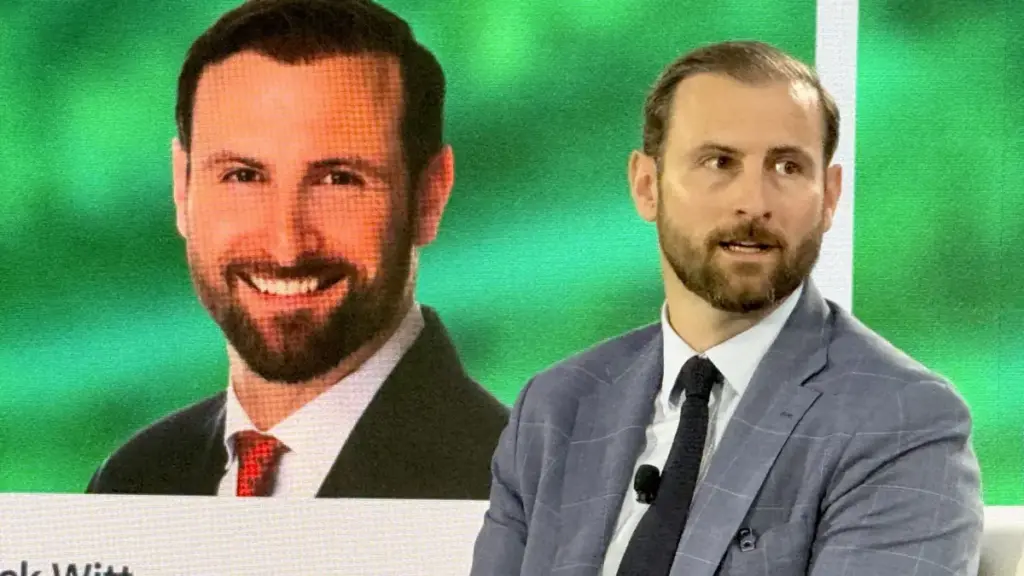
The departure of President Donald Trump’s final resident crypto adviser, Patrick Witt, has left the White House digital assets office entirely vacant, throwing the administration’s broader policy aims for the industry into a state of uncertainty.
When President Trump returned to the White House for his second term, he dramatically shifted from his earlier skepticism of digital currencies and blockchain technology. Instead, he fully embraced the digital assets sector, establishing the President’s Council of Advisors for Digital Assets and appointing a high-profile crypto czar to lead the charge.
Nearly two years into this ambitious agenda, however, that legislative and policy momentum has noticeably stalled. Witt’s exit marks the end of a tumultuous period for the administration’s dedicated in-house crypto team. Furthermore, when the administration recently appointed a new artificial intelligence overseer, the portfolio that once combined both artificial intelligence and cryptocurrency was stripped of its digital asset mandate.
This leadership vacuum raises pressing questions about who is currently managing cryptocurrency policy within the executive branch. While a handful of lawmakers on Capitol Hill continue to argue that the post-election congressional session could still yield some legislative movement for the industry, the White House lacks an explicit point person for its digital asset initiatives. Although the administration still employs a deep bench of policy advisers and maintains aggressive regulatory pursuits across federal agencies like the Securities and Exchange Commission, no new name has been officially attached to the White House’s internal crypto strategy.
A White House official confirmed Witt’s departure, expressing appreciation for his service and wishing him success in his future endeavors while declining to name an immediate successor. The official maintained that the administration remains committed to its core agenda, emphasizing that "crypto and the Clarity Act will continue to be a priority for the president."
The White House’s digital asset operation was never a sprawling federal bureau, but its officials wielded significant influence, injecting crucial administrative backing into the industry’s legislative goals. The effort originally took shape shortly before Trump’s return to the Oval Office in January 2025, when the incoming president named former PayPal executive David Sacks as his dual AI and crypto czar.
Simultaneously, Trump tapped Bo Hines, a former college football player with limited prior political exposure, to serve as the inaugural director of the digital assets advisory council. What began as a one-person office eventually expanded to include a deputy. Hines quickly emerged as the public face of the White House’s crypto outreach, holding continuous closed-door meetings with industry insiders and commanding prominent speaking slots at major sector events.
Hines’ tenure, which lasted roughly eight months, culminated in a massive legislative victory for the digital asset community: the passage of the Guiding and Establishing National Innovation for U.S. Stablecoins, or GENIUS, Act. The landmark legislation established a federal regulatory framework specifically tailored for stablecoin issuers.
The legislative win was celebrated with a high-profile White House signing ceremony, where many of the most influential figures in the cryptocurrency industry secured front-row seats. Less than two weeks after the bill was signed into law, the administration unveiled a comprehensive crypto agenda designed to solidify American leadership in digital financial technology.
Having successfully shepherded the stablecoin legislation across the finish line, Hines departed the White House to lead the U.S. operations of Tether, the world’s largest stablecoin issuer. Around the same time, public scrutiny mounted over a consulting firm, Nxum, which Hines had established alongside his father and another partner. Reports revealed that Nxum had collected millions of dollars in consulting fees as the primary service provider for a newly formed political action committee. This super PAC was predominantly financed by Cantor Fitzgerald—Tether’s primary U.S. financial partner—and managed by a high-ranking Tether executive.
Subsequent investigative reporting by the Wall Street Journal detailed that Nxum had received substantial payments from Tether for consulting work during the exact period Hines was stationed inside the White House helping draft and advance the GENIUS Act.
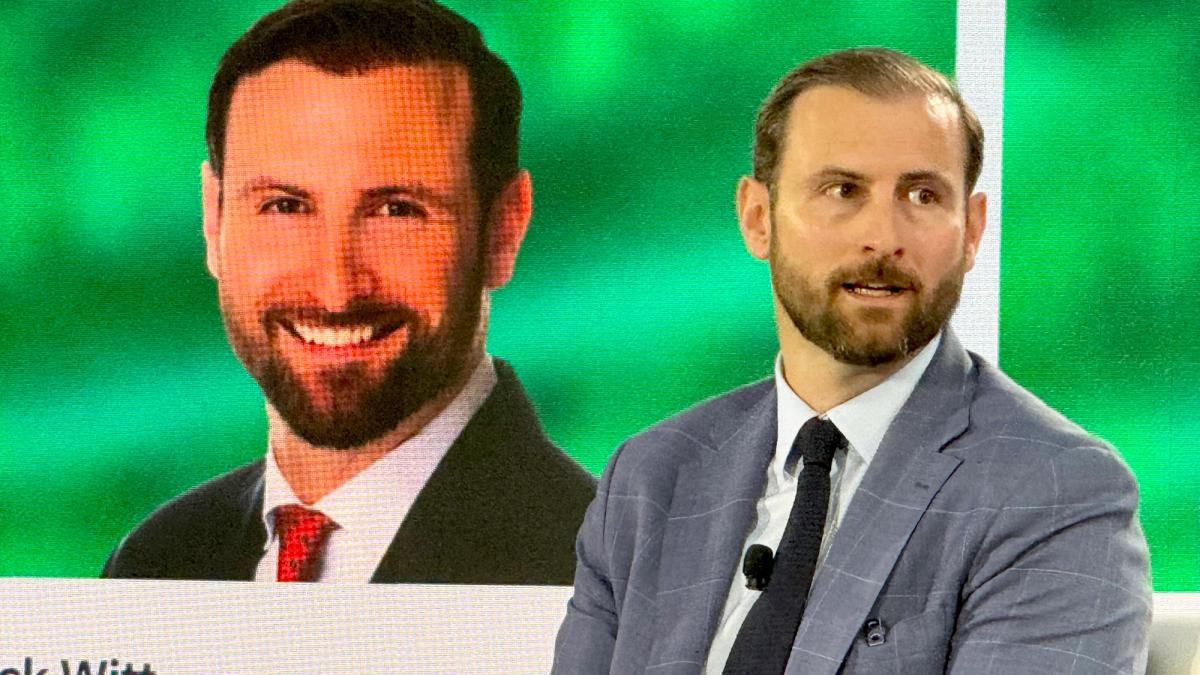
Following Hines’ departure, his deputy, Patrick Witt, stepped into the role of executive director of the digital assets council. Like his predecessor, Witt was a former college football player, but he brought a significantly deeper background in Washington policy circles. Witt quickly transitioned into the primary administration advocate for the Digital Asset Market Clarity Act, a sweeping piece of legislation intended to establish a comprehensive U.S. regulatory framework for wider crypto markets.
Throughout months of intense negotiations on Capitol Hill, Witt made little secret of his frustrations. He frequently used social media to publicly criticize lawmakers and political factions he believed were obstructing the Senate bill, which aimed to clarify the regulatory boundaries between the SEC and the Commodity Futures Trading Commission.
The policy landscape grew increasingly complicated earlier in the year when David Sacks stepped down from his position as AI and crypto czar in March. His resignation left Witt and his deputy, Harry Jung, to shoulder the administration’s crypto strategy alone. Their task was further complicated by political friction surrounding President Trump’s own burgeoning family crypto enterprises. Congressional Democrats aggressively pushed back during negotiations, demanding strict ethical safeguards to bar senior government officials from maintaining personal financial ties to digital assets.
As negotiations dragged on through the spring and summer, edging closer to the midterm elections, the administration proposed several compromise measures. These concessions would have imposed unprecedented ethics constraints on the president’s digital asset holdings, though Democratic lawmakers ultimately concluded the proposed restrictions fell short of what was required.
Witt had previously confirmed in July that he faced impending military service obligations with the Georgia National Guard. Despite this looming commitment, he chose to stay on to oversee the final push for the Clarity Act, even as his deputy departed the White House to join Hines at Nxum.
Ultimately, the legislative effort hit an insurmountable political wall. Last month, the Digital Asset Market Clarity Act failed to advance during a critical Senate floor vote, dealing a major blow to the industry’s near-term legislative hopes just as lawmakers recessed ahead of the November elections.
Rumors regarding Witt’s impending exit circulated throughout Washington before he officially confirmed his departure late Wednesday night on social media. In his farewell post, Witt thanked the agency leaders and federal lawmakers who had collaborated with him on the Clarity initiative. He expressed confidence in the sector’s trajectory, stating that with supportive regulators and elected officials, the future of digital asset innovation in America remains bright. He also announced his return to the private sector.
With Witt’s exit, crypto industry executives and lobbyists admit they are currently uncertain who within the administration they will be engaging with, especially now that their immediate market-structure ambitions have stalled.
The uncertainty was compounded earlier this month when President Trump moved to reinstate an artificial intelligence oversight role, appointing former SEC Chairman and current intelligence director Jay Clayton to lead a new initiative called the Super Intelligence Force. Notably, the newly established role omits any direct reference to cryptocurrency oversight. Clayton brings a contentious history with the digital asset sector; during his tenure as chair of the SEC, the agency initiated a regulatory strategy that the crypto industry frequently criticized as "regulation by enforcement."
 Cryptocurrency News
 Cryptocurrency News
 Cryptocurrency News