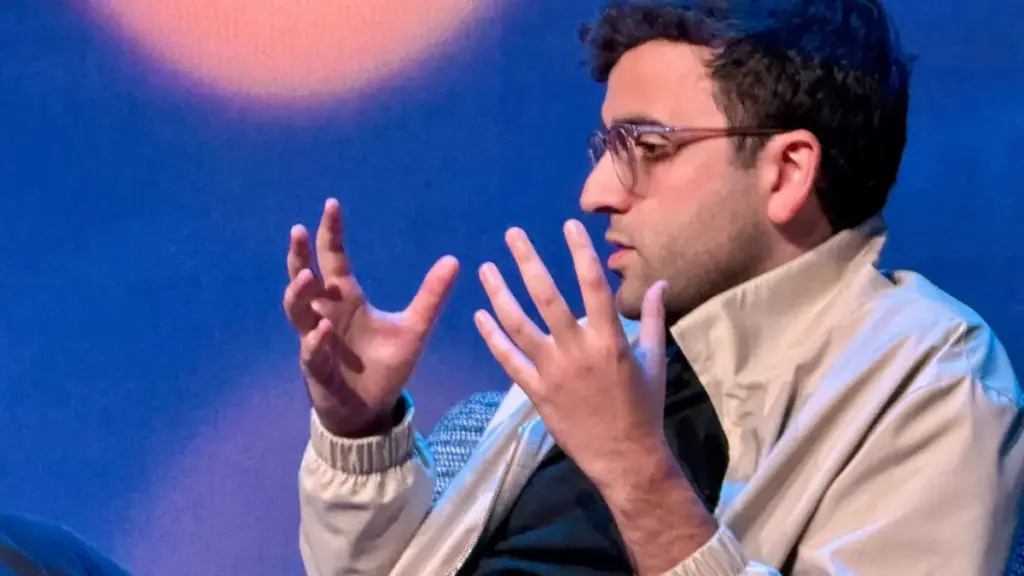
ARLINGTON, Va. — Tarek Mansour, the chief executive officer of Kalshi, says he feels "pretty good" about the pending outcome of a high-stakes legal battle that threatens to reshape the landscape of the United States financial and event-contracts industry. The core dispute centers on a fundamental question: who holds the ultimate legal authority to regulate the booming prediction markets sector—state-level gambling regulators or federal watchdogs?
Speaking at the DC Fintech Week event near Washington, D.C., Mansour addressed the intensifying friction between the rapidly growing industry and state authorities. However, he argued that the ongoing judicial clashes miss the true point of contention. According to Kalshi’s co-founder and CEO, the debate is not merely a jurisdictional tug-of-war between state oversight and federal administration, but rather a choice of whether innovative prediction markets will be legally permitted to operate within the United States at all, or whether they will be driven entirely into unregulated offshore jurisdictions.
"We feel pretty good about where we stand overall," Mansour told attendees, projecting confidence even as the legal architecture governing his platform faces unprecedented scrutiny from state governments, sports leagues, and federal appellate courts.
The controversy has escalated significantly as event-contracts platforms continue to expand into areas traditionally dominated by sports betting and recreational wagering. A growing list of individual states has launched aggressive legal challenges against Kalshi and competing prediction market firms. These state regulators argue that platforms offering event-based contracts tied to elections, entertainment, and athletic outcomes are engaging in unauthorized, illegal sports gambling that rightfully falls under their exclusive regulatory authority.
Conversely, Kalshi and its primary federal regulator, the Commodity Futures Trading Commission (CFTC), have fought back fiercely in courtrooms across the country. Their legal defense rests on the premise that the CFTC serves as the sole, appropriate federal watchdog for prediction markets, classifying these contracts as legitimate financial derivatives rather than games of chance or state-regulated gambling.
The legal battle has already climbed through multiple tiers of the federal court system, resulting in a fractured judicial landscape. Federal appellate courts have delivered conflicting opinions on the matter, with one major ruling decisively siding with Kalshi’s framework, while two subsequent rulings have backed the authority of state-level regulators.
This deep division prompted the state of New Jersey to formally petition the U.S. Supreme Court to take up the case and settle the jurisdictional conflict once and for all. The high-stakes nature of the dispute has drawn substantial outside interest, with prominent institutions filing briefs and sharing their perspectives with the Supreme Court. Among the heavyweights weighing in is the National Football League (NFL), which recently joined the chorus of voices pushing back against the expansion of federally sanctioned prediction markets into the sports domain.

Despite the mounting legal pressure and the involvement of major sports organizations, Mansour remains steadfast in his defense of the industry’s economic legitimacy. He strongly rejected the arguments put forward by critics and sports leagues claiming that sports-related contracts lack the significant economic consequences necessary to justify their status as federally regulated financial instruments.
"The notion that sports does not have economic consequence is ludicrous," Mansour asserted during his appearance at the fintech conference.
He emphasized that Kalshi’s regulatory alignment was carefully considered from the very inception of the company. In his view, the platform’s financial products fit naturally and elegantly under established statutory definitions of a commodity. Mansour praised the historical framework of the Commodity Exchange Act, describing it as a "truly beautiful statute" that historically accommodated a seamless evolution of the American financial markets—transitioning from traditional agricultural futures to industrial commodities like oil and metals, and eventually to less tangible, modern financial products such as swaps and event contracts.
"It’s not a choice of state versus federal market," Mansour reiterated, framing the broader existential threat to the domestic fintech sector. "It’s a choice of whether prediction markets exist in the U.S. or whether they go offshore."
Beyond the ongoing constitutional and regulatory showdowns, Mansour also used the platform at DC Fintech Week to address recent public scrutiny and online criticism regarding trading volumes on his platform. Over the past month, observers and financial researchers have raised questions about unusual trading patterns within bitcoin and ether perpetual-futures markets hosted on Kalshi, pointing to recurring, repetitive trade sizes that accounted for a substantial portion of the platform’s overall volume.
Addressing the controversy directly, Mansour dismissed the skepticism, noting that "there’s a lot of crazy" circulating on the social media platform X, formerly known as Twitter. He reiterated explanations previously offered by his team, pointing out that the concentrated activity stems from standardized, fixed-size orders executed by professional market makers rather than artificial inflation or systemic irregularities.
As the legal battle heads toward a potential showdown at the highest court in the nation, the ultimate fate of prediction markets in the United States hangs in the balance. For Kalshi and its leadership, the coming months will determine whether the federal framework they rely upon will withstand the coordinated pushback from state governments and sports leagues, or if the burgeoning industry will be forced to chart a new course outside of American borders.
 Cryptocurrency News
 Cryptocurrency News
 Cryptocurrency News