Zcash is moving forward with the shutdown of its oldest and foundational privacy technology, a network evolution that risks leaving millions of dollars in cryptocurrency entirely inaccessible to their legal owners. Even individuals who retain the proper passwords and private keys required to unlock their legacy wallets could find their assets permanently stranded as the blockchain undergoes a major structural overhaul.
According to network statistics from ZecStats, approximately 12,224 ZEC remain locked inside Sprout, which stands as the cryptocurrency’s original privacy pool. Evaluated at recent market valuations, those remaining holdings represent roughly $15 million to $16 million in digital assets. These funds face the immediate prospect of becoming entirely frozen the moment the Zcash network successfully activates its upcoming NU7 network upgrade.
The technical mechanism driving this change is built directly into the new upgrade code. "NU7 makes v4 transactions invalid, so what remains in Sprout is unspendable: frozen, not burned," ZecStats explicitly noted in an informational card detailing the status of the legacy pool.
The activation of the upgrade is tied directly to network progression rather than traditional clock time, scheduled to take place precisely at block 3,543,405. Depending on the real-time velocity at which the decentralized blockchain processes new blocks, network participants and stakeholders anticipated the critical threshold to be reached by Thursday evening in the United States.
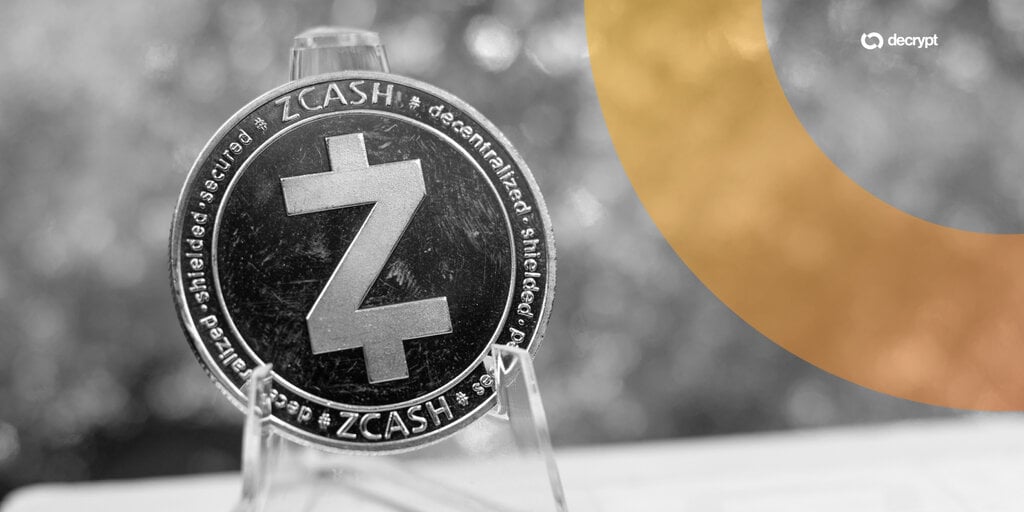
To understand the weight of this development, it helps to examine the underlying mechanics of Zcash itself. Unlike Bitcoin and several other major public cryptocurrencies—where transaction amounts, sending addresses, and receiving destinations remain entirely transparent and visible to anyone examining the distributed ledger—Zcash was engineered from its inception to offer robust financial privacy. The network achieves this confidential state through the application of advanced cryptography known as zero-knowledge proofs. These mathematical protocols allow the network to rigorously verify that a given transaction is completely valid without ever revealing its sensitive private details, such as who is sending funds, who is receiving them, or how much is being transferred.
Sprout was the pioneering privacy system that brought this zero-knowledge capability to life when Zcash officially launched to the public back in 2016. However, as cryptographic research advanced and the protocol matured, the Zcash development ecosystem introduced significantly more efficient and secure privacy frameworks over the subsequent years, including Sapling, Orchard, and Ironwood. While Sprout had already been closed off to any new incoming deposits for several years, legacy holders were previously permitted to withdraw their funds at their own convenience.
The upcoming NU7 upgrade permanently alters that landscape by entirely eliminating version-4 transactions. Because version-4 formatting is the sole transaction architecture capable of moving coins out of the obsolete Sprout pool, deprecating the format means that any remaining transactions utilizing it will instantly be classified as invalid once the upgrade activates. According to the network’s official technical specifications, the code leaves no room for alternative withdrawal paths under the legacy architecture.
This drastic architectural shift addresses a fundamental challenge familiar to any software engineer or protocol maintainer dealing with legacy codebases: maintaining support for obsolete technology inevitably introduces unnecessary technical complexity, bloated codebase maintenance, and potential security attack vectors that could threaten the broader ecosystem. Sprout’s original privacy mechanisms demanded considerable computational resources to operate smoothly, and its outdated verification structures present systemic risks that core developers have decided are necessary to eliminate for the health of the network.
From a strict accounting perspective, developers have not technically destroyed or burned the coins. The remaining assets will continue to factor into Zcash’s overarching circulating issuance calculations. Theoretically, a future network upgrade could be designed and implemented to restore access to these funds. However, such a restoration is far from guaranteed, and the core development team has shown no active interest or intention of pursuing a recovery path. In fact, the official technical specification explicitly warns community members that spending these specific legacy funds may never be re-enabled under any future circumstances.

Legacy holders of the cryptocurrency represent the demographic most directly exposed to the risks of this sweeping network change. Any individual whose ZEC remains sitting within a Sprout address must successfully migrate those funds through a compatible withdrawal mechanism before the network officially crosses the activation block, or else risk losing access to their capital indefinitely.
For users attempting to audit their holdings, old Sprout addresses can typically be identified by the fact that they begin with the characters "zc," serving as a clear marker for old wallet records. Regular ZEC holders who utilize modern, actively supported wallets do not need to panic or migrate their coins out of newer shielded pools, though keeping wallet software updated remains an essential best practice for overall digital asset security.
Compounding the challenge for legacy asset recovery is the fundamental nature of the privacy technology itself. Because Zcash shields transaction metadata, the blockchain possesses no built-in mechanism to reveal the true identities of the owners holding the remaining Sprout balance. Consequently, nobody outside of the individual wallet holders knows precisely how much of the $15 million pool belongs to active users who simply missed the deadline, and how much is already permanently abandoned because its original owners lost their private keys long ago.
Despite the friction surrounding the retirement of Sprout, the NU7 upgrade brings notable technical enhancements for the rest of the Zcash network and its active user base. Most significantly, the upgrade reduces Zcash’s target block interval from 75 seconds down to just 25 seconds. According to the Zcash Foundation, this adjustment means that standard transactions on the network should achieve their first cryptographic confirmation approximately three times faster than before, substantially improving the overall user experience for everyday payments and transfers.
For the holders holding out with legacy Sprout balances, however, the only metric that matters is the block counter. With the network ticking closer to the milestone block, any remaining coins sitting quietly in the pioneer privacy pool face permanent administrative freezing under the newly enforced network rules.
 Decentralized Finance (DeFi)
 Decentralized Finance (DeFi)
 Decentralized Finance (DeFi)