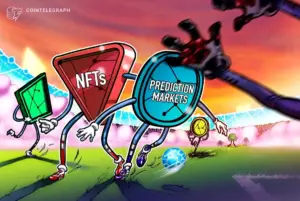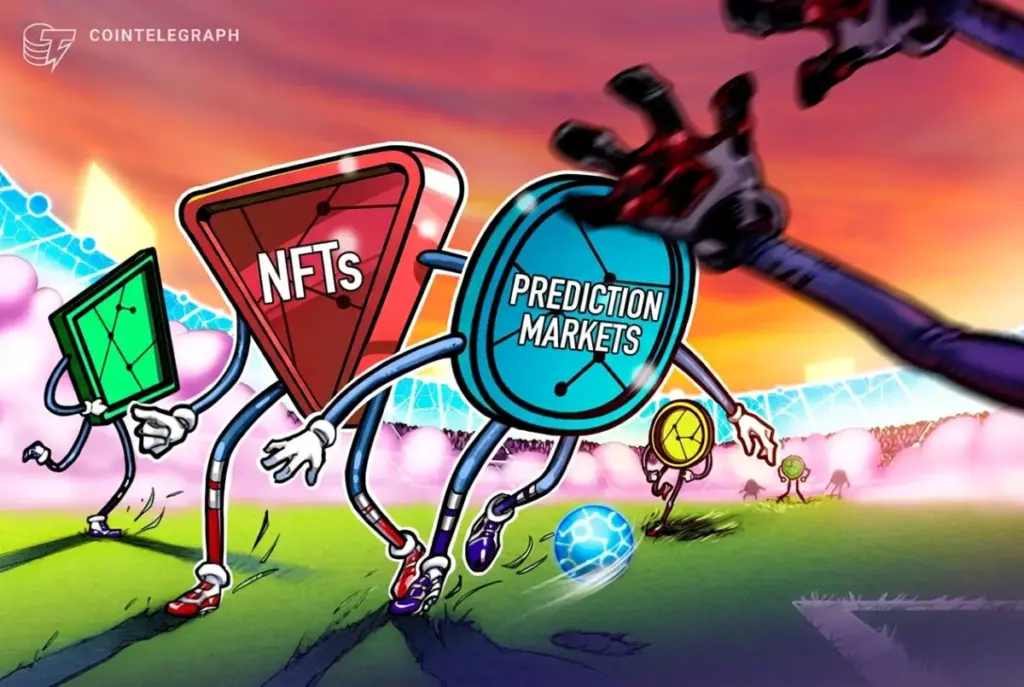
The 2026 FIFA World Cup left a massive digital footprint far beyond traditional broadcasting and stadium gates, driving an astonishing $20 billion in blockchain-based prediction market volume and $24 million in digital collectible trades. According to a comprehensive new report released by blockchain analytics firm Chainalysis, the global tournament galvanized decentralized finance and digital asset ecosystems on an unprecedented scale, with more than 400,000 distinct cryptocurrency wallets participating directly in blockchain-based betting throughout the lead-up and duration of the event.
The staggering $20 billion figure encapsulates the total trading volume recorded both in the months leading up to the tournament and throughout the five-week athletic showcase. Of that grand total, passionate bettors placed roughly $5.7 billion in active wagers specifically over the five-week window of the World Cup itself. The immense global interest in the tournament completely dominated the decentralized betting landscape during that period. Chainalysis noted that World Cup-related markets alone accounted for an overwhelming 63 percent of all prediction market activity globally across the entire duration of the tournament, demonstrating how major international sporting events can temporarily reshape decentralised financial ecosystems.
Geographically, the phenomenon proved to be truly global in scope. Data compiled by Chainalysis revealed that users from every single inhabited continent on Earth—spanning North America, South America, Europe, Asia, Africa, and Oceania, with the notable exception of Antarctica—actively participated in the World Cup prediction markets. Among the diverse participant base, users hailing from the United States and China generated the highest attributable trading volumes by a significant margin. Following these two economic powerhouses in terms of volume were Canada, Thailand, and the United Kingdom, illustrating a broad cross-section of geographic engagement spanning mature Western financial markets and rapidly expanding digital asset hubs across Asia.
Despite the sheer scale of the financial activity and the decentralized, permissionless nature of many prediction platforms, illicit participation remained remarkably limited. Chainalysis reported that fewer than 1 percent of all individual wallets participating in the World Cup prediction markets had any discernible ties to illicit actors or malicious entities. However, due to the high overall volume, the analytics firm did identify roughly $5.4 million in capital flows that originated from sanctioned entities and other illicit sources. This finding underscores the ongoing challenge that decentralized applications and prediction markets face regarding compliance, even as mainstream audiences increasingly adopt these technologies during high-profile global spectacles.
Alongside the massive wave of prediction market activity, the tournament also catalyzed growing adoption for blockchain-based digital collectibles and ticketing infrastructure. Fans enthusiastically traded approximately $24 million worth of FIFA Collect NFTs during the course of the tournament. Furthermore, the underlying platform proved its logistical utility on a grand scale by distributing more than 100,000 match tickets directly to supporters digitally.
Significantly, compliance measures appeared to bear fruit within the official collectible and ticketing ecosystem. Wallets linked to sanctioned entities accounted for less than 0.01 percent of all registered FIFA Collect users. Chainalysis attributed this exceptionally low rate of illicit integration in part to the platform’s robust identity verification requirements, which successfully filtered out unauthorized participants while still accommodating tens of thousands of legitimate football fans from around the world.
Looking at the broader implications of the tournament’s digital metrics, Chainalysis concluded that the findings strongly suggest blockchain technology will play an increasingly prominent and permanent role in major global events moving forward. As decentralized applications and digital asset platforms continue to attract broader participation from mainstream consumers, the report underscored the critical importance of implementing robust compliance, transparency, and identity verification measures to safeguard these rapidly expanding digital economies against illicit exploitation while fostering legitimate global engagement.
 Non-Fungible Tokens (NFTs)
 Non-Fungible Tokens (NFTs)
 Non-Fungible Tokens (NFTs)