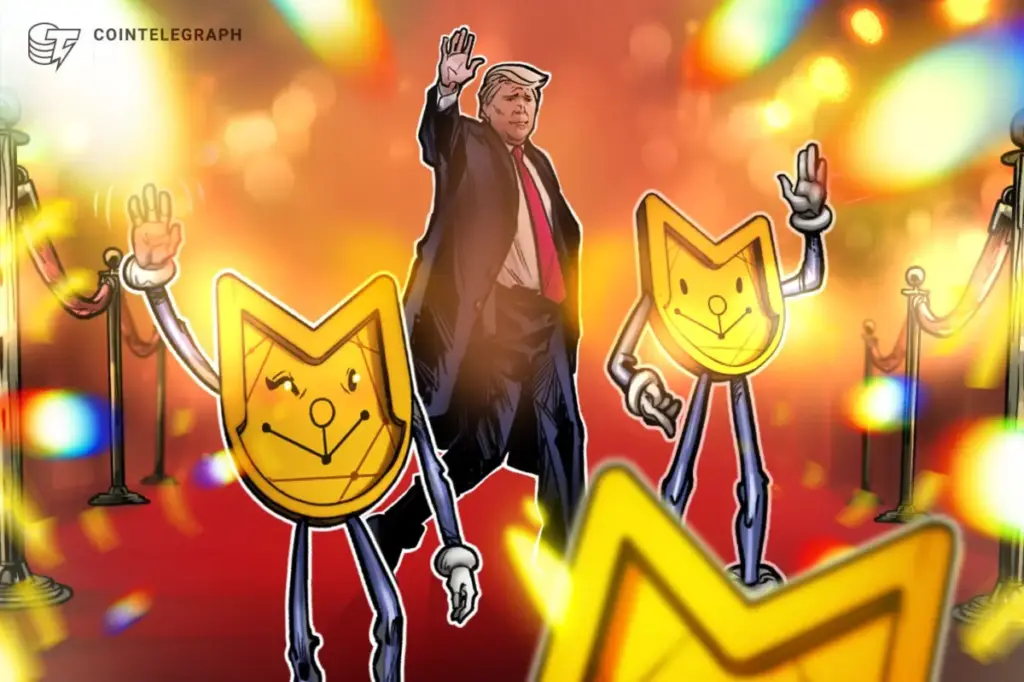
SkyBridge Capital founder Anthony Scaramucci has laid direct blame on United States President Donald Trump’s personal cryptocurrency business interests and high-profile memecoin launches for the sudden and decisive derailment of the much-anticipated CLARITY Act. According to the veteran financier, these commercial maneuvers single-handedly cost the landmark digital asset legislation essential Democratic support on Capitol Hill, unraveling what had previously looked like a promising pathway toward bipartisan crypto regulation.
Speaking extensively with Cointelegraph at the SALT London conference, Scaramucci pointed specifically to a series of memecoin launches that took place shortly before President Trump’s January 2025 inauguration. He argued that these speculative financial activities fundamentally undermined the hard-earned bipartisan momentum that had been building around cryptocurrency market structure reform in the wake of the 2024 election cycle.
When directly asked whether these memecoin activities represented the sole reason the comprehensive regulatory bill ultimately failed to pass the Senate, Scaramucci did not hesitate. "Singular reason," he told Cointelegraph, elaborating that key Democratic lawmakers who had previously grown increasingly receptive to establishing a formal regulatory framework for digital assets abruptly withdrew their backing following the flurry of presidential token launches.
The scathing remarks from the SkyBridge Capital chief executive follow a high-stakes legislative defeat in the United States Senate on September 15. On that day, the Senate officially failed to advance the CLARITY Act during a critical procedural vote. The motion mustered only 49 votes in favor against 50 opposed, falling crucially short of the formidable 60-vote threshold required to break a filibuster and move the legislation forward. The ambitious bill, which had been designed to establish a comprehensive federal regulatory framework for digital assets, had already been facing mounting political friction, primarily over contentious ethics provisions intended to restrict government officials from engaging in lucrative private cryptocurrency interests.
Scaramucci Says Both Sides Share Responsibility
While laying much of the blame on the doorstep of the executive branch’s commercial token activities, Scaramucci also pointed to deeper, systemic disagreements over the proposed ethics restrictions embedded within the legislative package. He explained that lawmakers across the political aisle were pushing for much stronger, more restrictive provisions to prevent conflicts of interest, a move that the White House consistently and firmly opposed.
"I think it’s the business interests, the memecoins," Scaramucci reiterated during his appearance at the conference, adding that lawmakers on Capitol Hill were actively "trying to put real teeth into the ethics provision," but the White House ultimately proved unwilling to sign off on such stringent limitations.
Despite his pointed critique of the administration’s involvement, Scaramucci maintained that the blame for the legislative collapse could not be laid entirely on one party. "There’s culpability on both sides for that deal not going forward," he noted, acknowledging the complex web of partisan politics, competing financial lobbies, and institutional stubbornness that frequently plagues major financial regulatory overhauls in Washington.
The tension surrounding the president’s digital asset holdings is far from new. Back in July, a group of five prominent Democratic senators formally called for congressional hearings to thoroughly investigate Donald Trump’s extensive crypto holdings and potential conflicts of interest. Those lawmakers cited deep-seated concerns that the president’s personal and financial ties to the sector could unduly influence federal crypto policy and regulatory enforcement priorities. The concerns were echoed within the legislative branch by House Financial Services Committee Chair French Hill, who similarly acknowledged that Trump’s private cryptocurrency businesses had significantly complicated ongoing efforts to forge a bipartisan consensus on digital asset legislation.
The political fallout has been further exacerbated by mounting financial losses suffered by everyday retail investors participating in these speculative markets. In August, prominent consumer advocacy group Public Citizen released an independent estimate suggesting that retail investors had incurred at least $4.7 billion in largely unrealized losses across various Trump-related cryptocurrency ventures. That staggering total included roughly $3.2 billion tied directly to the Official Trump (TRUMP) memecoin alone. Furthermore, Public Citizen’s analysis of official financial disclosures indicated that President Trump himself had earned an estimated $635 million in memecoin licensing fees throughout 2025.
Looking Beyond Washington to Tokenization’s Future
Despite the bitter legislative setback represented by the stalled CLARITY Act, Scaramucci shifted his focus toward the broader macroeconomic horizon, expressing optimism about the future of blockchain technology. He suggested that the regulatory approach being shaped at the Securities and Exchange Commission under the leadership of Chair Paul Atkins could ultimately help real-world asset tokenization reach what he termed "escape velocity."
According to Scaramucci, if tokenization adoption accelerates past a certain critical mass, it will build enough structural momentum and economic utility to make it practically impossible for any future SEC chair or hostile administration to successfully halt or slow down the burgeoning industry.
At the same time, the veteran financier tempered his optimism with a dose of realistic caution. He noted that it remains far too early to predict with any certainty whether widespread industry adoption will actually reach that vital threshold before the conclusion of the current political administration. As Washington continues to grapple with the intersection of executive power, personal finance, and the digital asset economy, the path forward for comprehensive federal crypto legislation remains as uncertain as ever.
 Crypto Regulation & Policy
 Crypto Regulation & Policy
 Crypto Regulation & Policy