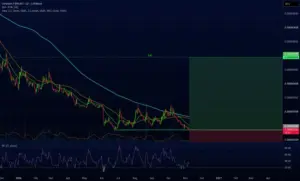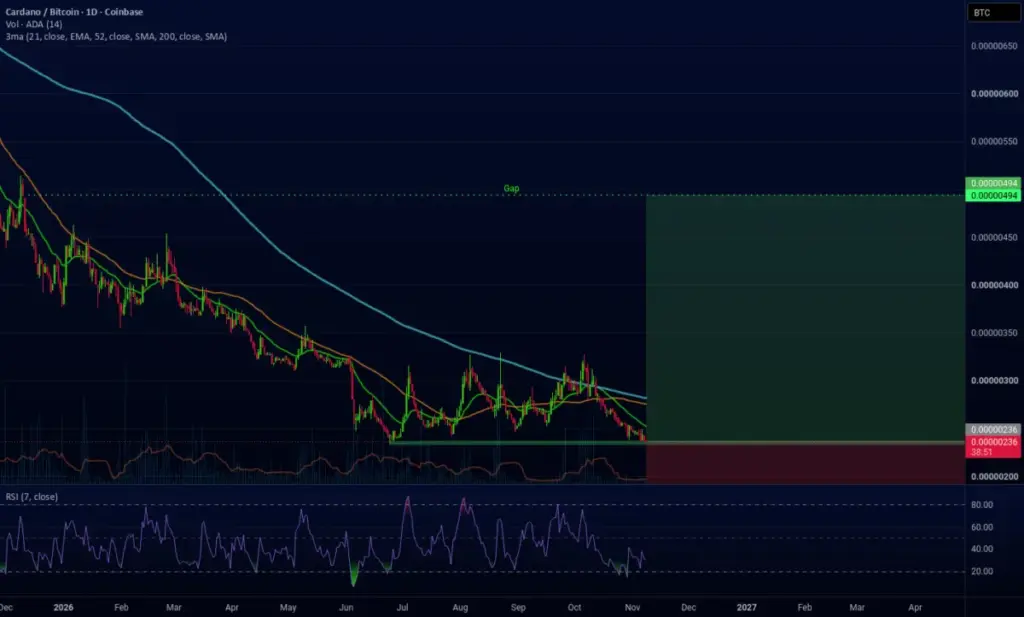
Cryptocurrency analysts monitoring the performance of Cardano (ADA) have identified emerging technical signals suggesting that the digital asset may have reached a definitive market bottom in its trading pairs against major cryptocurrencies Bitcoin (BTC) and Ethereum (ETH). Market observers utilizing foundational technical analysis on daily timeframes have pointed to a combination of support levels, dominance metrics, and momentum indicators that point toward a potential shift in market momentum for the prominent smart contract platform.
According to technical assessments circulating across trading platforms, Cardano appears to have established strong foundational support floors against both BTC and ETH. Furthermore, the ADA dominance chart, commonly tracked as ADA.D, has begun displaying encouraging structural patterns that technicians interpret as early signs of a market stabilization phase. This resilience relative to the broader altcoin market has drawn renewed interest from technical traders evaluating alternative cryptocurrency allocations.
Central to the bullish outlook on the daily timeframe is the identification of a developing bullish divergence. In technical analysis, bullish divergence occurs when an asset’s price records lower lows or consolidates near a support level while an underlying momentum oscillator, such as the Relative Strength Index or a similar indicator, registers higher lows. This divergence frequently signals a waning of downward selling pressure and often precedes a reversal or a substantial relief rally. Analysts reviewing the daily charts for ADA note that this setup has provided a compelling technical rationale for monitoring potential entry points, particularly within cross-asset pairs.
However, entering trades in pairs denominated in Bitcoin during periods of broader macroeconomic or cryptocurrency market uncertainty requires strict risk management protocols. Because this trade configuration involves going long on ADA against BTC, market participants face dual exposure risks. Beyond the localized price action of the altcoin, traders remain vulnerable to broader downward volatility impacting the primary cryptocurrency, which can subsequently drag down altcoin valuations against fiat or stablecoin benchmarks.
To mitigate portfolio exposure in the event of a continued market correction or a sudden liquidation cascade against the United States Dollar, risk management frameworks based on the Average True Range (ATR) indicator have been brought to the foreground. The ATR measures market volatility by decomposing the entire range of an asset price for a given period, allowing traders to calculate position sizes that align with their overall risk tolerance. Based on current ATR calculations for the asset pairing, risk-conscious market participants are being advised to cap their position sizes at a maximum threshold of 38.8 percent. This cautious sizing strategy is designed to protect overall portfolio health should the wider digital asset market experience extended downside pressure.

As market participants continue to observe these evolving technical formations, the broader community remains watchful to see whether the identified support levels will hold under sustained trading volumes. While technical indicators provide a roadmap for potential price trajectories, the volatile nature of digital asset markets means that risk mitigation remains paramount for anyone engaging in short- to medium-term trading strategies.
Double Top or Bottom
Support and Resistance
Disclaimer
The information and publications provided through these platforms are not meant to be, and do not constitute, financial, investment, trading, or other types of advice or recommendations supplied or endorsed by TradingView. Market participants are encouraged to conduct their own independent research and risk assessments before engaging in any financial transactions or trading activities. Detailed terms regarding the limitations of liability and the scope of information provided can be reviewed directly in the platform’s Terms of Use.
 Crypto Investing & Trading
 Crypto Investing & Trading
 Crypto Investing & Trading