October 2026 proved to be a challenging month for the global Bitcoin mining industry, characterized by a sharp contraction in hashprice, a significant spike in network difficulty, and shifting dynamics across forward markets. According to Luxor’s Monthly Lookback Series, spot hashprice experienced its largest open-to-close dollar decline since February 2025, falling by $7.17 over the course

of the month.

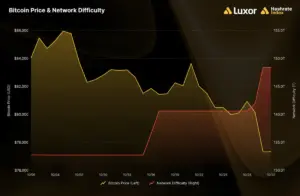
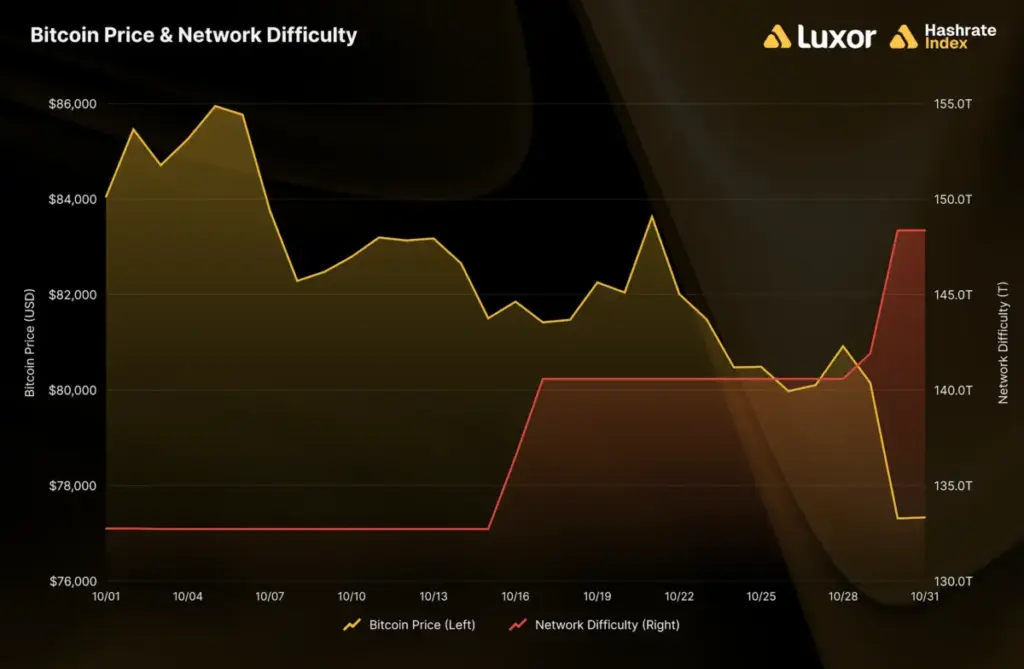
The downturn was driven by a combination of declining Bitcoin spot prices and aggressive upward adjustments in network difficulty. While September ended on an optimistic note, leaving analysts wondering whether Bitcoin’s upward trajectory could outpace network expansion, October answered with decisive downside. Bitcoin’s price fell 8.0% from its opening to its closing mark, while network difficulty jumped nearly 12% across three scheduled adjustments, squeezing profit margins for industrial miners worldwide.
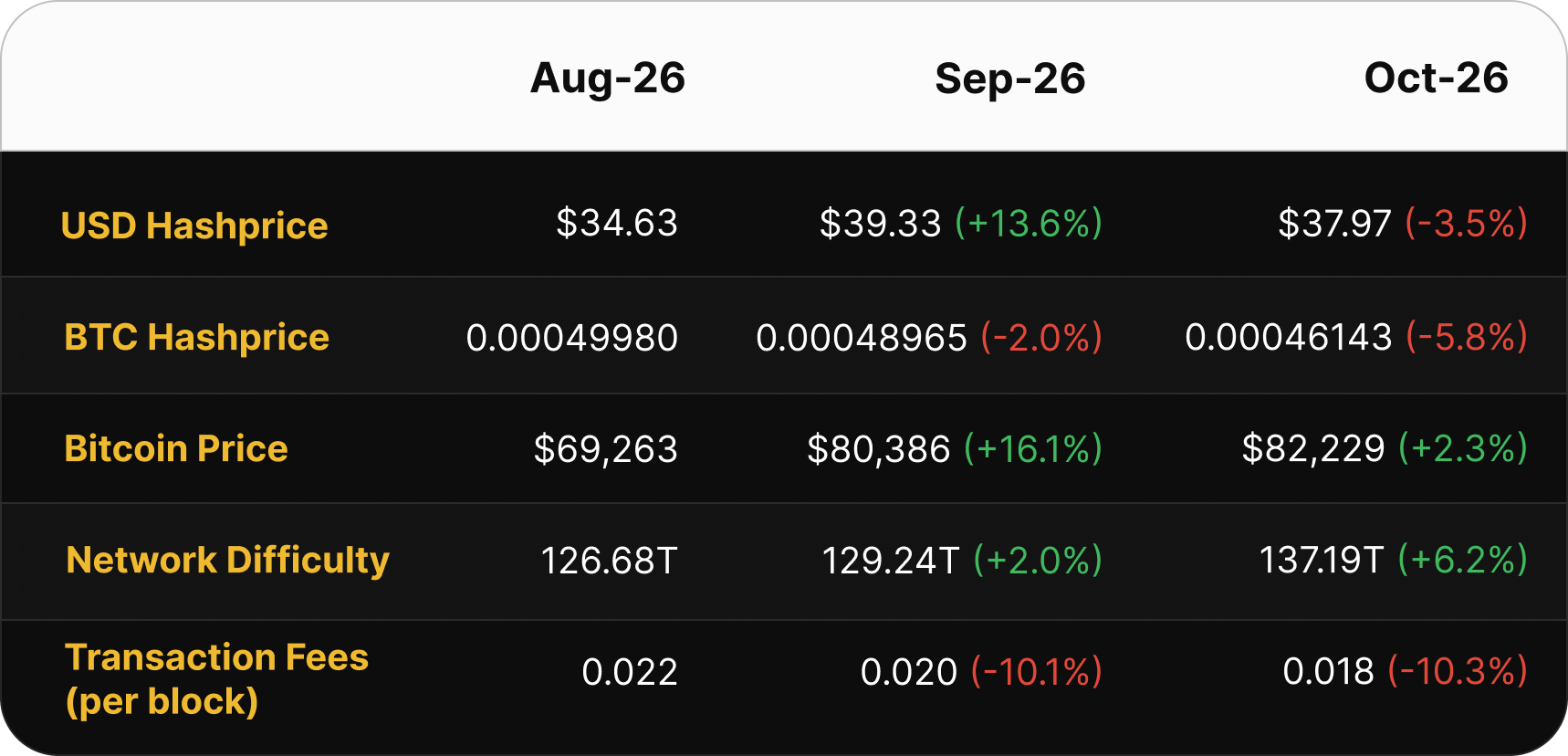
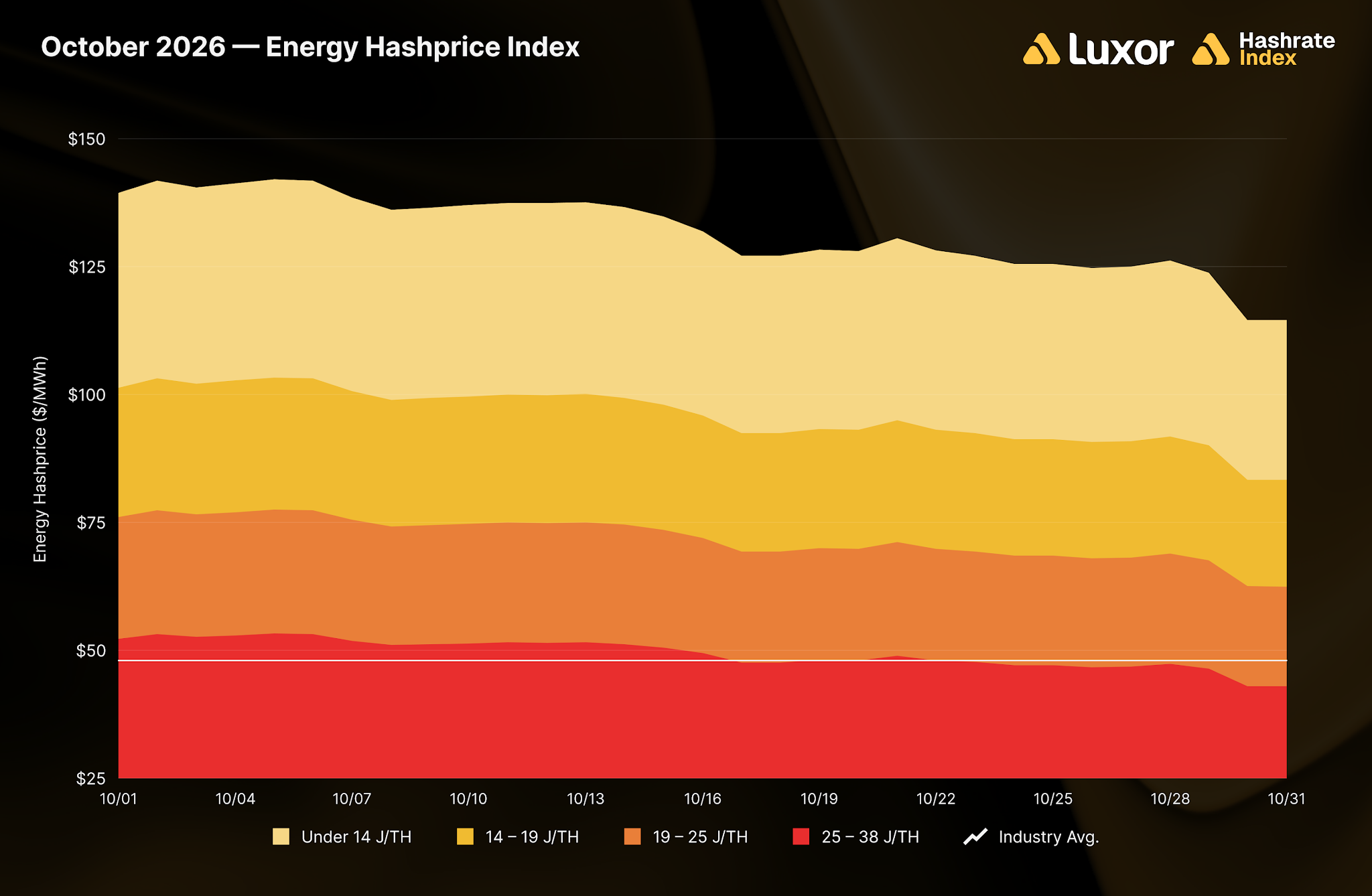
October 2026 Spot Hashprice and Its Constituents
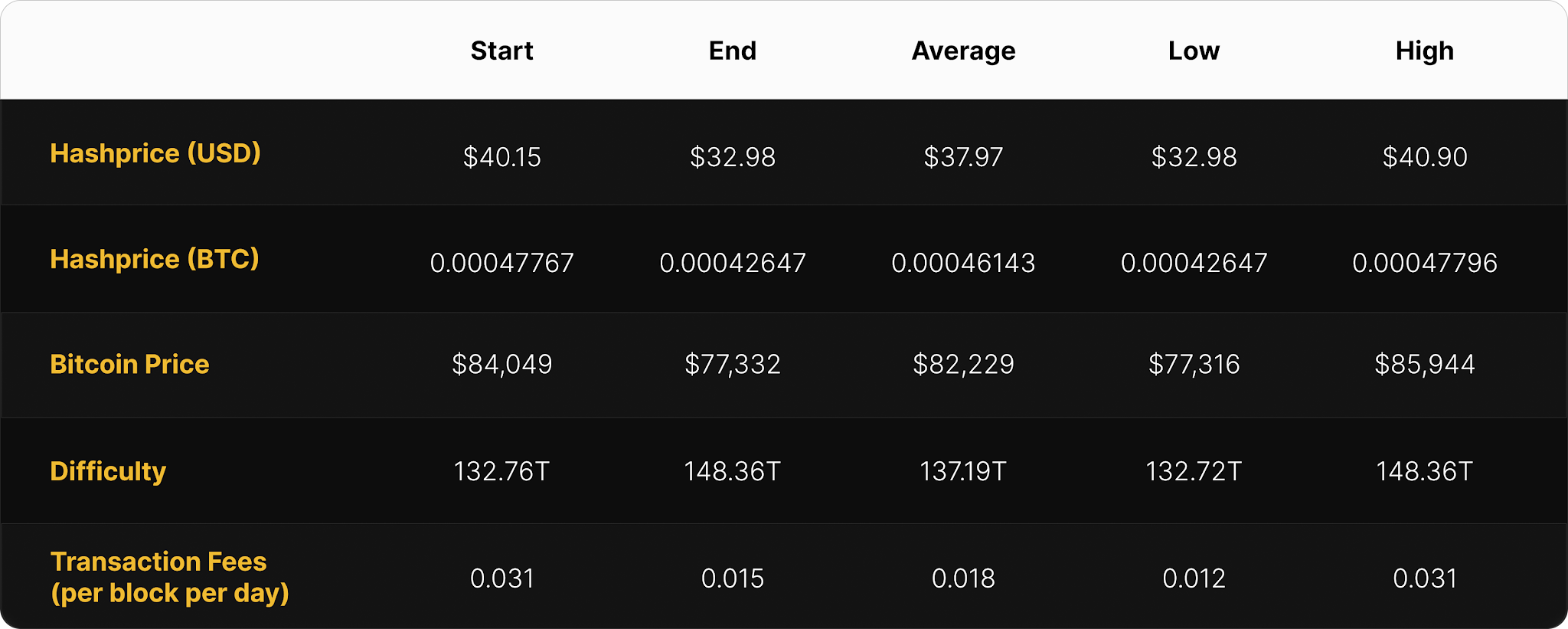
USD hashprice opened October at $40.15 per PH/s/day, briefly touching a monthly high of $40.90 on October 5, before tumbling to a low of $32.98 at month’s end—representing a steep 17.9% drop. Although the monthly average hashprice of $37.97 appeared relatively stable at just 3.5% below September’s average, this figure masked the severity of the damage, which was heavily concentrated in the final two weeks of the month.
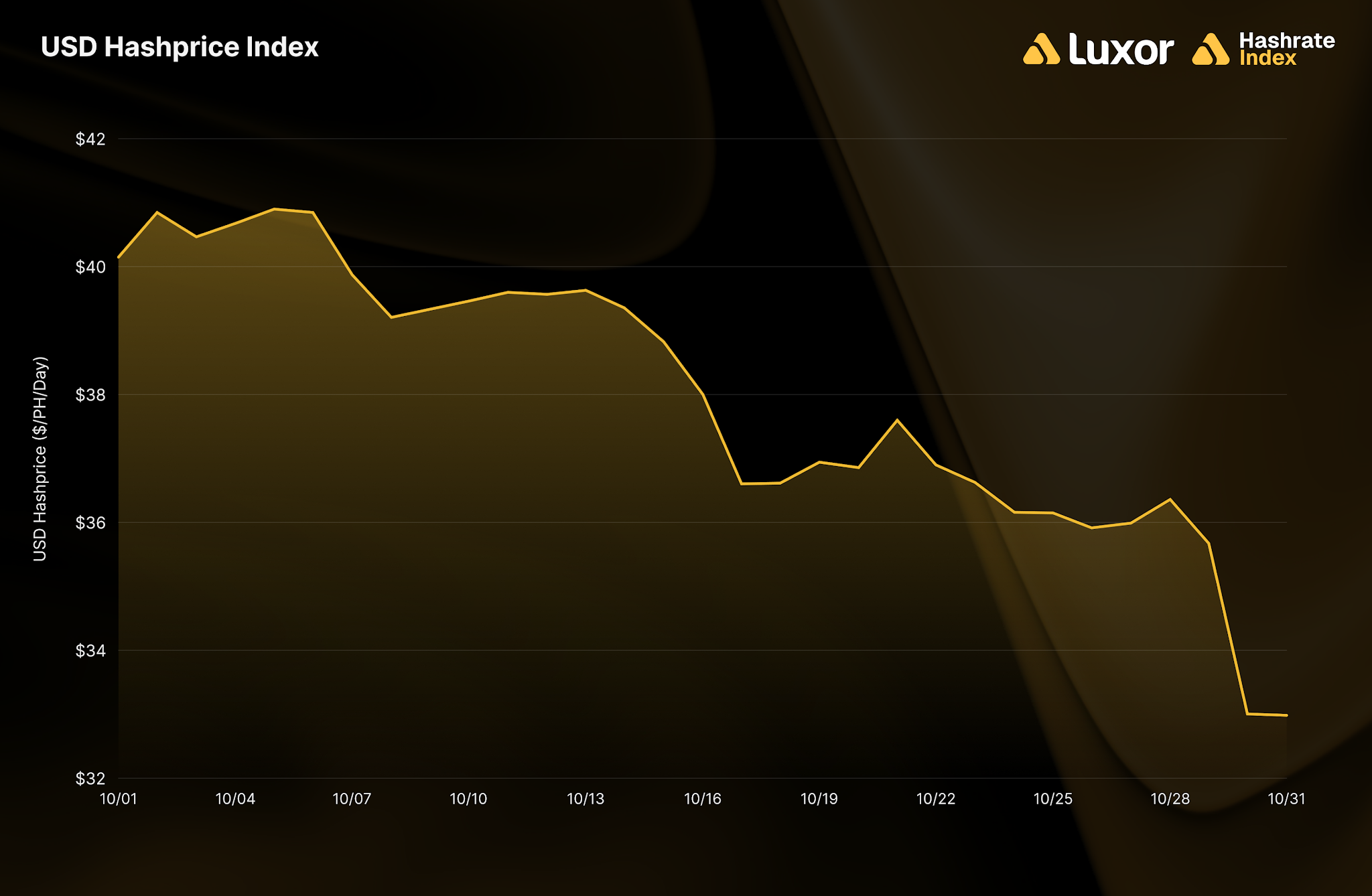
The decline unfolded in two distinct steps, each coinciding with network difficulty retargets. The first step down saw hashprice drop from $38.83 to $36.60 between October 15 and 17. The second step occurred between October 29 and 30, when a major difficulty adjustment coincided with a 3.5% single-day drop in Bitcoin’s price, driving hashprice down from $35.67 to $33.01.
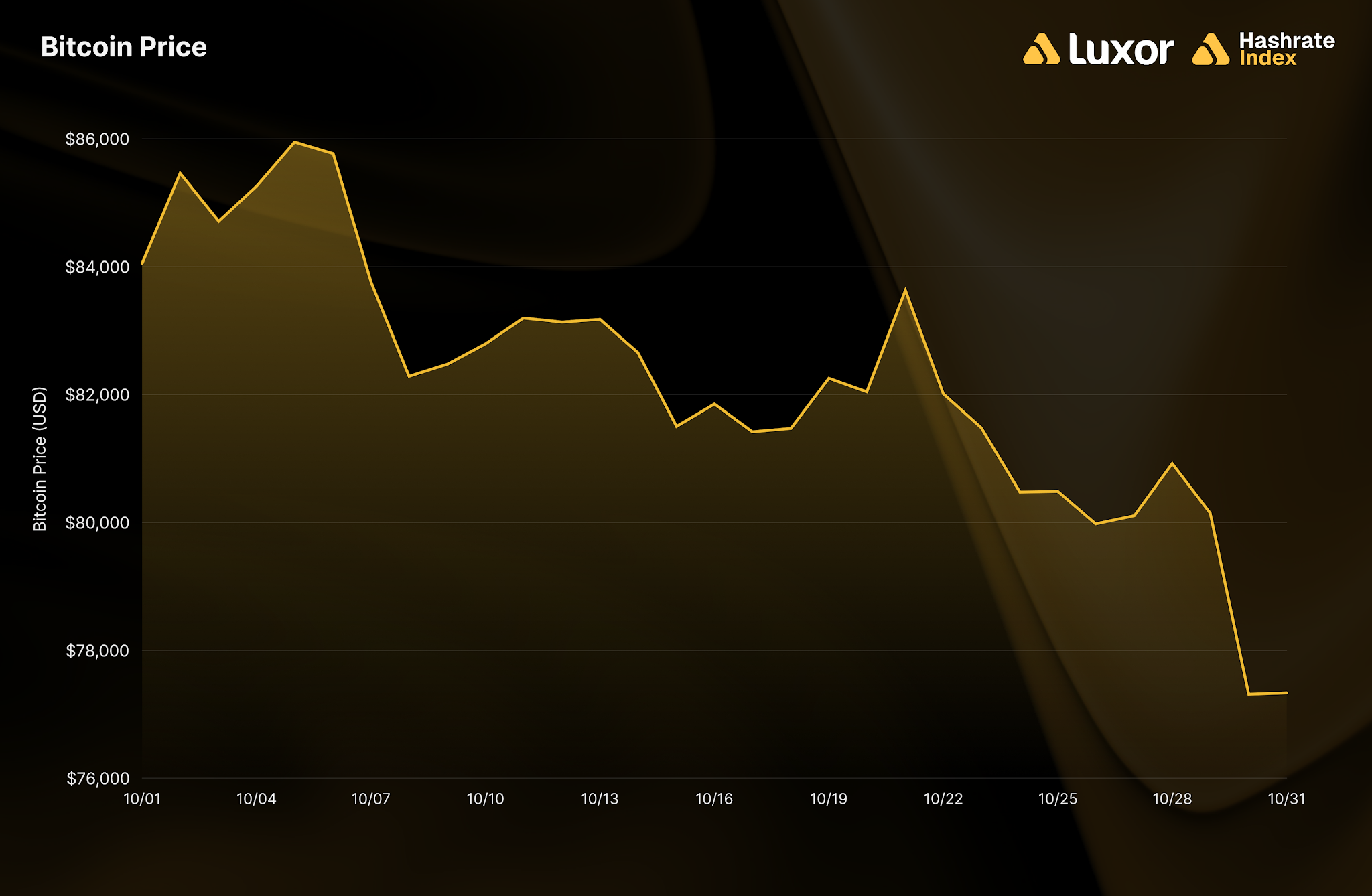
Bitcoin itself opened October trading at $84,049 and closed at $77,332, marking an 8.0% loss. Despite holding above $81,000 for the first three weeks of the month—which kept the monthly average price at $82,229, up 2.3% from September—downward pressure intensified late in the month. Macroeconomic factors played a background role as the Federal Open Market Committee (FOMC) opted to hold the federal funds rate steady at 3.75% to 4.00% on October 28 in a 10-2 vote. Bitcoin’s low of $77,316 was struck two days later.
Spot Bitcoin ETFs also faced headwinds, turning net sellers for the first time since June with $515 million in net outflows for October. This reversal followed robust inflows of $2.65 billion in September and $3.53 billion in August. A single-day outflow of $643 million on October 30—the largest single-day withdrawal since June 25—flipped the cumulative monthly position. At the close of October, Bitcoin sat 37.9% below its October 2025 all-time peak of $124,485 and roughly 19.7% below its high for 2026.
Network Difficulty and Hashrate Expansion
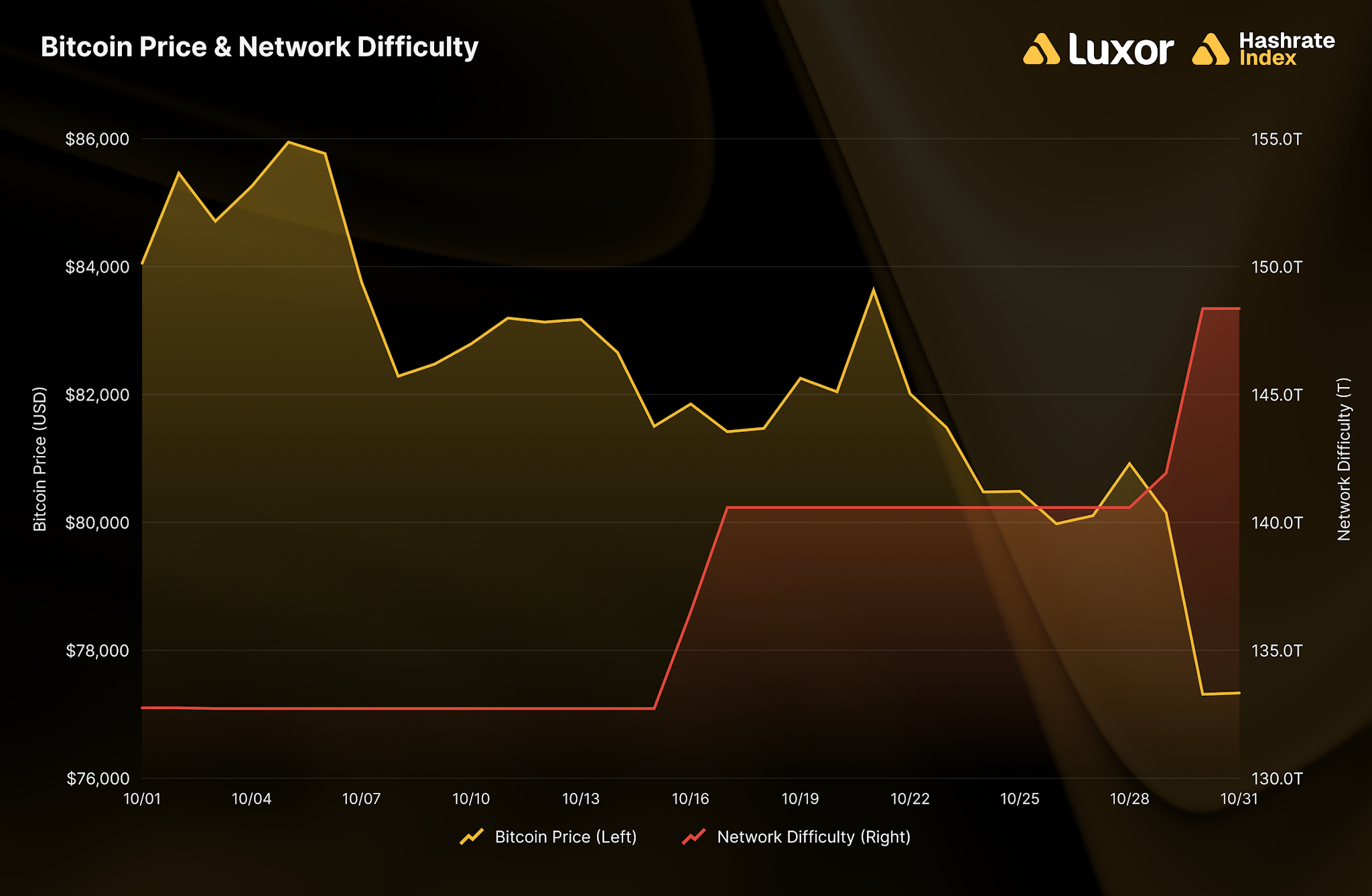
Network difficulty averaged 137.19T, up 6.2% month-over-month, finishing October at a staggering 148.36T. The network underwent three adjustments during the month: a negligible -0.03% change on October 3, followed by significant upward adjustments of +5.92% on October 16 and +5.54% on October 29. This net gain of 11.76% marked the largest monthly difficulty growth since February 2024, driven by the return of considerable processing power online.
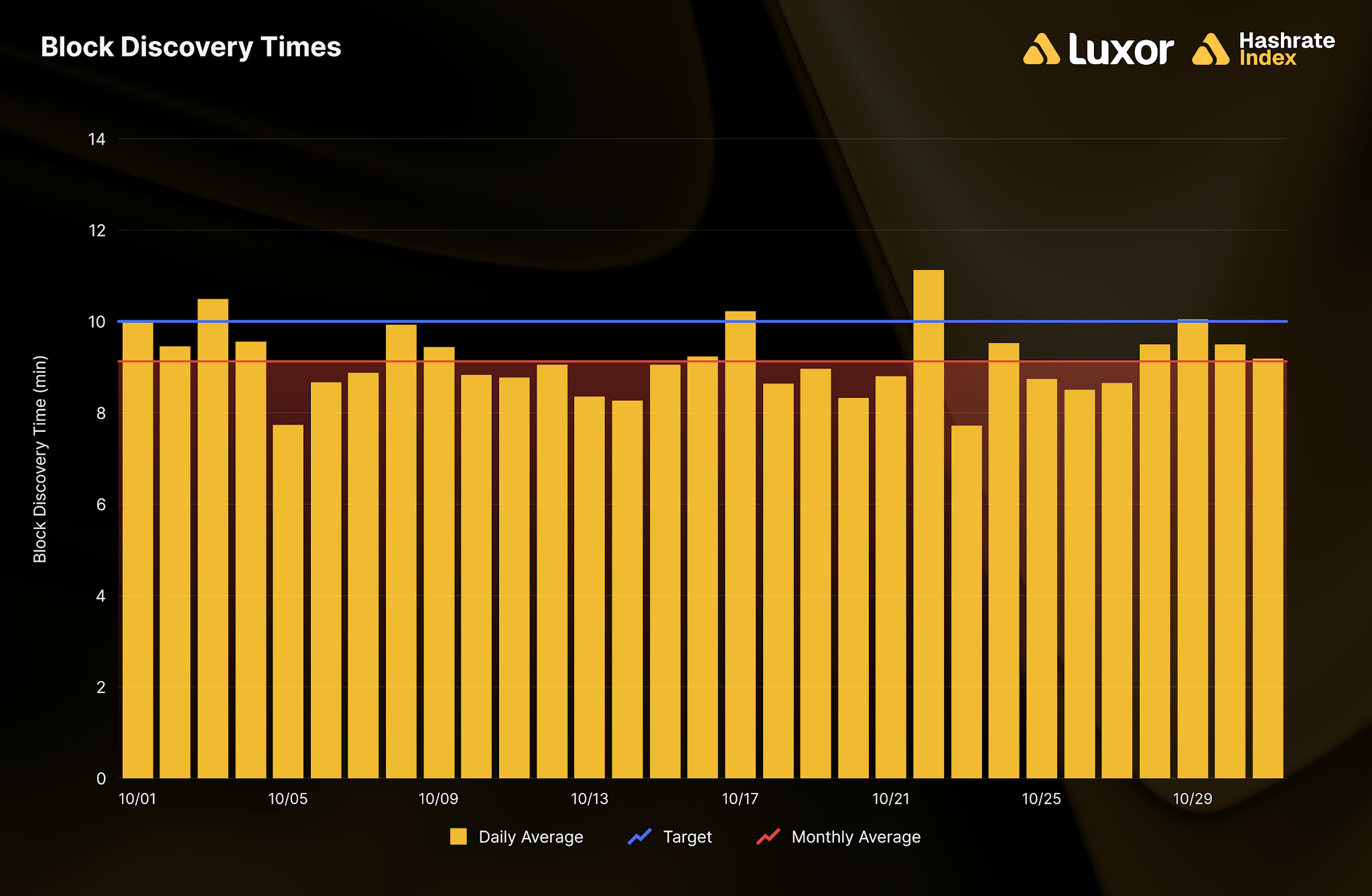
Block times averaged 9 minutes and 8 seconds, making October the fastest month for block generation since September 2025. With 27 out of 31 days running below the 10-minute target, the network officially pushed back above the 1 hashpetah-per-second threshold. The 7-day average network hashrate crossed 1,000 EH/s on October 11 for the first time since June, finishing the month at 1,067 EH/s.
This resurgence in active hashrate was heavily tied to Texas infrastructure. The Electric Reliability Council of Texas (ERCOT) 4CP (Coincident Peak) season officially concluded on September 30, releasing flexible industrial loads from summer curtailment obligations. Furthermore, real-time power prices in West Texas (LZ_WEST) softened considerably during mid-October, averaging $29/MWh and $25/MWh in consecutive weeks, aligning directly with the window during which the network’s largest difficulty increases took place.
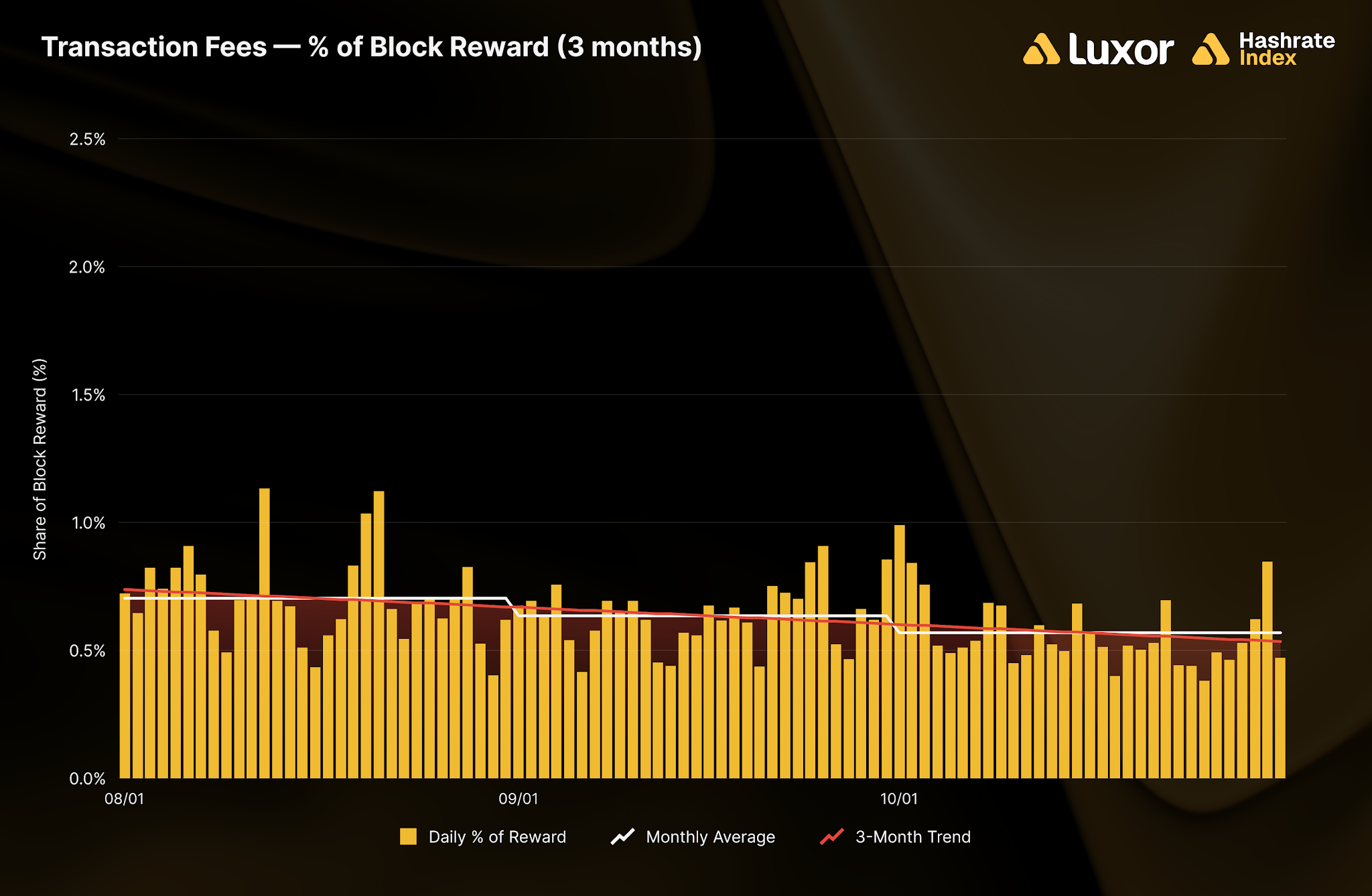
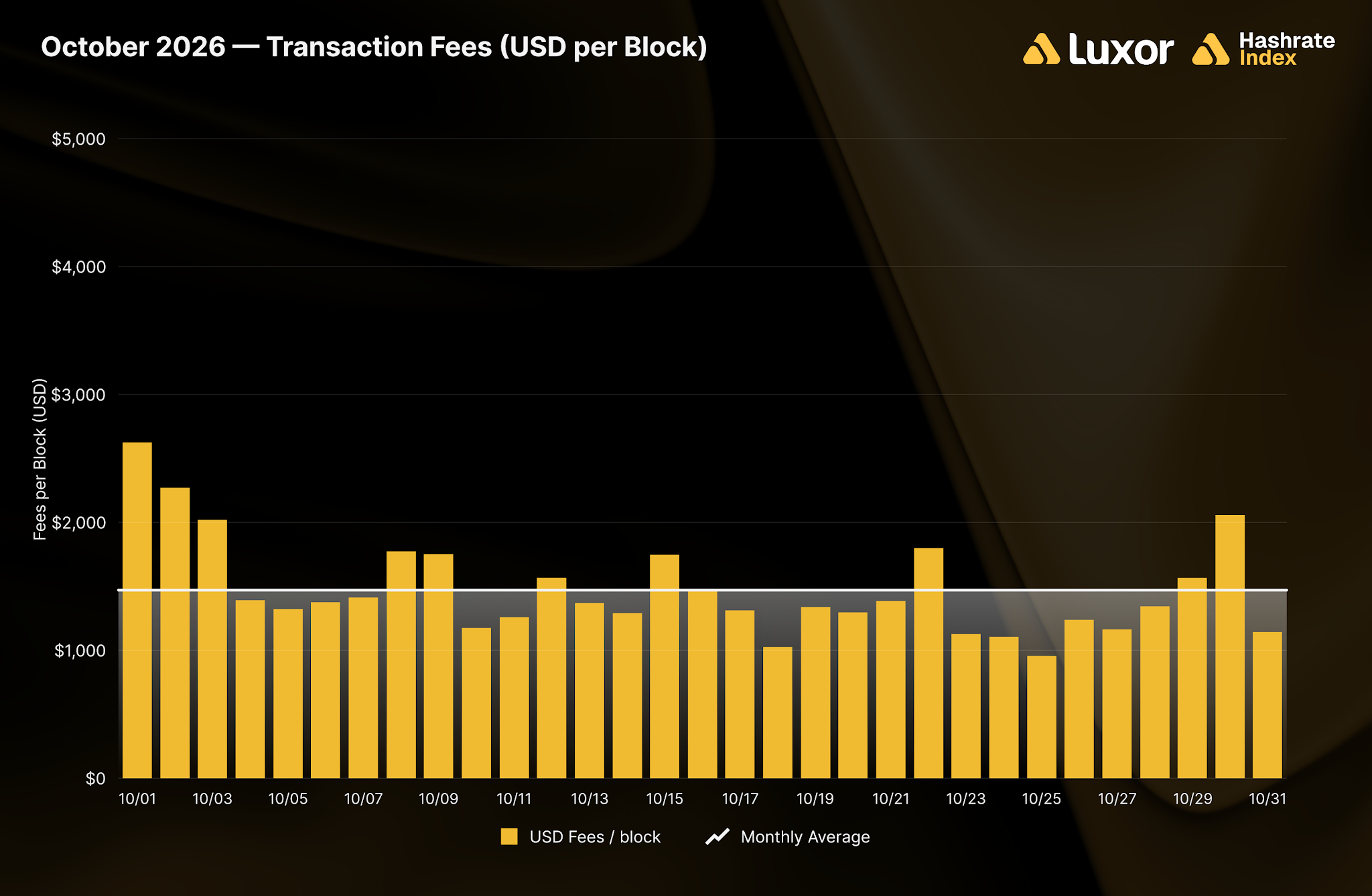
Transaction fee collection fell to its lowest level since April, averaging 0.0179 BTC per block. Fees accounted for just 0.57% of total block rewards, marking the sixteenth consecutive month that fee contribution has remained below 1%. In USD terms, average fee revenue per block dropped 8.3% to approximately $1,473, compounding the revenue squeeze from falling hashprices.
October 2026 Hashrate Market Activity
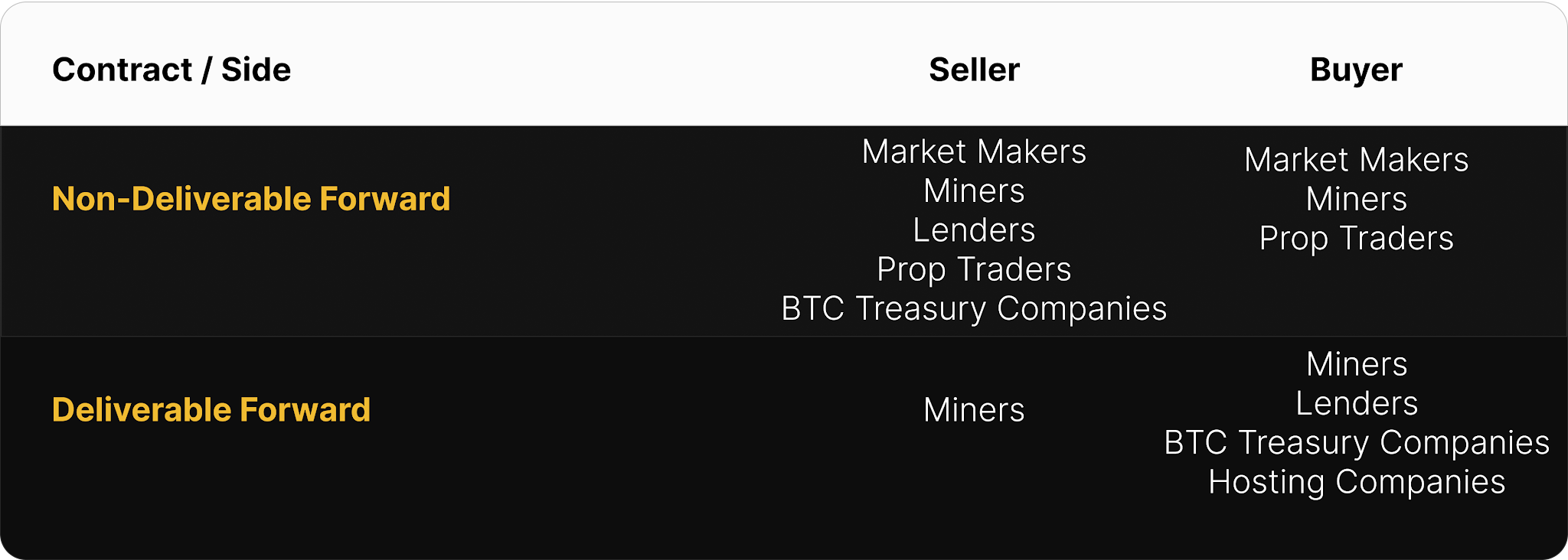
In the derivatives and forward markets, Luxor’s Non-Deliverable Hashrate Forward (NDF) and Deliverable Forward (DF) contracts experienced active participation. Lenders were notably active on the buy side of deliverable contracts to secure yield, while both public and private mining firms utilized forward sales to obtain non-dilutive capital and finance fleet upgrades.
Deliverable forwards, which are prepaid by nature, historically trade at a discount to non-deliverable forwards to account for credit risk and capital costs. Pairing these contracts created a reliable annualized yield of 6% to 13% for institutional lenders and treasury companies, while providing miners with predictable cash flow hedging instruments.
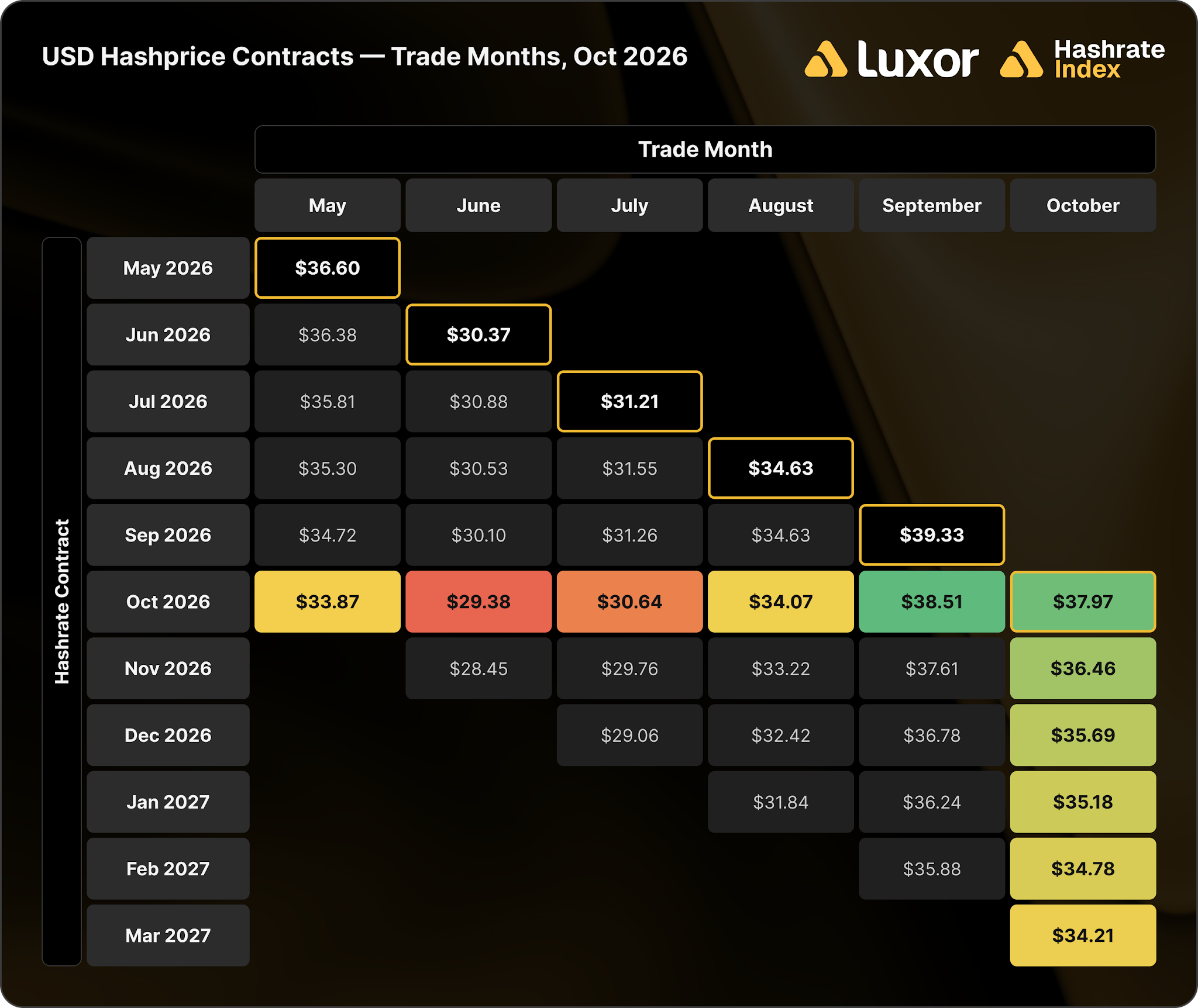
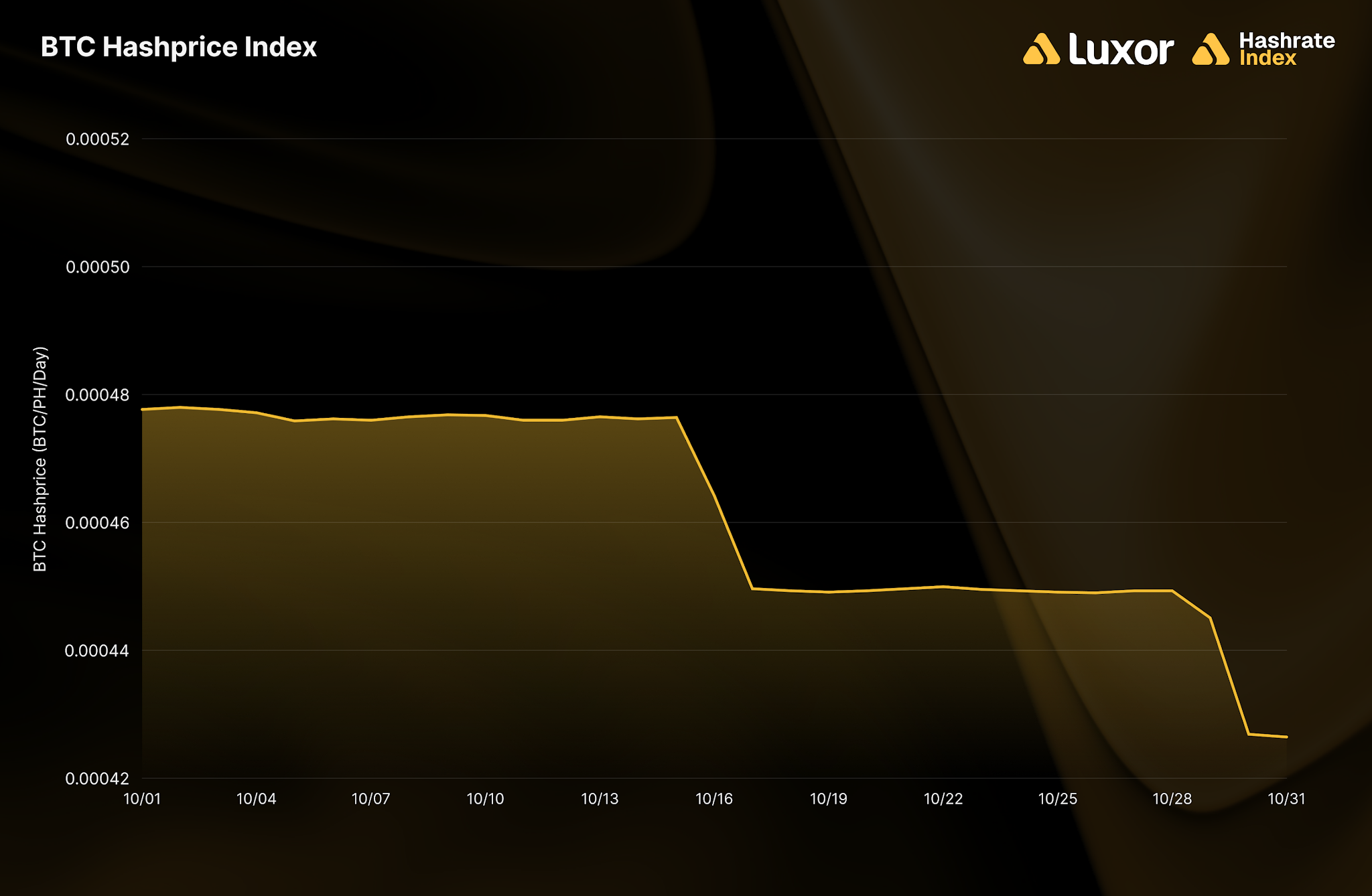
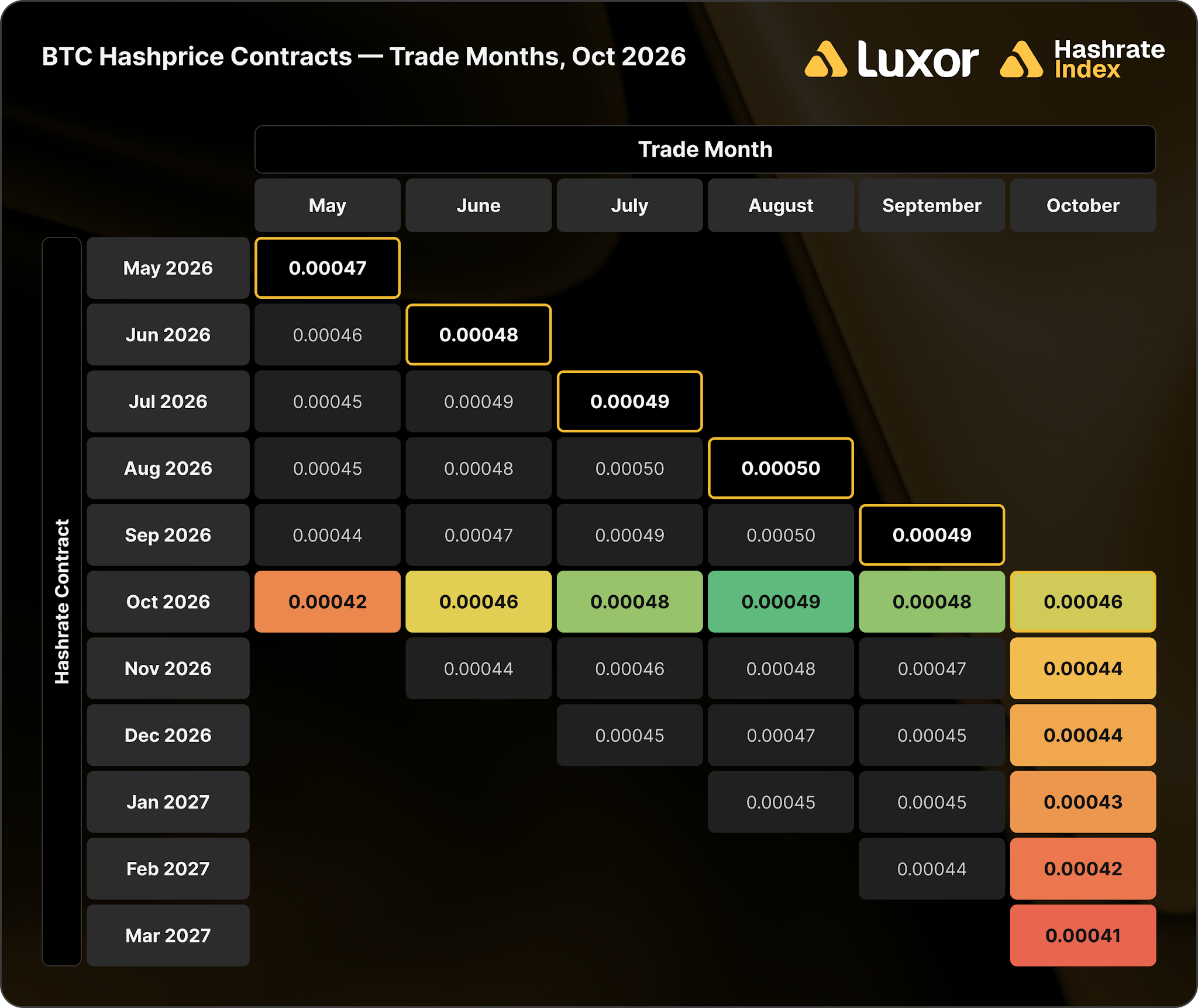
Performance across historical USD hashrate forward contracts was mixed. Early sellers of the October USD contract locked in rates ranging from $29.38 to $38.51 per PH/s/day, resulting in four out of five historical sales underperforming relative to the $37.97 spot settlement. For example, a five-month hedge struck in May gave up $4.10 per PH/s/day, translating to a substantial variance on a 1 EH/s scale. Conversely, BTC-denominated forward contracts performed relatively well, with mid-curve sales outperforming the final spot settlement of 0.00046 BTC per PH/s/day as difficulty increases aligned closely with market expectations.
Future Hashrate Outlook and Forward Pricing
Looking forward through the winter months, Luxor’s hashrate forward market indicates a stable yet subdued pricing environment. The USD forward curve for November 2026 through March 2027 trades within a tight band between $32.00 and $34.00 per PH/s/day, reflecting an expectation of flat network difficulty and limited macroeconomic catalysts for Bitcoin’s price in the immediate term.
Implied Bitcoin prices derived from the forward markets suggest that institutional traders do not price in a substantial recovery through the end of the first quarter of 2027, with forward rates continuing to hover near spot levels. Breakeven analyses indicate that while highly efficient mining fleets remain profitable under current power and hashprice conditions, marginal tiers operating above 30 J/TH face tightening margins, pointing toward continued efficiency-driven fleet optimization across the sector as winter weather patterns begin to influence grid stability.
 Cryptocurrency Mining
 Cryptocurrency Mining
 Cryptocurrency Mining