
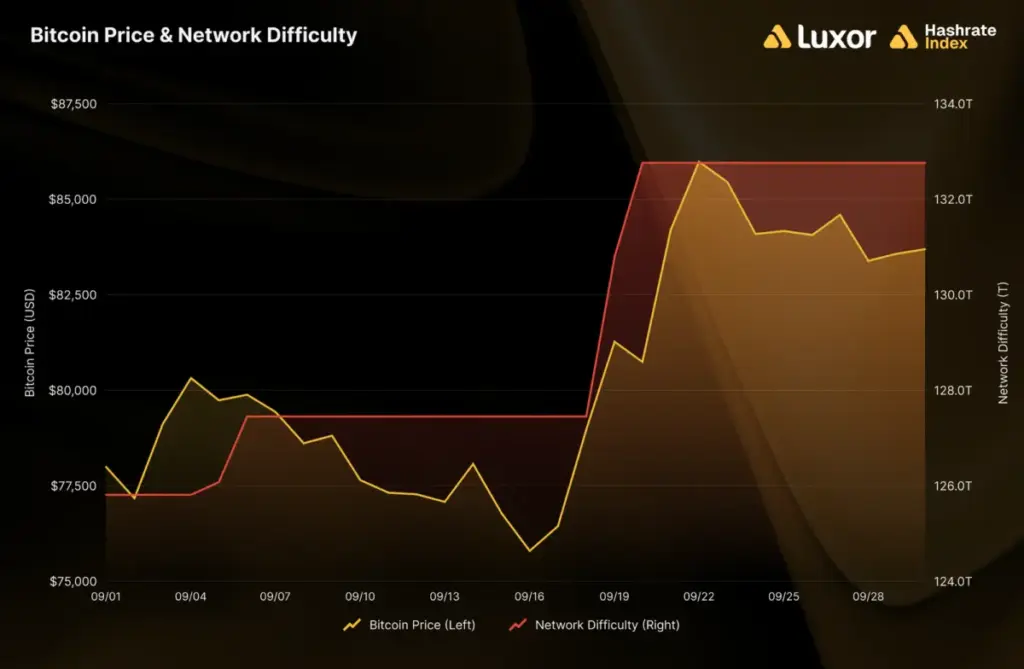
Luxor’s Monthly Lookback Series for September 2026 reveals a nuanced month for the Bitcoin hashrate market, defined by a delicate tug-of-war between rising Bitcoin spot prices and expanding network difficulty. Following a robust August rally that injected significant momentum into hashprice metrics, September tested whether network growth would erode those hard-fought gains or if spot price appreciation could maintain miner profitability. Ultimately, the market delivered a balanced outcome, with Bitcoin climbing steadily while network hash rates recovered from summer curtailments.

September 2026 Spot Hashprice and Its Constituents
August closed with a lingering question for Bitcoin miners: would network difficulty aggressively reprice and wipe out the hashprice gains secured during the month’s late rally? September provided a mixed answer. Bitcoin’s spot price managed a 7.3% climb from open to close, but network difficulty rose 5.5% across two upward adjustments. As a result, spot hashprice finished the month almost precisely where it started, closing within a razor-thin margin of its opening value.
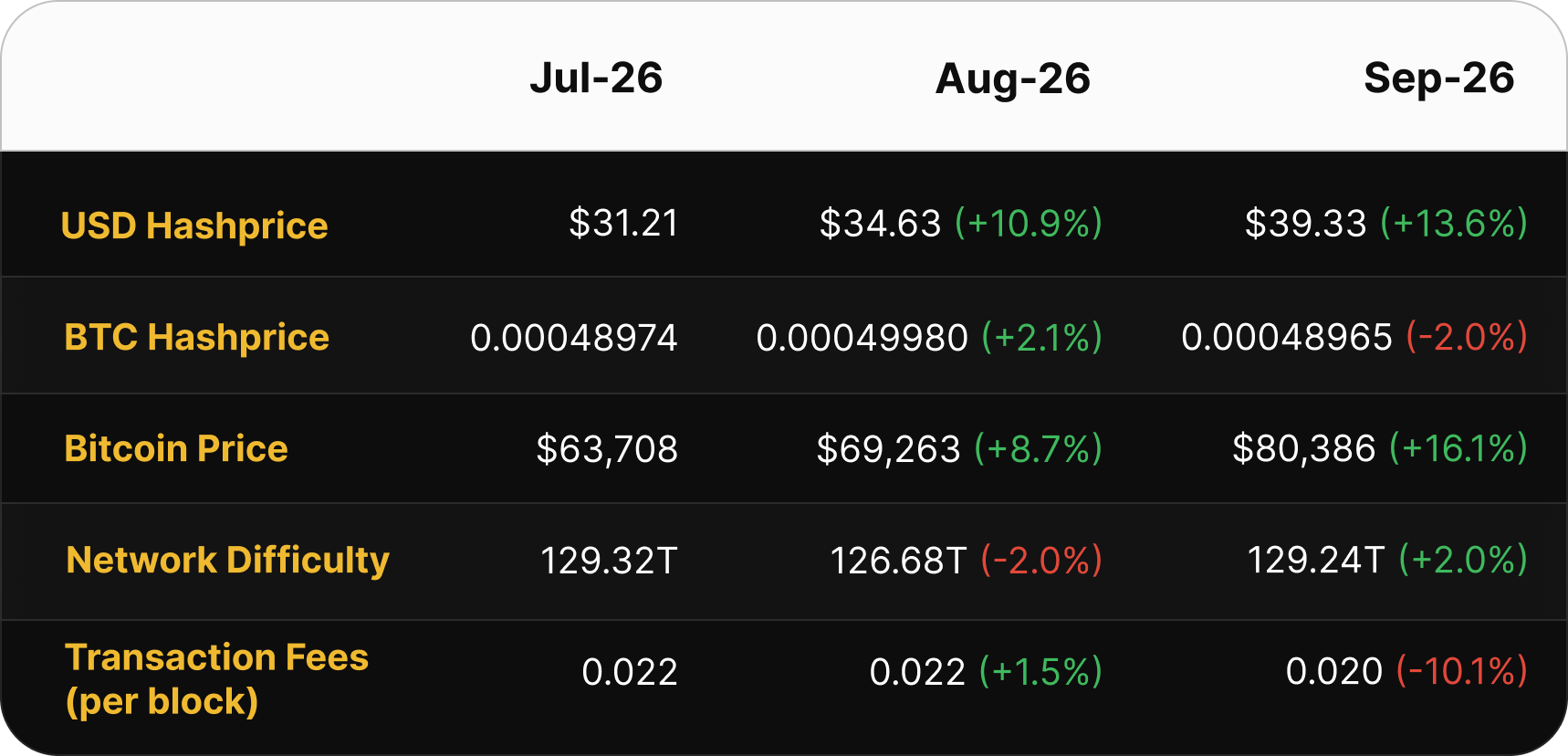
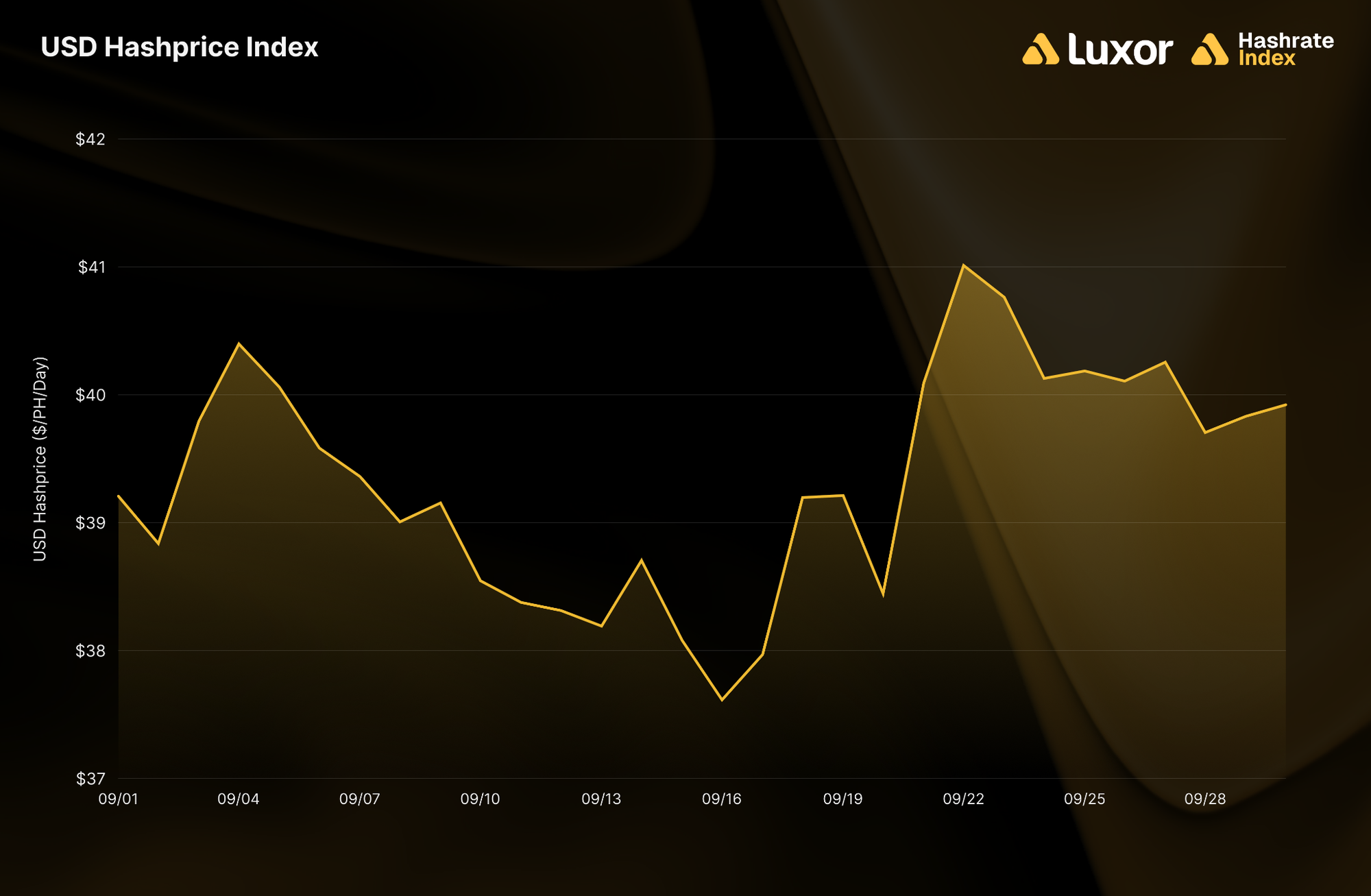
USD-denominated hashprice held onto the ground won during August without expanding dramatically. The month opened at $39.21 per PH/s/day, ticked up 1.8% to close at $39.92, and averaged $39.33 for the month—marking the highest monthly average since January. Daily metrics showed increased stability, with nine days settling above the $40 mark, the highest frequency since November 2025. The monthly range remained relatively narrow for modern market cycles, registering a low of $37.61 on September 16 before peaking at $41.01 six days later. Beneath these headline figures, upward pressure from Bitcoin’s price appreciation was continuously countered by escalating network difficulty.
Bitcoin Price Volatility and Macroeconomic Pressures
Bitcoin opened September trading at $77,984 and concluded the month at $83,687, translating to a 7.3% monthly gain and a 16.1% month-over-month increase in its average price. The asset reached a monthly peak of $85,973 on September 22. However, the path to these figures was fraught with macroeconomic and regulatory hurdles, particularly during a volatile mid-month 24-hour window.
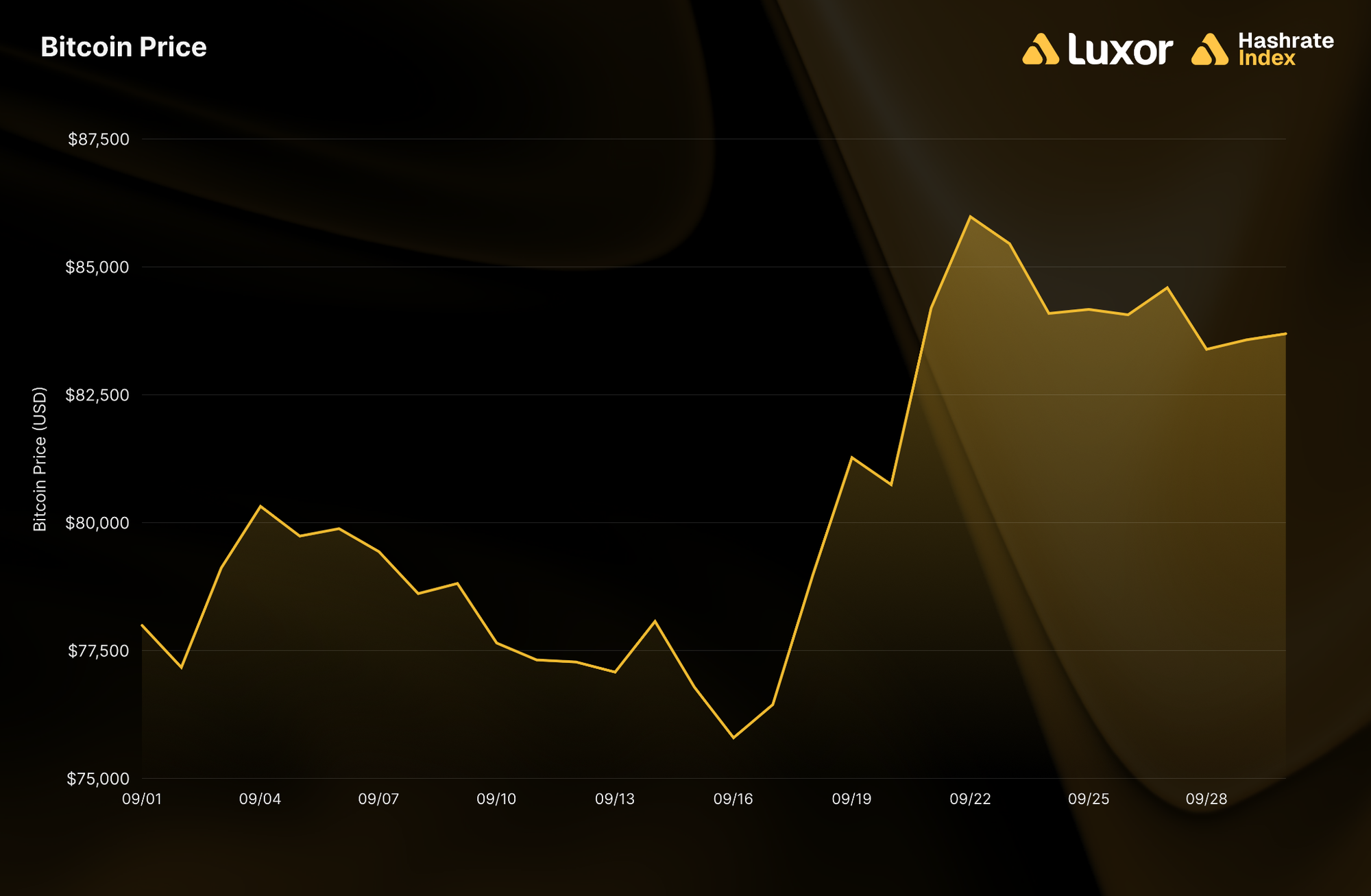
On September 15, the United States Senate failed to invoke cloture on the Clarity Act, falling short with 41 opposing votes and effectively stalling the legislation for the remainder of 2026. Just a day later, the Federal Open Market Committee (FOMC) unanimously voted to raise interest rates by 25 basis points to a range of 3.75% to 4.00%, marking the central bank’s first rate hike since July 2023. These simultaneous headwinds pushed Bitcoin to its monthly low of $75,791 on September 16.
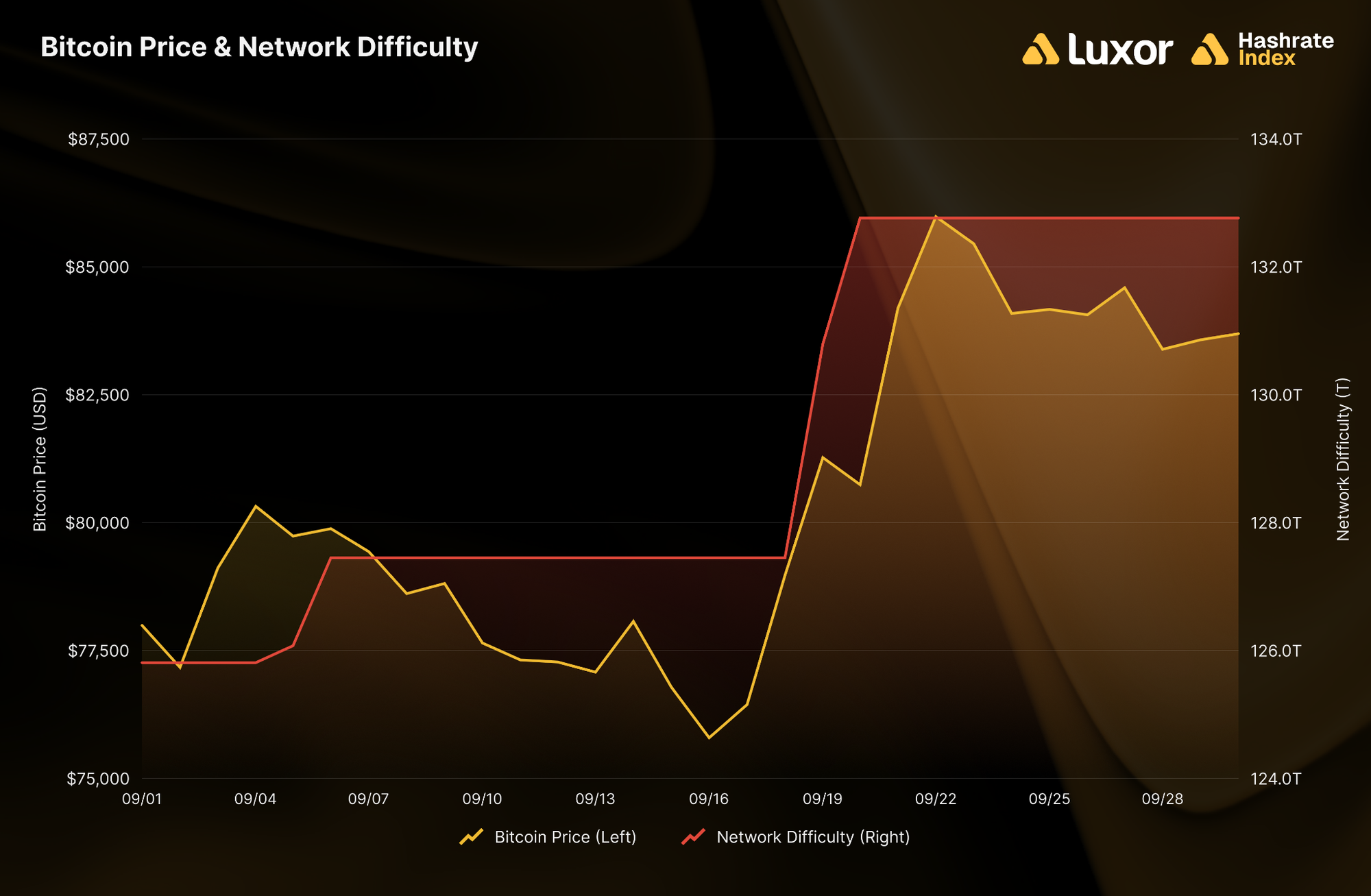
The market rebounded sharply in the days that followed. Between September 16 and September 22, Bitcoin surged 13.4% to reach its monthly high of $85,973, marking its strongest six-day rally since the August breakout. This recovery was heavily supported by institutional inflows, notably a $999 million single-day intake for U.S. spot exchange-traded funds on September 21—the largest daily total of the year and the highest since October 2025. Total net inflows for the month reached $2.65 billion, pushing 2026 net flows back into positive territory. According to Bloomberg Intelligence estimates, this resurgence brought the average U.S. spot ETF holder back above their cost basis for the first time since January.
Despite these gains, Bitcoin ended September down 32.8% from its October 6, 2025 peak of $124,485, an improvement over the 37.1% deficit recorded at the end of August. The asset also remained 13.1% below its 2026 high of $96,278 set on January 15. On a quarterly basis, however, Bitcoin delivered a 41.8% return, marking its strongest quarterly performance since the final quarter of 2024.
Network Difficulty and Infrastructure Dynamics
Network difficulty averaged 129.24T over the course of September, representing a 2.0% increase, and closed the month at 132.76T. Two upward difficulty adjustments occurred during the period: a 1.31% increase on September 5 followed by a 4.16% hike on September 19, which marked the largest single retarget since late June. The combined 5.52% growth across both adjustments made September the month of highest difficulty expansion since October 2025.
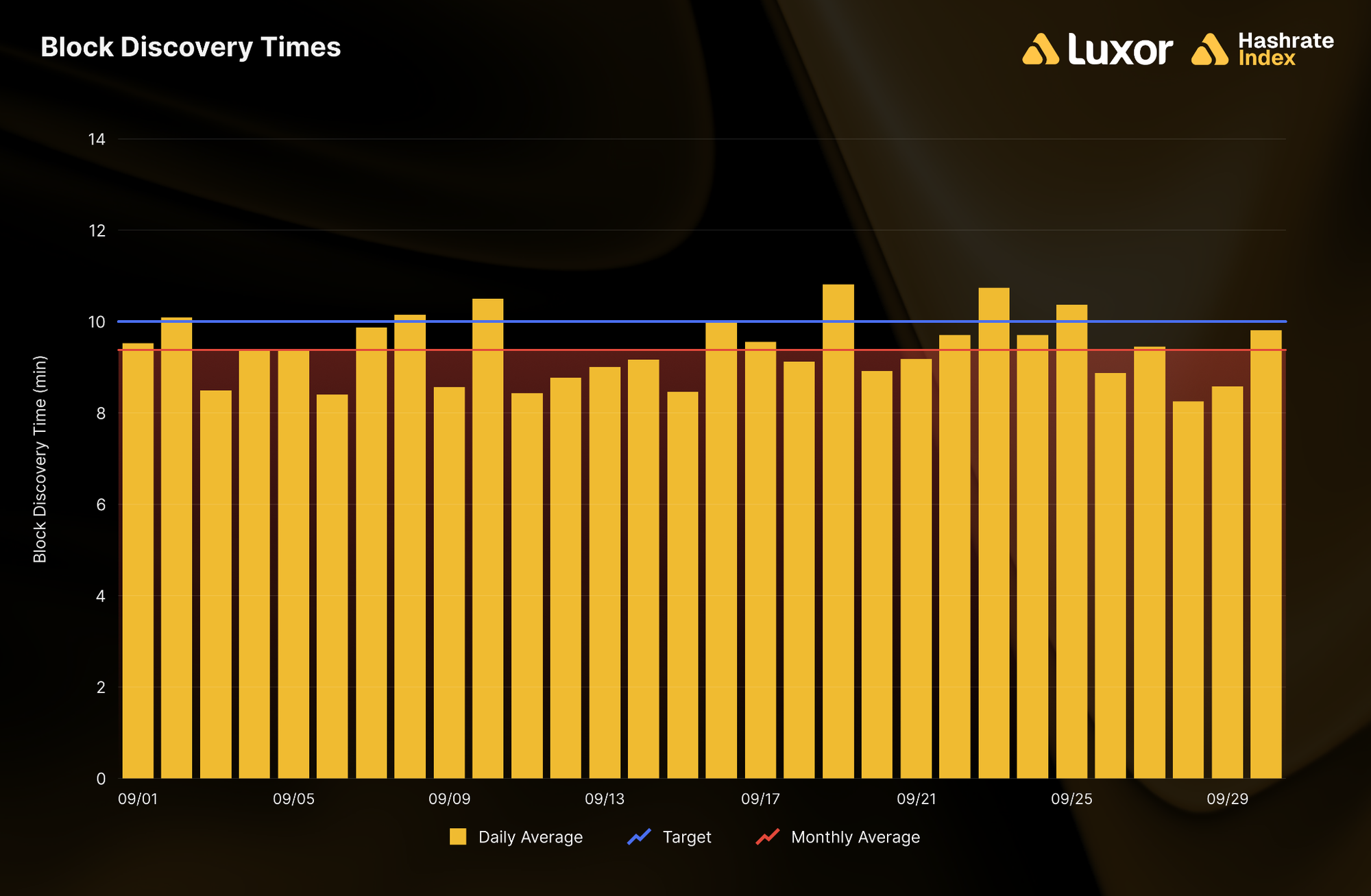
Block times averaged 9 minutes and 23 seconds, making September the fastest month for block production since February, with 23 out of 30 days coming in under the 10-minute target. This acceleration coincided with the conclusion of the Texas summer and the 4CP (Four Coincident Peak) season. As extreme summer heat waned and curtailment protocols relaxed, offline hashrate returned to the network, driving the 7-day network hashrate average from 926 EH/s up to 975 EH/s by month’s end.
ERCOT’s four coincident peaks for the transmission season officially landed on June 18, July 22, August 24, and September 12. While July established the seasonal high at 90.96 GW, September’s peak reached 86.49 GW at 4:30 PM Central Time. Major mining operators employing flexible-load curtailment strategies successfully minimized transmission charges, with certain fleets logging extensive downtime across the summer to offset future transmission costs by a significant margin relative to the mining revenue temporarily forgone.
Transaction Fees and Hashprice Valuations
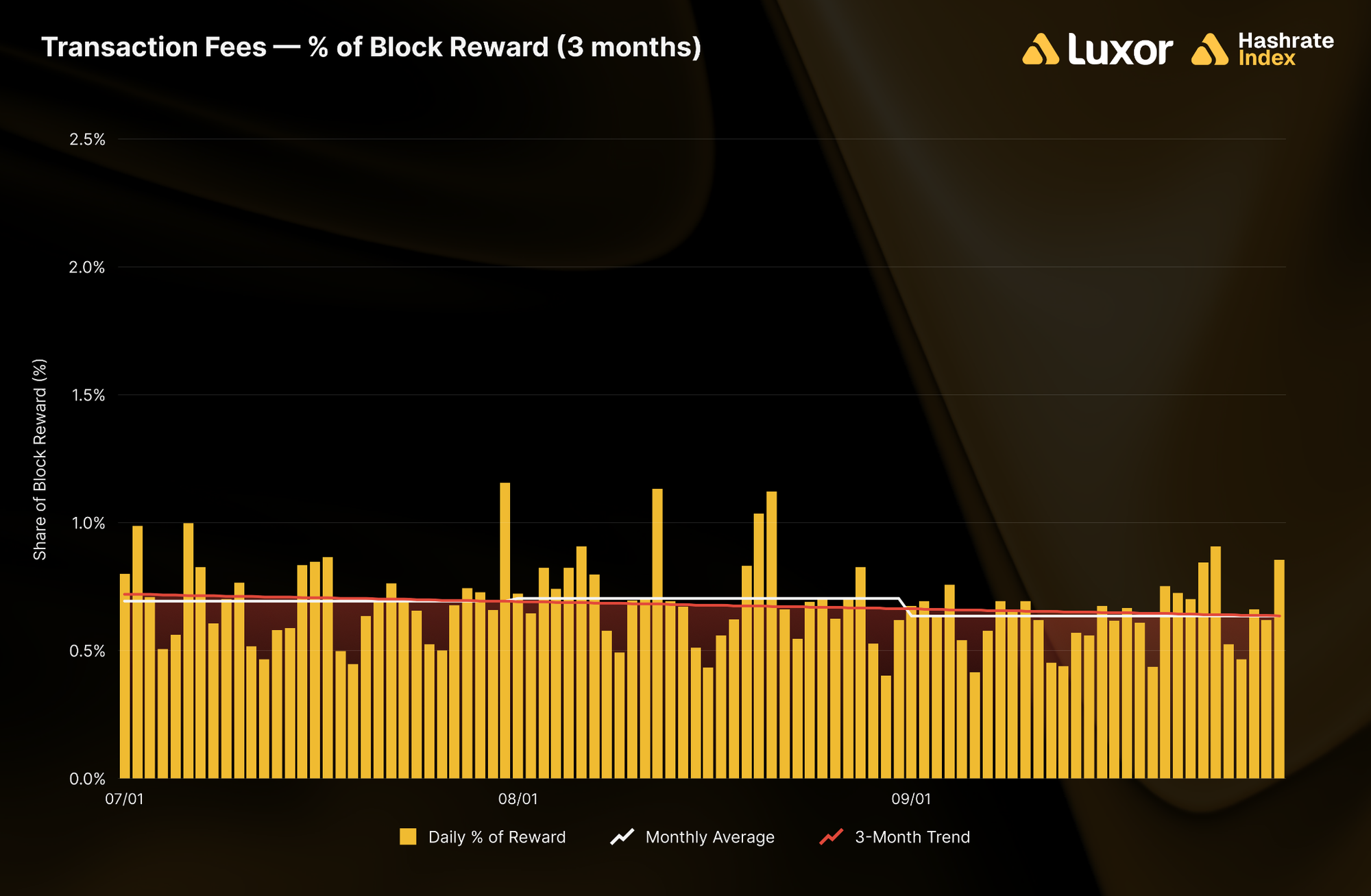
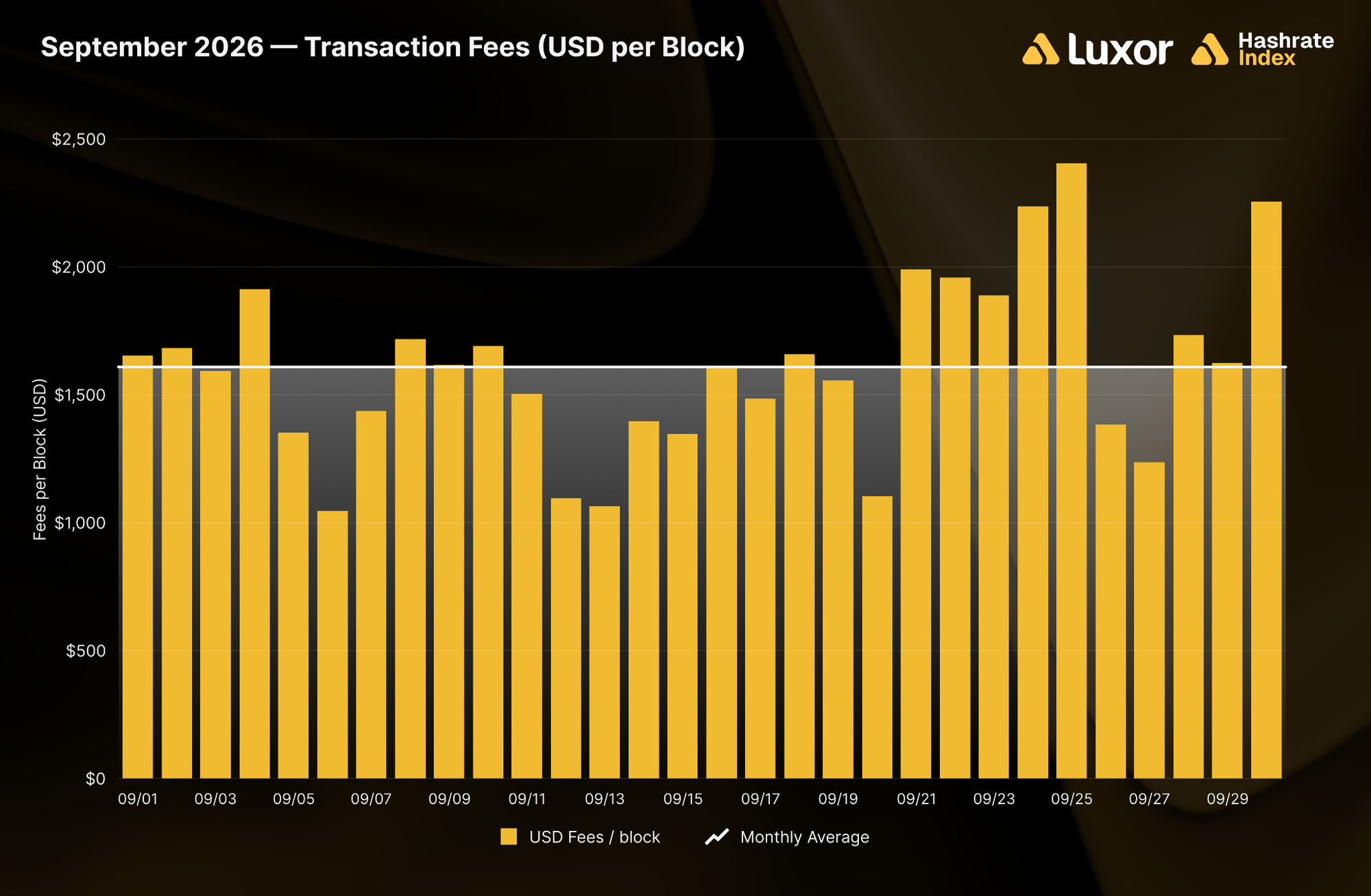
Transaction fee collection experienced a downward trend, falling 10.1% to an average of 0.0199 BTC per block, the lowest level recorded since May. Fees accounted for just 0.63% of total block rewards, marking the fifteenth consecutive month that fee dominance remained below 1%. Daily fee collections ranged between 0.013 and 0.029 BTC per block without notable outliers. In U.S. dollar terms, however, the average block earned approximately $1,607 in fees—a 4.8% increase driven entirely by Bitcoin’s price appreciation.
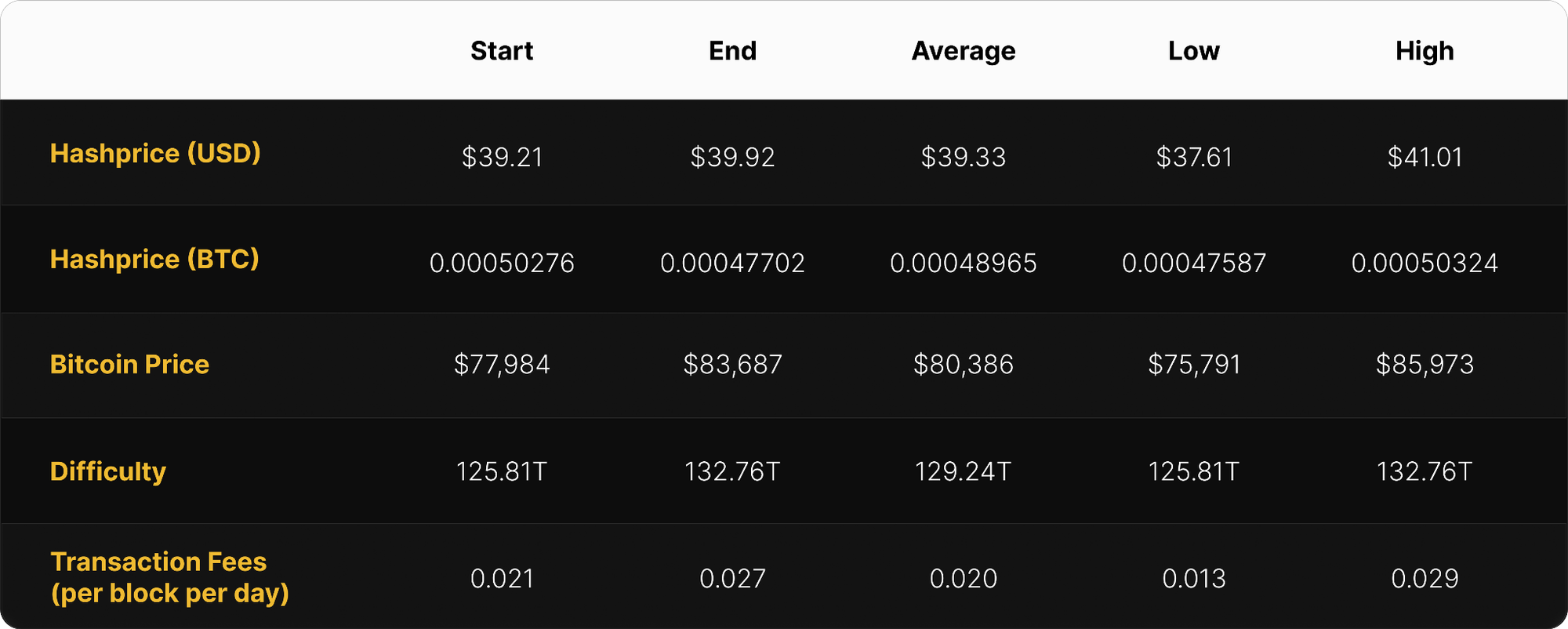
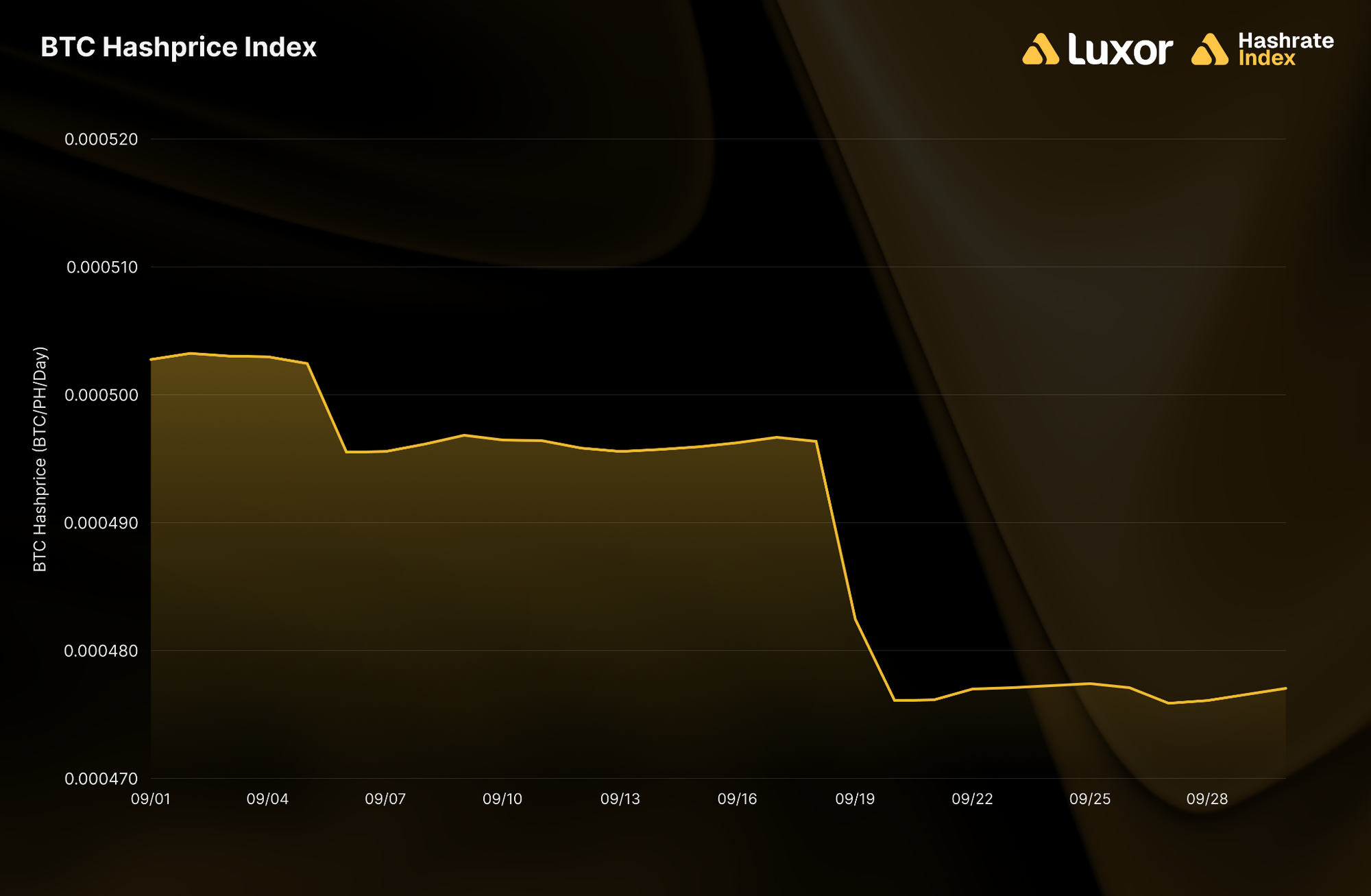
In BTC terms, average monthly hashprice declined by 2.0% to 0.00048965 BTC per PH/s/day. The month opened at 0.00050276 BTC and fell 5.1% to close at 0.00047702 BTC, with each downward step coinciding directly with a difficulty retarget day. This dynamic inverted August’s market performance, where falling difficulty temporarily elevated BTC hashprice to a thirteen-month high before September’s network hashrate recovery reclaimed those margins.
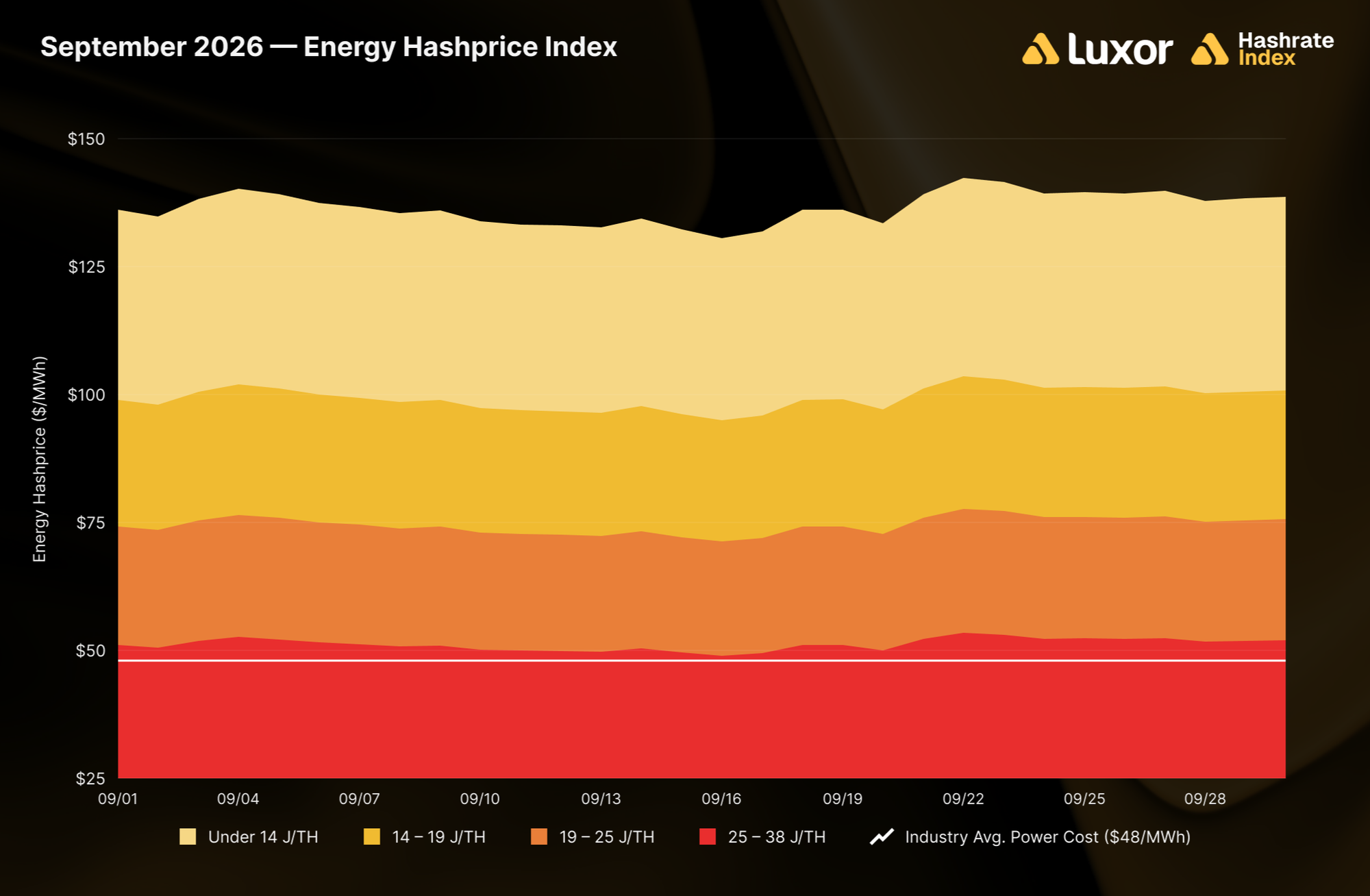
Energy-adjusted hashprice metrics rose uniformly across all fleet efficiency tiers, climbing roughly 13.6% month-over-month in tandem with broader hashprice movements. Against an average industrial power cost of $48 per megawatt-hour, the marginal fleet efficiency tier spanning 25 to 38 Joules per Terahash maintained an energy hashprice above $51 per megawatt-hour throughout every day of the final week of September.
Hashrate Market and Derivatives Activity
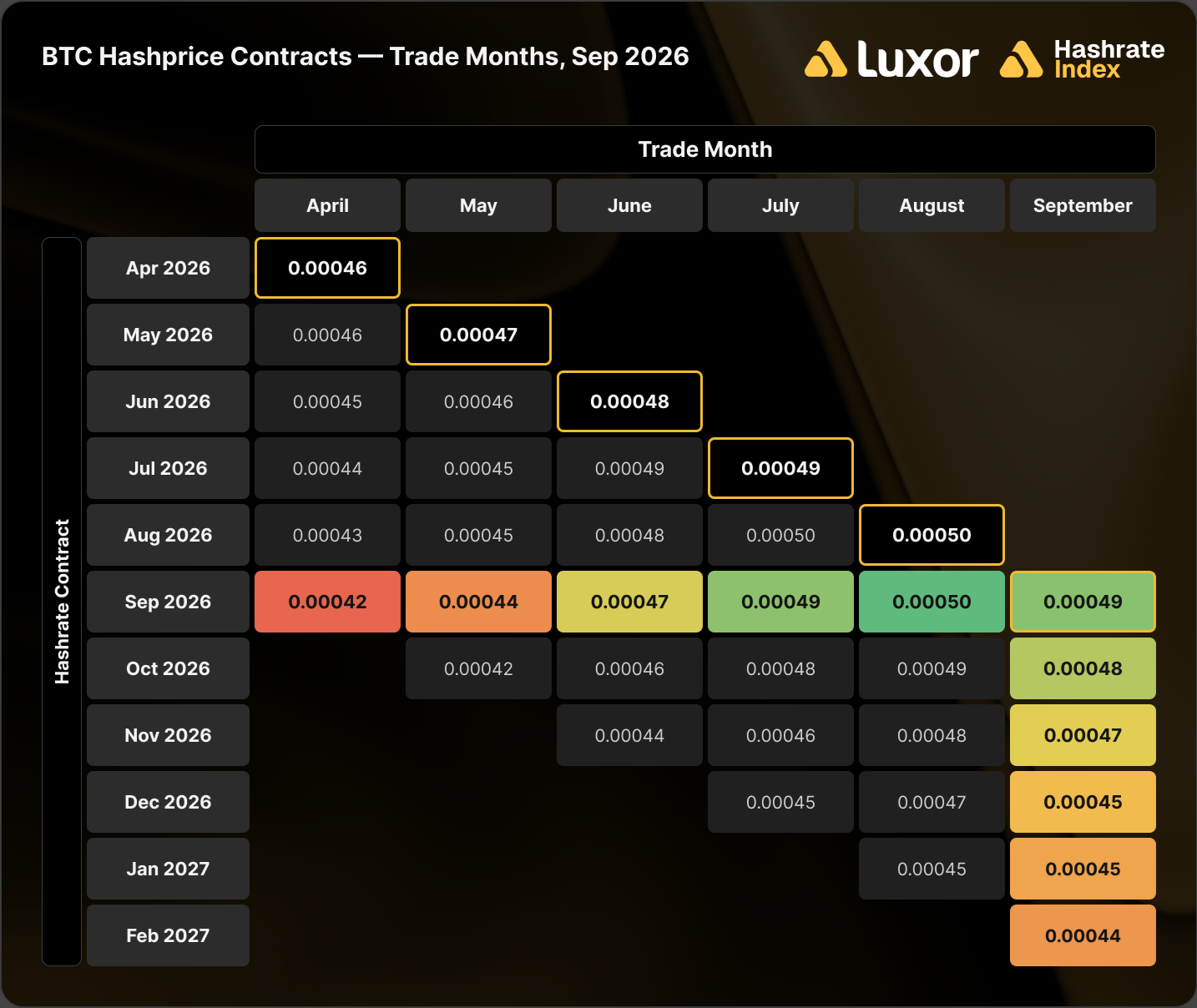
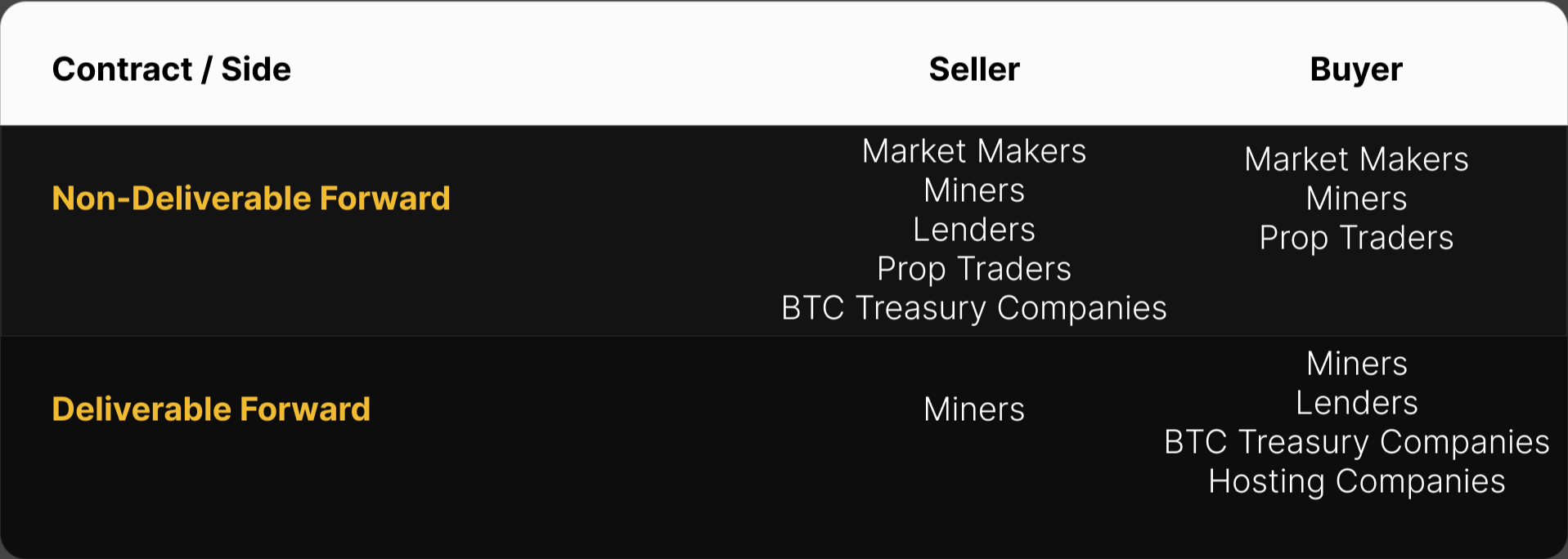
Analysis of Luxor’s hashrate forward market highlights how market participants utilized deliverable and non-deliverable forwards throughout September. Lenders actively participated on the buy side of deliverable contracts, while both public and private mining firms utilized forward sales to secure financing, manage capital expenditure, and fund fleet expansions. Because deliverable forwards require prepayment, they consistently trade at a discount to non-deliverable forwards to account for credit risk and capital costs. Pairing these contract types allowed treasury companies and lenders to capture fixed, BTC-denominated yields ranging from 6% to 13% annualized, while offering miners access to non-dilutive capital.
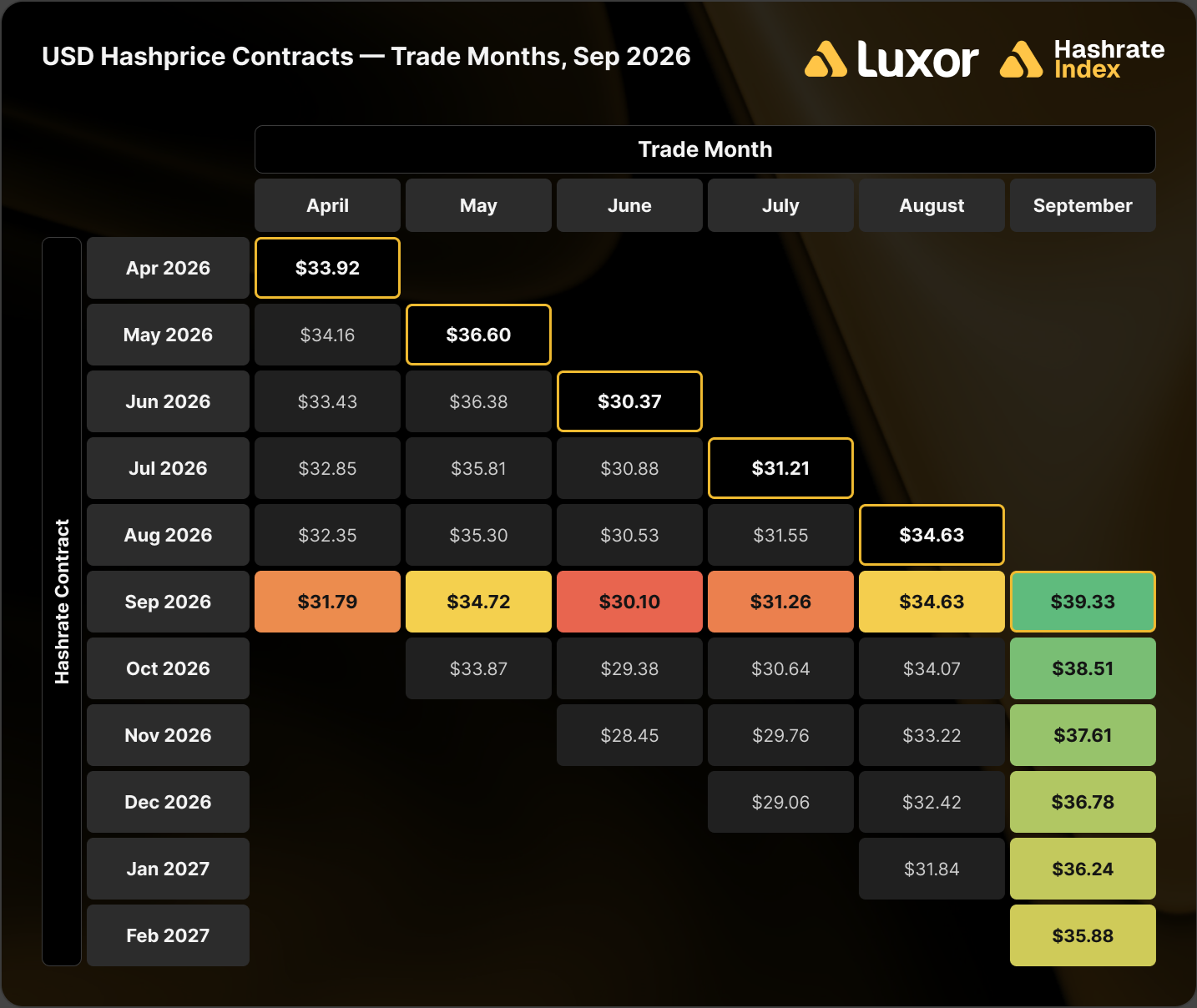
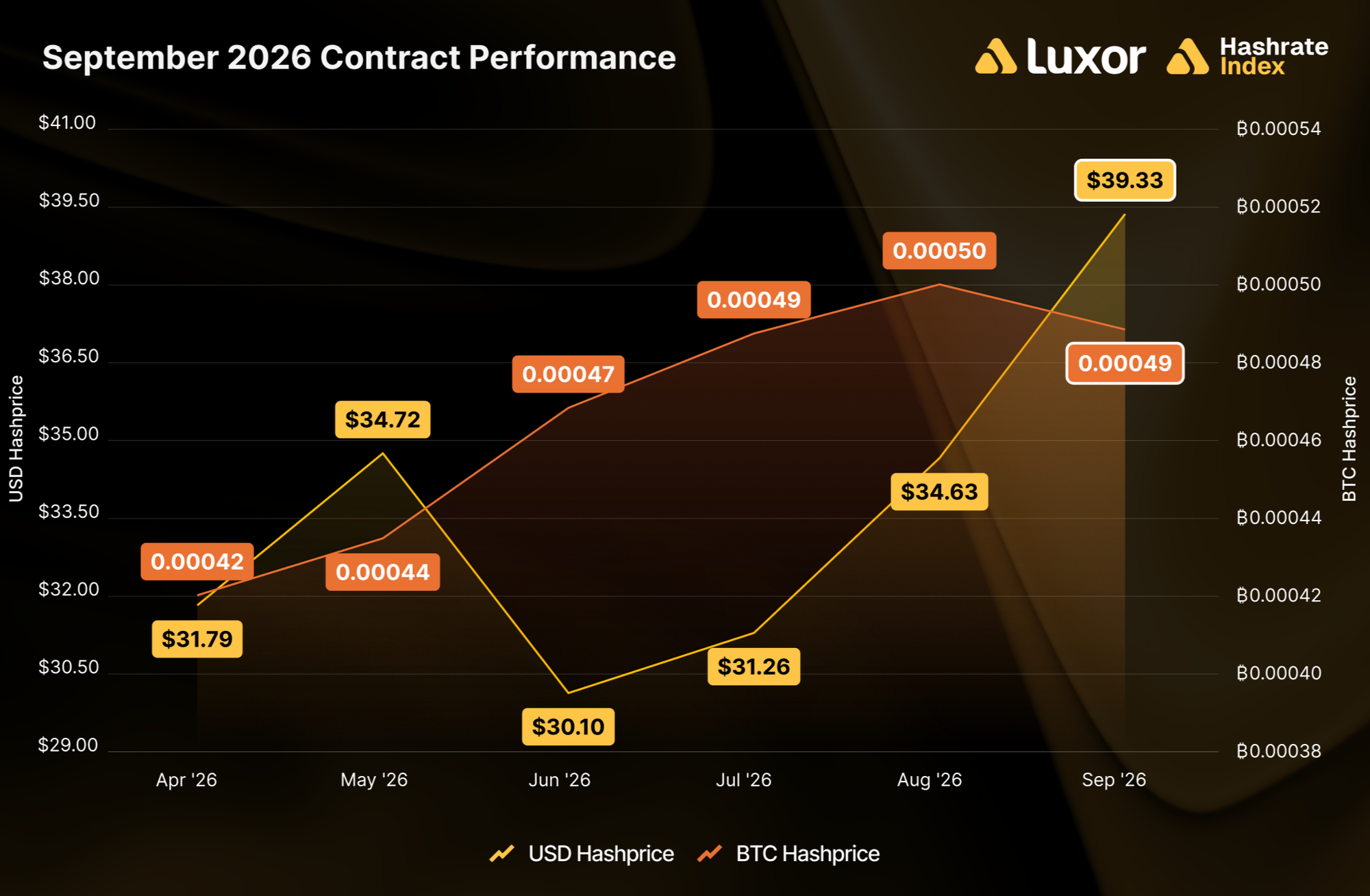
For USD-denominated hedges, September broke a long-standing trend by becoming the first month since July 2025 in which every dollar-denominated hedge resulted in an underperformance relative to spot. Sellers who locked in September USD contracts secured rates between $30.10 and $34.72 per PH/s/day, falling short of the $39.33 spot settlement average. Conversely, in BTC-denominated markets, a five-month losing streak was interrupted: August’s one-month forward sale at 0.00050 BTC per PH/s/day outperformed the September spot settlement of 0.00049 BTC by 2.4%. Longer-dated BTC horizons, however, continued to underperform spot, maintaining a pattern observed since January.
Forward market pricing heading into the final quarter of the year reflected continued expectations of network expansion. Between early September and early October, USD lock-in rates for October through February contracts rose by 2.8% to 5.3%, trailing the 3.9% increase in spot hashprice. Over the same period, BTC-denominated forward curves softened by 1% to 4% across the strip. By dividing USD contract values by corresponding BTC contracts, the implied forward Bitcoin price settled between $84,400 and $86,600 across the five-month forward strip. Translating these figures using September’s average fee collection implies network difficulty climbing toward 147.1T by February 2027, with network hashrate projected to cross the one exahash per second threshold entering the new year.
 Cryptocurrency Mining
 Cryptocurrency Mining
 Cryptocurrency Mining







