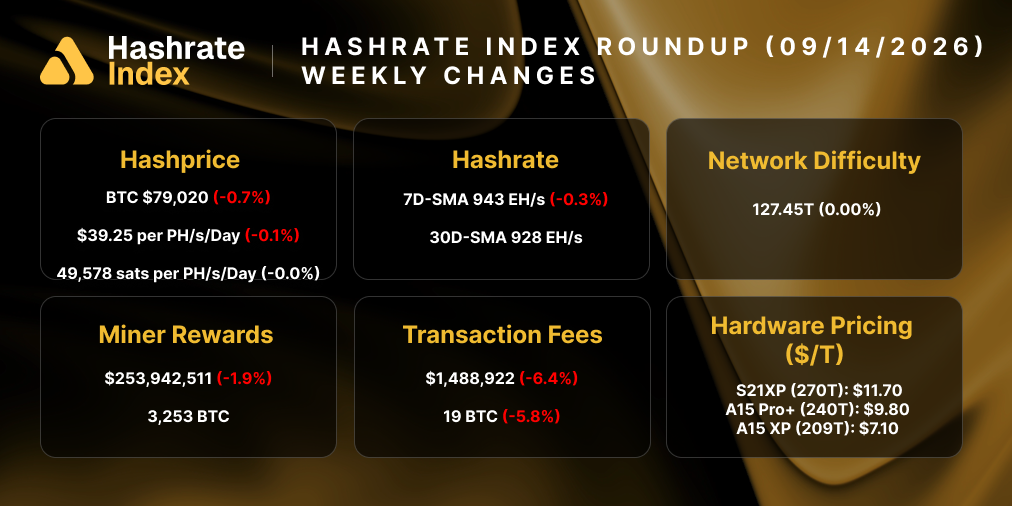
As the digital asset markets navigate a period of consolidation, the latest weekly metrics from the Bitcoin mining sector present a picture of relative stability. For the week ending September 14, 2026, the broader mining landscape experienced a modest flatline, with minor shifts in hashprice, network hashrate, and transaction fees. Despite lingering downward pressures on year-to-date asset performance, industrial operators continue to secure steady block rewards while looking ahead to an impending upward difficulty adjustment.
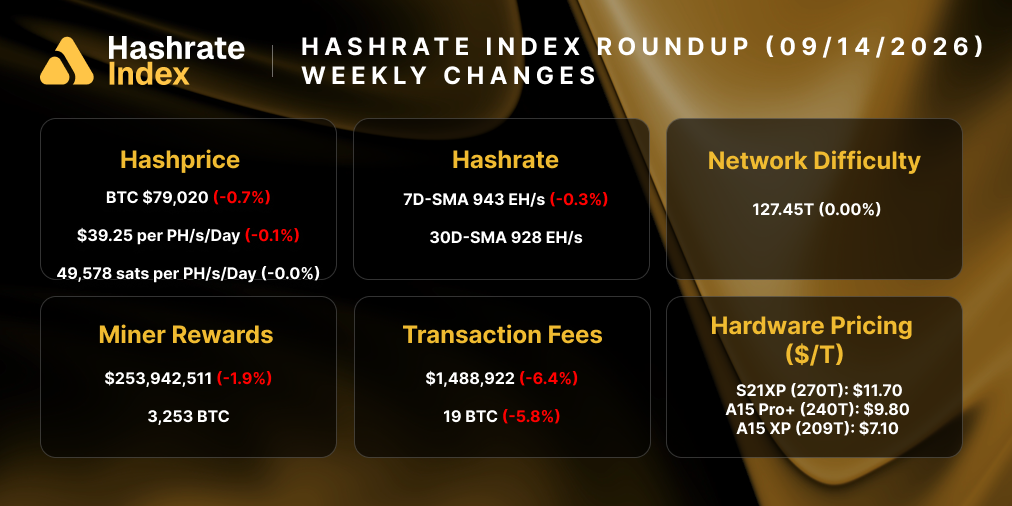
Over the past week, Bitcoin miners successfully collected a total of approximately 3,253 BTC in block rewards, translating to roughly $253 million at prevailing market valuations. Transaction fees accounted for a minor fraction of overall miner revenue, constituting just 0.59% of total block rewards. Miners brought in a cumulative 19 BTC from transaction fees, equivalent to approximately $1.49 million, underscoring a period of relatively calm on-chain activity without significant congestion or bidding wars for block space.
Bitcoin Price Action and Futures Market Dynamics
The flagship cryptocurrency experienced a slight downward drift over the seven-day observation period, moving by -0.7% from approximately $79,581 down to a current spot price of roughly $79,020. Despite a modest 2.3% rebound over the trailing 24 hours from a local low of $77,270, Bitcoin’s year-to-date performance remains in negative territory at -9.6%.
Derivatives markets reflect cautious optimism among institutional participants. The September Chicago Mercantile Exchange (CME) futures contract is currently trading at $79,300, marking a modest 0.4% spot change. Meanwhile, the October CME future stands slightly higher at $79,700 with a 0.9% gain, whereas the November contract trails behind at $77,610, reflecting a 1.8% dip as traders hedge against medium-term macro volatility.
Hashprice Stability Across USD and BTC Denominations
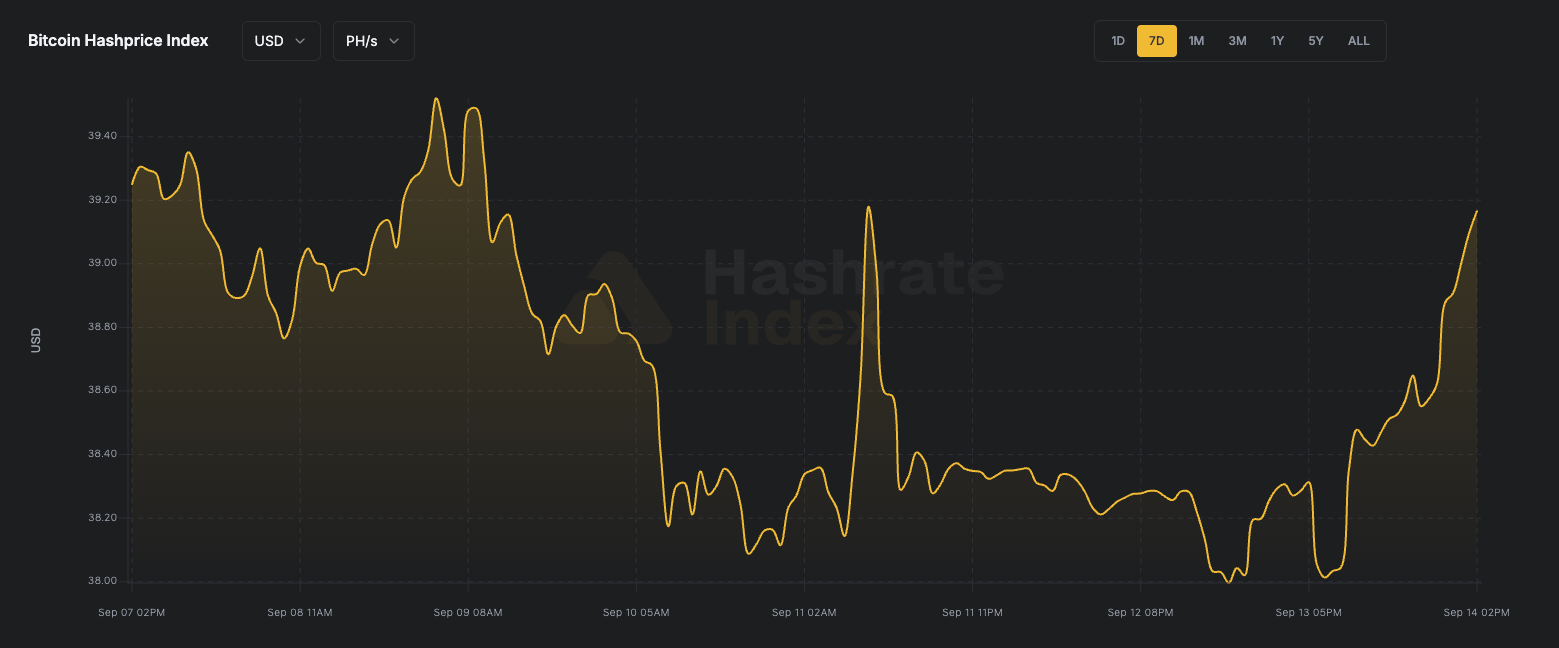
Unit economic profitability for Bitcoin miners, measured by the Hashprice Index, remained exceptionally flat over the week. The USD-denominated hashprice ticked down by just -0.1%, shifting from $39.29 per petahash per second per day (PH/s/Day) to a stable $39.25 per PH/s/Day. Over a broader monthly horizon, the 7-day average hashprice sits at $38.60, while the 30-day average registers at $38.04, demonstrating a slow but steady recovery in daily earnings per unit of compute power over the last month.
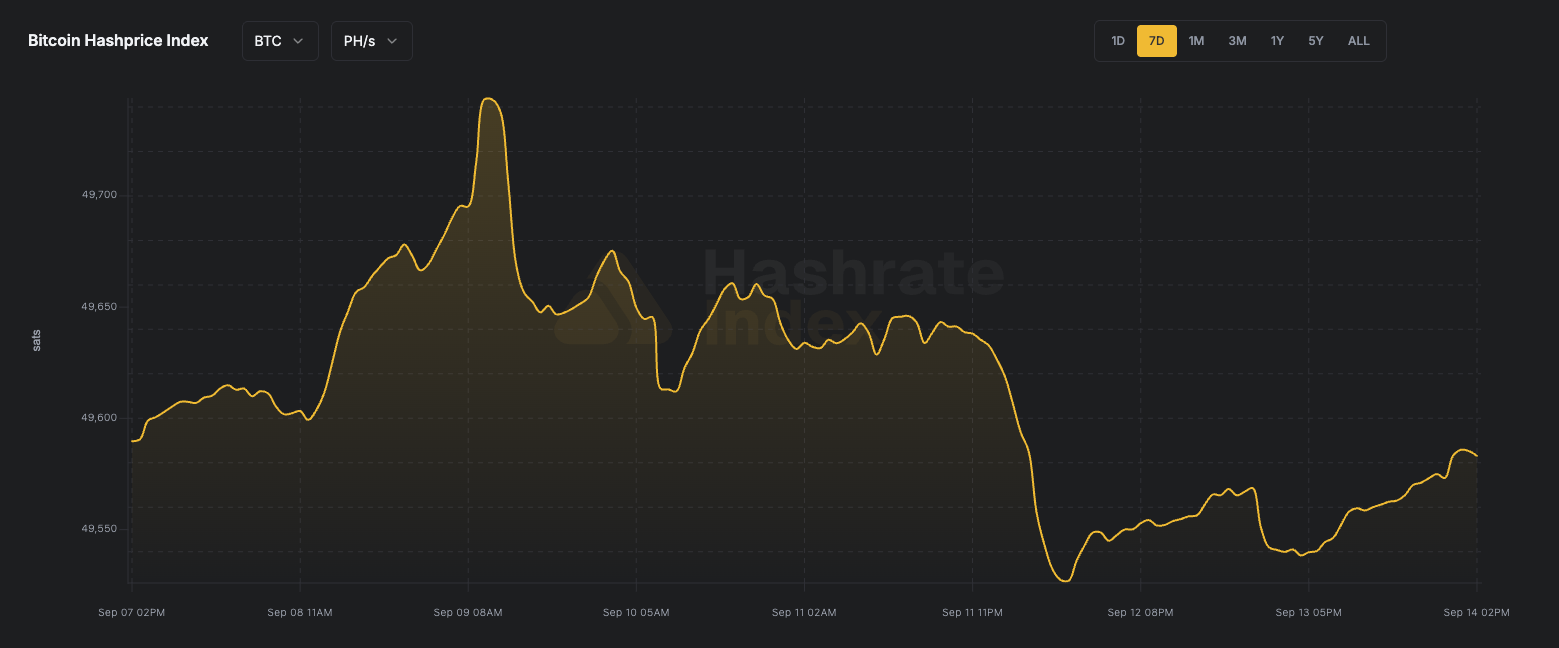
Measured in native asset terms, the BTC hashprice held virtually unchanged, shifting from 0.00049599 BTC to 0.00049578 BTC per PH/s/Day. The 7-day average BTC hashprice stands at 0.00049615 BTC, while the 30-day average is calculated at 0.00049941 BTC. Fleet-wide energy efficiency metrics indicate that modern SHA-256 operations continue to generate predictable revenue streams per watt-hour, though profit margins remain closely tied to individual facility power purchase agreements and hardware efficiency tiers.
Network Hashrate and Upcoming Difficulty Adjustment
The aggregate computational power securing the Bitcoin network saw a negligible contraction over the week. Network hashrate shifted by -0.3%, with the 7-day simple moving average (SMA) sliding from 946 exahashes per second (EH/s) down to 943 EH/s. The 30-day SMA currently rests at 928 EH/s, indicating that overall deployment of next-generation ASIC hardware remains robust despite flatlining profitability metrics.
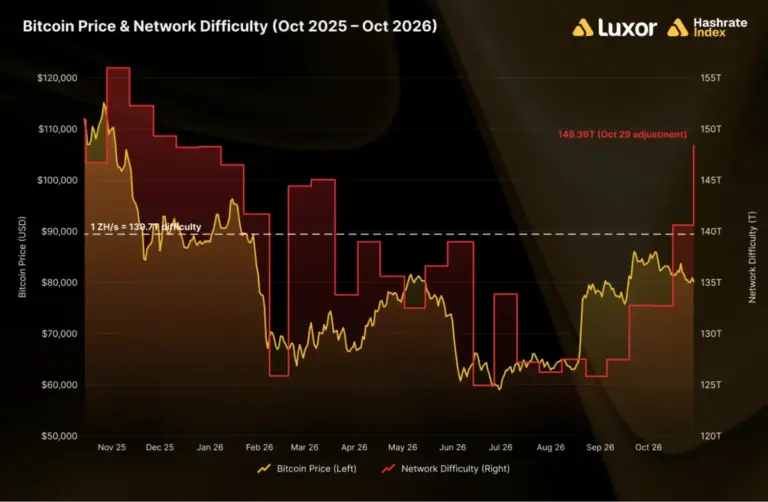
The network’s last difficulty adjustment occurred on September 5, 2026, pushing network difficulty upward by 1.31% to 127.45T. Over the past 24 hours, block times have averaged approximately 9 minutes and 30 seconds. With roughly 67% of the current epoch completed—standing at 1,350 out of 2,016 blocks—the network is hurtling toward its next automatic adjustment. Current estimates point to a significant upward difficulty correction of approximately +5.26%, expected to take effect around September 19, 2026, which will test the marginal efficiency of older generation mining rigs.
Transaction Fee Trends
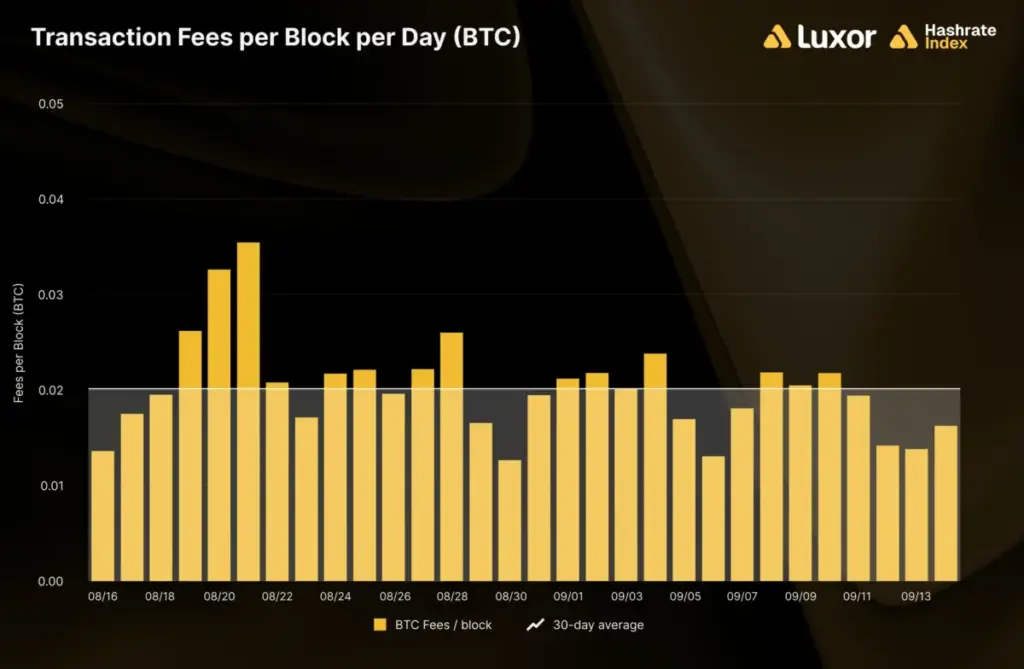
On-chain fee generation experienced a slight cooling trend over the past week. Miners collected an average of 0.0183 BTC per block per day in transaction fees, representing a 5% decline compared to the previous week’s average of 0.0193 BTC. Longer-term moving averages reflect a similar contraction, with the 14-day average sitting at 0.0188 BTC and the 30-day average settling at 0.0202 BTC, down 9.6% over the month as block space demand remains subdued.
Looking Forward: Hashrate Forward Market Outlook
Forward-looking sentiment within the derivatives sector indicates steady expectations for miner earnings. The Hashrate Forward Market is currently pricing in an average hashprice of $36.92, or approximately 0.00047 BTC, over the next six-month period. This forward curve reflects market consensus that while near-term spot hashprice remains supported around the $39 threshold, upcoming difficulty increases and seasonal energy fluctuations will introduce measured adjustments to compute valuation through the winter months.
Bitcoin Mining Equities Performance
Publicly traded Bitcoin mining companies experienced a predominantly downward week as equities reacted to broader macroeconomic factors and the slight pullback in spot Bitcoin prices. Among major sector players, several firms posted notable weekly corrections. Cipher Mining (CIFR) fell 14.0% to $15.91 with a market capitalization of $6.60 billion, while Core Scientific (CORZ) dropped 8.0% to $17.23, valuing the firm at $5.54 billion.
Other prominent operators saw mixed results. CleanSpark (CLSK) edged down by just 0.7% to $13.39, maintaining a market cap of $3.44 billion. Marathon Digital (MARA) dipped 1.8% to $11.62, and Riot Platforms (RIOT) fell 5.6% to $21.01. Meanwhile, IREN slid 7.0% to $43.63, retaining a substantial market valuation of $17.19 billion, and TeraWulf (WULF) recorded a 12.4% retreat to $15.65. On the positive side, select smaller-cap equities posted gains, with Aura (ANY) rallying 18.0% to $2.89 and Canaan (CAN) advancing 6.3% to $0.34.
 Cryptocurrency Mining
 Cryptocurrency Mining
 Cryptocurrency Mining