The high-profile legal dispute between Tron founder Justin Sun and the Trump family-backed decentralized finance venture World Liberty Financial has taken a sharp procedural turn, centering squarely on a complex question of nationality and corporate jurisdiction.
In a public statement shared on the social media platform X on Tuesday, Sun revealed that his legal team has officially petitioned a federal court in California to impose sanctions against World Liberty Financial. The motion targets the crypto project over what Sun describes as an unreasonable and deliberate delay in disclosing a crucial component of its ownership structure: that its corporate chain extends to include citizenship in the United Arab Emirates.
The ongoing feud marks a bitter escalation between two prominent figures in the digital asset landscape. Sun, who counts himself among World Liberty’s earliest and most substantial financial backers, initially agreed in November 2024 to purchase $30 million worth of the project’s native WLFI tokens. He subsequently increased his total investment to an impressive $45 million, cementing his status as a major stakeholder in the platform.
However, the partnership deteriorated rapidly. In April, Sun initiated legal action by filing a lawsuit against World Liberty Financial in federal court. Within his complaint, Sun alleged that the venture had misled him into making his substantial financial commitment and subsequently took the unlawful step of freezing his tokens. World Liberty Financial fired back vigorously against the claims, mounting a defense in court that alleged Sun had engaged in shorting WLFI tokens, an action the company claims directly contributed to a sharp crash in the asset’s market price.
As the litigation progressed, the battlefield shifted to a technical and foundational legal issue regarding jurisdiction. Sun had deliberately chosen to bring his case before a federal court. Under United States legal frameworks, federal courts possess the authority to adjudicate disputes between parties hailing from different geographic locations, commonly known as diversity jurisdiction. However, these courts generally lack the subject-matter jurisdiction to hear a case brought by a foreign plaintiff against a foreign defendant.
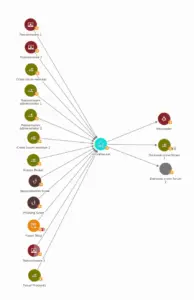
Explaining the mechanics of the legal hurdle, Sun noted that for jurisdictional purposes, an entity like World Liberty Financial assumes the collective citizenship of each individual owner within its corporate chain. Consequently, the presence of even a single foreign owner within that structure would technically render the entire company a foreign entity under federal jurisdictional guidelines, potentially stripping the federal court of its authority to hear the case.

According to Sun’s legal filings, World Liberty’s initial disclosures submitted to the court listed only the primary corporate entity, identifying Florida as its sole place of citizenship. The litigation reached a notable milestone during an August court hearing, where a federal judge signaled that a portion of Sun’s active claims should be allowed to proceed in open court rather than being forced into private arbitration, a ruling that initially favored the Tron founder.
Yet, the landscape shifted dramatically less than a week after that judicial hearing. Sun asserts that World Liberty amended its corporate disclosure to suddenly list 22 separate members within its ownership chain. This updated filing introduced citizenships spanning Florida, Delaware, Puerto Rico, and crucially, the United Arab Emirates. Armed with this newly expanded ownership profile, World Liberty has now shifted its legal strategy, arguing that the federal court lacks the requisite jurisdiction to continue overseeing the case.
Sun contends that this late-stage disclosure was not a routine administrative update, but rather a calculated tactical maneuver designed specifically to strip the federal court of jurisdiction and force the dismissal or transfer of the lawsuit. Through his newly filed motion for sanctions, Sun is asking the court to hold World Liberty and its legal representatives financially accountable by bearing the costs associated with the delayed and shifting disclosures.
To underscore his frustration, Sun contrasted the company’s recent jurisdictional defense with its aggressive public marketing campaigns. He highlighted excerpts from World Liberty’s official promotional material, frequently referred to as its "gold paper," which prominently markets the venture as an explicitly "American, tax-paying, corporation."
Despite the procedural setback in federal court, Sun made it clear that he has no intention of backing down from the legal fight. He announced that once the pending sanctions motion is fully resolved by the court, he plans to refile his entire lawsuit directly in California state court, where jurisdictional rules differ. Signaling his determination to see the matter through, Sun wrote on X that he remains committed to holding the project accountable and will continue fighting for the transparency that the crypto community deserves.
The public airing of grievances between Sun and the Trump-backed enterprise has captivated the cryptocurrency industry for months. Beyond the core contract and token disputes, Sun has repeatedly used public forums to criticize how World Liberty manages its relationships with investors. Among his various public allegations, Sun previously claimed that the project’s operators went so far as to threaten to burn his WLFI tokens entirely, a move that would have destroyed millions of dollars of his invested capital. As both sides prepare for the next phase of legal maneuvering, the case continues to highlight the complex intersection of high-profile politics, decentralized finance governance, and cross-border corporate law.
 Web3 & Decentralized Web
 Web3 & Decentralized Web
 Web3 & Decentralized Web