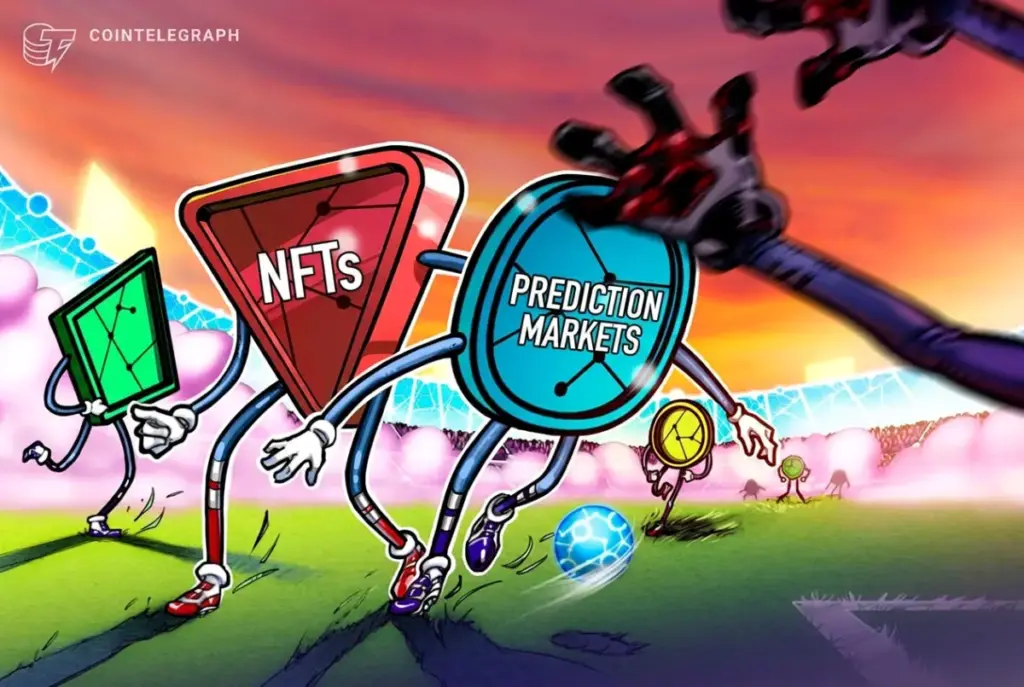
The 2026 FIFA World Cup proved to be a watershed moment not just for international football, but for the mainstream intersection of decentralized finance and major global sports, driving an astonishing $20 billion in blockchain-based prediction market volume and $24 million in digital collectible trades. According to a comprehensive new report released by blockchain analytics firm Chainalysis, more than 400,000 distinct digital wallets participated directly in blockchain-based betting throughout the tournament cycle, highlighting a massive surge in public engagement with decentralized applications during a marquee sporting event.
The landmark $20 billion volume figure captures a wide spectrum of trading activity that occurred both in the lead-up to the tournament and throughout the five-week athletic showcase itself. During the tournament proper, bettors placed roughly $5.7 billion in wagers on decentralized prediction platforms, capturing the intense global interest of fans turning to alternative financial instruments to speculate on match outcomes, group standings, and tournament brackets. The scale of this engagement made football’s premier competition a dominant force within the decentralized sector. Chainalysis noted in its findings that World Cup-related markets accounted for approximately 63 percent of all prediction market activity globally during that specific five-week period, overshadowing other simultaneous crypto-economic events and cementing the tournament’s unique pull.
The geographic footprint of these blockchain-based prediction markets was truly global, drawing participants from every continent except Antarctica. This widespread international adoption demonstrates that decentralized prediction architecture is increasingly crossing borders and attracting users in diverse regulatory and economic environments. According to data tracked by Chainalysis, the United States and China generated the highest attributable trading volumes, leading the global surge in decentralized sports speculation. Following the two economic superpowers, users in Canada, Thailand, and the United Kingdom rounded out the top tier of activity, contributing significant volume and proving that the phenomenon extended far beyond any single region.
Despite the sheer scale of the betting activity and the rapid influx of capital into decentralized smart contracts, illicit participation remained remarkably limited. Within an ecosystem often scrutinized by regulators for vulnerabilities related to financial crime, Chainalysis reported that fewer than 1 percent of all wallets participating in World Cup prediction markets showed any ties to illicit actors. However, the analytics firm did identify roughly $5.4 million in capital flows that originated from sanctioned entities and other illicit sources. While present, this fraction of illicit volume underscores the ongoing challenge that decentralized platforms face regarding wallet screening, even as the vast majority of participants operate through legitimate channels.
Beyond speculative betting, the tournament also served as a major proving ground for the growing adoption of blockchain-based digital collectibles and ticketing infrastructure. Fans enthusiastically engaged with the digital ecosystem surrounding the event, trading about $24 million worth of FIFA Collect NFTs over the course of the tournament. Simultaneously, the platform played a critical role in logistical distribution, with more than 100,000 official match tickets successfully distributed through the blockchain-backed system. This integration of digital assets into the traditional matchday experience points to a shifting paradigm in how sports organizations manage ticketing, ownership, and fan engagement.
Notably, the infrastructure surrounding the digital collectibles and ticketing platform appeared resilient against bad actors. Chainalysis highlighted that wallets linked to sanctioned entities accounted for less than 0.01 percent of all FIFA Collect users. The analytics firm attributed this exceptionally low rate in large part to the platform’s strict identity verification requirements, commonly known as know-your-customer protocols, which effectively deterred prohibited entities from exploiting the digital storefront for illicit financial transfers or unauthorized trading.
Concluding its assessment of the tournament’s financial technology footprint, Chainalysis stated that the findings strongly suggest blockchain infrastructure will play an increasingly prominent role in major global events moving forward. As decentralized finance tools and digital collectibles transition from niche technological experiments into the mainstream consciousness of billions of sports fans, the report underscored the critical importance of robust compliance measures. Ensuring transparency, user verification, and regulatory alignment will remain vital for platforms as they continue to attract broader participation on a global scale.
 Non-Fungible Tokens (NFTs)
 Non-Fungible Tokens (NFTs)
 Non-Fungible Tokens (NFTs)