As cryptocurrency markets continue to navigate periods of elevated volatility, market participants are increasingly focusing on precision entries and rigorous risk management frameworks. A recently shared analytical breakdown for the BTCUSD trading pair has drawn attention within the retail trading community by showcasing a high-conviction long position structured specifically to demonstrate how smaller accounts can engage with major digital assets while maintaining strict risk controls.
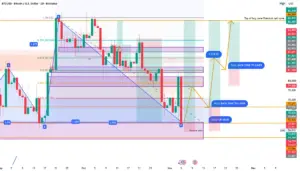
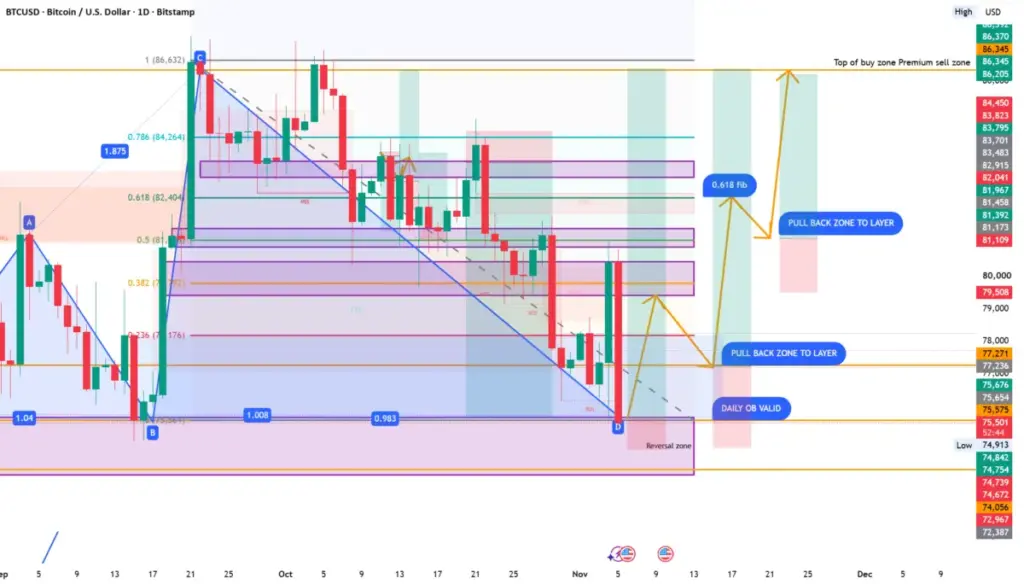
The trade plan, designed around a prospective entry at $75,702, outlines a bullish outlook for Bitcoin that targets an ambitious upward movement toward $86,257. To protect capital against unexpected market shifts, the strategy incorporates a tightly managed stop-loss order placed just beneath the entry threshold at $74,717. By limiting the potential downside while leaving room for substantial upside growth, the setup yields a notable risk-to-reward ratio of approximately 1 to 10.72, suggesting a potential return of roughly $10.72 for every single dollar risked.
Rather than advocating for over-leveraged positions that frequently jeopardize retail accounts, this particular setup utilizes a micro lot size of 0.01 to illustrate fundamental position-sizing principles. Within the context of a £100 trading account, this conservative approach demonstrates how traders can effectively regulate their market exposure. Under the outlined parameters, the maximum potential loss is capped at $9.85, whereas the projected profit target stands at $105.55. Financial analysts and experienced market participants frequently emphasize that such asymmetrical risk profiles are essential for long-term trading sustainability, particularly in highly unpredictable asset classes like cryptocurrency.
Nevertheless, market analysts and platform operators consistently remind participants that trading inherently involves substantial financial risk. The figures provided in the analysis remain theoretical estimates and do not account for variable market frictions such as spreads, exchange commissions, or order slippage during periods of high volatility. In fast-moving markets, execution prices can deviate significantly from targeted levels, meaning that absolute outcomes are never guaranteed.
The publication of this specific BTCUSD trade plan has also sparked wider community discussions regarding Bitcoin’s immediate price trajectory. Across various social trading platforms and forums, market participants are actively debating whether current price levels present an accumulation opportunity or a signal for a potential correction. Observers are weighing macroeconomic factors, technical indicator readings, and broader market sentiment to determine their stances.
Community engagement initiatives tied to the analysis encourage traders to voice their perspectives, dividing sentiment into bullish viewpoints—those anticipating a continuation toward higher valuations—and bearish outlooks, which project an impending market pullback. This ongoing dialogue underscores the diverse opinions that characterize the digital asset landscape, where participants must constantly balance technical setups against macroeconomic uncertainties.
As the discussion continues to unfold, market observers are invited to monitor price action closely around the proposed entry zone to see whether Bitcoin respects the technical parameters outlined in the trade plan or if shifting market dynamics will force a reevaluation of the strategy.
 Crypto Investing & Trading
 Crypto Investing & Trading
 Crypto Investing & Trading