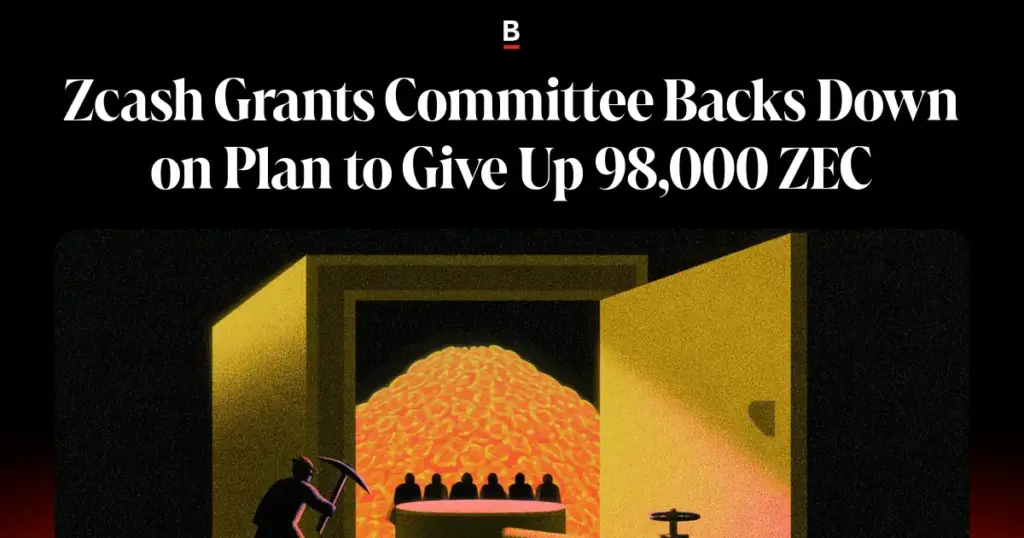
Zcash Community Grants has officially withdrawn its week-old proposal to hand a substantial portion of its treasury and future funding directly to miners. The abrupt reversal leaves rival plans for the network’s contested 8% share wide open, marking a significant twist in an ongoing governance debate surrounding the privacy-focused cryptocurrency.
The five-member committee, known as ZCG, is responsible for funding development across the Zcash ecosystem. Just under a week after initially pitching a plan to redirect approximately 98,000 ZEC toward future mining rewards, the committee announced it was abandoning the initiative. In a brief statement posted to the community forums, committee representatives confirmed the decision, stating simply that they had decided not to take the proposal forward.
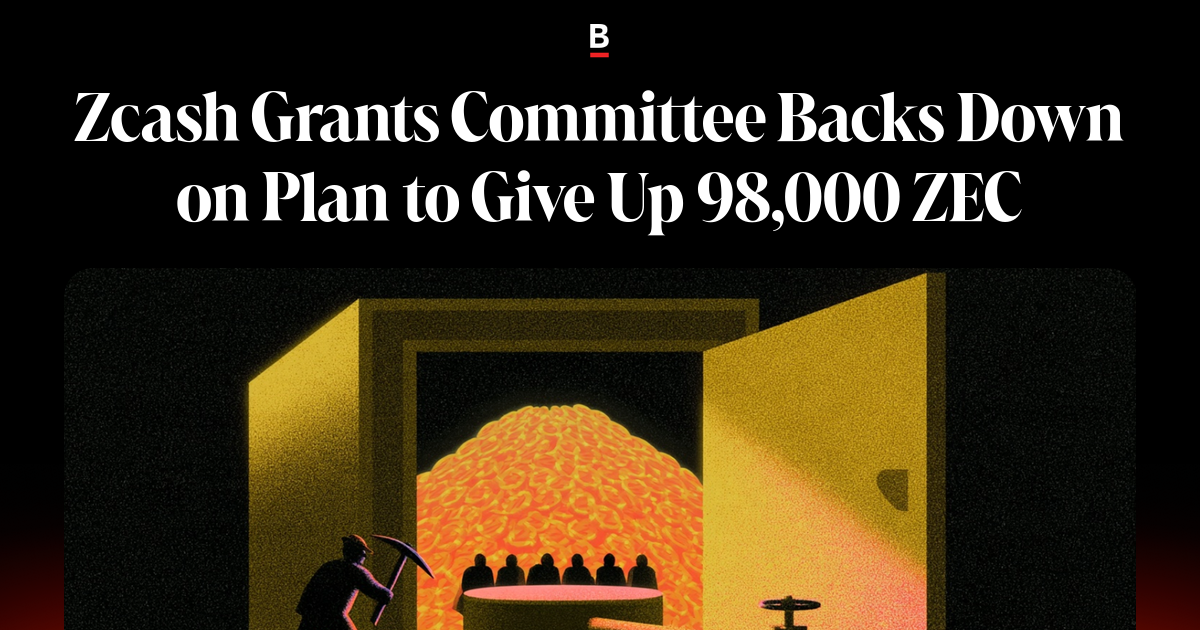
The abandoned proposal had sought to address persistent concerns regarding the allocation of the network’s resources and the proportion of funds under the committee’s direct control. Under the original structure, ZCG holds a steady share of the block reward to sustain continuous development, audits, and ecosystem expansion for Zcash. However, the sheer size of the treasury and the continuous influx of funds have repeatedly sparked debate among stakeholders, developers, and miners over the most equitable way to distribute network emissions.
The pivot by ZCG follows mounting discussions within the broader Zcash community regarding how the 8% block reward share ought to be managed. Earlier debates featured counter-proposals from various figures in the ecosystem, including Zcash co-founders and prominent community members who argued that the committee’s funding share should be restructured, reduced, or reallocated entirely. Critics of the existing model have often pointed to alternative uses for the capital, suggesting
that a heavier emphasis on proof-of-work mining rewards could better secure the network or realign economic incentives among node operators and miners.
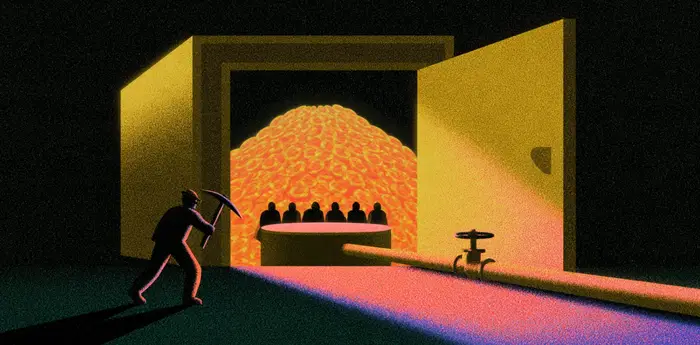
By shelving the 98,000 ZEC redirection plan, ZCG has removed its specific remedy from the table, shifting the focus back to alternative governance frameworks and competing visions for the network’s financial future. The committee’s retreat highlights the delicate balancing act required to manage decentralized treasury funds in major privacy coins, where stakeholder alignment can shift rapidly and community consensus is notoriously difficult to achieve.
With the ZCG proposal formally off the table, attention turns to how the community will address the future of the 8% block reward share. Rival ideas, ranging from structural overhauls of the grants program to alternative distribution schedules for miners, remain active subjects of debate across Zcash governance forums and communication channels. As stakeholders continue to evaluate the long-term sustainability and funding mechanisms of the protocol, the resolution to the ongoing funding allocation remains an open question for the ecosystem.
 Tokenomics & Digital Assets
 Tokenomics & Digital Assets
 Tokenomics & Digital Assets