
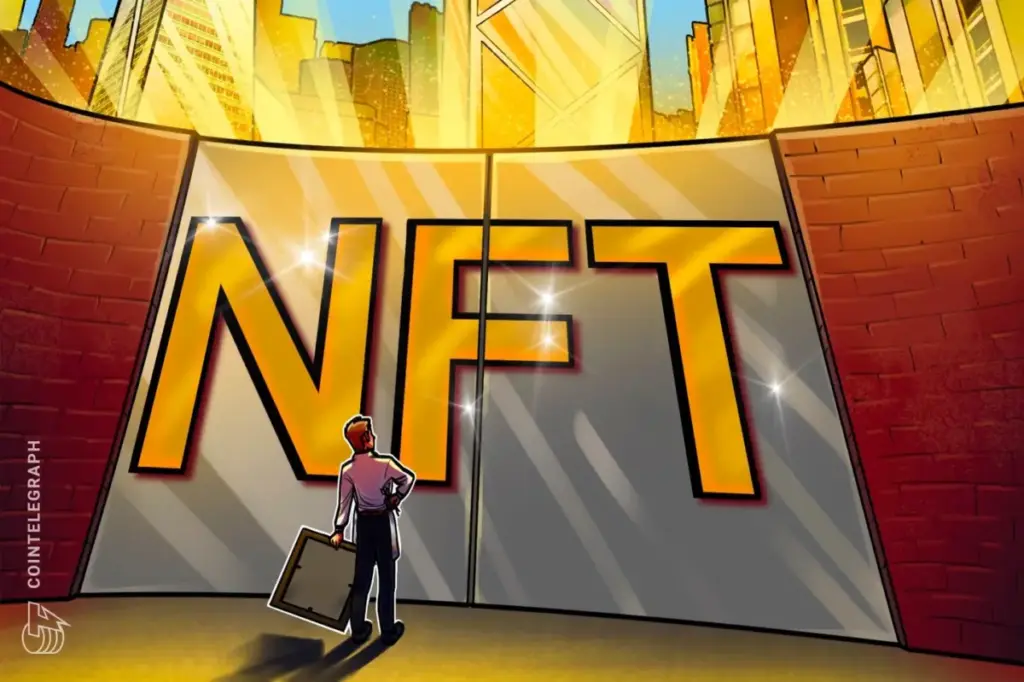
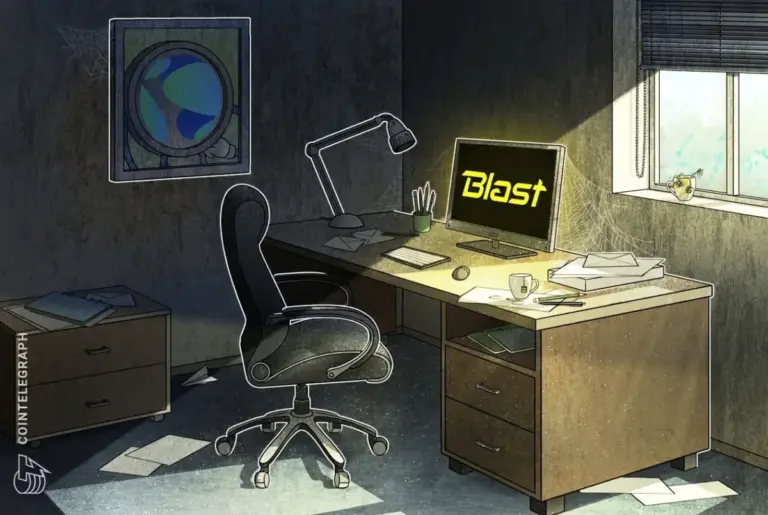
Nonfungible token marketplace Blur, which once shocked the digital asset industry by overtaking OpenSea as the largest NFT marketplace by trading volume, has announced that it is shutting down its website next month. While the sudden move marks a dramatic chapter for one of the sector’s most aggressive disruptors, it has been met with open celebration by certain corners of the NFT collector community.
Blur made the surprising announcement on social media platform X on Monday, marking its first post on the platform in more than a year. According to the announcement, the platform’s frontend website will officially shut down on Nov. 12. However, the protocol’s underlying onchain marketplace will remain operational, allowing basic decentralized interactions to persist independently of the main user interface.
Alongside the frontend closure, Blend, the peer-to-peer perpetual NFT lending protocol built by the Blur team, will also cease matching new loans. Blur stated that existing borrowers have until the Nov. 12 deadline to repay their outstanding loans or allow them to default according to the smart contract terms. The platform has also promised to provide a dedicated withdrawal interface following the shutdown to ensure users can retrieve stranded assets.
The announcement immediately reignited intense community debate, drawing sharp criticism and hostile send-offs from collectors who blamed the platform’s historical tokenomic strategies for degrading the broader digital art and collectibles ecosystem.
"Good riddance. You destroyed NFTs. Please shut down and never come back," wrote prominent NFT collector Cryptobscure in a direct reply to the platform’s post on X.
Another collector, known as starfruit, echoed the sentiment in a separate post, writing, "You may not have been able to complete your mission to destroy NFTs. But you acted with extreme determination and tried everything. Congratulations to us for surviving you."
The backlash highlights deep-seated industry resentment regarding the aggressive growth strategies that propelled Blur to the top of the NFT trading charts in 2023. By introducing optional creator royalties and lucrative token incentive programs, Blur successfully encouraged a wave of high-volume traders to relentlessly bid, flip, and speculate on digital assets. This aggressive market capture accelerated a fundamental structural shift across the entire industry toward lower creator royalties. Following Blur’s rise, rival marketplace OpenSea was eventually forced to transition toward optional creator fees for newly listed collections in an effort to stem its plunging market share.
Blur originally launched on Oct. 19, 2022, introducing a mechanism that allowed sellers to customize or reduce their royalty payments while offering larger prospective token rewards to traders who voluntarily chose to pay higher creator fees.
However, Blur entered a digital asset marketplace where creator royalty protections were already rapidly eroding. Competing marketplace Magic Eden had already moved to optional royalties just a week prior to Blur’s official launch as platforms vied for dwindling liquidity and trader attention.
The compounding effect of these competitive pressures quickly devastated creator earnings across the board. By July of the following year, blockchain analytics platform Nansen reported that effective creator royalty fees had plummeted to an average of just 0.6% in July 2023, down sharply from an average of 2.5% throughout 2022. Nansen attributed a massive portion of that drastic decline directly to Blur’s rapid growth, its minimum royalty framework, and OpenSea’s subsequent decision to lower its own royalty requirements in a bid to remain competitive.
NFT Sales Slump from Boom-Era Highs
Blur did not publicly disclose the specific business or strategic reasons behind its decision to shutter its frontend website and wind down new lending activity on the Blend protocol.
The closure arrives during a prolonged period of suppressed activity for the broader nonfungible token sector, which remains trapped far below the unprecedented financial heights of its pandemic-era boom. Comprehensive data compiled by CryptoSlam reveals that total NFT sales volume for the month of September hovered at a modest $167 million spread across roughly 2.9 million total transactions. By stark contrast, the market reached its all-time peak in January 2022, when monthly sales shattered records at an astonishing $6 billion across 13.7 million transactions.
The brutal, multi-year contraction in trading volumes and speculative interest has taken a heavy toll on infrastructure providers across the ecosystem. A series of high-profile wind-downs, closures, and strategic pivots has swept through the industry over the past year.
Gemini-owned platform Nifty Gateway and social collecting platform Rodeo both announced formal plans to wind down their operations in January. Meanwhile, marketplace Foundation announced its own permanent closure in April after a last-ditch corporate sale intended to keep the platform operating ultimately fell through. Major centralized exchange Binance also quietly ended dedicated NFT support across its core exchange platform, successfully shifting remaining user asset management over to the decentralized Binance Wallet.
Cointelegraph reached out to Blur founder Tieshun “Pacman” Roquerre for additional comment regarding the platform’s future and the upcoming shutdown.
 Non-Fungible Tokens (NFTs)
 Non-Fungible Tokens (NFTs)
 Non-Fungible Tokens (NFTs)







