
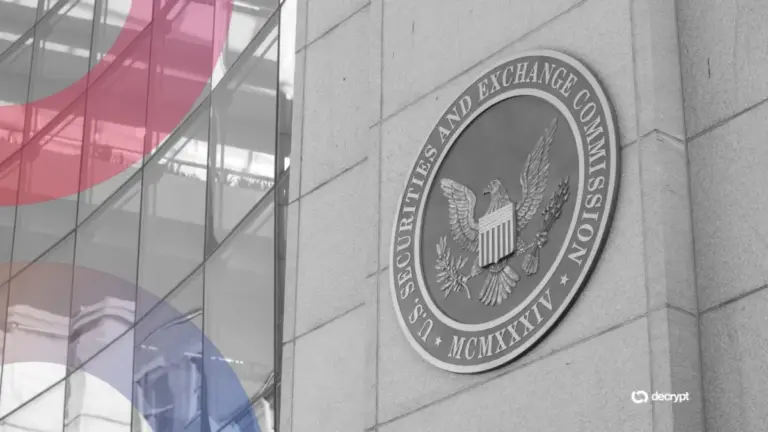
According to reports circulating in Washington, Democratic lawmakers are discussing strategic plans to expand the "Crypto Investor and Consumer Bill of Rights"—an amendment to the Clarity Act originally spearheaded by Representative Maxine Waters in 2025—into a much broader market structure bill during the next session of Congress. Industry sources indicate that the developing legislative proposal would aim to significantly broaden the supervisory powers of the Securities and Exchange Commission (SEC) over digital asset markets while simultaneously curbing and redefining the jurisdiction of the Commodity Futures Trading Commission (CFTC).
On the surface, the outcome of the midterm elections could easily be misinterpreted as a severe blow to the broader crypto policy landscape in the United States. President Trump’s Republican administration has long been championed as the overtly pro-crypto political faction, whereas the Democratic Party has frequently been characterized by industry advocates as more hostile or skeptical toward digital assets. However, as various market analysts and policy experts have pointed out, the political reality on Capitol Hill is proving to be far more nuanced. Rather than signaling a complete stalemate, the shifting dynamics suggest that crypto policy is steadily evolving into a complex, highly contested bipartisan issue rather than a partisan battleground.
Crypto Candidates and the Clarity Act
The intersection of digital assets and electoral politics was heavily underscored during the midterms by major advocacy organizations such as "Stand With Crypto." According to the organization’s official election tracker, Stand With Crypto formally endorsed 45 candidates across various congressional races. The ledger showed a strong showing for digital asset proponents, yielding 27 pro-crypto candidate victories, 12 losses, and six races that remained too close to call at the time of reporting. Notably, nearly half of all the candidates endorsed by the advocacy group were members of the Democratic Party, highlighting a growing base of crypto-friendly lawmakers across the political aisle.
Mason Lynaugh, the executive director of Stand With Crypto, addressed the outcomes in an official statement provided to media outlets. He expressed pride in seeing a solid majority of their endorsed candidates successfully secure their elections, while also offering gratitude to the candidates who championed the interests of crypto-owning Americans during tightly contested campaigns. Social media channels and tracking updates from the organization further celebrated the arrival of more than 50 new pro-crypto members heading to Capitol Hill, pointing to razor-thin victories such as Darren Soto’s win in Florida’s 9th District as evidence of mobilized grassroots advocacy.
Despite these legislative gains on the campaign trail, industry leaders acknowledge that significant hurdles remain when it comes to legislative casualties. James Butterfill, the head of research at digital asset investment firm CoinShares, pointed to the defeat of Republican Representative Bryan Steil of Wisconsin as a deeply meaningful loss for the crypto sector. Congressman Steil previously served as the chair of the House digital assets subcommittee and played a central, highly active role in trying to advance the Clarity Act—efforts that ultimately hit a brick wall when the bill stalled in the Senate earlier this year.
At the same time, Butterfill highlighted several key legislative victories among both parties, including Democrats such as Chris Pappas in New Hampshire and James Talarico in Texas, alongside Wyoming Republican Harriet Hageman, all of whom have established records of supporting constructive crypto policies. Nevertheless, Butterfill emphasized that the monumental challenge facing the industry is no longer just electing friendly faces, but successfully converting that disparate political support into actual, functional legislation. Some policy watchers believe this dynamic could further slow an already arduous and complicated path for the Clarity Act.

Carlos Guzman, vice president of research at digital asset trading firm GSR, offered a similar assessment regarding the fate of the legislation. While he noted that the current situation cannot be dismissed as "game over" for the Clarity Act, he warned that passing the measure has undeniably grown more difficult. Guzman noted that while certain factions within the Democratic Party recognize the urgent need for clearer regulatory rules for the crypto economy, comprehensive digital asset reform is unlikely to sit at the absolute top of their legislative priority list. Any viable bipartisan agreement moving forward will almost certainly demand much stricter provisions centered on robust consumer protections, market integrity, and the avoidance of conflicts of interest.
The Clarity Act itself has spent months being batted back and forth between lawmakers since its introduction in 2025, serving as the primary vehicle for establishing long-overdue rules of the road for crypto spot markets. Democratic opposition to earlier iterations of the bill frequently centered around concerns regarding President Trump’s personal crypto ventures and potential conflicts of interest. High-profile lawmakers, including Senator Elizabeth Warren of Massachusetts, aggressively pushed for strict amendments that would bar government officials and their immediate families from personally profiting from the rapidly expanding digital asset sector.
Looking beyond Capitol Hill, Guzman pointed out that the results of the midterm elections do not automatically trigger changes in the executive leadership of key regulatory agencies like the SEC or the CFTC, nor do they halt their ongoing rulemaking procedures. However, shifts in congressional oversight are inevitable. A newly configured Congress will likely subject regulatory decisions to much heavier scrutiny, with Democrats poised to wield significant influence over agency funding allocations and future high-level appointments.
Weighing in on the broader regulatory horizon, Butterfill suggested that the crypto industry may be slowly decoupling its fortunes from the immediate passage of the Clarity Act. He observed that both the SEC and the CFTC continue to push forward in their respective quests to establish regulatory clarity independently, reducing the absolute necessity for Congress to act. Furthermore, Butterfill noted that the explosive legislative focus on artificial intelligence (AI) regulation threatens to siphon away vital attention and bandwidth from lawmakers, which could inadvertently slow down the pace of crypto-specific policy development.
In the wake of the midterm election results, the broader financial markets have experienced typical bouts of volatility. Bitcoin has traded within a reactive band, hovering around the $76,820 mark while registering a minor pullback over a 24-hour window, according to market data.
Addressing the connection between political shifts and macro market health, Butterfill maintained that the electoral outcome alone is not enough to fundamentally alter his medium-term outlook for Bitcoin. While a slower pace of legislative reform could potentially delay certain institutional capital inflows and pilot programs, the most direct and immediate impact will likely be felt by domestic U.S. crypto enterprises that are desperately reliant on obtaining new regulatory permissions and charters. Analysts noted that their overall market outlook would only be reassessed if ongoing political uncertainty were to materially weaken broader investment flows or significantly tighten overall financial conditions.
 Web3 & Decentralized Web
 Web3 & Decentralized Web
 Web3 & Decentralized Web