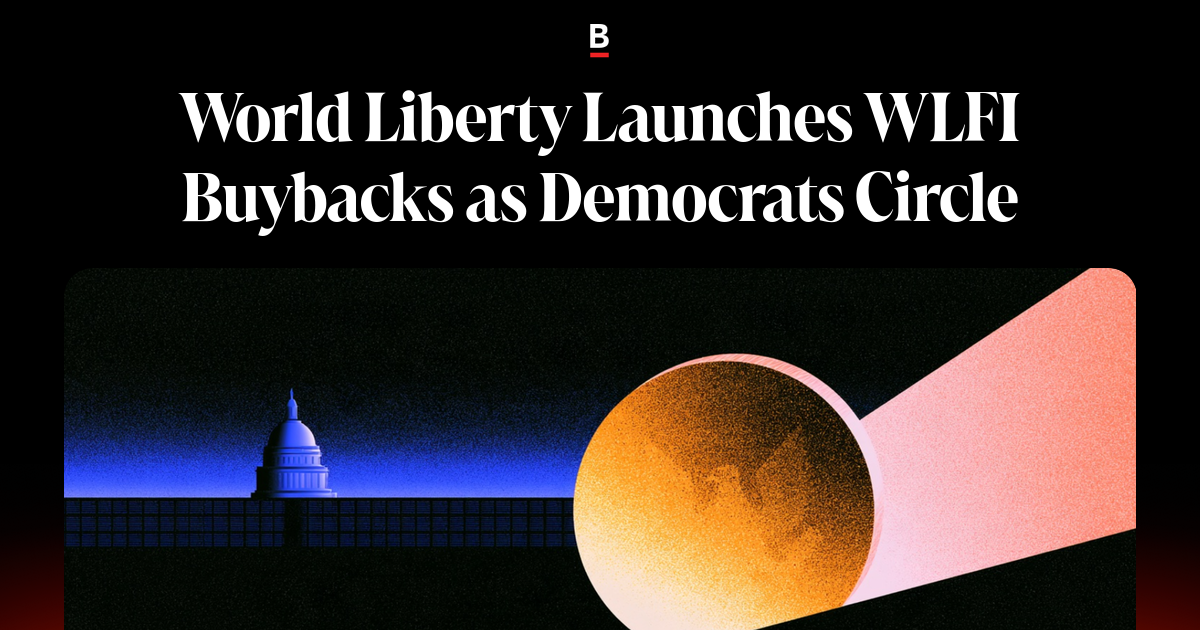
World Liberty Financial, the decentralized finance venture associated with the family of President Donald Trump, has announced the launch of a new token buyback program for its native WLFI governance token. According to public announcements made by the project, the initiative will be funded by an initial allocation that may incorporate reserve fees generated by its USD1 stablecoin, alongside other capital sources.
The announcement comes at a delicate political and regulatory juncture for the project. Just days prior to the unveiling of the buyback mechanism, congressional Democrats publicly identified World Liberty Financial as a likely target for oversight inquiries, bringing renewed attention to the intersections of political influence, decentralized finance, and stablecoin issuance.
The newly announced buyback program represents a significant milestone for World Liberty Financial as it attempts to establish economic utility and market support for the WLFI governance token. Governance tokens in decentralized finance protocols are typically designed to give holders voting rights over protocol parameters, treasury management, and future upgrades. However, projects frequently face challenges in maintaining token value and aligning the long-term interests of token holders with the underlying protocol’s revenue streams. By tying the buyback initiative directly to fees generated by the project’s USD1 stablecoin reserves, World Liberty Financial is attempting to create a direct economic link between stablecoin adoption and token valuation.
Stablecoins, which are digital assets typically pegged one-to-one to fiat currencies like the U.S. dollar, have become a cornerstone of the modern cryptocurrency economy. They serve as vital liquidity conduits for traders, lenders, and institutions navigating digital asset markets. The issuance of stablecoins often generates substantial revenue for their operators through the yield earned on the underlying reserve assets, such as U.S. Treasury bills and cash equivalents. By channeling a portion of these reserve fees into the acquisition and removal of WLFI tokens from circulation, the project is introducing a mechanism designed to potentially support token scarcity and market demand.
The timing of the buyback announcement has drawn considerable commentary from market observers and political analysts alike. The decision by congressional Democrats to name World Liberty Financial as a target for upcoming oversight reflects the ongoing scrutiny facing cryptocurrency projects connected to prominent political figures. Lawmakers have increasingly raised questions regarding potential conflicts of interest, regulatory compliance, and the transparency of financial arrangements within political-family-backed ventures.

As regulatory bodies and legislative committees continue to examine the rapid evolution of the digital asset sector, projects operating at the intersection of high-profile politics and decentralized finance find themselves under a powerful microscope. The use of stablecoin reserve fees to fund token buybacks introduces complex financial dynamics that are likely to attract further attention from regulators and lawmakers monitoring systemic risk, consumer protection, and financial integrity within the digital asset ecosystem.
World Liberty Financial has maintained that its operations are designed to navigate the evolving regulatory landscape while advancing decentralized finance innovation. The success and reception of the new WLFI buyback program will likely depend on the broader market performance of the token, the growth and adoption trajectory of the USD1 stablecoin, and the regulatory environment as federal oversight committees begin their planned inquiries. For now, the venture moves forward with a prominent financial maneuver designed to shore up its ecosystem token, even as political winds shift in Washington and stakeholders across the industry watch closely to see how these dual pressures shape the future of the project.
 Tokenomics & Digital Assets
 Tokenomics & Digital Assets
 Tokenomics & Digital Assets