Foundation, one of the most prominent Ethereum-based non-fungible token marketplaces to emerge during the explosive crypto boom of 2021, has officially shut down its platform following the collapse of an acquisition deal that was intended to keep it operational under new ownership.
Kayvon Tehranian, the founder and chief executive officer of Foundation, announced the permanent closure of the marketplace on X on Wednesday. The shutdown comes in the wake of a failed buyout attempt by Blackdove, a prominent digital art distribution platform. While Tehranian did not explicitly name Blackdove in his public statement, he explained that the primary objective of pursuing the sale had been to secure the platform’s long-term future and ensure uninterrupted operations for its community of digital creators and collectors under new leadership.
"That’s no longer possible," Tehranian wrote on the social media platform, noting that Foundation’s current organizational and financial standing leaves it unable to bring the marketplace
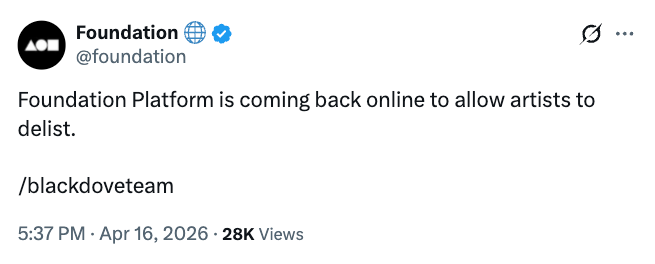
back online independently. Shortly after the announcement, a separate message signed by the Blackdove team indicated that the site would briefly be brought back online temporarily to allow users to safely delist their remaining NFTs.
The abrupt closure of Foundation serves as a stark reminder of the ongoing liquidity challenges and severe market contraction affecting the broader digital collectibles sector. Ever since trading activity peaked in 2022, shrinking volumes and declining market liquidity have made it increasingly difficult for independent, specialized marketplaces to survive against entrenched competitors and shifting market dynamics.
Foundation Rose in the 2021 Boom
Launched in early 2021, Foundation arrived at the exact crest of a historic wave for tokenized digital art. That year marked an unprecedented period of mainstream cultural and financial attention for the crypto industry, underscored by historic milestones such as digital artist Beeple selling a single NFT collage for a staggering $69.3 million at a major auction house.
Positioned as a curated platform for high-end digital creativity, Foundation quickly established itself as a premier destination for digital artists and collectors. According to figures provided by Blackdove, the marketplace successfully facilitated more than $230 million in primary sales for global artists throughout its operational lifespan. The platform regularly hosted high-profile NFT drops for renowned contemporary digital creators, including Jen Stark, James Jean, and Reuben Wu.
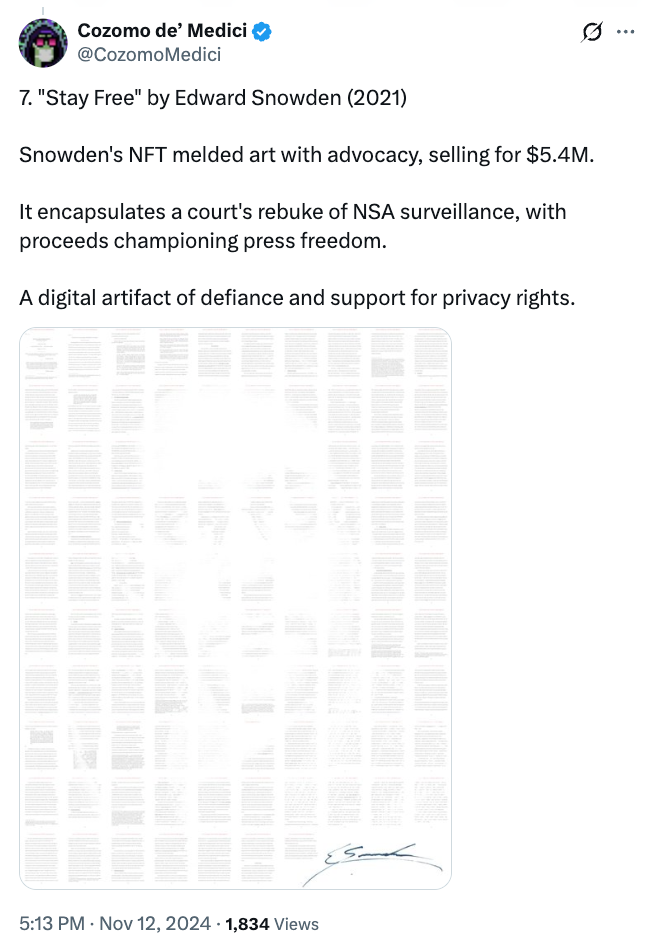
Beyond the traditional digital art community, Foundation also gained global mainstream attention when it hosted the sale of a tokenized artwork by prominent American whistleblower Edward Snowden. Snowden’s digital piece, titled "Stay Free," was minted and sold on the platform in 2021 for approximately 2,200 Ether. At the time of the transaction, the winning bid amounted to roughly $5 million, directing vital attention and funding toward freedom of expression initiatives.
However, as broader interest in the NFT sector cooled significantly following its historical highs in 2022, platforms like Foundation began facing compounding pressures. Shrinking liquidity, reduced speculative fervor, and dwindling transaction fee revenues eroded the business models of many standalone marketplaces. In response to these growing headwinds, Blackdove initially announced an agreement to acquire Foundation in early 2025, with plans for a full ownership transition intended to revitalize the platform over the following year. Ultimately, however, the arrangement fell apart, leaving the founding team with no viable path forward.
NFT Market Consolidation Deepens
Foundation’s permanent closure is part of a broader, accelerating wave of consolidation and capitulation across the digital asset ecosystem. The sector’s total market capitalization has plummeted, returning entirely to the pre-hype levels last observed before the 2021 bull market, according to data from early 2026.
The distress in the infrastructure tier of the ecosystem has been similarly pronounced. Mint Blockchain, an Ethereum-based infrastructure network specifically designed to support NFT applications, announced on Friday that it had officially ceased operations. The network advised its users to promptly withdraw their assets from the platform before systems were permanently taken offline.
The closure of Foundation and Mint Blockchain compounds a punishing year for specialized platforms. At least two other prominent digital asset and NFT trading platforms announced wind-down procedures earlier in the year, including Nifty Gateway—a digital art platform previously backed by crypto exchange Gemini—and Rodeo, a social-focused NFT platform.
This string of closures follows similar exits from the market in previous years. MakersPlace shut down its operations amid a prolonged slump in digital asset activity, while the X2Y2 marketplace wound down its traditional trading features to pivot away from NFTs entirely. Major cryptocurrency derivatives and spot exchange Bybit also elected to shutter its dedicated NFT marketplace as trading volumes dried up across the industry.
Despite the widespread contraction, a few major players continue to dominate the landscape. OpenSea has maintained its position as the dominant NFT marketplace through the prolonged industry downturn, capturing more than 73% of all trading activity across the sector at the time of publication, while facing ongoing competition from rivals such as Blur, according to DefiLlama analytics.
Even as the sector navigates one of its most challenging periods, some industry leaders remain optimistic about the long-term prospects of tokenized digital assets. Prominent figures, including Animoca Brands chairman Yat Siu, have publicly expressed confidence that the underlying technology will endure, suggesting that the market could eventually recover and reach new all-time highs as utility and developer interest evolve beyond pure speculation.
 Non-Fungible Tokens (NFTs)
 Non-Fungible Tokens (NFTs)
 Non-Fungible Tokens (NFTs)