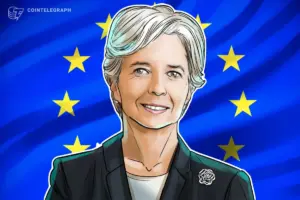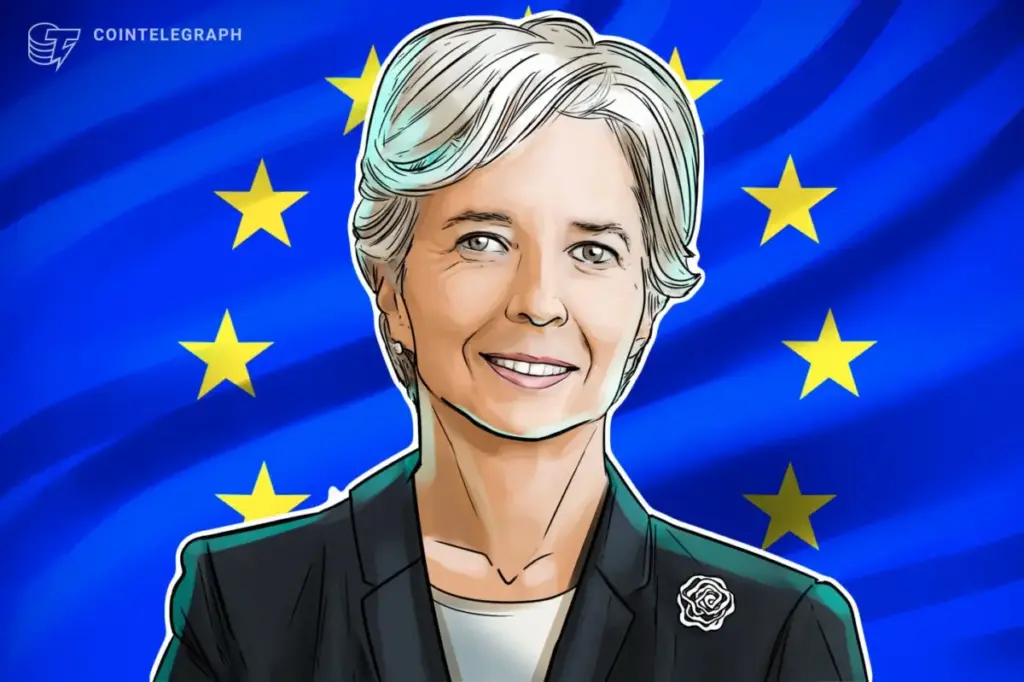
European Central Bank (ECB) President Christine Lagarde has officially announced her intention to step down from her leadership role at the central bank, setting the stage for a transition at the helm of one of the world’s most influential financial institutions.
“I have just informed my colleagues that I will step down as @ECB President on 7 February 2027,” Lagarde announced in a Thursday post on X.
Lagarde assumed the presidency of the European Central Bank in November 2019, succeeding Mario Draghi. When she officially vacates the office in early 2027, she will have served for approximately seven years and three months, falling slightly short of her full eight-year mandate, which was originally scheduled to conclude in October 2027.
The announcement brings clarity to months of speculation regarding the timeline of her departure. Reports of Lagarde’s potential early exit first surfaced in February 2026, when anonymous sources familiar with the matter told the Financial Times that the ECB chief was contemplating leaving her post before her official term came to a close.
The process to choose her successor will follow the formal guidelines established under European Union law. According to a press release issued by the ECB on Thursday, Lagarde’s successor will be appointed by the European Council following the nomination process outlined in Article 283 of the Treaty on the Functioning of the European Union. That constitutional procedure requires a formal recommendation from the Council, which must be made after consulting both the European Parliament and the governing council of the central bank itself.
During her tenure, Lagarde has steered the European Central Bank through a tumultuous period in modern economic history. A lawyer by profession, her extensive public service career prior to heading the ECB included serving as the managing director of the International Monetary Fund (IMF) from 2011 to 2019, as well as holding the prominent position of France’s Minister of the Economy, Finance, and Industry.
At the ECB, Lagarde helped the institution navigate several unprecedented global and regional crises. Her tenure coincided with the devastating economic fallout of the COVID-19 pandemic, which required massive monetary policy interventions to stabilize the eurozone economy. Shortly after, the central bank had to confront the severe economic shocks triggered by Russia’s invasion of Ukraine, an event that sparked a profound energy crisis across Europe, pushing inflation to historic highs and forcing the ECB into an aggressive cycle of interest rate hikes.
Alongside traditional monetary policy challenges, Lagarde’s presidency oversaw significant modernization efforts within the eurozone’s financial architecture, particularly regarding digital currencies and payment systems. Under her leadership, the ECB advanced preliminary work on the development of a digital euro, a central bank digital currency designed to facilitate day-to-day retail payments for citizens across the eurozone.
Furthermore, the central bank took major steps toward integrating tokenized finance into institutional markets. In September, the Eurosystem launched Pontes, a specialized system designed to allow financial institutions to settle wholesale tokenized asset transactions using central bank money. This initiative was positioned in part as a regulated institutional alternative to private stablecoins.
Vocal Crypto Critic Vowed No BTC in Central Bank Reserves
Throughout her time at the head of the European Central Bank, Lagarde has maintained a consistently skeptical stance on cryptocurrencies and decentralized digital assets, frequently warning about their speculative nature and potential risks to financial stability.
Her skepticism extended to the integration of digital assets into sovereign balance sheets. During a press conference in January 2025, Lagarde addressed the topic of alternative assets in institutional portfolios, asserting that central bank reserves need to remain strictly liquid, secure, and safe. At the time, she stated that she was “confident” that Bitcoin would not enter the reserves of any of the central banks operating under the umbrella of the ECB’s General Council.
Lagarde has similarly questioned the broader economic utility of private cryptocurrencies and stablecoins in reinforcing the international standing of the single currency. On multiple occasions, she argued that the proliferation of stablecoins and decentralized tokens would not inherently strengthen the global role of the euro, emphasizing instead the importance of robust public monetary frameworks and the potential eventual adoption of a digital euro to maintain Europe’s monetary sovereignty in an increasingly digital global economy.
With her departure date now firmly set for February 2027, attention across European financial and political circles is expected to increasingly shift toward the impending succession race. European leaders will face the task of selecting a new leader capable of guiding the central bank through the remainder of the decade, balancing ongoing economic uncertainties, the evolution of digital finance, and the complex monetary policy landscape of the eurozone.
 Crypto Regulation & Policy
 Crypto Regulation & Policy
 Crypto Regulation & Policy